
Benefits of Installing a Domestic Wind Turbine
A house wind turbine offers a practical route toward self-sufficient energy generation and reduced carbon emissions. For properties with suitable wind conditions, it can offset a significant portion of electricity bills while improving grid resilience. The technology has matured to the point where small-scale turbines are quieter, more efficient, and easier to integrate with smart home systems. When combined with storage or solar panels, they create hybrid setups that provide steady power even in variable weather. The financial case depends on local incentives and energy prices, but for many homeowners committed to sustainability, the long-term environmental and economic benefits are compelling.
The Role of House Wind Turbines in Domestic Energy Systems?
The adoption of house wind turbines represents a shift from centralized utility models toward distributed generation. This change allows households to contribute directly to clean energy production while reducing dependence on fossil-fueled grids.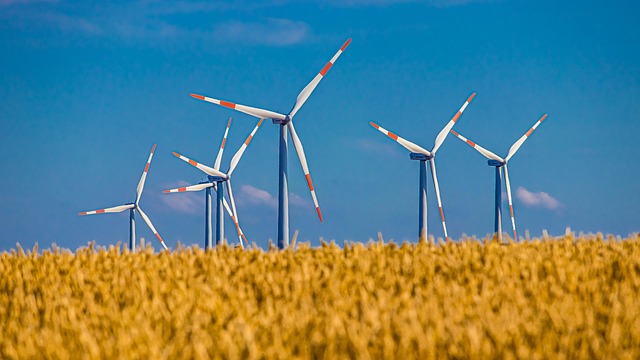
The Concept of Distributed Renewable Power Generation
Distributed energy resources (DERs) include small-scale technologies like rooftop solar, micro-hydro, and domestic wind turbines that generate electricity near the point of consumption. They play an essential role in sustainability by minimizing transmission losses and supporting local grid stability. In residential contexts, integrating a house wind turbine into existing networks enhances resilience during outages and enables partial autonomy from utility supply. Compared with centralized systems that rely on large power stations, decentralized models distribute risk and environmental impact more evenly across communities.
Integration of Small-Scale Wind Turbines into Residential Energy Networks
Modern home turbines typically connect through inverters that synchronize with household circuits or feed surplus electricity back to the grid. Smart meters record production data for billing or credit under net metering schemes. Some setups include hybrid controllers that balance inputs from both wind and solar sources depending on real-time conditions.
Comparison Between Centralized and Decentralized Power Generation Models
Centralized generation depends on large plants transmitting power over vast distances, often losing up to 8% through line inefficiencies. Decentralized systems like domestic turbines produce power locally, cutting those losses and offering flexibility for remote or rural properties where grid extension is expensive.
Technological Advancements in Residential Wind Systems?
Rapid innovation has made small turbines more viable for urban and suburban use. Manufacturers now focus on compactness, noise control, and digital intelligence rather than just raw capacity.
Evolution of Turbine Design for Low-Wind-Speed Environments
Early residential units required high average speeds to function effectively. Newer designs employ larger blade surface areas or vertical-axis configurations that capture energy even at 3–4 m/s. This improvement broadens installation potential beyond coastal or hilltop sites.
Innovations in Materials, Aerodynamics, and Noise Reduction
Lightweight composites such as carbon fiber reduce rotational inertia while enhancing durability. Blade geometry has evolved to minimize turbulence-induced noise—a key factor for neighborhood acceptance—while maintaining lift efficiency under variable gusts.
Smart Grid Compatibility and Digital Monitoring Systems for Household Turbines
Integration with smart grids allows automatic adjustment of output during peak demand or curtailment periods. Digital dashboards now provide real-time analytics on performance, fault detection, and maintenance scheduling via mobile applications or cloud platforms.
Assessing the Energy Potential of a House Wind Turbine?
Estimating realistic output requires detailed analysis of site-specific conditions rather than relying solely on manufacturer ratings.
Evaluating Site Conditions and Wind Resources
Accurate assessment involves measuring average speed at hub height using anemometers over several months. Software tools model turbulence intensity based on terrain features such as nearby buildings or trees that disrupt airflow patterns.
Tools and Methodologies for Measuring Average Wind Speed and Turbulence Intensity
Developers often reference meteorological databases maintained by agencies like the IEA or national weather services to cross-check field data. Computational fluid dynamics (CFD) models simulate how air moves around obstacles to refine turbine placement.
Influence of Topography, Building Height, and Local Obstructions on Performance
A turbine mounted above roofline level typically experiences steadier flow than one placed within ground-level eddies. Slopes facing prevailing winds amplify velocity through natural funneling effects known as speed-up zones.
Estimating Power Output and Efficiency Metrics?
Once resource data are available, engineers calculate expected yield using rotor area and air density values relevant to the location.
Relationship Between Rotor Diameter, Wind Speed, and Energy Yield
Power increases roughly with the cube of wind speed; doubling velocity can raise output eightfold if mechanical efficiency remains constant. Larger rotors capture greater swept area but require stronger towers for structural stability.
Capacity Factor as a Measure of Turbine Efficiency in Domestic Settings
In residential contexts, capacity factors usually range between 15–30%, depending on site exposure. This figure represents actual annual production compared with theoretical maximum output if running continuously at rated capacity.
Seasonal Variability and Its Impact on Annual Power Generation Potential
Winter months often deliver higher yields due to stronger winds associated with frontal systems, while summer lulls may lower performance unless complemented by solar panels in hybrid configurations.
Economic Considerations in Domestic Wind Power Adoption?
Financial feasibility depends heavily on upfront cost structures, maintenance schedules, and policy incentives available within each jurisdiction.
Capital Investment and Operational Costs
Installation costs include turbine hardware, tower erection, electrical wiring, inverter setup, and potential grid interconnection fees. Routine maintenance—bearing lubrication, blade inspection—typically accounts for 1–2% of capital expenditure annually over a 20-year lifespan.
Maintenance Requirements and Associated Long-Term Costs
Smaller units need less frequent servicing than commercial models but still require periodic checks after storms or icing events to prevent imbalance damage that could shorten operational life.
Comparison with Other Renewable Options Such as Rooftop Solar PV Systems
While solar panels have lower moving parts and simpler upkeep, wind can outperform them during night hours or cloudy seasons when irradiance drops sharply—providing complementary generation profiles when used together.
Financial Incentives and Return on Investment Analysis?
Governmental frameworks significantly affect payback timelines by offering subsidies or favorable tariffs for renewable microgeneration.
Government Subsidies, Feed-in Tariffs, or Tax Credits Supporting Small Wind Systems
Many regions provide grants covering part of equipment cost or guaranteed purchase rates per kilowatt-hour exported back into the grid under feed-in tariff programs established by national regulators following IRENA guidelines.
Payback Period Estimation Under Different Energy Pricing Scenarios
At moderate electricity prices around $0.15 per kWh, payback may occur within 10–15 years depending on local wind availability; higher retail tariffs shorten this window considerably.
Impact of Net Metering Policies on Economic Feasibility for Homeowners
Net metering allows households to offset consumption directly against production credits rather than selling excess at wholesale rates—an arrangement particularly beneficial where daytime use aligns with windy periods.
Environmental Impact and Sustainability Benefits?
Domestic turbines contribute meaningfully toward emission reduction goals while fostering awareness about renewable transitions at community scale.
Reducing Carbon Footprint Through On-Site Generation
Each kilowatt-hour generated locally displaces equivalent fossil-fuel-based electricity from the grid. Over its lifetime a typical 5 kW unit may save several tons of CO₂ compared with conventional supply chains defined by IEA emission factors.
Lifecycle Analysis Including Manufacturing, Operation, and Decommissioning Stages
Although production involves embodied energy from materials like steel or fiberglass, lifecycle assessments consistently show net-positive outcomes within two years of operation due to ongoing zero-emission output thereafter.
Contribution to National Renewable Energy Targets and Decarbonization Goals
Widespread adoption supports government commitments under frameworks such as the Paris Agreement by diversifying renewable portfolios beyond solar dominance into mixed-resource strategies incorporating household-scale wind assets.
Noise, Visual, and Ecological Considerations?
Public acceptance hinges not only on economics but also environmental coexistence within residential settings.
Addressing Concerns About Acoustic Emissions in Residential Zones
Modern designs maintain sound levels below 45 dB at typical setback distances—comparable to background conversation—through refined blade pitch control systems that dampen vibration resonance frequencies.
Aesthetic Integration into Urban or Suburban Landscapes
Compact vertical-axis models blend more easily into rooftops without requiring tall masts; some architects incorporate them as visual features symbolizing green innovation rather than obtrusive machinery.
Mitigation Strategies for Potential Impacts on Local Wildlife Populations
Proper siting away from migratory corridors minimizes bird collisions; ultrasonic deterrents further reduce risk without affecting human hearing ranges according to environmental assessment standards set by ISO 14001 frameworks.
Technical Integration with Home Energy Systems?
Efficient operation relies increasingly on digital coordination between multiple renewable inputs managed through intelligent controllers rather than isolated devices.
Hybrid Configurations Combining Wind with Other Renewables
Pairing small turbines with photovoltaic arrays balances seasonal variation—solar dominates summer days while wind contributes during stormier months—to maintain steadier household supply curves supported by battery storage banks when necessary.
Use of Battery Storage to Stabilize Intermittent Generation Patterns
Lithium-ion systems store surplus during high-wind intervals then discharge during calm periods; advanced charge controllers prevent overcycling that would otherwise degrade battery lifespan prematurely.
Smart Home Energy Management Systems Optimizing Renewable Utilization
AI-based algorithms forecast demand profiles using historical consumption data allowing dynamic load shifting—for example running water heaters when excess wind power is available instead of exporting it cheaply back to utilities.
Grid Connection Versus Off-Grid Operation Models?
Choosing between connection modes depends largely on geographic accessibility to infrastructure networks alongside lifestyle preferences regarding autonomy levels.
Technical Requirements for Grid-Tied Microgeneration Systems
Compliance involves certified inverters meeting IEEE 1547 interconnection standards ensuring synchronization safety plus anti-islanding protection so equipment disconnects automatically during outages protecting line workers downstream.
Advantages and Limitations of Standalone (Off-Grid) Configurations for Remote Properties
Off-grid setups appeal where extending utility lines is impractical; however they demand larger storage capacity since no external backup exists during prolonged calm spells leading sometimes to reliance on auxiliary diesel generators despite added emissions trade-offs.
Role of Inverter Technology in Ensuring Power Quality and Safety Compliance
Modern bidirectional inverters regulate voltage harmonics maintaining waveform purity within IEC 61000 electromagnetic compatibility thresholds critical for sensitive electronics inside modern homes filled with digital devices.
Policy Frameworks and Future Outlook for Domestic Wind Power?
Regulation defines what homeowners can build while innovation determines how accessible these solutions become across different housing types worldwide.
Regulatory Standards Governing Residential Turbines
Zoning ordinances often restrict tower heights below 15 meters within city limits; manufacturers must obtain certification under IEC 61400 series verifying mechanical integrity against fatigue loads predicted over design lifetimes exceeding two decades.
Certification Standards Ensuring Safety, Reliability, and Performance Compliance
Third-party testing agencies accredited under ISO/IEC 17025 confirm compliance before market release providing confidence both for consumers purchasing units and insurance firms underwriting installations.
Interconnection Guidelines Set by Utilities or Regulatory Bodies
Utilities issue technical rulesets outlining permissible voltage fluctuations reactive power limits and metering protocols aligning microgenerators seamlessly within broader distribution frameworks without destabilizing feeder circuits.
Emerging Trends Shaping the Future of Home Wind Energy Solutions?
Technology convergence continues pushing boundaries beyond conventional rotor-and-tower concepts toward integrated smart ecosystems.
Advances in Modular Turbine Systems Designed for Urban Environments
Compact modular blades assembled onsite simplify logistics reducing crane requirements enabling retrofits even atop mid-rise apartment blocks previously unsuitable due limited roof access.
Integration with Community Microgrids Enabling Peer-to-Peer Energy Exchange
Neighborhood clusters increasingly trade surplus generation locally through blockchain-based microgrid markets lowering transaction costs and enhancing collective resilience against centralized outages.
Prospects for Combining AI-Driven Forecasting with Predictive Maintenance Tools for Enhanced Reliability
Machine learning models trained on sensor telemetry anticipate component wear before failure allowing preemptive service scheduling minimizing downtime extending equipment lifespan significantly compared traditional reactive maintenance cycles.
FAQ
Q1: How much energy can a typical house wind turbine produce annually?
A: A well-sited 5 kW unit may generate between 6 000–10 000 kWh per year depending on average local speeds around 5–6 m/s.
Q2: What is the ideal location for installing a domestic turbine?
A: Open areas free from tall obstructions where prevailing winds remain consistent throughout seasons yield best results—often rural properties or coastal zones suit this profile.
Q3: Are small turbines noisy enough to disturb neighbors?
A: Modern designs operate quietly below conversational levels thanks to improved aerodynamics and vibration damping technologies tested under IEC acoustic standards.
Q4: Can house wind turbines work efficiently in urban environments?
A: While turbulence reduces performance somewhat vertical-axis types designed specifically for rooftops can still contribute useful supplemental power especially when paired with solar arrays.
Q5: What maintenance tasks are required over time?
A: Regular inspections every six months checking bolts bearings blades and electrical connections suffice under normal conditions ensuring safe continued operation across decades-long service life.