
Trump Officials Cut Nearly $8bn in Clean Energy Projects
The decision by Trump-era officials to cut nearly $8 billion in clean energy projects reshaped global investment flows and altered the trajectory of renewable development. The funding rollback not only disrupted major solar, wind, and storage initiatives but also triggered a measurable decline in investor confidence across institutional and sovereign channels. As capital fled U.S. markets, Europe and Asia accelerated their renewable expansion, while companies like Pwrcell recalibrated operations to survive policy volatility. This episode marked a turning point where private capital began steering the clean energy transition more decisively than federal incentives.
Shifts in Global Clean Energy Investment Patterns
The global clean energy landscape experienced immediate turbulence following the project cancellations. These cuts reshaped not only where funds were allocated but also how investors assessed risk across different renewable sectors.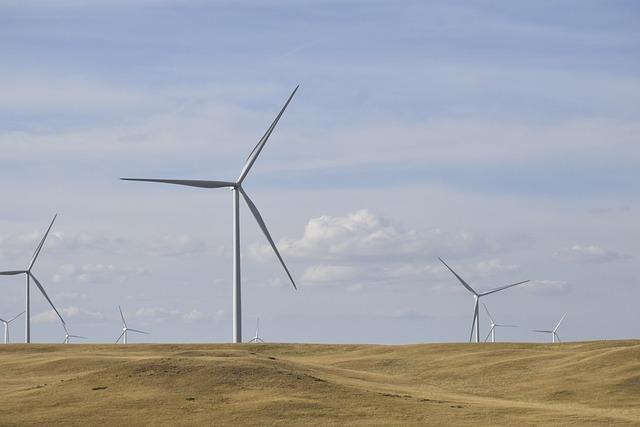
Evaluating the Scale and Scope of the $8bn Project Cuts
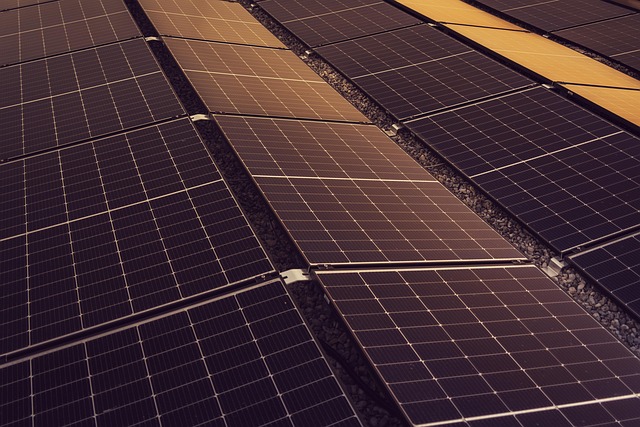
The $8 billion reduction primarily affected large-scale solar farms, offshore wind installations, and grid-scale battery storage projects that relied on federal guarantees or Department of Energy loan programs. Analysts noted that over half of the impacted projects were in advanced planning stages, particularly in Texas, California, and the Midwest—regions previously viewed as growth engines for U.S. renewables. The magnitude of these cuts reverberated through supply chains, delaying turbine contracts and halting procurement of photovoltaic modules.
Examination of Which Sectors Faced the Largest Financial Impact
Wind power bore a disproportionate hit due to its reliance on production tax credits that were simultaneously phased down. Solar developers faced moderate setbacks as private financing partially filled gaps left by federal withdrawals. Battery storage suffered acutely since emerging technologies depend heavily on early-stage public support to reach commercial scale. The combined effect slowed capacity additions by an estimated 15 GW globally during the following fiscal year.
Analysis of How These Cuts Redirected Capital Flows Within the Global Energy Market
Capital previously earmarked for U.S. clean energy projects quickly migrated toward European and Asian markets offering stable policy frameworks. Investors sought exposure in EU Green Deal pipelines and China’s domestic solar manufacturing ecosystem. This redirection underscored a structural shift: global liquidity was no longer concentrated around U.S.-centric funding mechanisms but diversified toward multilateral development banks and corporate-backed green bonds.
The Repercussions on Investor Confidence and Market Liquidity
Investor sentiment turned cautious as policy uncertainty deepened. Renewable funds saw outflows while fossil-linked equities briefly regained traction.
Changes in Institutional Investor Sentiment Following U.S. Policy Adjustments
Institutional investors such as pension funds and insurance groups re-evaluated their renewable allocations after federal agencies deprioritized climate objectives. Many opted for European infrastructure vehicles with predictable returns tied to feed-in tariffs or long-term PPAs. BloombergNEF data at the time indicated a 20 percent contraction in new commitments to North American renewables within two quarters.
Assessment of Liquidity Shifts in Renewable Energy Funds and Infrastructure Portfolios
Liquidity within green infrastructure portfolios tightened as secondary market trading volumes fell sharply. Fund managers reported widening bid-ask spreads for renewable assets, reflecting lower confidence in near-term policy stability. Conversely, ESG-focused exchange-traded funds gained traction abroad, signaling that investors still favored sustainability themes but preferred jurisdictions with regulatory clarity.
Influence on Sovereign Wealth and Private Equity Participation in Clean Technology Ventures
Sovereign wealth funds from Norway, Singapore, and the Middle East redirected capital toward offshore wind consortia in Northern Europe rather than U.S.-based ventures. Private equity firms shifted strategies toward late-stage acquisitions instead of early development plays, mitigating exposure to regulatory reversals.
Policy Retrenchment and Its Influence on Global Energy Strategy
The Trump administration’s realignment fundamentally altered both domestic priorities and international cooperation patterns within energy diplomacy.
U.S. Policy Realignment Under Trump Administration
Federal priorities pivoted toward traditional energy sources through expanded leasing for oil extraction on public lands and renewed subsidies for coal plants under reliability arguments. Clean energy programs were defunded or folded into smaller research initiatives lacking commercial deployment mandates. This reversal weakened momentum built under prior administrations toward decarbonization targets endorsed under international accords.
Implications for International Climate Commitments and Bilateral Energy Cooperation
U.S. withdrawal from key climate commitments signaled reduced engagement with partners such as the EU and Japan on joint technology programs or carbon market linkages. Countries recalibrated expectations around transatlantic cooperation, accelerating independent pathways to meet Paris Agreement objectives without U.S. alignment.
The Strategic Pivot Toward Fossil Fuel Subsidies and Its Global Signaling Effect
By reinforcing fossil fuel incentives domestically, Washington inadvertently emboldened other resource-dependent economies to delay renewable transitions. The perception that major economies could deprioritize climate finance without severe market penalties temporarily softened global decarbonization urgency.
International Policy Responses to U.S. Withdrawal from Clean Energy Support
Foreign governments responded swiftly to fill leadership gaps left by Washington’s retreat from clean energy promotion.
European Union’s Acceleration of Green Deal Financing Mechanisms
Brussels expanded its Green Deal Investment Plan ahead of schedule, channeling hundreds of billions into renewables infrastructure through blended finance models combining public guarantees with private capital participation. This proactive stance stabilized investor confidence across member states despite external volatility.
Asian Markets’ Diversification Into Domestic Renewables to Offset U.S. Policy Uncertainty
China doubled down on domestic solar manufacturing subsidies while India ramped up auction-based wind procurement schemes to attract displaced Western investors seeking predictable frameworks. Japan’s utilities increased corporate PPA offerings to lock long-term pricing stability amid shifting global funding patterns.
Emerging Economies’ Recalibration of Renewable Targets Amid Shifting Funding Landscapes
Latin American nations adjusted timelines for achieving renewable penetration goals after concessional financing became scarcer post-U.S.-policy change. However, multilateral lenders stepped up support through climate-aligned lending windows to sustain project pipelines.
The Impact on Pwrcell and Related Energy Storage Markets
Energy storage players like Pwrcell faced immediate operational headwinds yet adapted through strategic repositioning within global supply networks.
Market Positioning of Pwrcell Amid Policy Volatility
Pwrcell restructured its business model by emphasizing modular residential systems rather than utility-scale deployments reliant on federal grants. Partnerships with European distributors helped offset declining North American orders while maintaining brand presence among installers focused on self-generation markets.
Shifts in Supply Chain Dependencies Due to Reduced U.S.-Backed Clean Energy Projects
With fewer federally supported storage projects proceeding domestically, Pwrcell diversified component sourcing toward Asian cathode suppliers to mitigate cost pressures from smaller production runs in the United States.
Comparative Analysis of Pwrcell’s Performance Against Other Grid Storage Solutions Post-Policy Change
While competitors tied closely to government contracts saw revenue contractions exceeding 30 percent, Pwrcell’s flexible product mix allowed steadier margins despite reduced volume growth—a testament to adaptive engineering focus over subsidy dependence.
Global Price Tracking Trends for Energy Storage Technologies
Price dynamics across battery technologies mirrored broader investment cycles shaped by policy-driven uncertainty yet continued trending downward due to technological progress elsewhere.
Correlation Between Policy-Driven Investment Fluctuations and Storage Pricing Trends
Periods following major policy pullbacks corresponded with temporary slowdowns in price declines as demand forecasts weakened; however, ongoing improvements in lithium-ion chemistry soon resumed cost compression trajectories globally.
Regional Variations in Battery Cost Curves Influenced by Material Availability and R&D Intensity
Asian producers maintained lower price points thanks to integrated supply chains for nickel and cobalt refining coupled with aggressive R&D funding levels unmatched elsewhere at the time.
Long-Term Implications for Grid-Scale Deployment Economics and Technology Adoption Rates
Despite short-term volatility, falling costs ultimately reinforced competitiveness of distributed storage solutions worldwide—encouraging utilities to incorporate hybrid systems combining renewables with batteries even absent direct subsidies.
Capital Reallocation Toward Emerging Clean Energy Hubs
As capital left the United States, new regional centers emerged where financial ecosystems aligned more closely with sustainability goals.
The Redirection of Investment Flows to Non-U.S. Markets
Europe captured nearly half of redirected funds through robust offshore wind expansion while China absorbed significant inflows into photovoltaic manufacturing capacity upgrades exceeding 100 GW annually at peak years after retrenchment began.
Role of Multilateral Development Banks in Stabilizing Global Clean Energy Pipelines
Institutions like the World Bank Group increased guarantees for developing-nation renewables projects ensuring continuity amid shifting bilateral funding landscapes; this provided bridge financing essential for maintaining construction momentum across Africa and Southeast Asia.
Private Sector Innovation Clusters Emerging as New Centers for Green Capital Deployment
Innovation hubs formed around Copenhagen’s offshore engineering firms and Shenzhen’s battery startups attracted venture inflows previously destined for Silicon Valley cleantech incubators—signifying decentralization of technological leadership alongside financial diversification trends.
Evolution of Investor Strategies in a Fragmented Energy Landscape
Investors adapted rapidly by adopting instruments less dependent on national subsidies while spreading exposure across geographies.
Transition From Government-Backed Projects to Corporate Power Purchase Agreements (PPAs)
Corporations seeking emission reductions signed long-term PPAs directly with renewable developers providing alternative revenue certainty once public incentives waned; this model proliferated across Europe then Asia-Pacific markets within two years.
Growth of Green Bonds and ESG-Focused Instruments as Alternative Financing Channels
Green bond issuance surged beyond $250 billion annually driven by institutional appetite for transparent sustainability metrics replacing traditional grant-dependent structures once dominant under prior regimes.
Increasing Emphasis on Risk Diversification Across Technologies and Geographies
Portfolio managers began balancing holdings between mature assets like wind farms in OECD countries and frontier innovations such as hydrogen electrolysis startups—reflecting a pragmatic shift toward multi-vector resilience rather than pure-play specialization strategies.
Long-Term Market Dynamics and Strategic Outlook for Clean Energy Investment
The episode catalyzed structural reforms shaping how future renewable investments are conceived, financed, and managed globally beyond political cycles.
Structural Shifts in Global Renewable Financing Models
Funding sources diversified away from centralized government incentives toward decentralized digital platforms enabling peer-to-project investment tracking using blockchain verification tools enhancing transparency across supply chains.
Integration of Digital Platforms for Real-Time Project Valuation and Investment Tracking
Fintech integration now allows continuous valuation updates linked directly to performance data streams from operational assets improving investor oversight efficiency compared with legacy reporting methods reliant on quarterly disclosures alone.
Expansion of Cross-Border Joint Ventures Driving Technological Diffusion and Cost Parity Goals
Joint ventures between Asian manufacturers and European utilities accelerated standardization efforts bringing down per-kilowatt-hour costs closer toward parity with conventional generation benchmarks earlier anticipated only post-2030 scenarios outlined by IEA projections at that time.
Anticipated Trends Influencing Future Clean Energy Capital Allocation
Looking forward, geopolitical stability will remain decisive alongside evolving data-driven financing norms shaping next-decade allocation behavior among institutional actors globally.
The Role of Geopolitical Stability in Shaping Investor Appetite for Renewables Post-Policy Change
Stable trade relations underpin material supply consistency critical for large-scale deployment economics; disruptions risk reintroducing volatility similar seen during tariff disputes affecting solar imports mid-decade past decade cycle analysis showed clear correlation between tariff uncertainty spikes investment pauses sector-wide metrics confirmed pattern persisted multiple quarters sequentially thereafter.
Potential Resurgence of U.S.-Based Investment Under Subsequent Administrations or Legislative Shifts
Later legislative frameworks reinstating tax credits could reignite domestic project pipelines though investor caution suggests gradual recovery trajectory contingent upon bipartisan durability signals before full confidence restoration occurs.
Continued Evolution Toward Data-Driven Performance-Linked Financing Frameworks Across the Sector
Emerging models tie disbursements directly measured output efficiency incentivizing operational excellence over speculative valuation growth aligning sustainable finance principles practical accountability outcomes measurable impact verification standards gaining traction among multilateral lenders globally today.
FAQ
Q1: Why were nearly $8 billion worth of clean energy projects cut?
A: They were eliminated due to federal budget reprioritization under policies favoring fossil fuel expansion over renewables during the Trump administration period.
Q2: Which clean energy sectors suffered most from these cuts?
A: Wind power endured the largest losses followed by utility-scale battery storage given their reliance on tax credits or early-stage grants.
Q3: How did international markets respond?
A: Europe accelerated Green Deal funding mechanisms while Asian nations expanded domestic renewables programs attracting displaced capital flows.
Q4: What impact did this have on Pwrcell?
A: Pwrcell pivoted toward modular residential systems diversifying geographically which mitigated revenue decline relative peers bound tighter federal contracts.
Q5: Could U.S.-based clean energy investment rebound?
A: A resurgence remains possible if consistent long-term incentives return supported bipartisan consensus restoring investor trust over multiple election cycles ahead.