
Queensland-Built, Solar-Powered Recycling Tech Delivering Results
Queensland has become a proving ground for solar tech in industrial recycling. The region’s engineering firms and renewable energy innovators are fusing photovoltaic systems with advanced waste recovery plants, transforming how materials are processed and reused. This integration is not just about sustainability—it’s about performance. Solar-powered recycling facilities now operate with higher uptime, lower emissions, and reduced operational costs. These results place Queensland at the forefront of renewable waste management innovation and position its solar-integrated recycling systems as export-ready technologies for global markets.
The Intersection of Solar Technology and Recycling Innovation in Queensland
Queensland’s transition toward solar-integrated recycling represents a convergence of environmental policy, technical ingenuity, and industrial pragmatism. The state’s abundant sunlight and strong renewable incentives have created ideal conditions for experimentation and scale-up.
The Emergence of Solar-Powered Recycling Systems
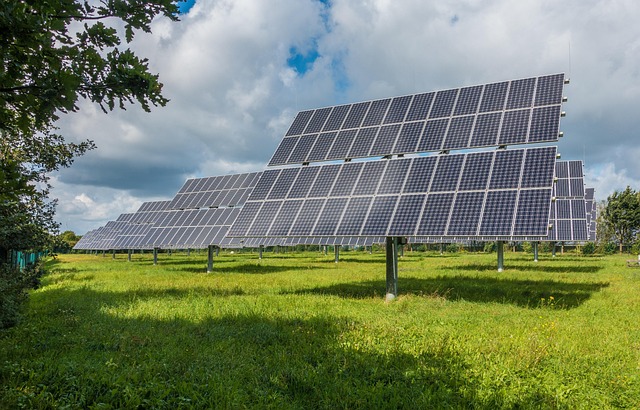
Queensland has invested heavily in solar tech infrastructure that powers municipal recycling centers and private material recovery facilities. Many plants now operate partially or entirely on solar arrays mounted on rooftops or adjacent land parcels. This model supports energy independence while aligning with the state’s renewable energy targets set under its long-term sustainability plan.
Key Motivations Driving the Adoption of Renewable Energy in Waste Management
The shift to solar power stems from both economic and environmental motivations. Rising grid electricity costs have pushed operators to seek stable, self-generated power sources. Additionally, public pressure for cleaner operations has encouraged companies to reduce their carbon footprint through renewable substitution.
The Role of Government Incentives and Sustainability Targets in Promoting Solar-Integrated Systems
Government programs offering feed-in tariffs, low-interest green loans, and grants for renewable retrofits have accelerated adoption. Queensland’s Renewable Energy Target aims to achieve 70% clean energy by 2032, creating a direct incentive for recycling operators to integrate solar capacity into their daily operations.
How Solar Energy Enhances Recycling Efficiency
Integrating solar power into waste management does more than replace fossil fuels—it redefines operational reliability and scalability.
Continuous Energy Supply Supports Uninterrupted Recycling Operations
Solar energy combined with battery storage systems enables round-the-clock operation even during peak demand or grid outages. Facilities using lithium-ion or flow batteries can maintain conveyor belts, sorting robots, and shredders without interruption.
Reduction in Operational Carbon Footprint Through Renewable Power Substitution
Replacing diesel generators or coal-based electricity with solar generation significantly cuts greenhouse gas emissions. A mid-sized plant powered by a 1 MW photovoltaic system can offset thousands of tons of CO₂ annually while maintaining identical throughput rates.
Improved Cost Efficiency and Scalability for Large Recycling Facilities
Solar installations reduce long-term electricity expenses by up to 40%. As module prices fall globally, Queensland’s large recycling hubs can scale operations without proportional increases in energy expenditure—an advantage that strengthens competitiveness across Asia-Pacific markets.
Engineering Foundations of Queensland-Built Solar Recycling Technologies
Behind every high-performing solar-powered facility lies careful engineering design focused on modularity, resilience, and digital control.
Core Design Principles Behind Solar-Integrated Recycling Units
Engineers favor modular photovoltaic units that can be expanded as processing volumes grow. Each module feeds into an integrated inverter system designed to handle fluctuating loads typical in mechanical sorting lines.
Energy Storage Mechanisms Ensuring Operational Stability During Low Sunlight Periods
Battery banks store excess daytime energy for use during night shifts or cloudy conditions. Some facilities pair batteries with supercapacitors to manage short bursts of high-power demand from crushers or balers.
Integration of IoT Sensors for Energy Monitoring and Process Optimization
IoT-enabled sensors monitor voltage output, machine load profiles, and temperature variations across panels. Data analytics platforms convert this information into actionable insights that improve both energy yield and equipment longevity.
Material Recovery Processes Enhanced by Solar Power Utilization
Solar integration goes beyond powering lights—it drives the machinery that separates valuable materials from waste streams.
Solar-Driven Sorting and Separation Technologies Improving Throughput Rates
Automated optical sorters powered by solar-fed circuits achieve faster cycle times due to stable power delivery. This consistency improves recovery rates for plastics, metals, and glass fractions.
Thermal Treatment Processes Powered by Concentrated Solar Energy
Concentrated solar thermal (CST) systems generate high temperatures required for pyrolysis or glass remelting stages. Using mirrors to focus sunlight reduces dependence on natural gas furnaces while maintaining process quality.
Automation Supported by Solar-Fed Control Systems to Reduce Manual Intervention
Solar-fed programmable logic controllers (PLCs) manage conveyor sequencing, robotic arms, and safety interlocks with minimal human oversight. This automation improves precision while cutting labor costs over time.
Evaluating Performance Metrics and Environmental Outcomes
Performance measurement is critical to validate the benefits of solar-driven recycling technologies across operational scales.
Quantifying Efficiency Gains from Solar Adoption in Recycling Plants
Comparative studies show that facilities using hybrid solar-grid setups report up to 15% higher uptime due to fewer power disruptions. Processing speed remains consistent even during high-load conditions thanks to distributed energy management systems.
Measurement Indicators: Processing Speed, Uptime, and Waste-to-Resource Conversion Ratios
Key metrics include kilowatt-hour consumption per ton processed, uptime percentage per month, and conversion ratios indicating how much input waste becomes recovered material output—figures essential for lifecycle reporting under ISO 14040 standards.
Lifecycle Assessment to Determine Long-Term Sustainability Benefits
Lifecycle analyses reveal lower embodied emissions over 20 years compared with fossil-fueled plants. Reduced maintenance frequency also extends component lifespan—particularly when panels use anti-soiling coatings suited for industrial dust environments.
Environmental Impact Assessment Across the Value Chain
The environmental advantages extend beyond plant boundaries into supply chains and community ecosystems.
Reduction in Greenhouse Gas Emissions Associated with Fossil-Fuel-Based Energy Sources
Transitioning from conventional grid electricity can cut Scope 2 emissions substantially. For instance, a fully solar-powered facility processing 50 tons daily avoids roughly 500 metric tons of CO₂ annually based on IEA emission factors.
Contribution to Circular Economy Goals Through Cleaner Production Cycles
Cleaner energy inputs make recycled materials more attractive for manufacturers pursuing low-carbon supply chains under circular economy frameworks promoted by ISO 59004 standards.
Alignment with Queensland’s Renewable Transition Roadmap and Global Climate Commitments
These initiatives align directly with Queensland’s climate action roadmap targeting net-zero emissions by 2050 while supporting Australia’s commitments under the Paris Agreement framework monitored by IRENA data sets.
Global Implications of Queensland’s Solar Recycling Model
Queensland’s success story is attracting international attention as other regions seek proven models combining renewables with waste valorization technology.
Potential for International Technology Transfer and Adaptation
Engineering firms are already exploring export deals across Southeast Asia where sunlight abundance mirrors Queensland conditions. Modular system designs allow adaptation to local regulatory environments without major redesigns.
Adaptability to Diverse Climatic and Regulatory Contexts Worldwide
Systems built for tropical heat resilience perform equally well in arid regions like the Middle East or Southern Europe when equipped with adaptive cooling mechanisms integrated into inverter housings.
Strategic Partnerships Fostering Cross-Border Innovation in Sustainable Waste Management
Collaborations between Australian universities and foreign research institutes encourage joint patents covering smart-grid-compatible recycling plants—an emerging field expected to grow rapidly through international funding mechanisms like Horizon Europe programs.
Positioning Queensland as a Global Leader in Renewable Waste Solutions
Early adoption gives Queensland both reputation capital and export leverage within the global sustainability sector.
Competitive Advantages Derived from Early Adoption of Solar-Integrated Recycling Models
Local manufacturers gain first-mover benefits through established supplier networks for PV modules, control software, and specialized automation hardware—all developed within regional innovation clusters around Brisbane.
Influence on International Sustainability Standards and Best Practices
Queensland-built solutions contribute case data informing revisions of IEC technical guidelines related to renewable-powered industrial processes—a sign of growing influence beyond domestic borders.
Prospects for Collaboration With Global Institutions on Decarbonized Industrial Ecosystems
Partnerships with multilateral organizations such as IEA Clean Energy Transitions Program could accelerate replication projects across developing economies seeking decentralized recycling models powered by renewables.
Future Directions for Research and Development in Solar-Powered Recycling
Continuous R&D remains essential as demand grows for smarter integration between clean energy generation and material recovery operations.
Advancements Driving Next-Generation Solar Integration Technologies
Emerging perovskite-based photovoltaic materials promise higher efficiency under diffused light conditions common during coastal cloud cover typical of northern Queensland sites. Hybrid setups merging wind microturbines further stabilize output profiles year-round.
Hybrid Renewable Systems Combining Solar With Wind or Bioenergy Inputs for Enhanced Reliability
Combining bioenergy digesters using organic waste feedstock with rooftop PV arrays creates closed-loop plants capable of self-sustaining heat generation alongside electricity production—ideal for remote mining towns transitioning toward circular models.
AI-Driven Predictive Maintenance Optimizing System Performance Over Time
Machine learning algorithms analyze inverter telemetry data to predict faults before downtime occurs—a practice increasingly standardized under IEEE Smart Grid interoperability frameworks adopted across modern industrial estates.
Policy, Investment, and Infrastructure Pathways Supporting Growth
Expanding this sector requires coordinated policy frameworks linking innovation funding with infrastructure modernization programs nationwide.
Role of Public-Private Partnerships in Scaling Solar-Recycling Innovations Across Australia
Joint ventures between local councils, private recyclers, and renewable developers facilitate shared investment risk while accelerating deployment timelines across urban centers like Townsville or Cairns where sunlight exposure is optimal year-round.
Funding Mechanisms Encouraging Continuous R&D Investment in Green Manufacturing Technologies
Federal grants through Australia’s Clean Energy Finance Corporation provide low-cost capital supporting pilot-scale demonstrations combining advanced robotics with embedded PV systems at manufacturing sites transitioning toward zero-emission status benchmarks defined by ISO 50001 standards on energy management systems.
Infrastructure Modernization Aligning Urban Recycling Networks With Renewable Integration Goals
Upgrading distribution substations to accommodate bidirectional power flow allows surplus solar generation from recycling facilities to feed back into municipal grids—creating localized microgrids resilient against national-level outages or extreme weather events increasingly frequent along Australia’s eastern coastlines.
FAQ
Q1: How do solar-powered recycling plants maintain operations at night?
A: They rely on battery storage systems that capture excess daytime energy for nighttime use or cloudy periods without halting production lines.
Q2: Are these systems economically viable compared with traditional grid-powered facilities?
A: Yes. Initial installation costs are offset within several years through savings on electricity bills plus government incentives supporting renewable integration projects.
Q3: What types of materials benefit most from solar-driven processing?
A: Metals, plastics, paper fibers, and glass all show improved recovery efficiency when powered consistently by stable renewable electricity sources.
Q4: Can this model be replicated outside Australia?
A: Absolutely. Modular designs allow easy adaptation across regions sharing similar sunlight intensity profiles such as India or southern Spain.
Q5: What research areas will shape future developments?
A: Focus areas include next-generation photovoltaic chemistry like perovskites, AI-based predictive controls for maintenance scheduling, and hybridized renewable grids combining multiple clean sources within one facility ecosystem.