
Quick answer for buyers
For rooftop buyers in India, a Tata solar panel can be a credible choice when the project needs a recognized domestic brand, ALMM-related compliance, and access to a broader installation and service network. The buying decision should not rest on the brand name alone. Buyers still need to compare the exact module model, wattage, efficiency, warranty document, inverter, roof layout, net-metering rules, subsidy eligibility, and total installed cost per watt.
Tata Power Solar and TP Solar have expanded domestic manufacturing, and Tata Power’s rooftop business has grown across India. Even so, rooftop performance depends on site-level execution: installer quality, shading, mounting structure, wiring, inverter sizing, and after-sales support. For more solar explainers and market context, see our solar section.
What “Tata solar panel” usually means
Searches for “Tata solar panel” often refer to three related but separate things. The first is a Tata-branded solar PV module, the physical panel installed on a roof or in a solar plant. The second is a complete rooftop system marketed by Tata Power Solaroof, where the panel is only one part of a package that may include the inverter, mounting structure, wiring, protection equipment, monitoring, installation, and service. The third is TP Solar, Tata Power’s solar manufacturing arm, which produces cells and modules for project and market use.
The distinction matters because a panel datasheet is not the same as a rooftop system proposal. A module may have strong electrical specifications, but a poor layout or weak balance-of-system components can reduce generation. A rooftop quote may also advertise a Tata module while using different inverter brands, mounting structures, or service terms. Buyers should ask for a complete bill of materials, not just a brand logo.
According to Tata Power’s February 6, 2025 release, TP Solar inaugurated a 4.3 GW solar cell and module manufacturing facility at Tirunelveli, Tamil Nadu. The company described it as a single-location facility using advanced TOPCon and Mono PERC technologies. In a January 7, 2026 stock-exchange release, Tata Power said TP Solar manufactured 2.8 GW of DCR solar cells and 2.9 GW of solar modules from April 2025 to December 2025. That scale is relevant because domestic manufacturing, DCR availability, and ALMM eligibility have become more important in India’s rooftop solar policy environment.
Verified module details buyers should check
Tata’s module range changes over time, and sellers may quote different models depending on availability, project size, and subsidy requirements. The safest approach is to request the exact datasheet for the panel being supplied. Model names such as TP540HG10B and TP600LG10B appear in Tata Power Solar or TP Solar materials and represent high-wattage Mono PERC bifacial modules. They are not the only Tata modules available, but they show the type of specification buyers should verify before signing a rooftop contract.
| Item to verify | Why it matters | Example from public Tata materials |
|---|---|---|
| Power rating | Higher wattage can reduce panel count, but roof size, layout, and handling limits still matter. | TP540HG10B series lists 530–550 W variants; TP600LG10B series lists 570–600 W variants. |
| Module efficiency | Efficiency affects how much capacity can fit on limited roof area. | Public datasheets list up to about 21.29% for a 550 W TP540HG10B and about 21.54% for a 600 W TP600LG10B. |
| Construction type | Glass-glass and bifacial designs may suit some roofs or elevated structures, but benefits depend on reflected light and mounting height. | TP540HG10B and TP600LG10B are described as Mono PERC bifacial glass-glass modules. |
| Power tolerance | Positive tolerance means a module should not be below nameplate within stated testing limits. | Datasheets list 0 to +5 W power tolerance for these examples. |
| Mechanical rating | Wind, structure, and snow-load ratings matter for safety and long-term durability. | TP600LG10B materials mention front/rear load figures up to 2400/5400 Pa and an IP68 junction box. |
| Warranty terms | Product warranty and power-output warranty are different protections. | TP600LG10B brochure material shows 12 years for material/workmanship and 30 years for linear power output, subject to warranty terms. |
A common buyer mistake is comparing only wattage. A 600 W module is physically larger than many older residential modules. The TP600LG10B datasheet lists dimensions around 2456 x 1134 x 35 mm and weight around 36 kg. That can improve capacity per panel, but it also requires suitable handling, roof access, structural review, and wind-safe mounting. On small or irregular roofs, a lower-wattage module with a better layout may sometimes produce a more practical system.
Warranty claims need careful reading
Solar warranty language can be confusing because several warranties may apply to one rooftop system. A product warranty covers defects in materials or workmanship for the module itself. A performance or linear power-output warranty states how much of the original rated output the panel should retain over time under defined conditions. A complete rooftop system may also include separate warranties for the inverter, micro-inverter, mounting structure, workmanship, monitoring equipment, or service.
Tata Power Solaroof materials mention a 25-year module warranty for rooftop systems, while TP Solar module brochures for certain high-wattage products mention a 12-year product warranty and a 30-year linear power-output warranty. These statements are not necessarily contradictory; they may refer to different products, packages, or warranty categories. Before payment, buyers should request the actual warranty certificate for the quoted model and system package.
Buyers should ask five warranty questions in writing:
- What is the exact module model number, and how is serial-number traceability handled?
- Is the warranty issued by the manufacturer, EPC installer, dealer, or rooftop platform?
- What output level is guaranteed after year 1, year 10, year 25, and year 30?
- Who pays for inspection, removal, transport, and reinstallation if a claim is accepted?
- What happens if the installer stops operating but the module warranty remains valid?
For homeowners, the inverter warranty may be as important as the panel warranty. A module may last for decades, but inverter or micro-inverter replacement can affect project payback. Tata Power’s Solaroof page refers to micro-inverters with a 10-plus-year warranty and also mentions a five-year full system warranty for that micro-inverter rooftop system. Buyers should confirm which inverter architecture is included in their own quote.
Why ALMM, DCR, and subsidy rules matter
India’s rooftop solar market is shaped by policy as well as technology. The Ministry of New and Renewable Energy updated the Approved List of Models and Manufacturers, known as ALMM List-I, for solar PV modules in 2024. MNRE and government communications also state that from June 1, 2026, solar PV modules used in covered projects, including government-backed schemes, net-metering projects, and open-access renewable initiatives, must source cells from ALMM List-II, with exemptions for some earlier projects.
For a household buyer, this means the lowest quoted module may not always be eligible for subsidy or net-metering approval. If the purchase is under PM Surya Ghar: Muft Bijli Yojana or another regulated route, the buyer should check whether the vendor, module, and system configuration satisfy the applicable portal, DISCOM, ALMM, DCR, and state-level requirements at the time of installation.
The PM Surya Ghar scheme was launched in February 2024 with a goal of supporting rooftop solar for one crore households. Government materials describe central financial assistance based on system capacity, capped at 3 kW, with benchmark examples of ₹30,000 for 1 kW, ₹60,000 for 2 kW, and ₹78,000 for 3 kW or higher systems. PIB reported on March 24, 2026 that 26,19,879 rooftop systems had been installed under the scheme as of March 19, 2026, with ₹17,967.53 crore disbursed as central financial assistance since launch.
Those figures explain why DCR and ALMM-compliant supply has become strategically important. Tata’s domestic manufacturing scale may help it participate in this environment, but eligibility is still not automatic for every quote. Buyers should ask the installer to state whether the proposed panels are DCR modules, ALMM-listed modules, or both, and whether the quoted system is eligible for the intended subsidy route.
How to compare a Tata rooftop quote
A good rooftop quote should make the system easy to audit. If a quote only says “Tata solar panel, 3 kW,” it is incomplete. The useful comparison is not brand versus brand in the abstract; it is full system versus full system. See also: clean energy.
Start with the capacity and generation estimate. A 3 kW rooftop system may generate more than 300 units per month on average under favorable conditions, according to government scheme materials, but actual output varies by city, roof angle, shading, dust, module temperature, system losses, and downtime. Ask the installer for a monthly generation estimate rather than one annual number. A credible design should show assumptions for solar irradiation, roof direction, tilt, shadow losses, inverter efficiency, and degradation.
Next, calculate installed cost per watt after separating subsidy from the gross price. Two 3 kW proposals may show the same post-subsidy outlay, while one includes a better inverter, safer structure, stronger surge protection, or more detailed monitoring. Another may look cheaper because it excludes net-metering fees, earthing, civil work, replacement tiles, extra cable length, or structural reinforcement.
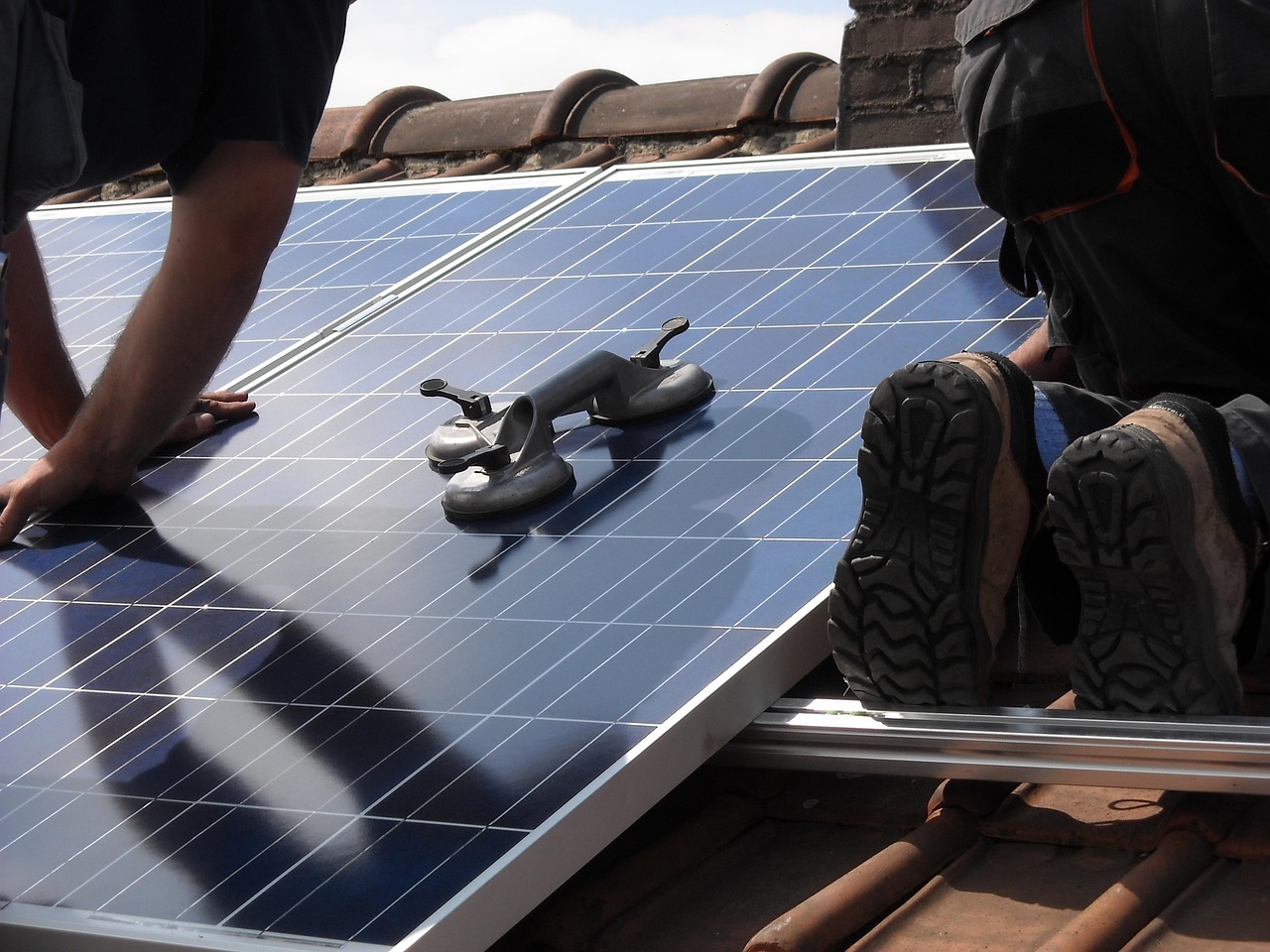
Then review the installation details. Roof penetrations, waterproofing, wind loading, cable routing, DC isolators, earthing, lightning protection, and AC distribution-board integration all affect safety and reliability. In coastal or industrial areas, corrosion resistance and connector quality are especially important. A branded panel cannot compensate for loose connectors, poor cable management, or weak mounting.
Finally, check after-sales support. Tata Power has publicly highlighted a large rooftop footprint and a partner/service network, but the actual service experience still depends on the local vendor or channel partner. Ask who will visit the site if the inverter trips, generation drops, or the DISCOM inspection requires changes. A clear response-time commitment is more useful than a general brand statement.
When Tata panels may be a strong fit
Tata panels may suit buyers who value domestic manufacturing, documented module supply, policy compliance, and brand-backed rooftop execution. They may also appeal to homeowners who prefer a larger organized provider over a small local-only EPC company. For commercial and institutional rooftops, higher-wattage bifacial modules can help reduce panel count and simplify some layouts, provided the roof structure and mounting design support the module size.
There are also situations where buyers should compare more widely. If the roof is small, shaded, or split across multiple orientations, the inverter architecture and design quality may matter more than the module brand. If the buyer is outside India, Tata panel availability, certifications, warranty service, and importer support should be verified locally. If the quote is materially higher than alternatives, the buyer should identify what extra value is included, such as better monitoring, faster service, longer inverter warranty, stronger mounting, financing support, or easier subsidy handling.
The balanced conclusion is that Tata is a serious name in India’s solar market, but “Tata solar panel” should be treated as the start of due diligence rather than the end of it. The exact model, compliance status, warranty certificate, installation quality, and lifecycle service plan determine whether the system is a good buy.
Frequently asked questions
Is Tata solar panel good for home rooftop solar?
It can be a good option when the quoted model, installer, inverter, warranty, and subsidy compliance are suitable for the home. The brand has domestic manufacturing and a large rooftop presence, but homeowners should still compare full system proposals and not rely only on the panel name.
What is the price of Tata solar panels?
There is no single reliable all-India price because rooftop cost depends on system size, state, subsidy route, inverter type, structure, roof complexity, net-metering charges, and vendor margin. Ask for the gross price, subsidy estimate, net payable amount, installed cost per watt, and a complete bill of materials.
Are Tata solar panels eligible for subsidy?
Eligibility depends on the specific module, vendor, system design, DCR and ALMM status, and the rules of the relevant government portal or DISCOM at the time of installation. Buyers should request written confirmation from the installer before placing an order.
What warranty should I expect?
Expect separate warranty terms for modules, inverter, installation workmanship, and sometimes the full system. Public Tata materials mention different warranty categories, including 25-year module warranty language for rooftop systems and 12-year product plus 30-year linear power-output warranty for some TP Solar module materials. Always rely on the warranty certificate attached to your actual quote.
Should I choose Tata over another Indian solar panel brand?
Compare the exact model and installed system, not only the brand. Tata may be attractive for buyers prioritizing a recognized domestic supplier and organized rooftop network, but alternatives may also be competitive depending on price, efficiency, warranty, installer quality, and local service strength.