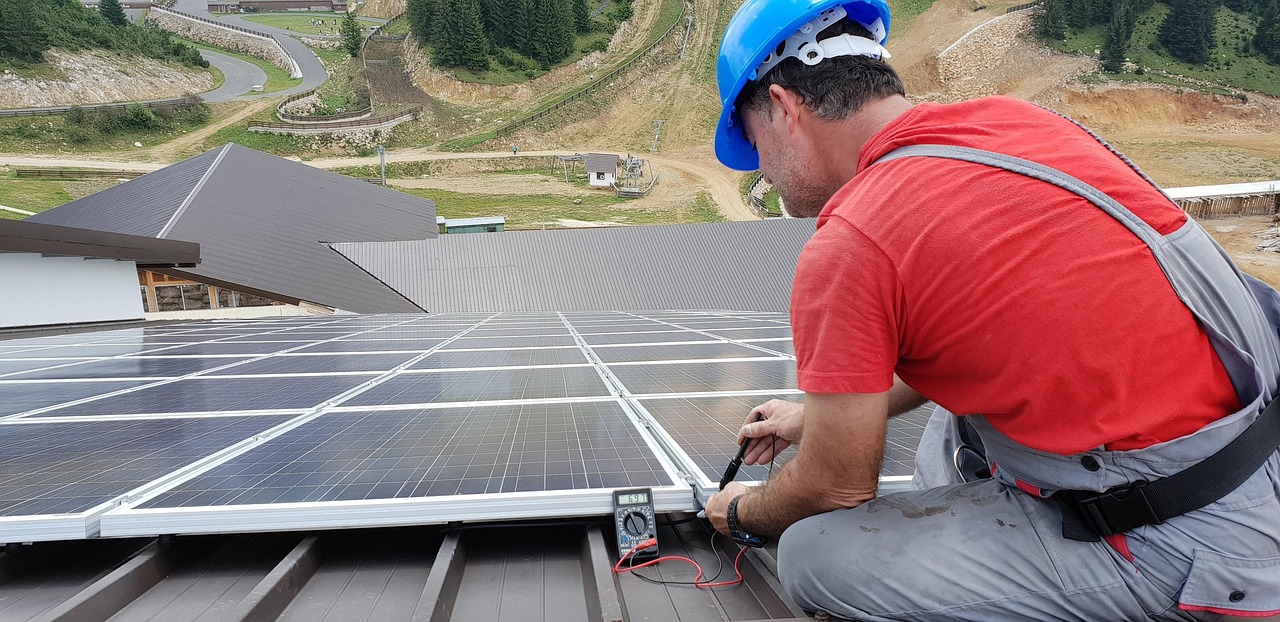

Why the installer decision matters more now
The right solar installation company should be able to prove that it can design, permit, install and support a system that fits the site, the utility rules and the buyer’s financial goals. In the United States, that decision became more important after federal incentive changes reshaped project economics. IRS guidance following Public Law 119-21 states that the residential clean energy credit under Section 25D is not available for expenditures made after December 31, 2025, and that paying before the deadline was not enough if the original installation was completed after that date. (content.govdelivery.com)
Solar can still be a practical investment in the right setting, but the proposal now needs closer review. Buyers should expect clear production estimates, realistic timelines, transparent financing terms and a direct explanation of roof suitability, equipment choices, permitting, interconnection, warranties and available local incentives. A strong installer should explain uncertainty instead of using it as a sales tactic.
For more background on solar market developments, visit our solar section.
What changed in the solar buying environment
Solar remains a major source of new U.S. power capacity, but the market is not moving evenly across all segments. SEIA and Wood Mackenzie reported that the U.S. solar industry installed 43.1 GWdc in 2025, down 14% from 2024, while solar still accounted for 54% of new electricity-generating capacity added to the U.S. grid that year. The same report said residential solar installed 4,647 MWdc in 2025, down 2% from 2024, and projected a steeper residential contraction in 2026 after the Section 25D customer-ownership credit expired. (seia.org)
For homeowners and small businesses, the practical effect is that the installer’s assumptions matter more. A proposal built around an outdated federal credit, an optimistic interconnection date or a vague utility bill estimate can make a system look better than it is. A credible company should separate confirmed incentives from pending programs, state tax benefits, utility rebates, renewable energy certificates and financing promotions.
Berkeley Lab’s distributed solar dataset also shows why local comparison matters. Its latest update includes roughly 5.3 million individual distributed solar and solar-plus-storage systems installed through the end of 2025, with details such as installed prices, permitting timelines, financing and installer-level data. That range of local conditions supports a practical rule: national averages can help frame expectations, but the final decision should be based on site-specific quotes. (emp.lbl.gov)
Start with proof of qualifications
Licensing, insurance and certification
Before comparing system sizes or batteries, verify that the company is allowed to perform the work in the project location. The U.S. Department of Energy advises buyers to confirm that an installer is licensed, bonded and insured, and to look for recognized credentials such as NABCEP certification. DOE also recommends asking whether subcontractors will be used and checking their credentials as well. (energy.gov)
Certification is not a substitute for a local electrical license, and a license is not a substitute for good workmanship. The stronger signal is alignment across the project team: licensed electrical work, experienced design staff, trained installers, documented safety procedures and a named project manager who remains accountable from contract signing through inspection.
Relevant experience
Experience should match the project type. A company that focuses on simple residential roofs may not be the right fit for a commercial rooftop that requires structural review, demand charge analysis and a more complex interconnection process. A rural ground-mount project may involve trenching, zoning review and different racking expertise. Ask how many similar systems the company has completed in the same utility territory, not only how many systems it has sold in total.
Clear responsibility for subcontractors
Subcontracting is common and is not automatically a red flag. The risk appears when the sales company, engineering firm, roofing contractor, electrical crew and service provider are poorly coordinated. The contract should state who performs roof work, electrical work, monitoring setup, inspection corrections and warranty labor. If the company uses subcontractors, the buyer should know who supervises them and who remains responsible if something fails inspection.
Compare proposals by design, not only by price
DOE recommends converting quotes to cost per watt by dividing the system price by its capacity in watts. That is a useful starting point, but it should not be the only metric. A lower cost per watt can hide lower production, weaker warranties, unrealistic shading assumptions, high financing fees or limited post-installation service. (energy.gov)
| Proposal item | What to check | Why it matters |
|---|---|---|
| System size | DC capacity, inverter capacity and expected annual kWh | Two systems with the same panel wattage can produce different energy depending on shade, orientation and inverter design. |
| Price | Cash price, financed price and cost per watt | Financing fees can make a low monthly payment more expensive than it appears. |
| Production estimate | Software model, shade data and degradation assumptions | The savings case depends on energy production, not just installed capacity. |
| Equipment | Panel, inverter, racking and battery models | Brand names matter less than compatibility, warranty coverage and availability of replacement parts. |
| Utility assumptions | Retail rate, export credit and net billing rules | Solar economics can change sharply when exported energy is credited below the retail rate. |
| Scope exclusions | Roof repair, main panel upgrade, trenching or structural work | Excluded work can become a major change order after signing. |
A good solar installation company should be able to explain why the proposed system is sized the way it is. Oversizing may be reasonable for a home that will add an electric vehicle or heat pump. It may be wasteful where export compensation is low. Undersizing may preserve roof space or reduce upfront cost, but it can also leave savings on the table. The right answer depends on load profile, roof geometry, utility rules and budget.
Check the project path from roof survey to permission to operate
Many buyers focus on installation day, but the project path is longer. A typical grid-tied project can include site qualification, contract review, engineering, permit submission, utility interconnection application, equipment procurement, installation, inspection, meter approval and permission to operate. Delays often happen outside the one or two days when crews are physically on the roof.
- Site review: The installer should inspect roof age, roof material, attic access, electrical panel capacity, shading and available mounting area.
- Engineering: The company should prepare a code-compliant design and identify whether structural upgrades or a main panel upgrade may be needed.
- Permitting: Local authorities may require plan review before work begins.
- Installation: Crews install racking, modules, wiring, inverter equipment and any battery system included in the contract.
- Inspection: The local authority and sometimes the utility verify that the system meets requirements.
- Permission to operate: The utility authorizes the system to operate in parallel with the grid.
Permitting can be a measurable source of schedule risk. NREL reported that, in 2023 data, the median duration from permit submission to final passed inspection for PV-only projects was 33 days for SolarAPP+ permits compared with 47.5 days for traditional permits, a difference of about 14.5 business days. That does not guarantee a fast project in every jurisdiction, but it shows why local permitting experience is valuable. (nrel.gov)
Ask the installer for a realistic schedule with dependencies. A responsible company will distinguish between dates it controls and dates that depend on the utility, city or county. Be cautious if a proposal promises a specific completion date without explaining permitting and interconnection variables.
Evaluate warranties and long-term service
A solar project is a long-lived asset, so the company’s service process matters as much as its sales process. Product warranties usually come from equipment manufacturers. Workmanship warranties come from the installer. Performance warranties may refer to panel degradation, not a guarantee of total bill savings. Monitoring platforms show production, but someone still needs to diagnose and fix issues if equipment goes offline. See also: clean energy.
Ask who handles warranty claims if a panel, inverter, optimizer, battery or communication gateway fails. Also ask how roof leaks are handled, whether roof penetrations are covered, and what happens if roofing work is needed after the solar system is installed. DOE specifically recommends discussing roof condition before installation and asking who is responsible if roof damage or leaks develop. (energy.gov)
Company durability is harder to verify than license status, but buyers can look for signs of stability: a defined service area, documented installation history, clear warranty language, local references, active insurance and a process for service tickets after installation. A company that offers a very aggressive price but cannot explain future service may be shifting risk to the customer.
Ask better financing and incentive questions
After the federal residential credit change, the savings case for owner-purchased residential systems depends more heavily on cash price, utility rates, local incentives and financing structure. Commercial and third-party-owned projects may involve different tax rules, but those claims should be reviewed carefully with tax and legal professionals. The installer should not present a tax outcome as guaranteed unless it is directly supported by current rules and the buyer’s circumstances.
For financed systems, compare the cash price with the financed price. Some loans lower the interest rate by adding dealer fees to the project cost. That can make monthly payments look attractive while increasing the total installed price. For leases and power purchase agreements, review escalators, buyout options, transfer terms, maintenance obligations and what happens when selling the property.
The most useful financing conversation is not simply, how much will I save? It is: what assumptions create the savings estimate? Those assumptions include current usage, future electricity rates, export compensation, equipment degradation, battery cycling, demand charges for some commercial customers, insurance and any expected panel or roof work.
Red flags before signing a solar contract
- The company claims a federal program provides free solar panels without explaining ownership, financing or eligibility.
- The proposal uses the expired residential federal tax credit for a new 2026 owner-purchased residential system without qualification.
- The salesperson cannot explain the difference between system capacity in kW and estimated annual production in kWh.
- The contract does not identify equipment models, workmanship warranty length or who handles service.
- The company refuses to provide a cash price alongside loan or lease terms.
- The design ignores roof age, shading, electrical panel capacity or utility export rules.
- The installer promises a fixed permission-to-operate date even though the utility controls final approval.
- High-pressure discounts expire the same day and discourage comparing quotes.
None of these issues automatically proves a company is unqualified, but each one deserves a pause. The buyer should be able to understand the project before signing. A transparent installer will welcome detailed questions because good documentation reduces disputes later.
A practical checklist for choosing a solar installation company
- Get at least three detailed quotes for the same general project scope.
- Verify local licensing, insurance and any relevant professional certification.
- Ask who performs installation and who remains accountable for subcontracted work.
- Compare cash price, financed price and cost per watt.
- Review estimated annual production, not only system size.
- Confirm utility tariff assumptions and export credit rules.
- Ask whether roof repair, main panel upgrades or structural work are included.
- Review workmanship, equipment and roof-penetration warranty terms.
- Request a realistic timeline that separates installer tasks from utility and permitting steps.
- Keep copies of the contract, design, permit, inspection record, interconnection approval and monitoring login.
The best choice is usually not the cheapest company or the largest company. It is the company that gives a complete, verifiable and site-specific proposal; explains tradeoffs clearly; and remains accountable after the system is turned on.
Frequently asked questions
How many solar installation quotes should I compare?
Three quotes is a practical minimum because it reveals price range, design differences and sales assumptions. If the quotes vary widely, ask each company to explain the system size, equipment, production model and financing structure before choosing.
Is the cheapest solar installation company a bad choice?
Not necessarily. A lower price may reflect efficient operations, simpler equipment or a competitive local market. It becomes risky when the quote excludes needed work, uses unrealistic production estimates, offers weak workmanship coverage or does not include a clear service process.
Should I require NABCEP certification?
NABCEP certification is a positive quality signal, especially for design and installation leadership, but it should be considered alongside local licensing, insurance, project experience and references. The key question is whether qualified people are responsible for the actual work and review.
How long does a solar installation project take?
The physical installation may take only a few days for a simple residential roof, but the full timeline can be much longer because design, permitting, inspection and utility approval are separate steps. Local permitting systems and utility interconnection queues can materially affect the schedule.
Can a homeowner still claim the federal residential solar tax credit for a new 2026 installation?
Based on IRS guidance following Public Law 119-21, the Section 25D residential clean energy credit is not available for expenditures made after December 31, 2025, and an installation completed after that date is treated as made after the deadline. Buyers should confirm current tax treatment with a qualified tax professional before relying on any incentive claim. (content.govdelivery.com)