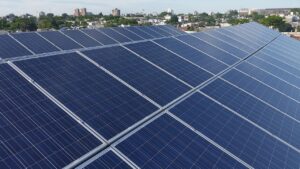

What changed for a house solar system in 2026
A house solar system can still reduce grid electricity purchases, but the financial calculation changed after the U.S. federal Residential Clean Energy Credit deadline. As of September 2026, the Section 25D homeowner credit is not available for qualified residential clean energy expenditures made after December 31, 2025, and IRS guidance treats the expenditure date as the date the original installation is completed. Homeowners should no longer build a 30% federal homeowner tax credit into payback estimates. Planning is now more dependent on local conditions: roof quality, retail electric rates, net billing rules, battery value, financing cost and installer pricing. For more solar market context, see our solar coverage.
The change does not make home solar irrelevant. It makes the design and contract details more important. A properly sized system for a household with high daytime electricity use, high retail rates, time-of-use pricing or outage concerns may still be financially and operationally attractive. A system sold with vague production claims, expensive financing fees or an oversized battery may disappoint even if the equipment itself is reliable.
How to size a house solar system
Most homeowners start by asking how many panels they need. Panel count, however, is not the best first number. A better starting point is annual electricity consumption in kilowatt-hours, monthly usage patterns, available roof area and the utility rule for exported solar energy.
The U.S. Energy Information Administration reported that the average U.S. residential electric bill was about $144 per month in 2024, with average monthly grid-delivered consumption of 865 kWh and an average residential electricity price of 16.5 cents per kWh. Those national figures are useful only as a reference point. A Louisiana home with heavy air-conditioning load and low rates can have a very different solar outcome from a Hawaii or Connecticut home with lower usage but much higher electricity prices.
Berkeley Lab’s 2025 distributed solar data update found that the median U.S. residential PV system installed in 2024 was 7.2 kW, with most systems ranging from roughly 4 kW to 11 kW. That range is helpful for early planning, but it should not be treated as a sizing rule. A smaller, unshaded roof in a high-rate market can produce stronger savings than a larger system facing shade, weak export compensation or costly financing.
A practical sizing process should follow this order:
- Collect at least 12 months of electricity bills and record total kWh, not just dollars.
- Check whether the home is on time-of-use rates, demand charges, minimum bills or seasonal pricing.
- Estimate future load changes, such as an electric vehicle, heat pump, induction cooking or home addition.
- Use a recognized production modeling tool such as PVWatts or installer software to estimate annual output from the actual roof planes.
- Compare several system sizes instead of accepting a single proposal designed only to offset 100% of annual usage.
Offsetting 100% of annual kWh is not always the economic target. In areas with strong one-for-one net metering, full offset can make sense. In markets where exported energy is credited below the retail price, a smaller system that serves more on-site load may deliver a better return per watt.
What a complete house solar system includes
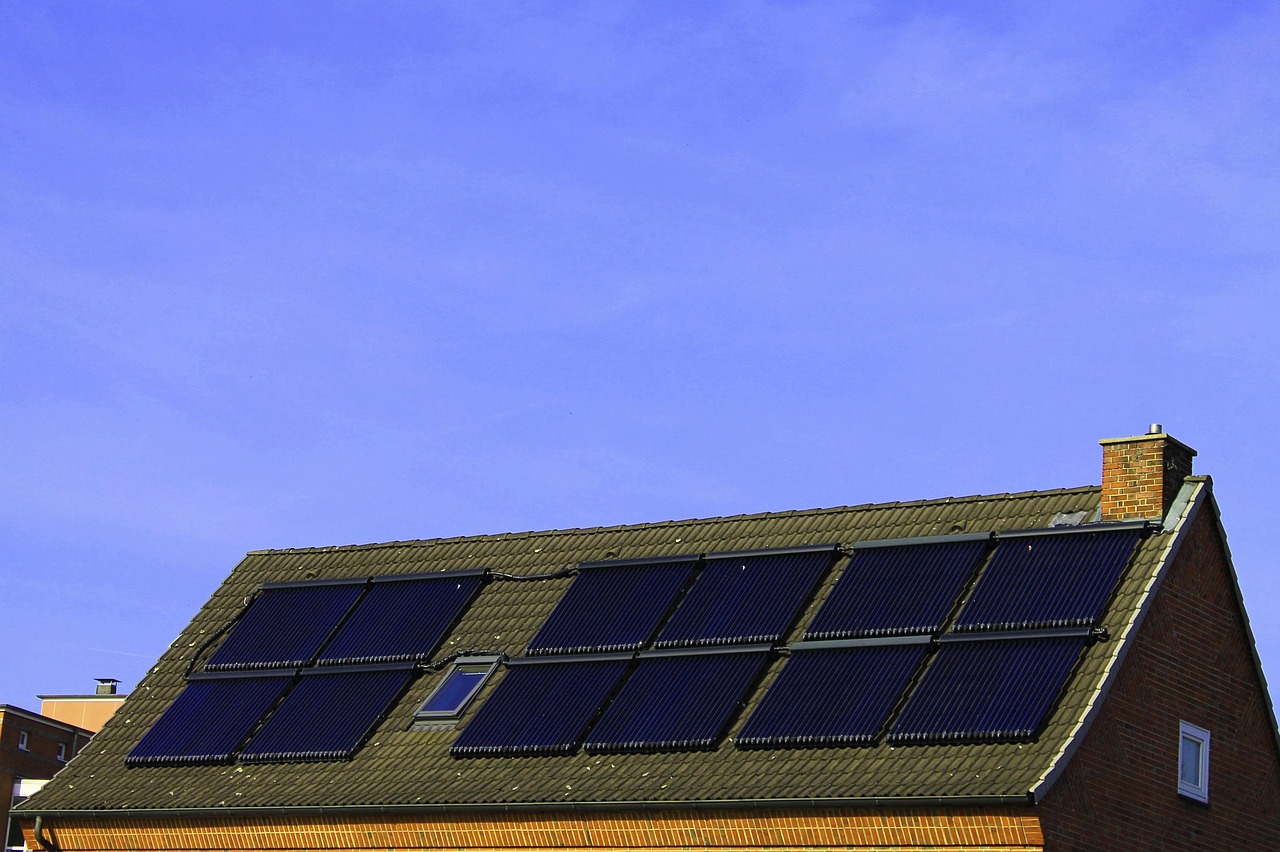
A residential solar proposal should describe more than the modules. A complete grid-connected house solar system typically includes PV modules, racking, roof attachments, one or more inverters, module-level power electronics where needed, rapid shutdown equipment, wiring, monitoring, permitting, inspection and utility interconnection. If storage is included, the scope should also specify battery capacity, power rating, backed-up circuits, transfer equipment and operating modes.
Berkeley Lab’s 2024 installation data showed that residential modules had a median efficiency of roughly 21%, and module-level power electronics such as microinverters or DC optimizers were used in a large majority of residential systems. That does not mean every home needs the same inverter architecture. Microinverters and optimizers can help manage mixed orientations and partial shade, while a string inverter can be cost-effective on a simple, unshaded roof. The better question is not which technology is most common, but which design fits the roof and service requirements.
Homeowners should also separate the solar production system from the backup system. A grid-tied solar array without batteries usually shuts down during an outage for safety unless it has specific equipment designed for limited daytime backup. A battery system can provide backup power, but only for the circuits, loads and duration it was designed to support.
| Planning item | What to verify | Why it matters |
|---|---|---|
| Roof condition | Age, material, remaining service life and structural capacity | Removing and reinstalling solar for a roof replacement can add cost later |
| Electrical panel | Main panel rating, available breaker space and required upgrades | Panel work can affect price, timeline and permit approval |
| Array layout | Orientation, tilt, shade and fire setbacks | Small shade losses can have large production impacts depending on design |
| Utility approval | Interconnection process, meter type and export compensation | Utility rules can change project economics more than panel efficiency |
| Monitoring | Panel-level or system-level monitoring and warranty responsibilities | Early fault detection protects long-term output |
Cost drivers and financing after the federal credit deadline
Because the homeowner federal credit has ended for post-2025 expenditures, gross installed price and financing structure now need closer review. Berkeley Lab’s data for 2024 showed a wide price spread in the residential market: median loan-financed systems were materially higher priced than cash-purchase systems, partly because some loan fees are rolled into the upfront contract price. That pattern matters in 2026 because a low monthly payment can hide a higher total project cost.
When comparing quotes, homeowners should request both the gross cash price and any financed price. They should also ask whether dealer fees, roof work, panel upgrades, trenching, battery equipment, extended warranties or monitoring subscriptions are included. A quote that looks cheaper on dollars per watt may exclude work that another installer has included.
Use a simple comparison framework:
- Cash price per watt: Divide the pre-incentive cash price by the DC system size in watts.
- Annual production estimate: Compare first-year kWh estimates and degradation assumptions.
- Bill savings method: Check whether savings are based on today’s rates, escalated rates or optimistic export credits.
- Financing cost: Compare the total of payments, not only the monthly payment.
- Warranty responsibility: Confirm who covers workmanship, roof penetrations, inverter replacement and monitoring support.
State, utility and local incentives may still exist, but they vary by location and can change quickly. The safer approach is to verify incentives directly with the state energy office, utility program administrator or a tax professional before signing a contract. If a salesperson presents an incentive as guaranteed, ask for the eligibility rule in writing and confirm whether it applies to owned systems, leased systems or both. See also: clean energy.
Battery storage changes the value calculation
Battery attachment is one of the clearest shifts in home solar. Berkeley Lab reported that the median residential battery storage system installed with PV in 2024 was 13.5 kWh, with most systems ranging from 10 kWh to 20 kWh. SEIA and Wood Mackenzie later reported that a record 45% of residential solar installations in the first quarter of 2026 were paired with battery energy storage.
The reason is not only backup power. Batteries can store midday solar production and discharge it during evening peak-rate hours in markets with time-of-use pricing. They can also reduce exports when the utility pays less for exported energy than the homeowner pays for imported energy. In those cases, a battery can improve self-consumption even if the homeowner rarely experiences outages.
Still, batteries should be sized by purpose. A small battery may cover internet, lighting, a refrigerator and selected outlets during short outages. Whole-home backup, central air conditioning or long-duration storm resilience requires more storage, more inverter capacity and careful load management. The cost difference can be substantial.
Ask installers for two designs if storage is being considered: solar-only and solar-plus-storage. The comparison should show system cost, expected self-consumption, outage capability, payback effect and the loads included in backup. If the battery reduces annual savings because the utility still offers generous net metering, its main value may be resilience rather than bill reduction. That is a valid reason to buy storage, but it should be described clearly in the proposal.
A homeowner checklist before requesting quotes
The strongest solar decisions are often made before the first sales appointment. Homeowners who understand their roof, utility tariff and load profile can identify weak proposals more quickly.
- Download 12 to 24 months of utility usage data if available.
- Photograph the main electrical panel, meter, roof planes and attic framing access points.
- Check whether major roof work is likely within the next 10 years.
- List planned electrification upgrades such as EV charging, heat pumps or a larger water heater.
- Identify critical backup loads if considering a battery.
- Request at least three quotes using comparable system sizes and battery assumptions.
- Ask for the expected first-year production in kWh and the software or method used.
- Confirm the project timeline for permit approval, installation, inspection and permission to operate.
- Review cancellation terms, workmanship warranties and production guarantees carefully.
Do not rush a decision because a national tax credit deadline has passed. In 2025, many installers prioritized projects before the Section 25D deadline, and SEIA/Wood Mackenzie reported a late-year installation rush even though residential capacity still fell 2% for the year. In 2026, the better strategy is disciplined comparison. Pricing, equipment availability and local incentives may shift, so each proposal should be judged on transparent assumptions rather than urgency.
Frequently asked questions
Is a house solar system still worth it after the federal residential tax credit ended?
It can be, but the answer is more location-specific than before. Homes with high retail electricity rates, good sun exposure, strong on-site daytime usage or time-of-use rates may still see attractive savings. Homes with low rates, poor roof conditions, heavy shade or weak export compensation need more cautious modeling.
What size solar system does an average house need?
There is no single average that fits all homes. Berkeley Lab found a median U.S. residential system size of 7.2 kW for 2024 installations, with most systems roughly between 4 kW and 11 kW. Your actual size should be based on annual kWh use, roof production potential, utility rules and future electric loads.
Should I add a battery to my home solar system?
Add a battery if you value backup power, face time-of-use rates, or receive low compensation for exported solar energy. If your utility offers favorable net metering and outages are rare, a battery may provide resilience but not necessarily the fastest financial payback.
Can I claim the old 30% residential solar credit for an installation completed in 2026?
Based on IRS guidance following Public Law 119-21, the Section 25D Residential Clean Energy Credit is not allowed for expenditures made after December 31, 2025, and the expenditure is generally treated as made when original installation is completed. Homeowners should consult a qualified tax professional for personal tax questions.
What is the most important number in a solar quote?
The most important number is not panel wattage alone. Compare the gross cash price, first-year production estimate, financing cost, utility bill savings method and warranty coverage together. A lower monthly payment can still mean a higher total cost if financing fees are embedded in the contract.