
What roof top solar means in 2026
Roof top solar, more commonly written as rooftop solar, refers to a photovoltaic system installed on a home, commercial building, warehouse, school, or other roof surface to generate electricity near the point of use. In 2026, the core proposition remains straightforward: a suitable roof can turn unused space into a distributed power asset. The decision, however, is more site-specific than it used to be. Buyers need to look beyond panel efficiency and the headline system price. The practical questions are whether the roof is ready, how much electricity the building can consume on site, how exported power is credited, whether storage adds value, and which incentives still apply. In the United States, the former 30% federal Residential Clean Energy Credit for new residential systems completed after December 31, 2025 is no longer available under IRS guidance following Public Law 119-21, so local economics carry more weight than before.
This guide covers the checks that should happen before a rooftop solar project moves from initial interest to a signed contract. For more clean energy market updates, see our solar section.
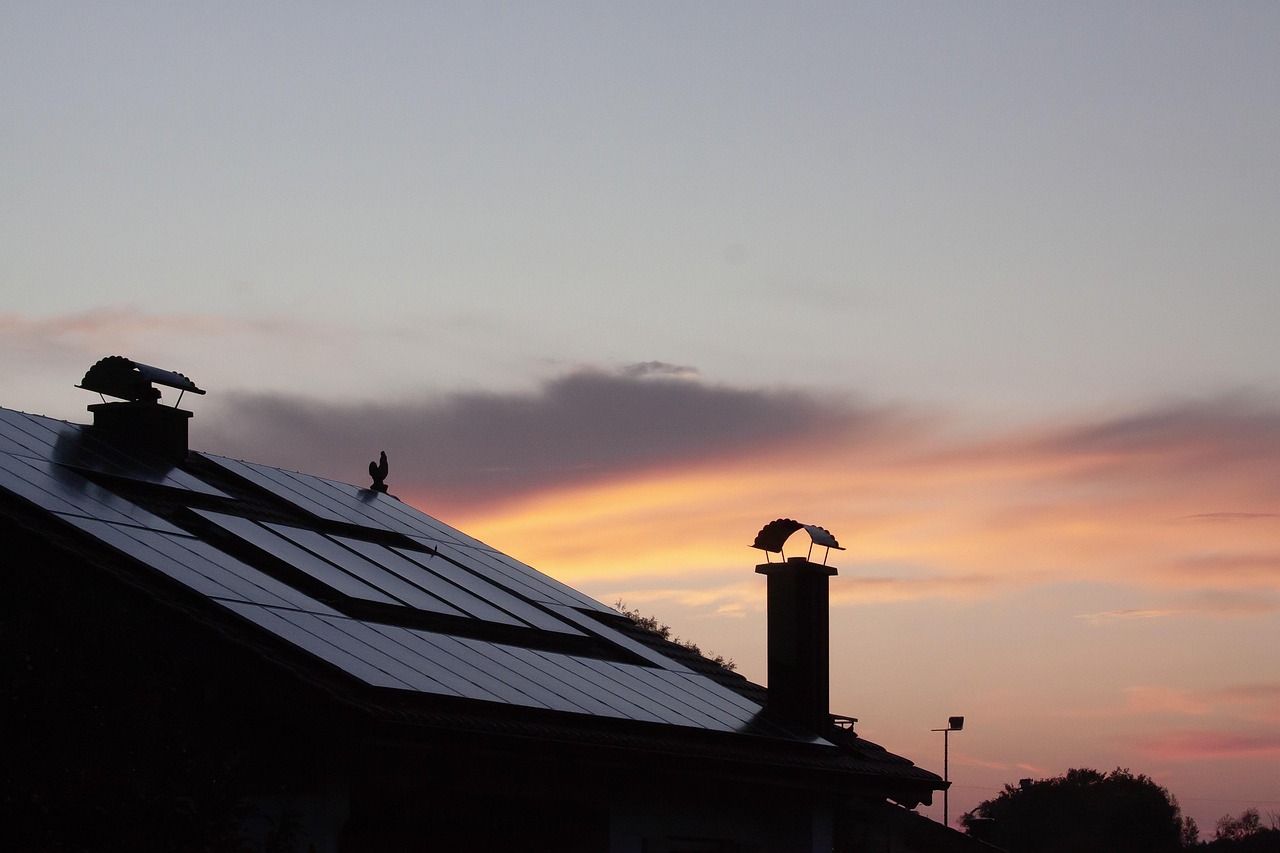
The market signal behind rooftop solar demand
Rooftop solar is part of a broader shift toward distributed energy. The International Energy Agency has projected strong renewable power capacity growth from 2025 to 2030, with solar PV accounting for the largest share of expected additions. Its Renewables 2025 analysis says distributed solar PV, including residential, commercial, industrial, and off-grid systems, represents a significant part of overall PV expansion. That matters because rooftop projects are no longer a niche environmental purchase. They are one way grids, buildings, and power consumers respond to electricity prices, reliability concerns, and decarbonization targets.
IEA PVPS reported that 2024 was another record year for global solar PV, with roughly 553 GW to 601 GW newly installed worldwide. Utility-scale systems remained the largest segment, but distributed and prosumer systems continued to expand as households and businesses used solar to offset retail electricity consumption. The United States remains a major market, while China, the European Union, and India are also central to global growth. These trends do not make every roof a good investment, but they explain why building-level generation has become a mainstream planning topic.
In the U.S., Lawrence Berkeley National Laboratory’s distributed solar and storage data set includes about 5.3 million individual systems installed through the end of 2025. The U.S. Department of Energy has also cited NREL analysis estimating more than 8 billion square meters of technically suitable U.S. rooftop area, representing more than 1 terawatt of potential rooftop PV capacity. Technical potential is not the same as economic potential, but it shows why roofs remain an important energy resource.
What changed for incentives and payback
For U.S. homeowners, the most important recent policy change is the expiration of the federal residential clean energy credit for new systems completed after December 31, 2025. IRS guidance explains that, for Section 25D, an expenditure is generally treated as made when the original installation is completed. In practical terms, paying a deposit before the deadline was not enough if the system was completed after December 31, 2025. This distinction matters because many older solar articles still describe a 30% credit through 2032, which is no longer the current rule for residential systems.
That does not mean rooftop solar stopped making sense. Payback now depends more heavily on four local factors: the retail electricity rate avoided through self-consumption, the export credit for excess generation, state or utility incentives, and financing cost. A system that offsets expensive daytime electricity can still perform well. A system that exports much of its output into a low compensation tariff may need storage, load shifting, or a smaller design to make financial sense.
Commercial and third-party-owned arrangements may involve different tax rules, ownership structures, or incentives. Because tax treatment can change and depends on the taxpayer, building owners should verify current rules with a qualified tax professional before signing a contract. The practical lesson is simple: do not evaluate a 2026 quote using a 2024 incentive assumption.
Costs are lower than long-term historical levels, but quotes vary widely
Solar hardware has become much cheaper over the long term, but residential rooftop prices still vary widely because a home system is not just panels. The Department of Energy’s 2024Q1 cost benchmark modeled an 8 kW residential rooftop PV system at about $2.74 per watt DC on a minimum sustainable price basis and about $3.15 per watt DC on a modeled market price basis, before system-level subsidies. Berkeley Lab’s 2025 distributed solar data update, looking at host-owned stand-alone PV systems installed in 2024, reported a median residential installed price of about $4.0 per watt DC, with a broad 20th to 80th percentile range around $3.0 to $5.2 per watt DC.
Those figures are not contradictory. DOE and NREL benchmarks are modeled cost and price estimates for representative systems, while Berkeley Lab reports observed installed prices from actual project data. The comparison is useful because it shows why homeowners should not rely on one national average. Local labor rates, permitting, roof complexity, electrical upgrades, financing fees, installer business models, and customer acquisition costs can all move a quote up or down.
Berkeley Lab also notes that installed prices have fallen by roughly 70% to 80% in real terms over the past two decades, but declines have been more modest in recent years. Soft costs and other balance-of-system costs now make up a large share of residential installed prices. As a result, the best savings opportunity may come from comparing quotes, simplifying system design, improving permitting, and reviewing financing terms rather than waiting for panel prices alone to fall.
| Source or data set | Relevant period | Key point for rooftop solar | Why it matters |
|---|---|---|---|
| IEA Renewables 2025 | 2025 to 2030 outlook | Solar PV is expected to drive most renewable capacity growth, with distributed PV playing a major role. | Rooftop solar is part of a broad distributed energy trend, not a fringe application. |
| IEA PVPS Trends 2025 | 2024 market data | Global PV additions reached a record level, estimated around 553 GW to 601 GW. | Large-scale deployment supports supply chains, technology learning, and market maturity. |
| Berkeley Lab distributed solar data | Systems through 2025 | The data set covers roughly 5.3 million U.S. distributed solar and storage systems. | Observed project data shows real-world variation in system size, price, and adoption. |
| DOE and NREL cost benchmarks | 2024Q1 benchmark | An 8 kW residential PV-only benchmark is modeled near $2.74 to $3.15 per watt DC, depending on cost metric. | Benchmarks help compare quotes, but they are not a substitute for site-specific pricing. |
| IRS and ENERGY STAR guidance | Rules after Public Law 119-21 | The residential clean energy credit ended for qualifying expenditures after December 31, 2025. | Payback calculations should not assume the former 30% federal residential credit for new 2026 completions. |
How to evaluate roof suitability before asking for bids
A good rooftop solar project starts with the roof, not the inverter. If the roof has only a few years of life remaining, installing panels now can create future removal and reinstallation costs. Asphalt shingles, metal roofing, tile, membrane roofs, and flat commercial roofs each need different mounting approaches. The installer should explain how attachments are flashed, how waterproofing is protected, and whether the roof warranty is affected.
Orientation and shading are just as important. South-facing roofs often receive strong annual production in the Northern Hemisphere, but east- and west-facing arrays can also be useful when electricity prices are high in the morning or late afternoon. A site with heavy tree shade, nearby taller buildings, dormers, vents, or chimneys may still work, but the design should be based on a real shade analysis rather than a simple satellite estimate.
Structural and electrical checks should come before final pricing. The roof must support the added load and meet local wind, snow, and fire access requirements. The electrical panel must have enough capacity or a compliant interconnection approach. If a home is likely to add an EV charger, heat pump, induction cooking, or electric water heating, the solar design should reflect expected future load rather than only last year’s utility bills.
- Check roof age, material, warranty, and remaining service life.
- Ask for a shade analysis and annual production estimate, not just system size.
- Confirm whether structural review, panel upgrades, or service changes are needed.
- Review local fire setbacks, access pathways, and utility interconnection rules.
- Design around future electricity use if major electrification upgrades are planned.
Battery storage and self-consumption are becoming more central
Batteries are not required for every rooftop solar project, but they are becoming more important in markets where exported solar receives less value than electricity consumed on site. A battery can shift midday solar generation into evening use, support backup loads during outages, and help avoid high time-of-use rates. The tradeoff is cost. DOE’s 2024Q1 benchmark for an 8 kW residential PV system paired with a 13.5 kWh battery shows a much higher modeled cost and levelized cost than PV alone, before incentives.
The decision should start with the use case. If the goal is the shortest financial payback in a market with full retail net metering, a battery may not be necessary. If the goal is backup power for refrigeration, communications, medical equipment, or home office continuity, the value is partly resilience rather than pure bill savings. If export compensation is low, storage may help increase self-consumption, but the battery should be sized to real daily load patterns.
Homeowners should also understand that not every battery backup system powers the whole house. Some systems support selected critical loads; others can support larger loads but require more equipment and careful design. Ask the installer which circuits will operate during an outage, how long the battery may last under different loads, and whether the system can recharge from solar when the grid is down. See also: clean energy.
Quote, ownership, and contract checks
Rooftop solar quotes should be compared on more than total price. A useful quote includes system size in kW DC, estimated first-year kWh production, module and inverter models, roof layout, battery capacity if included, cash price, financed price, escalators if any, warranty terms, monitoring access, and assumptions about electricity rates and export credits. If the proposal hides the cash price or folds dealer fees into a low monthly payment, comparison becomes difficult.
Ownership structure matters. A cash purchase usually gives the owner the simplest long-term control. A loan can preserve ownership but may include financing costs that raise the effective system price. A lease or power purchase agreement may reduce upfront cost, but the homeowner does not own the system and should read transfer, buyout, roof repair, insurance, and production guarantee terms carefully. For commercial roofs, tenant arrangements, roof leases, and power offtake agreements add another layer of review.
Production estimates should be conservative enough to be credible. A strong proposal will show assumed panel degradation, local weather data, shading losses, inverter clipping, and utility tariff assumptions. Be cautious if the savings estimate depends on aggressive electricity price inflation or ignores a pending rate-plan change. Rooftop solar is a long-lived asset, so small errors in assumptions can change the apparent payback period.
Common mistakes that reduce project value
The first mistake is oversizing a system without understanding export compensation. Bigger is not always better if excess generation receives a low credit. A right-sized array that serves on-site load can sometimes outperform a larger system with poor export economics.
The second mistake is ignoring roof work. If a roof replacement is likely soon, coordinate reroofing and solar installation together. Removing and reinstalling panels later can be expensive and inconvenient.
The third mistake is comparing only monthly payments. Financing can make solar accessible, but a low payment does not automatically mean a low system cost. Compare cash price, loan price, interest rate, fees, term length, and total repayment amount.
The fourth mistake is treating battery backup as unlimited power. A battery is a finite storage resource. It should be matched to critical loads, outage expectations, and the ability to recharge during extended interruptions.
The fifth mistake is relying on outdated incentive information. Articles, ads, and calculators published before the 2025 federal tax law change may still appear in search results. Always confirm current federal, state, utility, and local rules before calculating payback.
Frequently asked questions
Is roof top solar the same as rooftop solar?
Yes. Roof top solar and rooftop solar are commonly used to describe solar PV systems installed on building roofs. The one-word spelling is more common in technical and industry writing, but both terms usually refer to the same type of installation.
Is rooftop solar still worth it in the U.S. after the federal residential credit ended?
It can be, but the answer is more local than before. Systems are more attractive where retail electricity rates are high, roof conditions are strong, self-consumption is high, and state or utility programs remain supportive. A project that depended entirely on the former 30% federal residential credit needs a new financial review.
How large is a typical home rooftop solar system?
Berkeley Lab’s 2025 distributed solar data update reported a median U.S. residential system size of about 7.2 kW for systems installed in 2024, with many systems falling roughly between 4 kW and 11 kW. The right size for a specific home depends on electricity use, roof area, shading, utility rules, and budget.
Should I add a battery to rooftop solar?
Add a battery if it solves a clear problem: backup power, time-of-use shifting, or low export compensation. If your utility still gives strong export credits and outages are rare, PV alone may provide better financial performance. If resilience is a priority, storage can be valuable even when the simple payback is longer.
Can every roof support solar panels?
No. Some roofs are too shaded, too old, structurally unsuitable, poorly oriented, or crowded with equipment. Others can support solar but need electrical upgrades or a different layout. A site-specific inspection and design are essential before signing a contract.
The bottom line
Rooftop solar remains a practical way to produce clean electricity at the building level, but the 2026 decision is more nuanced than simply asking how many panels fit on the roof. The strongest projects align roof condition, load profile, utility tariff, equipment choice, ownership model, and realistic financial assumptions. Start with the building, verify current incentive rules, compare transparent quotes, and treat batteries as a specific solution rather than a default upgrade. That approach gives homeowners and building owners a clearer view of whether roof top solar is a sound investment for their site.