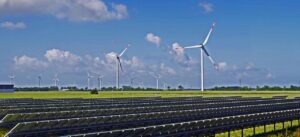

Permits Were Expedited for This California Clean Energy Project. Were Residents Sidelined?
California’s accelerated clean energy permitting has reshaped how renewable projects move from concept to construction. The state’s reforms have undeniably trimmed years off approval timelines, unlocking billions in private investment. Yet, while efficiency has soared, some residents argue that their voices were muted in the rush to meet net-zero targets. The reality is nuanced: expedited permitting has advanced climate goals and strengthened the position of renewable energy companies near me, but it has also tested the balance between speed, transparency, and public trust.
The Acceleration of Renewable Energy Permitting in California
California’s clean energy expansion depends heavily on how swiftly projects can secure permits without compromising environmental or community standards. The state’s recent reforms have centered on balancing urgency with accountability.
Overview of California’s Expedited Permit Process for Clean Energy Projects
California’s legislature has introduced multiple policies aimed at shortening approval times for renewable developments. Measures like Senate Bill 100 and Assembly Bill 205 empower agencies to streamline environmental reviews under the California Environmental Quality Act (CEQA). These frameworks encourage coordination among the California Energy Commission (CEC), Public Utilities Commission (CPUC), and local governments to accelerate project delivery while maintaining oversight.
The regulatory shift also promotes interagency collaboration through shared data systems and standardized templates, which reduce redundancy in environmental documentation. By aligning these processes, California aims to meet its 2045 carbon neutrality target with fewer procedural bottlenecks.
How Expedited Permitting Impacts Project Timelines and Investment Flows
A faster permitting process directly influences project economics. Developers now face fewer bureaucratic hurdles, enabling earlier commissioning dates that improve financial returns and attract institutional investors seeking predictable timelines. This clarity has drawn global capital toward utility-scale solar and wind ventures across Kern County and the Mojave region.
However, rapid approvals introduce trade-offs. Some analysts caution that compressed review periods may overlook cumulative ecological impacts or insufficiently address local concerns about land use. The challenge lies in maintaining rigorous evaluation standards while sustaining development momentum.
The Role of Renewable Energy Companies in Setting New Standards
As state agencies redefine permitting norms, renewable energy firms operating in California have adapted swiftly—often setting benchmarks that influence national practices.
Corporate Adaptation to California’s Regulatory Environment
Leading developers have restructured internal workflows to align with the state’s streamlined procedures. Many employ digital compliance platforms that track permit milestones, automate documentation submissions, and flag potential CEQA-related risks early in design stages. Collaboration with agencies such as the CEC allows companies to pilot expedited review models that could later become standard practice statewide.
These operational shifts are not purely bureaucratic; they reflect a strategic response to regulatory evolution where speed equates to market advantage.
Competitive Advantages from Early Compliance and Innovation
Firms adopting proactive environmental assessments often secure approvals more smoothly than competitors reacting late in the process. Integrating community engagement strategies—public consultations, visual impact simulations, or habitat restoration commitments—into early design phases helps mitigate opposition before formal hearings begin.
Transparent sustainability reporting further enhances corporate reputation among investors prioritizing ESG metrics. As a result, companies recognized as compliant innovators gain both regulatory goodwill and brand equity within California’s competitive renewable sector.
Community Perspectives on Expedited Renewable Development
While developers celebrate efficiency gains, communities living near proposed sites often express mixed feelings about being part of an accelerated system.
Resident Concerns Regarding Participation and Oversight
Many residents report feeling sidelined during shortened public comment periods. Traditional CEQA reviews once allowed months for feedback; expedited pathways may compress this into weeks. Questions persist over whether environmental impact assessments remain comprehensive under tighter deadlines or if cumulative effects—such as groundwater depletion or habitat fragmentation—are fully considered.
Balancing local land-use priorities with statewide decarbonization goals remains contentious, particularly in rural counties hosting large-scale solar arrays but seeing limited direct economic benefits.
Mechanisms for Strengthening Public Involvement in Fast-tracked Projects
To rebuild trust, policymakers are experimenting with digital participation tools that enable real-time feedback during review stages. Virtual town halls and online dashboards allow residents to monitor project progress without attending lengthy hearings physically. Advisory panels representing local stakeholders are also being formed to provide continuous input beyond initial consultations.
Incorporating social impact indicators—like job creation quality or cultural site preservation—into permit evaluation criteria helps ensure that community welfare remains integral even under accelerated schedules.
Policy Implications for Future Renewable Energy Expansion
The success of California’s permitting reforms will depend on measurable outcomes rather than legislative intent alone. Evaluating both efficiency gains and governance integrity is essential for long-term credibility.
Evaluating the Effectiveness of Current Permitting Reforms
State agencies now track metrics such as average permit duration, interagency coordination timeframes, and transparency scores based on public accessibility of documents. Early case studies suggest significant reductions in processing time without major legal challenges—a promising sign but not yet conclusive evidence of systemic improvement.
Identifying persistent bottlenecks—like inconsistent county-level interpretations of CEQA exemptions—will determine whether reforms can scale effectively across all jurisdictions.
Balancing Speed, Accountability, and Environmental Stewardship
Maintaining ecological integrity amid rapid development requires adaptive governance models capable of revising rules as new data emerge. Strategies include tiered review systems where low-risk projects receive automatic fast-tracking while high-impact proposals undergo enhanced scrutiny.
Future amendments may refine how stakeholder feedback influences final approvals, ensuring that acceleration does not erode accountability or scientific rigor within environmental assessments.
Technological and Institutional Innovations Supporting Permit Efficiency
Technology plays a crucial role in making expedited permitting both feasible and credible across complex regulatory landscapes.
Digital Transformation in Environmental Review Processes
AI-driven modeling tools now assist planners in identifying optimal sites based on terrain suitability, grid proximity, and biodiversity risk profiles. Cloud-based documentation platforms allow multiple agencies to review submissions simultaneously instead of sequentially—a key factor reducing administrative lag.
Predictive analytics further support decision-making by quantifying potential delays or litigation risks before they materialize, allowing regulators to intervene proactively rather than reactively.
Interagency Collaboration Models Enhancing Regulatory Performance
Shared databases reduce duplication between state departments handling similar datasets on land use or wildlife corridors. Standardized templates improve consistency across jurisdictions while training programs equip staff with updated technical skills relevant to emerging technologies like battery storage integration or offshore wind siting analysis.
These institutional innovations collectively underpin California’s ambition to sustain rapid yet responsible clean energy growth through smarter governance rather than looser oversight.
Economic and Strategic Outcomes of California’s Expedited Clean Energy Pathway
The economic ripple effects of streamlined permitting extend beyond project developers into broader market structures shaping regional competitiveness.
Market Dynamics Influenced by Streamlined Permitting
Predictable approval schedules encourage more developers to enter bidding rounds for utility contracts, intensifying competition that drives down power purchase agreement prices. Local supply chains—from steel fabricators to electrical contractors—benefit from steady project pipelines supported by reduced regulatory uncertainty.
Investors increasingly view California renewables as low-risk ventures aligned with policy certainty—a sharp contrast to states where permitting remains fragmented or politically volatile.
Long-term Implications for California’s Energy Transition
Expedited processes contribute directly to meeting net-zero emission milestones within planned timelines by accelerating deployment capacity each fiscal year. Moreover, California’s model is influencing national discussions around federal permitting reform under initiatives like the Infrastructure Investment and Jobs Act framework.
The phrase “renewable energy companies near me” has evolved from a search query into a marker of regional innovation ecosystems where policy alignment meets technological excellence—a reflection of how local action can set global precedent in clean energy governance.
FAQ
Q1: Why did California decide to expedite renewable energy permits?
A: To meet its 2045 carbon neutrality goal faster by reducing administrative delays that historically slowed project deployment under CEQA reviews.
Q2: Are expedited permits less environmentally rigorous?
A: Not necessarily; they rely on pre-vetted templates and data-sharing systems designed to maintain compliance standards while shortening review timeframes.
Q3: How do residents participate under fast-tracked reviews?
A: Through digital comment platforms and advisory panels established by state agencies to gather continuous input even after initial hearings close.
Q4: What benefits do developers gain from early compliance?
A: They enjoy smoother approvals, stronger investor confidence, and improved reputations through transparent sustainability practices aligned with state expectations.
Q5: Could other states replicate California’s model?
A: Yes; several are studying its interagency coordination framework as a template for balancing speed with accountability in clean energy expansion efforts.