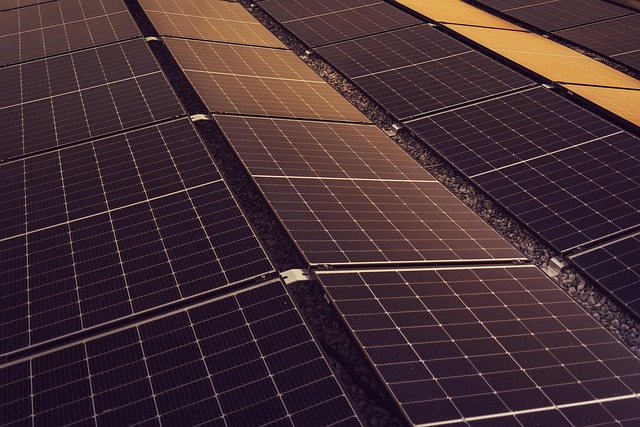

Ib Vogt Secures Financial Close for 99 MWp Hybrid Solar Project in Philippines
The financial close of ib vogt’s 99 MWp hybrid solar project in the Philippines marks a pivotal moment for green energy finance in Southeast Asia. This milestone demonstrates how structured financing, policy alignment, and technical innovation can converge to accelerate renewable deployment. By blending photovoltaic generation with storage systems, the project not only enhances grid reliability but also attracts diversified capital through sustainable financial instruments. It stands as a blueprint for how green energy finance can scale large-scale solar development while advancing national energy transition goals.
The Strategic Role of Green Energy Finance in Large-Scale Solar Development
Green energy finance has evolved from a niche funding mechanism into a central pillar of global renewable infrastructure investment. In large-scale solar projects, it determines not only capital flow but also long-term sustainability outcomes.
Definition and Mechanisms of Green Energy Finance Within Solar and Hybrid Energy Projects
Green energy finance refers to the allocation of capital toward projects that deliver measurable environmental benefits, particularly those reducing carbon emissions or enhancing resource efficiency. In solar and hybrid systems, this includes equity contributions from developers, concessional loans from development banks, and proceeds from green bonds earmarked for renewable assets. These mechanisms collectively lower the cost of capital while maintaining investor confidence in long-term returns.
The Role of Sustainable Financial Instruments Such as Green Bonds, Equity Financing, and Concessional Loans
Green bonds have become one of the most effective tools for mobilizing institutional investment into renewables. Their transparency and certification standards align with international frameworks such as the Climate Bonds Initiative and ICMA’s Green Bond Principles. Equity financing remains critical during early project stages when risk exposure is high, while concessional loans from multilateral lenders help bridge funding gaps by offering below-market interest rates.
How Financial Frameworks Align With Environmental, Social, and Governance (ESG) Objectives
Financial structuring today must integrate ESG objectives to attract both public and private investors. These frameworks embed sustainability metrics—like lifecycle emissions reduction or social inclusion—into loan covenants and reporting obligations. This alignment ensures that profitability does not compromise environmental integrity or community welfare.
Financial Structuring for Utility-Scale Solar Projects
Financing a utility-scale hybrid solar plant demands meticulous structuring to balance technical complexity with financial feasibility. The integration of battery storage introduces both new opportunities and unique risks that must be addressed through multi-layered funding models.
Capital Allocation Strategies for Hybrid Solar Systems Integrating Battery Storage
Capital allocation typically divides between photovoltaic generation assets and storage infrastructure. Investors often treat these as separate revenue streams under unified ownership structures to improve transparency in cash flow modeling. This approach allows lenders to evaluate performance guarantees tied specifically to battery life cycles or degradation rates.
Risk Mitigation Through Diversified Funding Sources and Long-Term Power Purchase Agreements (PPAs)
Long-term PPAs remain the cornerstone of bankability in large-scale renewables. They provide predictable revenue streams that de-risk investments against volatile market prices. Coupled with diversified funding sources—such as local banks partnering with export credit agencies—they create resilience against currency fluctuations or policy shifts.
The Importance of Project Bankability and Credit Enhancement Tools in Renewable Project Financing
Credit enhancement tools like partial risk guarantees or liquidity reserves are increasingly applied to renewable projects in emerging markets. These instruments strengthen bankability by mitigating counterparty risk associated with off-takers or grid operators.
IB Vogt’s 99 MWp Hybrid Solar Project: A Financial and Technical Overview
Ib vogt’s Philippine venture exemplifies how hybrid design and innovative financing can reinforce national energy resilience while attracting international capital participation.
Project Composition and Energy Integration Model
The 99 MWp configuration combines high-efficiency photovoltaic modules with advanced battery storage designed to stabilize grid output during peak demand hours. This hybrid model addresses intermittency challenges common in island grids such as those across the Philippines by ensuring steady supply even under fluctuating sunlight conditions.
Integration of Grid Stability Measures to Address Intermittency Challenges in the Philippine Energy Market
Grid integration strategies include automated dispatch control systems that synchronize storage discharge with real-time demand fluctuations. This reduces reliance on fossil-based peaker plants while improving overall grid frequency stability—a key concern identified by the country’s transmission operator.
Expected Performance Metrics Including Annual Yield, Capacity Factor, and Emission Reduction Potential
Performance projections estimate an annual yield exceeding 150 GWh with an average capacity factor around 17%. Emission reduction potential is projected at over 70 thousand tons of CO₂ annually compared to equivalent fossil generation—an impact consistent with IRENA benchmarks for tropical solar installations.
Financing Framework Behind the Project’s Success
Behind every successful renewable build lies a carefully engineered financial structure balancing local participation with international expertise.
Structure of the Financial Close, Including Participating Institutions and Investment Vehicles
The project achieved financial close through a blend of senior debt provided by regional banks alongside equity commitments from ib vogt’s investment partners. Dedicated project vehicles were established under Philippine corporate law to streamline asset ownership and compliance reporting.
The Role of Local and International Lenders in Facilitating Cross-Border Renewable Investments
Local lenders bring contextual understanding of regulatory processes, while international institutions contribute access to low-cost capital pools denominated in stable currencies. This collaboration enables cross-border knowledge transfer on due diligence standards and environmental safeguards.
Alignment With Philippine Renewable Energy Policies and Incentives Supporting Private Sector Participation
The project aligns directly with incentives outlined under the Renewable Energy Act, including tax holidays, duty-free importation of equipment, and guaranteed grid interconnection rights—all designed to stimulate private sector involvement in clean power expansion.
The Philippine Renewable Energy Landscape and Policy Environment
The Philippines has positioned itself as one of Southeast Asia’s most dynamic markets for solar-hybrid development due to supportive legislation and growing electricity demand across its islands.
National Energy Transition Goals and Market Conditions
Under its National Renewable Energy Program, the government targets a 35% renewable share by 2030. Rising industrial consumption combined with high fuel import dependency creates strong motivation for domestic renewable generation capacity expansion.
Market Dynamics Influencing Investment Attractiveness for Solar-Hybrid Developments
High retail electricity prices make solar-hybrid systems financially competitive without heavy subsidies. Moreover, frequent grid constraints encourage developers to deploy distributed solutions supported by localized storage facilities.
Government Initiatives Promoting Foreign Direct Investment (FDI) in Clean Energy Infrastructure
Recent policy reforms have lifted foreign ownership limits on renewable generation assets, significantly improving FDI inflows into utility-scale projects like ib vogt’s hybrid facility.
Regulatory Mechanisms Supporting Green Finance Deployment
To sustain momentum toward decarbonization goals, regulatory bodies continue refining mechanisms that enhance investor confidence through predictable revenue frameworks.
Feed-In Tariffs, Net Metering Schemes, and Green Certification Programs Enhancing Project Viability
Feed-in tariffs historically catalyzed early adoption by guaranteeing fixed purchase rates; now net metering schemes extend similar benefits to distributed generators. Green certification programs further validate compliance with sustainability criteria recognized internationally.
Tax Incentives, Duty Exemptions, and Other Fiscal Measures Driving Capital Inflows Into Renewables
Fiscal incentives reduce upfront costs significantly—crucial when competing against subsidized fossil alternatives—and encourage reinvestment into new capacity pipelines across multiple provinces.
The Role of Public-Private Partnerships (PPPs) in Accelerating Large-Scale Solar Adoption
PPP models leverage state-backed guarantees alongside private operational expertise. They have proven effective particularly where infrastructure upgrades are necessary before renewable integration can proceed at scale.
Economic and Environmental Impacts of Hybrid Solar Financing Models
Hybrid solar financing delivers layered benefits extending beyond immediate electricity production into broader economic ecosystems.
Economic Multiplier Effects on Local Communities and Industry Growth
Construction phases generate hundreds of local jobs spanning civil works to electrical installation services. Post-commissioning operations sustain long-term employment through maintenance contracts while stimulating ancillary industries like logistics or component manufacturing.
Stimulation of Local Supply Chains Through Component Sourcing and Service Contracts
Where feasible, developers source mounting structures or cabling domestically—boosting local fabrication sectors that might otherwise rely heavily on imports—and fostering skill transfer among engineering firms.
Contribution to Regional Economic Resilience via Decentralized Power Generation Models
Distributed hybrid plants reduce vulnerability to centralized outages common during typhoons or transmission failures—a tangible advantage for archipelagic nations seeking resilient growth paths.
Environmental Sustainability Outcomes From Financial Innovation
Innovative financing directly shapes measurable environmental outcomes when linked with transparent performance monitoring systems embedded within ESG reporting frameworks.
Quantified Carbon Offset Potential Derived From Renewable Generation Capacity
Each megawatt-hour generated displaces roughly one ton of CO₂ emissions relative to diesel-based alternatives prevalent across remote islands—a quantifiable metric often monetized via voluntary carbon markets.
Enhancement of Grid Reliability Through Storage-Backed Solar Deployment Reducing Fossil Dependency
Battery integration minimizes curtailment losses during low-demand periods while enabling smoother ramp-up during evening peaks—cutting fossil backup requirements substantially over time.
Long-Term Sustainability Metrics Integrated Into Project Reporting Frameworks Under ESG Standards
Developers now publish periodic sustainability reports aligned with GRI guidelines detailing not only emission savings but also social engagement indicators such as workforce diversity or community benefit programs.
Future Outlook: Scaling Green Energy Finance for Emerging Markets
Experience gained from ib vogt’s financing model offers replicable insights applicable well beyond Philippine borders as emerging economies pursue their own clean transition pathways.
Lessons From IB Vogt’s Financial Structuring Approach
Key lessons include early stakeholder engagement across regulatory agencies, flexible debt tenors accommodating construction delays typical in tropical climates, and transparent ESG disclosure attracting institutional investors wary of reputational risk exposure.
Strategic Partnerships Between Developers, Financiers, and Policy Institutions Fostering Scalability
Collaborative ecosystems involving developers like ib vogt working alongside government energy departments create continuity between policy intent and market execution—critical when scaling beyond pilot projects into gigawatt-level portfolios.
Innovations in Blended Finance Enabling Risk-Sharing for Early-Stage Renewable Ventures
Blended finance instruments combining concessional public funds with commercial equity are proving essential where perceived country risk remains high yet technical potential is strong enough to justify entry by global investors.
Advancing Sustainable Investment Ecosystems in the Region
Southeast Asia’s future energy stability depends on nurturing trust among financiers through transparency tools rooted in digital transformation trends reshaping asset management globally.
Role of Multilateral Development Banks (MDBs) in De-Risking Private Capital Participation
MDBs increasingly act as anchor lenders providing first-loss protection layers that unlock participation from pension funds otherwise restricted by conservative mandates on emerging-market exposure levels.
Emerging Trends in Carbon Credit Monetization Linked to Hybrid Solar Projects
Hybrid plants generate verifiable emission reductions suitable for registration under voluntary carbon standards like Verra VCS—creating secondary income streams reinforcing overall project economics without distorting primary tariffs.
Digitalization of Financial Processes Improving Transparency and Investor Confidence in Green Assets
Blockchain-based registries now track issuance histories for green bonds ensuring traceability between raised funds and deployed assets—a technological step enhancing accountability across entire investment cycles.
FAQ
Q1: What makes ib vogt’s hybrid solar project financially significant?
A: It demonstrates how structured green energy finance can attract both local banks and international investors while aligning profit motives with sustainability metrics.
Q2: How does battery storage improve project economics?
A: Storage increases dispatch flexibility allowing operators to sell power during higher tariff periods which improves revenue stability over time.
Q3: Which policies support foreign investment in Philippine renewables?
A: The Renewable Energy Act provides tax holidays, duty exemptions on imported equipment, guaranteed grid access rights, plus relaxed foreign ownership rules encouraging FDI inflows.
Q4: Why are ESG factors critical for renewable financing?
A: ESG integration reassures investors that environmental integrity accompanies financial returns reducing reputational risk across portfolios exposed to public scrutiny.
Q5: Can this financing model be replicated elsewhere?
A: Yes; its blended structure combining equity participation with concessional lending suits other Southeast Asian markets pursuing similar hybrid developments amid evolving policy landscapes.