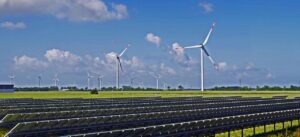
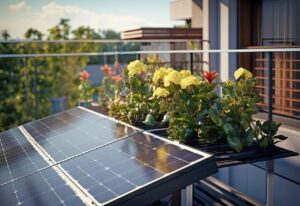
Solar Panels Help Make Community Centre Self-Sufficient
Solar panels have become a cornerstone of community resilience and sustainability. Their adoption allows local centers to generate their own electricity, cut operational costs, and reduce dependence on external suppliers. By integrating solar technologies with smart systems and storage, communities achieve energy stability while contributing to environmental goals. This model of self-sufficiency is not only technically feasible but also economically sound, aligning with global trends in green renewable energy and decentralized resource management.
Understanding the Concept of Community Self-Sufficiency Through Renewable Energy?
Community self-sufficiency in energy is no longer an abstract idea—it’s a practical framework reshaping how local societies manage power needs. It merges technology, economics, and social governance into one ecosystem where independence meets sustainability.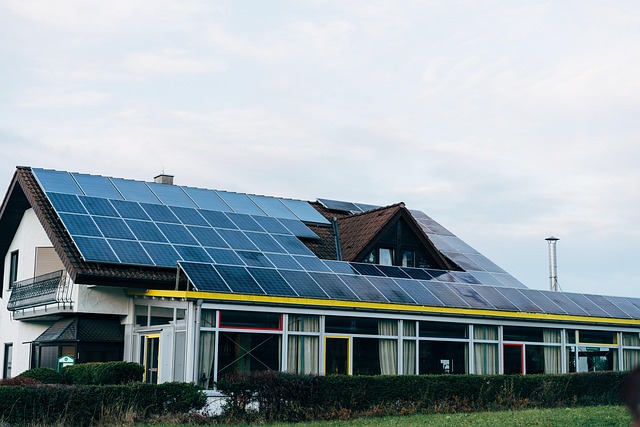
Defining Community Energy Independence
Community energy independence refers to the ability of a locality to produce, distribute, and manage its own power resources. It minimizes reliance on centralized grids or large utilities that are often vulnerable to market fluctuations or infrastructure failures. When communities control their own generation capacity, they gain flexibility in pricing and supply management. Such autonomy encourages long-term sustainable development by keeping economic benefits within the region and fostering innovation through localized decision-making.
The Role of Green Renewable Energy in Localized Systems
Green renewable energy plays a central role in enabling decentralized systems. Solar, wind, hydro, and biomass are scalable enough for small grids yet powerful enough to sustain critical infrastructure. Among these, solar power stands out for its adaptability—it can serve single buildings or entire neighborhoods. When paired with storage systems like lithium-ion batteries or flow batteries, reliability improves dramatically. This integration creates a continuous supply even during low sunlight periods or grid outages.
Solar Panels as a Catalyst for Sustainable Community Development
For many communities, solar installations are more than an environmental choice; they’re an investment in future autonomy. The shift from passive consumption to active generation empowers local institutions such as community centers to become models of sustainable practice.
The Technical Foundations of Solar Energy Systems
Photovoltaic (PV) technology converts sunlight directly into electricity using semiconductor materials such as silicon. The efficiency of this process depends on several factors—panel orientation toward the sun, tilt angle relative to latitude, and local solar irradiance levels measured in kWh/m²/day. Modern systems use advanced inverters that synchronize with microgrids to stabilize voltage and frequency. These features enable seamless integration into existing infrastructure while reducing conversion losses.
Infrastructure and Design Considerations for Community Solar Projects
Planning a community-scale solar project involves balancing sunlight exposure with land use priorities and grid connectivity requirements. Rooftop systems are ideal for urban areas where space is limited, while ground-mounted arrays suit rural sites with open terrain. Modular design allows incremental expansion as demand grows without major redesigns. Regular maintenance—cleaning panels, inspecting wiring, calibrating inverters—ensures consistent performance over decades.
Economic Implications of Solar-Powered Self-Sufficiency
The financial dimension often determines whether communities adopt renewable solutions at scale. Fortunately, declining panel prices and supportive policies have made self-generation increasingly viable.
Cost Structures and Return on Investment for Communities
Initial capital investment covers equipment purchase, installation labor, electrical upgrades, and sometimes battery storage units. Though upfront costs can be significant, operational expenses remain minimal because sunlight is free fuel. Over time, savings from reduced grid imports offset initial spending. Many communities achieve payback within 7–10 years depending on local tariffs and system size. Cooperative ownership models or Power Purchase Agreements (PPAs) further distribute costs among participants.
Funding Mechanisms and Policy Incentives Supporting Green Projects
Government incentives such as tax credits or feed-in tariffs accelerate adoption by lowering financial barriers. In some regions, public-private partnerships help share risk between municipalities and investors while ensuring public benefit retention. Participation in carbon credit markets can also generate additional income by monetizing avoided emissions—a growing opportunity under international carbon trading frameworks recognized by the International Renewable Energy Agency (IRENA).
Environmental and Social Dimensions of Green Renewable Energy Adoption
Beyond economics lies the broader value proposition: cleaner air, healthier ecosystems, and stronger social cohesion around shared goals.
Environmental Benefits of Transitioning to Solar Power
Switching from fossil fuels to solar drastically cuts greenhouse gas emissions aligned with targets set under the Paris Agreement. It also reduces particulate pollution that affects public health near industrial zones or highways. Moreover, solar modules are increasingly recyclable; materials like aluminum frames and glass can be recovered for reuse—an example of circular economy principles gaining traction across the green renewable energy sector.
Strengthening Community Engagement and Social Equity Through Energy Autonomy
Ownership changes behavior. When residents collectively manage their energy assets, they participate more actively in governance decisions about consumption patterns or reinvestment strategies. Access to affordable clean power narrows inequality gaps by lowering household utility bills while improving living standards. Educational programs accompanying installations—such as training sessions on PV maintenance—build technical literacy among youth and workers alike.
Integrating Smart Technologies to Enhance Solar-Based Self-Sufficiency
Technology now bridges the gap between generation potential and real-world reliability. Digital tools transform static solar setups into responsive ecosystems capable of predicting demand shifts or optimizing output automatically.
The Role of Digitalization in Optimizing Energy Management
Smart grids equipped with sensors provide real-time data on production levels, battery charge states, and user consumption trends. Algorithms analyze this data to forecast loads more accurately than traditional scheduling methods used by utilities decades ago. Internet of Things (IoT) devices embedded within panels or meters adjust parameters autonomously—for instance dimming non-essential lighting during peak demand—to maintain balance without manual intervention.
Energy Storage Solutions for Reliable Supply Continuity
Battery storage remains crucial for ensuring uninterrupted supply when sunlight is unavailable or demand spikes unexpectedly. Lithium-ion technology dominates current deployments due to its high energy density and falling cost per kWh stored. However hybrid configurations combining batteries with hydrogen fuel cells are emerging as promising alternatives offering seasonal storage capability—a key step toward complete off-grid independence envisioned by industry bodies like the International Energy Agency (IEA).
Future Outlook for Green Renewable Energy Communities
Decentralized generation models are maturing rapidly thanks to advances in both hardware efficiency and digital coordination platforms.
Emerging Trends in Distributed Generation Models
Peer-to-peer trading allows consumers who produce excess electricity to sell it directly within their neighborhood network using blockchain verification systems that guarantee transparency without intermediaries. Microgrids powered by mixed renewables strengthen resilience against climate-induced disruptions such as storms that frequently damage centralized lines.
Policy Evolution Supporting Decentralized Renewable Ecosystems
Regulatory frameworks are evolving to accommodate distributed producers through simplified interconnection standards defined by organizations like IEEE 1547 for grid interoperability. Governments increasingly recognize community-scale projects as vital components of national transition strategies toward net-zero emissions targets set for 2050 across multiple jurisdictions worldwide.
FAQ
Q1: How do solar panels make a community center self-sufficient?
A: They allow the center to generate its own electricity onsite using photovoltaic systems instead of relying solely on external grids.
Q2: What happens during cloudy days when sunlight is limited?
A: Stored energy from batteries compensates for reduced generation ensuring continuous operation even without direct sunlight.
Q3: Are community solar projects economically viable?
A: Yes; declining installation costs combined with policy incentives make them financially attractive over long-term horizons.
Q4: Can small communities participate without large budgets?
A: Cooperative ownership models enable shared investment among members reducing individual financial burdens significantly.
Q5: What environmental benefits result from adopting solar power?
A: Reduced carbon emissions cleaner air lower fossil fuel dependency and support for circular material recovery practices all contribute positively to sustainability goals.