
Mandatory Utility Fees Distort Price Signals for Rooftop Solar in the US
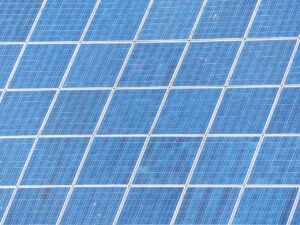
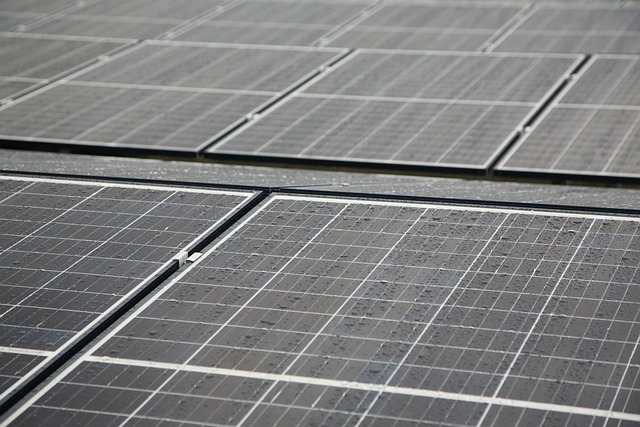
Rooftop solar power has become a cornerstone of clean energy investments across the United States, yet mandatory utility fees are reshaping its economic logic. Fixed and demand-based charges increasingly dilute the financial appeal of distributed generation by weakening price signals that once rewarded self-consumption and grid efficiency. These structural shifts alter investor confidence, disrupt market signals, and can slow the pace of grid decarbonization. The result is a growing disconnect between policy goals promoting renewable energy and tariff designs that unintentionally penalize those who adopt it.
The Relationship Between Clean Energy Investments and Utility Fee Structures
The interaction between clean energy investments and utility tariffs defines how fast distributed generation scales. As rooftop solar becomes mainstream, the balance between installation costs, retail electricity rates, and regulatory incentives determines whether households or businesses see value in producing their own power.
The Economics of Rooftop Solar Adoption
The financial performance of rooftop solar depends heavily on upfront capital costs, local electricity prices, and available tax credits or rebates. In states with high retail rates and generous incentives, such as California or Massachusetts, payback periods can be under ten years. Net metering policies further shape returns by crediting exported power at near-retail prices, while avoided cost pricing can reduce compensation when regulators aim to reflect wholesale market values instead. Utility tariff structures—whether volumetric or fixed—directly influence these economics by defining how much savings accrue from each kilowatt-hour generated behind the meter.
How Mandatory Utility Fees Affect Distributed Generation Economics
Mandatory fixed charges have emerged as a key friction point for solar adopters. By raising the non-variable portion of monthly bills, these fees cut into savings from self-consumed energy since fewer costs are offset by reduced grid usage. Demand-based charges add another layer of complexity: customers with intermittent loads may face higher bills even if their total consumption falls. This dynamic discourages investment in rooftop systems or paired storage because it blurs the link between consumption behavior and cost savings. Over time, such fee structures can erode the marginal incentive to expand distributed generation capacity.
Policy Intentions Behind Mandatory Utility Fees
Utility regulators often justify mandatory fees as necessary for fairness and cost recovery. Yet these same mechanisms risk undermining broader clean energy objectives if not carefully aligned with decarbonization strategies.
The Rationale for Fixed and Demand Charges
Utilities argue that fixed charges ensure all customers contribute to maintaining grid infrastructure regardless of how much electricity they consume. Under cost-of-service regulation, this approach aims to prevent cross-subsidization where non-solar customers bear more of the system’s fixed costs. Demand charges—based on peak usage rather than total consumption—are designed to align customer payments with their contribution to system stress during high-load periods. From an engineering standpoint, this logic appears sound; however, its economic implications for distributed generation are far less benign.
Evaluating Policy Consistency with Clean Energy Goals
While fixed fees may stabilize utility revenue streams, they often conflict with state-level renewable portfolio standards or carbon reduction mandates. By reducing consumers’ ability to save through conservation or self-generation, such tariffs blunt one of the most effective market signals for emission reduction. Tariff design can thus either accelerate or impede integration of distributed energy resources (DERs). Regulators face a delicate balancing act: preserving equity among ratepayers while advancing sustainability targets without discouraging private investment in renewables.
Impacts on Market Signals and Investment Behavior
The structure of utility tariffs sends powerful signals to both consumers and investors about where capital should flow. When those signals are distorted by excessive fixed costs, the entire ecosystem—from household adopters to institutional investors—adjusts accordingly.
Distortion of Price Signals for Distributed Energy Resources (DERs)
High fixed components in electricity bills weaken consumer responsiveness to price changes. When most costs are unavoidable regardless of usage patterns, incentives for conservation or load shifting disappear. This also diminishes participation in time-varying rate programs designed to reduce peak demand pressures. Investors perceive this as regulatory uncertainty since future revenue from rooftop systems depends on variable savings that are now capped by static fees.
Investor Response to Changing Tariff Structures
Developers adapt quickly when economic conditions shift. As residential solar margins shrink under new fee regimes, many firms redirect focus toward community solar projects or utility-scale installations where returns are more predictable. Financing models evolve too: third-party ownership arrangements like power purchase agreements must account for lower bill savings per customer. Meanwhile, policy instability—frequent changes in net metering rules or fee levels—raises perceived risk premiums across clean energy portfolios, making capital more expensive and slowing deployment timelines.
Regulatory and Economic Alternatives to Flat Utility Fees
Rather than relying on blunt instruments like mandatory fixed charges, regulators have tools that better align economic efficiency with environmental outcomes.
Time-Varying Rates as a Market-Based Solution
Time-of-use pricing offers one such alternative by tying electricity costs directly to grid conditions throughout the day. Consumers pay more during peak hours but benefit from lower rates when demand falls—a structure that naturally encourages behavioral adaptation without penalizing DER adoption. For instance, pairing rooftop solar with battery storage allows homeowners to store excess midday generation and discharge it during evening peaks, maximizing both personal savings and system reliability. Transparent rate signals also guide investment toward technologies that provide real value at critical times rather than simply offsetting average consumption.
Performance-Based Regulation (PBR) Models
Performance-based regulation redefines how utilities earn revenue by linking profits to measurable outcomes such as emission reductions or DER integration targets instead of total sales volume. This model rewards innovation rather than throughput and replaces rigid fixed fees with dynamic performance metrics tied to efficiency gains or reliability improvements. Several U.S. states have begun experimenting with PBR frameworks inspired by international examples under IEA guidance, showing promising results in aligning corporate incentives with public policy goals.
Broader Implications for the Clean Energy Transition
The cumulative impact of tariff design choices extends far beyond individual households; it shapes national progress toward decarbonization and grid modernization.
Long-Term Effects on Grid Decarbonization Pathways
Persistent disincentives for rooftop solar slow down distributed generation growth trajectories just when grid planners need more localized flexibility resources. Lower DER penetration reduces opportunities for microgrid development and limits resilience benefits during extreme weather events—a growing concern across U.S. regions facing climate-related disruptions. Misaligned tariffs risk locking utilities into outdated cost structures incompatible with net-zero pathways outlined by organizations like IRENA and BloombergNEF projections through 2050.
Reframing Utility Business Models for a Distributed Future
A sustainable transition requires utilities to evolve beyond volumetric sales toward service-oriented models that monetize reliability, flexibility, and data services rather than pure energy delivery. In this future architecture, utilities act as platform operators enabling prosumers—consumers who also produce—to transact energy locally through digital marketplaces or peer-to-peer networks governed by transparent pricing rules. Achieving this vision demands collaborative regulatory reform where state commissions coordinate closely with industry stakeholders to harmonize incentives across all layers of the power system.
FAQ
Q1: Why do utilities impose mandatory fixed fees?
A: Utilities introduce fixed fees to recover infrastructure costs fairly among all customers regardless of usage levels.
Q2: How do these fees affect rooftop solar economics?
A: They reduce potential bill savings from self-generated electricity since less consumption-based cost is avoided each month.
Q3: Are there alternatives that support both fairness and clean energy?
A: Yes, time-of-use rates and performance-based regulation models balance cost recovery with sustainability goals more effectively than flat fees.
Q4: What risks do investors face under changing tariff structures?
A: Uncertainty around future fee levels or net metering rules increases perceived risk premiums on clean energy investments.
Q5: How can regulators realign tariffs with decarbonization goals?
A: By designing rate structures that maintain strong price signals for conservation while rewarding distributed resource integration through outcome-based incentives.