
Solar Experts Offer a Solution to Satisfy Both Sides in Ivanpah Decommissioning Battle
The debate over the future of the Ivanpah Solar Electric Generating System has reached a critical point. Experts across the renewable energy sector are proposing a middle-ground solution that balances environmental restoration with technological reuse. Their approach centers on sustainable decommissioning—recovering valuable materials, restoring desert habitats, and preserving local economic benefits. This compromise could transform Ivanpah from a symbol of controversy into a model for responsible energy transition.
Understanding the Ivanpah Solar Decommissioning Debate
The discussion around Ivanpah’s future reflects broader questions about how large-scale renewable projects should evolve at the end of their lifecycle. It is not merely about dismantling infrastructure but redefining how solar assets contribute to long-term sustainability.
Background of the Ivanpah Solar Facility
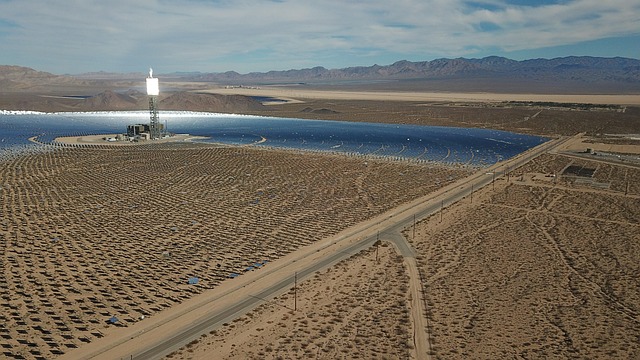
Ivanpah Solar, located in California’s Mojave Desert, is one of the world’s largest concentrated solar power (CSP) plants. Spanning over 3,500 acres, it uses more than 170,000 heliostats to focus sunlight onto central towers generating steam-driven electricity. The facility began operations in 2014 under a partnership between BrightSource Energy, NRG Energy, and Google. It was celebrated as a pioneering step toward utility-scale solar thermal generation in the United States.
Key stakeholders include federal regulators from the Bureau of Land Management, state energy commissions, environmental organizations like the Sierra Club, and local community representatives. Each group holds distinct priorities—ranging from clean energy advocacy to wildlife protection.
Economically, Ivanpah represented an investment exceeding $2 billion and created hundreds of construction jobs. Environmentally, it contributed to California’s renewable portfolio standards by producing nearly 400 megawatts at peak capacity. Yet its high maintenance costs and lower-than-expected output have triggered calls for reevaluation.
The Core Issues Driving the Decommissioning Discussion
The idea of decommissioning or repurposing Ivanpah stems from several converging factors: aging technology, reduced operational efficiency, and evolving grid economics favoring photovoltaic systems over CSP. As newer solar technologies achieve higher yields at lower costs, older thermal systems face diminishing returns.
Environmental advocates emphasize land restoration as a moral obligation after industrial use. The site overlaps with sensitive desert tortoise habitats and native plant zones that were disrupted during construction. Restoring these ecosystems requires careful soil management and species reintroduction plans guided by ecological assessments.
Economically, investors face complex trade-offs between asset write-downs and potential reuse opportunities. Local communities worry about job losses if decommissioning proceeds without redevelopment plans such as solar PV retrofitting or research facilities.
Evaluating Sustainable Decommissioning Practices in Solar Energy
Sustainable closure strategies are gaining traction as renewable infrastructure matures globally. They aim to minimize waste while maximizing recovery value through circular economy principles.
Principles of Sustainable Decommissioning
A lifecycle assessment forms the foundation for responsible closure planning. It quantifies environmental impacts from construction through dismantling and guides decisions on material recovery versus disposal. Integrating circular economy concepts encourages reusing metals, glass, and structural steel rather than sending them to landfills.
Regulatory frameworks play an essential role here. Agencies such as the U.S. Environmental Protection Agency (EPA) and international bodies like ISO provide standards for waste management and site remediation under renewable projects. Compliance ensures transparency and accountability during every phase of decommissioning.
Lessons from Existing Solar Decommissioning Projects
Globally, several decommissioned solar sites offer valuable lessons. In Spain and Japan, early CSP plants were dismantled with partial component reuse in newer installations. However, challenges persist—particularly in recycling mirrors coated with reflective films or recovering heat transfer fluids safely.
Photovoltaic recycling faces similar hurdles due to mixed material layers in panels containing silicon wafers and polymers. Emerging methods such as thermal delamination and chemical separation are improving recovery rates but remain costly at scale.
Technological innovation continues to redefine what “end-of-life” means for solar assets. Modular plant design now allows selective replacement instead of full teardown—a concept that could benefit facilities like Ivanpah.
Technical Pathways Toward Sustainable Decommissioning at Ivanpah
For Ivanpah Solar, technical solutions must address both resource recovery and ecological healing while maintaining economic feasibility for stakeholders involved.
Material Recovery and Recycling Strategies
The plant’s heliostat mirrors contain glass and aluminum frames suitable for recycling through conventional industrial processes. Steel from tower structures can be melted down for reuse in construction or manufacturing sectors nearby to minimize transport emissions.
Unlike photovoltaic systems dominated by silicon modules, CSP components involve unique materials such as molten salts or heat-resistant alloys requiring specialized treatment facilities. Developing regional recycling supply chains around California could create new employment opportunities while reducing carbon footprints associated with long-distance shipping.
Site Restoration and Ecological Rehabilitation Approaches
Restoring desert ecosystems involves more than removing hardware—it demands reestablishing natural soil crusts that prevent erosion and support native flora like creosote bush or yucca species. Techniques include seeding native plants adapted to arid conditions and using biological soil amendments derived from composted organic matter.
Soil remediation focuses on removing contaminants left by lubricants or coolants used during operations. Bioremediation using microbial cultures has shown promise in neutralizing hydrocarbons without introducing synthetic chemicals into fragile desert systems.
Balancing biodiversity conservation with potential future land uses remains delicate work. Some experts propose converting parts of the site into research zones for studying desert resilience under climate stress while restoring other sections fully to natural states.
Policy and Economic Dimensions of Ivanpah’s Future
Decisions about Ivanpah’s next chapter depend heavily on regulatory clarity and financial models that reward sustainable practices rather than short-term cost savings.
Regulatory Considerations Influencing Decommissioning Decisions
At the federal level, renewable site closures fall under guidelines set by agencies such as BLM requiring post-operation reclamation plans before permits expire. State policies reinforce compliance with environmental protection acts ensuring proper waste handling and habitat restoration documentation.
Public consultation plays an increasingly visible role in shaping outcomes. Transparent communication channels between developers, residents, scientists, and advocacy groups can reduce conflict while building consensus around shared goals like carbon neutrality or local job preservation.
Financial Models Supporting Sustainable Closure Plans
Sustainable decommissioning often costs more upfront but yields long-term savings through resource recovery credits and avoided landfill fees. Comparative cost-benefit analyses show that recycling steel alone can offset significant portions of dismantling expenses when market prices remain stable.
Funding tools like decommissioning bonds guarantee financial responsibility even if project owners change hands before closure occurs. Sustainability-linked loans tied to measurable environmental outcomes are also emerging as attractive financing mechanisms within green capital markets.
Economic incentives encouraging circular material flows—such as tax credits for secondary raw materials—could make sustainable approaches financially competitive against traditional demolition methods.
Collaborative Solutions Proposed by Solar Industry Experts
Industry professionals argue that collaboration among all parties is essential if Ivanpah is to transition smoothly into its next phase without reigniting past disputes over land use or environmental damage.
Stakeholder Engagement for Balanced Decision-Making
Effective engagement frameworks align diverse interests through structured dialogues facilitated by independent mediators or technical panels. Sharing operational data openly helps build trust among regulators wary of incomplete disclosures during previous project phases.
Independent technical assessments conducted by third-party engineering firms provide objective insight into equipment condition, salvage value estimates, and contamination risks—critical inputs when negotiating closure terms acceptable to all sides.
Innovation-Led Pathways Toward a New Industry Standard
Emerging technologies such as AI-driven asset monitoring can extend component lifespans by predicting failures before they occur—reducing premature replacements during operation or shutdown stages alike. Robotics-assisted dismantling improves worker safety while increasing precision during mirror removal or tower disassembly tasks.
If managed transparently with measurable sustainability metrics—like material recovery rates or restored habitat acreage—Ivanpah could become a benchmark case study guiding future large-scale thermal plant transitions worldwide.
FAQ
Q1: Why is there debate about decommissioning Ivanpah Solar?
A: The debate stems from declining efficiency compared with modern PV systems and concerns over habitat restoration versus continued operation under modified use cases such as hybrid retrofits.
Q2: What makes CSP decommissioning different from PV?
A: CSP systems involve complex thermal fluids and large structural components requiring specialized recycling processes unlike PV modules dominated by semiconductor layers.
Q3: Could parts of Ivanpah be reused?
A: Yes, steel towers and mirror assemblies can be recycled or repurposed; some experts suggest adapting existing infrastructure for research or hybrid generation projects combining PV arrays with storage units.
Q4: How does policy influence closure decisions?
A: Federal reclamation requirements ensure environmental accountability while state-level regulations mandate detailed restoration planning before permits lapse or transfer ownership occurs.
Q5: What lessons can other projects learn from Ivanpah?
A: Early integration of end-of-life planning into project design reduces later conflicts; transparent stakeholder engagement fosters trust essential for achieving sustainable closure outcomes across future renewable developments.