
How Renewable Energy Companies Can Increase Efficiencies
Renewable energy companies face growing pressure to balance sustainability, profitability, and operational efficiency. The most effective firms are those that align their business models with global market shifts, scale production smartly, and integrate digital technologies into every layer of operation. Efficiency gains now come less from incremental improvements and more from structural innovation — modular plants, smart grids, predictive analytics, and diversified financing. Firms that master these elements not only cut costs but also strengthen resilience in volatile markets.
Strategic Frameworks for Enhancing Efficiency in Renewable Energy Companies
Renewable energy companies must rethink their strategic frameworks as policies evolve and competition intensifies. Success depends on aligning business structures with market dynamics while integrating sustainability into financial performance.
Aligning Business Models with Global Market Dynamics
Government incentives remain a decisive factor in renewable adoption. Policies such as feed-in tariffs or tax credits directly shape market entry timing and technology selection. Companies entering new regions must tailor their models to local regulations and grid codes — for example, Europe’s capacity markets differ sharply from Asia’s direct purchase models. Sustainability goals should not sit apart from profit metrics; leading firms now embed carbon reduction targets into executive compensation structures to ensure accountability.
Leveraging Economies of Scale in Renewable Energy Production
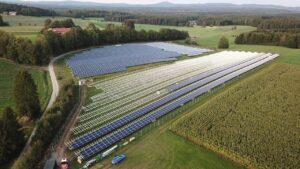
Expanding capacity through modular plant designs allows renewable energy companies to scale faster without large upfront costs. Modular solar parks or wind farms can be replicated regionally with minimal redesign, reducing engineering expenses. Supply chain efficiency is another driver: by consolidating component procurement and using regional assembly hubs, firms lower transport emissions and cost per unit of output. Partnerships between developers and local utilities further reduce capital intensity by sharing infrastructure like substations or transmission lines.
Technological Innovations Driving Operational Efficiency
Technology has become the backbone of cost reduction in renewables. From storage breakthroughs to AI-driven grid management, innovation defines how efficiently energy is produced, stored, and delivered.
Advanced Energy Storage Solutions
Large-scale batteries stabilize intermittent generation by balancing supply during peak demand hours. Lithium-ion remains dominant, yet hybrid systems combining thermal storage or compressed air are emerging for longer-duration needs. Predictive analytics tools now forecast charge-discharge cycles based on weather data and consumption patterns, cutting maintenance costs while extending battery life.
Smart Grid Integration and Digitalization
Digitalization transforms how renewable assets interact with the grid. IoT sensors track real-time power flow across turbines or panels, allowing immediate fault detection. AI algorithms forecast load changes and schedule maintenance before failures occur — a shift from reactive to predictive operations. Blockchain platforms are being tested for peer-to-peer trading of surplus energy, ensuring transparent transactions and data integrity across distributed systems.
Financial Optimization in Global Renewable Markets
Financial strategy defines a company’s ability to sustain growth amid price volatility and shifting investor expectations. Efficient capital structuring can mean the difference between expansion and stagnation.
Structuring Investment Portfolios for Risk Mitigation
Diversification across solar, wind, hydro, and bioenergy spreads exposure to resource variability. Currency hedging through local financing shields projects from exchange rate swings common in emerging markets. Investors increasingly demand adherence to ESG criteria; firms that meet these standards attract green funds at favorable terms while improving brand equity among institutional investors.
Accessing International Funding Mechanisms
Green bonds have matured into a primary funding channel for capital-heavy renewable projects. Development banks also offer concessional loans tied to climate objectives, lowering financing costs for early-stage ventures. Participation in carbon credit markets adds an alternative revenue stream — selling verified emission reductions can offset operational expenses while enhancing sustainability reporting credibility.
Enhancing Supply Chain Resilience and Sustainability
A resilient supply chain underpins operational stability for renewable energy companies facing geopolitical disruptions or raw material shortages.
Building Sustainable Procurement Networks
Securing certified low-carbon materials reduces lifecycle emissions across projects. Lifecycle assessments help quantify environmental impact from sourcing through decommissioning — crucial as regulators tighten reporting standards under frameworks like ISO 14040. Circular economy practices are gaining traction: recycling turbine blades or repurposing battery modules curbs waste while recovering valuable metals such as lithium or rare earths.
Streamlining Logistics Through Digital Platforms
Digital logistics systems use real-time tracking to coordinate shipments of heavy components like nacelles or solar modules across continents. AI-based routing tools shorten delivery times by analyzing traffic patterns and port congestion data. Partnering with regional distributors not only cuts emissions but also mitigates customs delays that often stall project timelines.
Workforce Development and Knowledge Transfer Across Markets
Human capital remains a decisive factor in achieving operational excellence within renewable sectors that evolve rapidly.
Upskilling Technical Teams for Emerging Technologies
Continuous training ensures technical teams can handle innovations such as hydrogen fuel systems or floating solar installations. Cross-functional collaboration between engineering, IT, and operations fosters integrated problem-solving approaches vital for digitalized plants. Partnerships with universities support research-driven training programs that align academic output with industry needs.
Encouraging Global Collaboration Among Experts
Knowledge-sharing platforms link R&D centers worldwide, allowing engineers in different time zones to co-develop solutions for grid integration or offshore construction challenges. Exchange programs between technical teams accelerate technology transfer while harmonizing safety practices across markets. Standardized project execution guidelines help multinational firms maintain consistency despite regulatory diversity.
Policy Engagement and Market Positioning Strategies
Policy influence shapes long-term competitiveness just as much as technology does. Active engagement helps renewable energy companies anticipate regulatory shifts rather than react belatedly.
Navigating Regulatory Landscapes in Different Regions
Mapping national policy frameworks allows firms to identify investment-friendly jurisdictions early on. Advocating for harmonized standards simplifies cross-border electricity trade within interconnected grids such as those emerging in Southeast Asia or Europe. Monitoring carbon pricing mechanisms helps forecast future operating costs under evolving climate legislation scenarios published by institutions like the IEA or IRENA.
Branding and Market Differentiation Through Sustainability Leadership
Transparent communication of measurable sustainability results builds investor confidence. Brands highlighting tangible achievements — reduced water use per megawatt-hour or verified zero-waste operations — stand out in crowded markets. Participation in global sustainability indices signals reliability to financiers seeking credible environmental performers rather than aspirational claims.
FAQ
Q1: How do renewable energy companies maintain profitability while focusing on sustainability?
A: They integrate environmental targets directly into financial models so that emission reductions correlate with cost savings through efficiency gains or access to green finance instruments.
Q2: What technologies most improve operational efficiency?
A: Smart grids combined with predictive analytics deliver the largest efficiency improvements by minimizing downtime and balancing generation dynamically across assets.
Q3: Why is modular design important for scaling production?
A: Modular systems allow incremental expansion without full redesigns, reducing both engineering time and capital expenditure per additional capacity unit.
Q4: How can supply chain resilience be improved globally?
A: By diversifying suppliers geographically, adopting digital tracking systems, and implementing recycling programs that recover critical materials domestically.
Q5: What role do international policies play in shaping investment decisions?
A: Policies determine subsidy eligibility, tariff structures, and compliance requirements; understanding them early enables firms to position assets where returns are most stable over time.