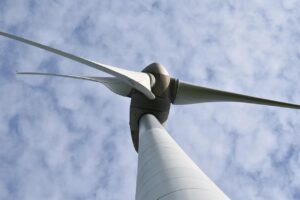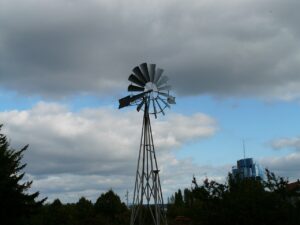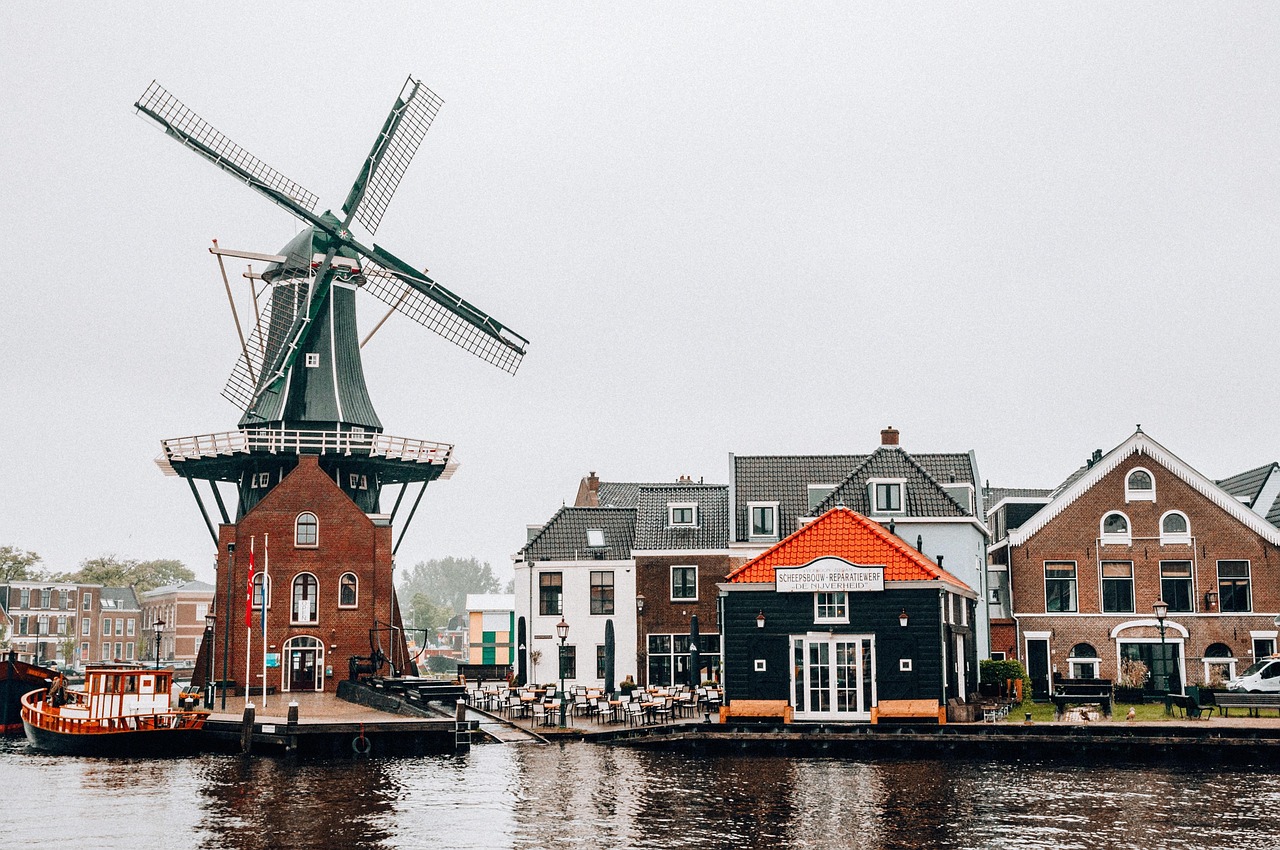

In today’s renewable energy market, a wind mill usually means a modern wind turbine: a machine that converts moving air into electricity for homes, businesses, and power grids. Traditional windmills used wind for mechanical work such as grinding grain or pumping water. Modern wind turbines use aerodynamic blades, generators, control systems, power electronics, and grid equipment to produce renewable electricity.
Recent 2026 reports from GWEC, IRENA, and the IEA show that wind power is now a mainstream power-generation technology. Global additions reached record levels in 2025, while offshore wind continued moving toward the 100 GW cumulative milestone. For more updates on this sector, visit our wind energy section.
What does wind mill mean in renewable energy?
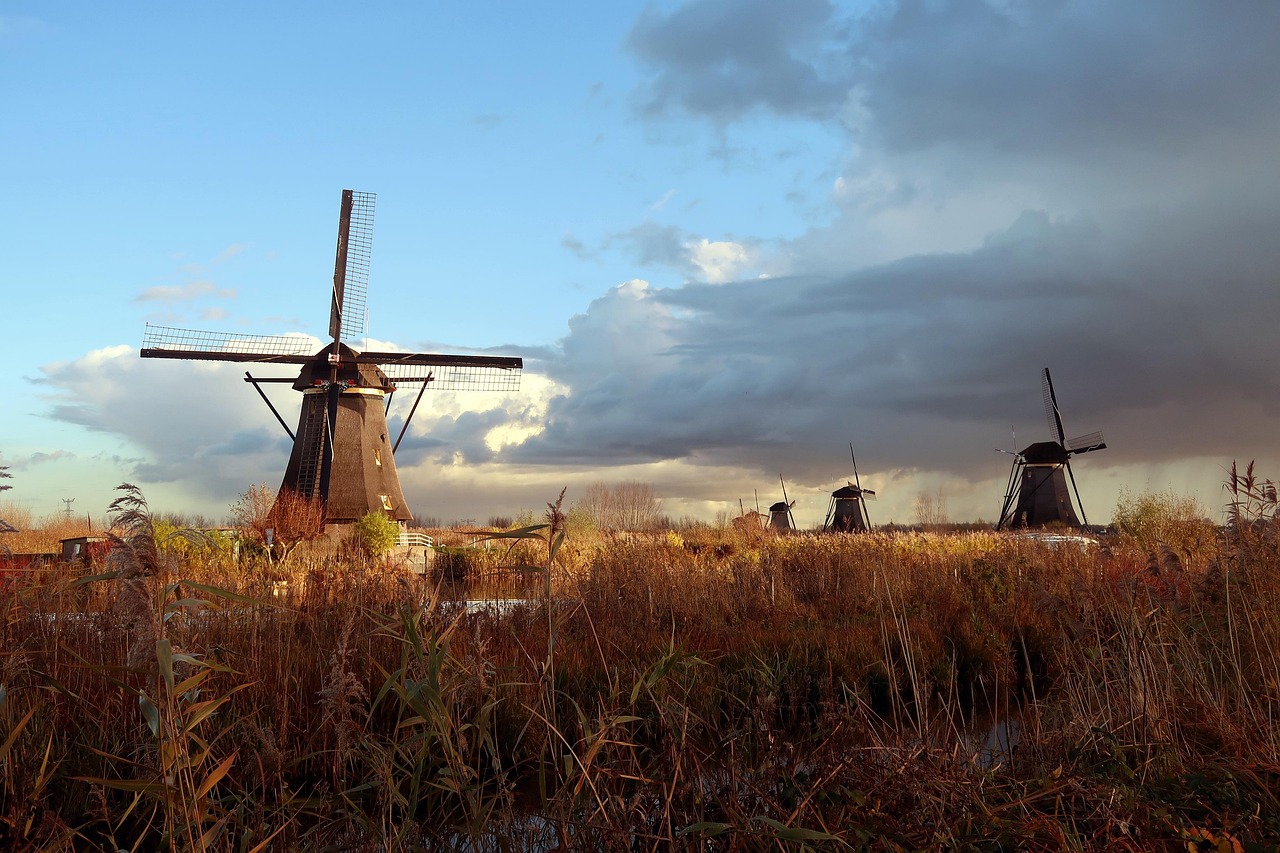
The standard spelling is windmill, but wind mill remains a common search phrase. In technical use, the distinction is important. A historical windmill converts wind energy into mechanical motion. It may turn a millstone, drive a saw, or pump water from the ground. A wind turbine converts wind energy into electricity, which can be used locally, stored, or delivered to the power grid.
That difference helps avoid confusion when comparing small farm machines, residential turbines, community wind projects, and utility-scale wind farms. A water-pumping windmill can still be useful in rural settings, but it is not the same product as a grid-connected turbine with a nacelle, generator, converter, brake system, yaw control, and transformer. In most renewable energy discussions, references to a wind mill are really references to a wind turbine.
How a modern wind mill makes electricity
A modern wind turbine works like a fan in reverse. Instead of using electricity to move air, it uses moving air to produce electricity. As wind passes over the blades, the blade profile creates lift, similar to an aircraft wing. That lift turns the rotor. The rotor then transfers mechanical rotation through a shaft and either a gearbox or a direct-drive system to a generator.
The main steps are straightforward:
- Wind reaches the rotor. Larger blades sweep a larger area, allowing the turbine to capture more energy from the same wind resource.
- Blade pitch and yaw systems adjust the machine. The turbine turns toward the wind and changes blade angle to improve output and protect equipment.
- The drivetrain transfers rotation. Some turbines use gearboxes to increase rotational speed; others use direct-drive generators.
- The generator produces electricity. Power electronics condition the output so it can meet grid requirements.
- A transformer raises voltage. Electricity is then sent through collection lines to a substation and the wider grid.
Output depends heavily on wind speed, tower height, rotor diameter, air density, and machine availability. Because the power available in wind rises very quickly as wind speed increases, a small improvement in site quality can have a large effect on annual generation. That is why developers spend heavily on wind measurement, resource modeling, wake analysis, and grid studies before financing a project.
The 2026 market signal is record growth, not a niche technology
Several 2026 datasets describe wind power’s 2025 performance. Their numbers vary slightly because each organization uses its own accounting method. GWEC’s Global Wind Report 2026 reported 165 GW of new wind capacity added in 2025 and 1,299 GW of installed wind power by the end of the year. IRENA’s Renewable Capacity Statistics 2026 reported record wind additions of 158.7 GW and said total renewable power capacity reached 5,149 GW after 692 GW of renewable additions in 2025. The IEA’s Global Energy Review 2026 described annual wind additions at around 160 GW.
| Reference | 2025 wind data point | How to read it |
|---|---|---|
| GWEC Global Wind Report 2026 | 165 GW added; 1,299 GW cumulative global wind capacity | Industry-focused view of installed and commissioned capacity |
| IRENA Renewable Capacity Statistics 2026 | 158.7 GW of wind additions | Statistical capacity dataset compiled for international comparison |
| IEA Global Energy Review 2026 | About 160 GW of annual wind additions | Energy-system view used alongside solar, power demand, and regional trends |
The practical conclusion is consistent across the sources: 2025 was a record year for wind deployment. The data also shows uneven geography. GWEC reported that Asia, led by China and India, accounted for most new capacity. China alone installed more than 120 GW in 2025 under GWEC’s accounting, while India reached a record 6.3 GW of new wind capacity.
Onshore and offshore wind solve different problems
Onshore wind
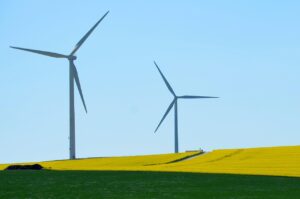
Onshore wind is typically the lower-cost and more mature option. Projects can be built on agricultural land, ridgelines, plains, or other high-resource areas where transmission access is available. Land-based turbines are easier to reach for maintenance than offshore machines, and their supply chains are more established in many markets. The main constraints are siting, local acceptance, road and bridge logistics, aviation or radar concerns, wildlife studies, and grid interconnection queues.
Offshore wind
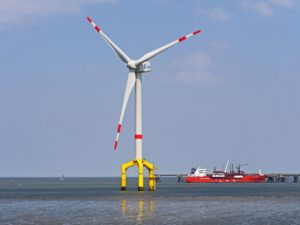
Offshore wind uses stronger and often steadier wind resources at sea. It can serve coastal demand centers where land is scarce, but it also requires specialized vessels, ports, subsea cables, marine surveys, and more complex permitting. GWEC’s 2026 offshore wind report said 9.3 GW of new offshore wind was grid-connected worldwide in 2025, bringing global offshore installations to 92.5 GW. It also reported that the average offshore turbine installed in 2025 passed 10 MW, a sign of continued scale-up in machine size.
The choice is not simply onshore versus offshore. A power system may need both: lower-cost land-based energy where transmission is available, and offshore projects near coastal load where large-scale clean electricity is valuable despite higher project complexity.
Economics depend on resource quality, grid access and financing
Wind power economics are often compared through levelized cost of electricity, or LCOE. IRENA’s 2026 cost analysis for 2025 placed the global weighted-average LCOE of onshore wind at about USD 33 per MWh and offshore wind at about USD 78 per MWh. These figures are useful benchmarks, but they do not replace project-specific analysis. A low-cost turbine in a weak wind site can underperform, while a higher-cost project near a valuable grid node can still be attractive.
Financing costs also matter. Wind projects have high upfront capital costs and low fuel costs, so interest rates, contract structure, power prices, tax rules, and interconnection delays can change the final economics. In the United States, the Energy Information Administration reported that wind generated about 464 billion kWh in 2025 and supplied about 10.5% of total utility-scale electricity generation. That scale is one reason wind is now treated as core grid infrastructure rather than an experimental resource. See also: clean energy.
What developers and communities still need to manage
A credible wind mill discussion should include the limitations. Wind output is variable, so grids need forecasting, flexible generation, transmission, storage, demand response, regional balancing, or a combination of these measures. Wind farms also require careful siting to manage sound, shadow flicker, visual impact, aviation lighting, land use, and wildlife interactions.
U.S. DOE WINDExchange materials emphasize early engagement with communities, local authorities, and other stakeholders during project development. DOE guidance also notes that shadow flicker depends on specific sun, distance, turbine, and viewing conditions, while sound concerns are addressed through siting studies and applicable local rules. Wildlife impacts require field surveys, seasonal operating strategies, and mitigation where bird, bat, or marine mammal risks are identified.
End-of-service planning is another practical issue. Towers, foundations, copper, steel, and many mechanical components have established recycling routes, but composite blades remain more challenging. DOE materials published in recent years point to expanding recycling and repurposing options, while also making clear that commercial scale and local processing capacity vary. Responsible projects should plan decommissioning, repowering, recycling, and land restoration before construction begins.
A practical checklist before comparing wind mill options
For readers evaluating a small turbine, community project, or utility-scale investment, the first question is not turbine size. It is whether the site has enough wind and a practical way to use or sell the electricity. A basic screening should include:
- Measured or modeled wind speed at the planned hub height
- Distance to interconnection, load, or battery storage
- Zoning, setback, sound, height, and aviation rules
- Road access for blades, towers, cranes, and maintenance teams
- Expected annual energy production, not only nameplate capacity
- Service contract terms, spare parts availability, and downtime risk
- Community engagement and environmental study requirements
- End-of-life plan for removal, repowering, recycling, or reuse
For small properties, a wind turbine may make sense where the wind resource is strong, towers are allowed, and turbulence from trees or buildings is low. In many urban or suburban locations, rooftop solar may be simpler. For utility-scale systems, wind often works best as part of a diversified renewable portfolio that also includes solar, storage, transmission planning, and flexible demand.
Frequently asked questions
Is wind mill one word or two?
The standard spelling is windmill. However, wind mill is a common search phrase. In renewable energy, the more precise term is wind turbine when the machine generates electricity.
How much electricity can one wind turbine produce?
It depends on nameplate capacity, wind speed, rotor size, tower height, and downtime. DOE educational materials note that a typical 2.8 MW utility-scale turbine can produce enough electricity for just under 1,000 average American homes, but actual output changes by site and year.
Why are wind turbines getting taller?
Taller towers can reach stronger and less turbulent winds. Larger rotors also sweep more area. Together, these changes can raise annual energy production, although transport limits, cranes, foundations, local rules, and cost all constrain turbine size.
Is offshore wind better than onshore wind?
Not always. Offshore wind can access strong marine wind resources and serve coastal demand, but it is usually more complex and expensive to build. Onshore wind is often cheaper and easier to maintain, but it faces land, transmission, and community constraints.
Does wind power need storage?
Not every wind project needs a dedicated battery, but power systems with high wind shares need flexibility. That flexibility can come from transmission, forecasting, hydropower, gas peakers, demand response, batteries, long-duration storage, or a mix of resources.