
What onshore wind energy means now
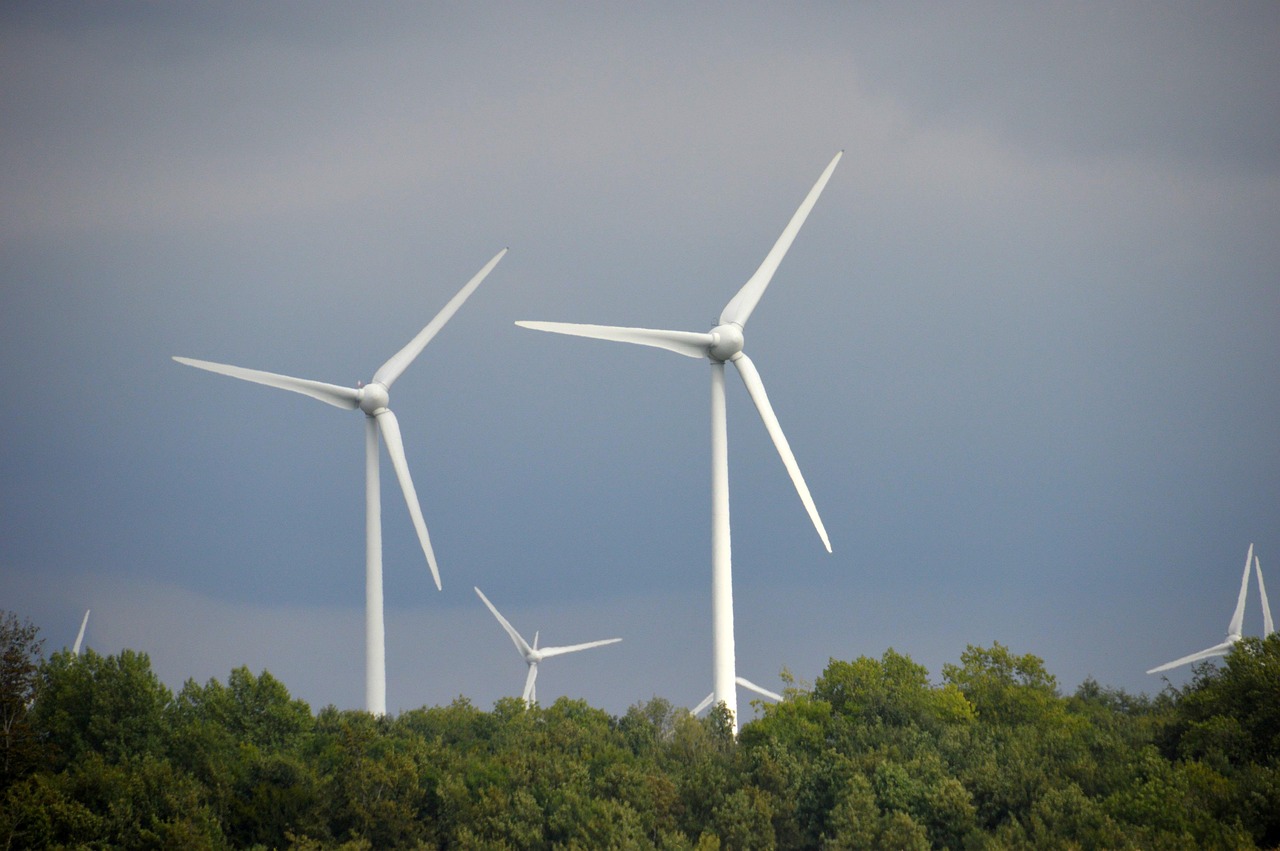
Onshore wind energy is electricity generated by wind turbines installed on land, usually in open rural areas, plains, ridgelines, or agricultural regions with strong wind resources. It has moved well beyond niche status. In many power systems, it is now a mainstream utility-scale resource because it uses no fuel, produces electricity without direct air emissions, and can compete on cost with many new sources of generation. Recent public data show the scale involved: the Global Wind Energy Council reported that wind reached 1,299 GW of installed capacity worldwide by the end of 2025, while the U.S. Energy Information Administration said wind generated about 464 billion kWh of U.S. electricity in 2025. (gwec.net)
For readers following renewable electricity trends, onshore wind should be viewed as both a mature generation technology and a grid integration challenge. Its value depends not only on turbine performance and wind resource quality, but also on transmission access, project siting, market design, financing costs, and how system operators combine wind with storage, solar, demand flexibility, hydropower, nuclear, or dispatchable thermal generation. For more wind-sector coverage, visit our wind energy section.
How onshore wind works
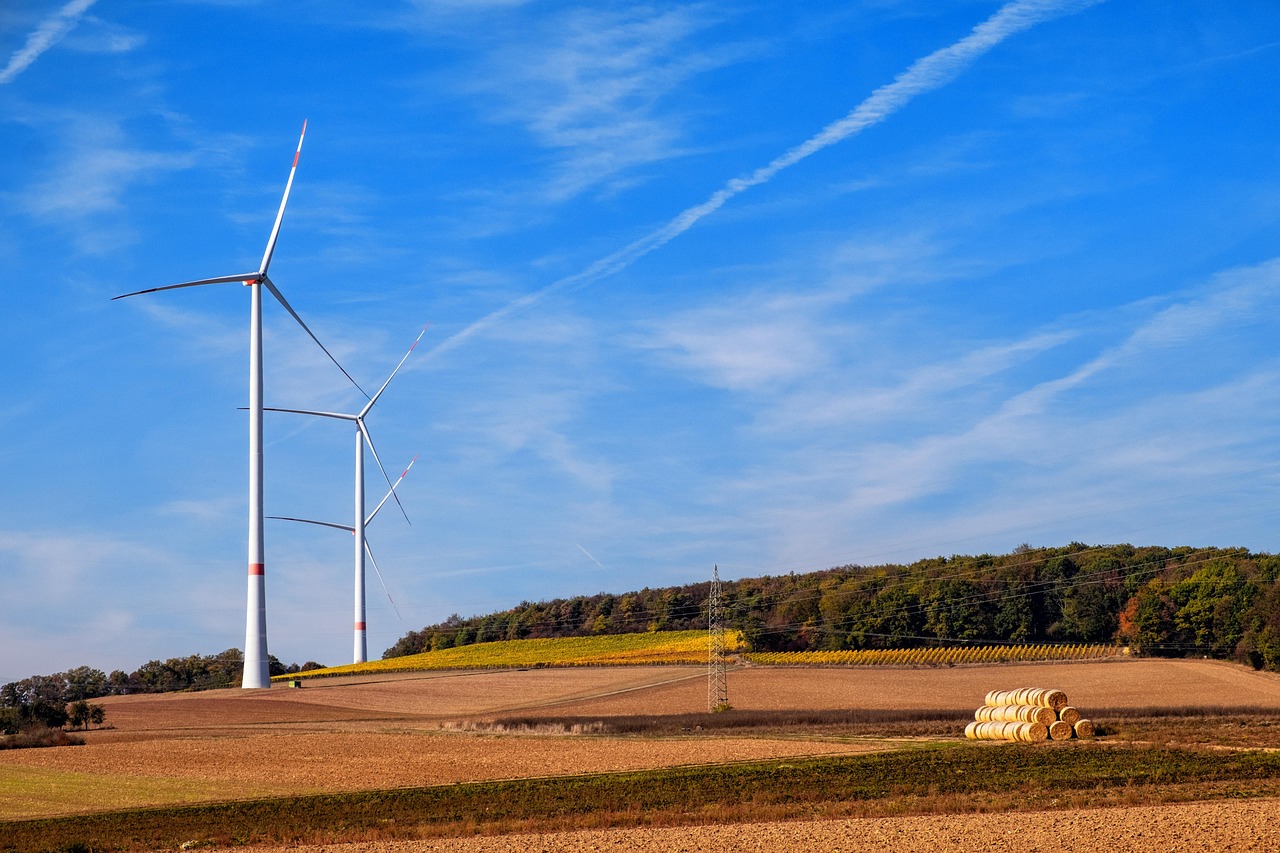
A modern onshore wind project converts moving air into electricity through a relatively direct equipment chain. Wind flows across turbine blades, creating lift that turns the rotor. The rotor drives a drivetrain connected to a generator, and power electronics condition the output before electricity is stepped up through transformers and delivered to the grid.
The commercial work behind that process is more complex. A project developer must secure a windy site, land agreements, permits, grid interconnection, turbine supply, construction contractors, financing, and a route to sell the power. These variables explain why two projects using similar turbines can produce very different costs and returns.
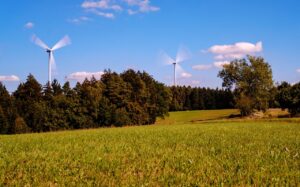
At utility scale, onshore wind farms typically include dozens or hundreds of turbines spread across a large area. The physical footprint of towers, roads, substations, and foundations is much smaller than the full project area, which is why farming and grazing can often continue between turbines. That coexistence has helped onshore wind expand in agricultural regions. Even so, land use remains a real planning issue. Visual impact, sound, wildlife, road access, aviation constraints, and community acceptance can decide whether a technically strong site becomes a buildable project.
Why growth has continued despite harder development conditions
Global growth has continued because the core value proposition is still strong: wind converts a local renewable resource into electricity without buying fuel. GWEC’s 2026 Global Wind Report said the industry added a record 165 GW of wind capacity in 2025, including 155.3 GW of onshore wind and 9.3 GW of offshore wind. China, the United States, India, Germany, and Brazil were the top five markets for annual additions, showing that growth is concentrated but not confined to one region. (gwec.net)
Onshore wind also fills an important role in renewable power portfolios. Solar output is strongest during daylight hours, while wind often follows different daily and seasonal patterns. In many regions, wind output can strengthen during evenings, nights, or colder seasons. That does not make wind dispatchable, but it can help system planners diversify variable renewable generation when it is paired with a broader resource mix.
The International Energy Agency’s Renewables 2025 outlook expects cumulative onshore wind additions over 2025-2030 to reach 732 GW, a 45% increase compared with 2019-2024. The same outlook also notes that permitting, grid connection delays, inflation, and supply-chain bottlenecks remain important constraints. In other words, the market is expanding, but not because every project is easy to build. (iea.org)
Cost and performance indicators to watch
Cost comparisons for onshore wind can be misleading if the metrics are mixed together. Installed cost, turbine price, levelized cost of electricity, power purchase agreement price, and wholesale market value are related, but they are not the same. A low-cost wind farm in a congested grid area may receive poor market value if it cannot deliver power when and where demand needs it. A more expensive project near strong transmission or high-value load can be more attractive.
| Indicator | Recent public data point | Why it matters |
|---|---|---|
| Global onshore wind LCOE | IRENA reported a global weighted average of USD 0.034/kWh for new utility-scale onshore wind in 2024. | Shows why onshore wind remains one of the cheapest renewable electricity options globally. (irena.org) |
| U.S. wind generation | EIA reported about 464 billion kWh from U.S. wind in 2025, equal to about 10.5% of total U.S. utility-scale generation. | Shows that wind is already a large operating resource, not just a future pipeline. (eia.gov) |
| U.S. construction cost | EIA’s 2024 generator construction data listed onshore wind turbines at a capacity-weighted average cost of USD 1,882/kW for generators installed in 2024. | Helps distinguish project capital cost from lifetime generation cost. (eia.gov) |
| Grid queue pressure | Berkeley Lab’s Queued Up 2026 update reported 220 GW of active U.S. wind capacity in interconnection queues at the end of 2025. | Shows that grid access can be as important as turbine cost. (emp.lbl.gov) |
The main takeaway is that onshore wind energy cannot be judged by a single headline number. The best projects combine strong wind resources, modern turbines, reasonable permitting risk, competitive financing, manageable local impacts, and realistic grid delivery. Investors and utilities are increasingly focused on all-in deliverability, not only headline LCOE.
How turbine technology is changing
Modern onshore turbines are taller, use longer blades, and have larger nameplate capacities than earlier generations. The U.S. Department of Energy reported that the average newly installed U.S. land-based turbine in 2023 had a nameplate capacity of 3.4 MW, an average rotor diameter of 133.8 meters, and an average hub height of 103.4 meters. Larger rotors sweep more area, allowing turbines to capture more energy, including at lower wind speeds. (energy.gov)
This design trend has two practical implications. First, fewer turbines may be needed to deliver the same annual energy output, which can reduce some balance-of-plant and operations costs. Second, larger components create logistics challenges. Long blades and wide tower sections must move through roads, bridges, ports, rail corridors, and rural turns that were not always designed for equipment at this scale. Transportation constraints can therefore influence which turbine model is practical for a specific site.
Repowering is another important technology pathway. Instead of developing an entirely new site, owners can replace older turbines with fewer, larger, more efficient machines. Repowering can increase output from an existing wind area and may use existing roads, substations, and grid connections. It still requires permitting, construction planning, community engagement, wildlife review, and grid studies if capacity or operating characteristics change.
Grid value depends on location and timing
The next phase of onshore wind will be shaped by grid value as much as by turbine engineering. A wind farm produces electricity when the wind resource is available, not necessarily when prices are highest. If many wind projects deliver power into the same constrained transmission corridor at the same time, local wholesale prices can fall and curtailment can rise. That is why transmission planning is central to wind economics.
Berkeley Lab’s Queued Up 2026 update shows the scale of the U.S. interconnection challenge. At the end of 2025, about 8,200 projects were actively seeking grid interconnection across generation and storage, representing 1,312 GW of generation and about 749 GW of storage. The same update reported that the median duration from interconnection request to commercial operation exceeded five years for projects built in 2025 in regions with available data. (emp.lbl.gov) See also: clean energy.
For onshore wind, delays create several risks. Turbine prices can change before construction. Tax credit eligibility or contract terms may shift. Local support can weaken if projects appear stalled. Interconnection upgrades can also raise costs beyond early estimates. These risks do not mean wind is uneconomic; they mean successful development increasingly depends on early transmission analysis, realistic queue assumptions, and flexible procurement strategies.
Environmental and community limits
Onshore wind has significant environmental advantages because operating turbines do not burn fuel, do not release direct air pollution, and do not require cooling water. EIA also notes that wind can reduce fossil-fuel generation and associated carbon dioxide and air pollutant emissions. These benefits are central to why utilities, governments, and corporations include wind in clean electricity plans. (eia.gov)
But onshore wind is not impact-free. Turbines can change viewsheds, create sound concerns, require access roads, and affect birds and bats. EIA and DOE both identify wildlife interaction as an issue that requires careful siting, monitoring, and mitigation. DOE notes that developers and operators can use tools such as pre-construction screening, mortality monitoring, targeted curtailment, and deterrent technologies to reduce bat and bird impacts, although curtailment may reduce generation in some periods. (energy.gov)
Community acceptance is often the deciding factor. Local governments and residents may support wind because of lease payments, tax revenue, and jobs, but opposition can arise if benefits appear uneven or if residents believe project impacts are not being addressed. Better projects tend to communicate early, explain setbacks and sound standards clearly, provide transparent benefit mechanisms, and show how decommissioning or repowering will be handled.
What the next phase of onshore wind requires
The future of onshore wind energy is not only about installing more turbines. It is about building projects that are more deliverable, more grid-aware, and more durable in local communities. The strongest markets will likely share several traits: clear permitting rules, sufficient transmission capacity, predictable revenue structures, credible wildlife mitigation, and supply chains that can deliver larger equipment without excessive delay.
Hybridization will also matter. Wind paired with batteries can shift some output into higher-value hours, support grid services, and reduce curtailment in congested areas. Wind paired with solar can use land and interconnection capacity more efficiently where resource patterns complement each other. These combinations do not eliminate variability, but they can improve the market profile of renewable projects.
For utilities and policymakers, the strategic question is no longer whether onshore wind can produce low-cost electricity. The evidence shows that it can. The harder question is how to connect high-quality wind resources to demand centers quickly enough while maintaining reliability and local trust. Transmission planning, market reform, community engagement, and technology improvements will determine how much of the available wind resource becomes real power supply.
Frequently asked questions
Is onshore wind energy cheaper than offshore wind?
In most current datasets, onshore wind is cheaper than offshore wind because land-based projects avoid marine foundations, offshore vessels, subsea cables, and harsher installation conditions. Offshore wind can access stronger and more consistent wind resources near coastal demand centers, but its capital costs and construction risks are generally higher.
Why do wind farms need so much land if each turbine has a small footprint?
Turbines need spacing to reduce wake losses and maintain safe operation. The full project area can look large on a map, but only part of it is physically occupied by towers, roads, foundations, and electrical equipment. In many onshore projects, agriculture or grazing continues between turbines.
Can onshore wind provide reliable electricity?
Onshore wind can provide reliable energy over time, but it is variable hour by hour. Power systems manage that variability through geographic diversity, forecasting, transmission, storage, flexible demand, and other generation resources. Reliability depends on the whole grid portfolio, not on one wind farm operating alone.
What is the biggest barrier to more onshore wind?
In many markets, the biggest barrier is no longer turbine technology. It is the combination of transmission access, interconnection delays, permitting complexity, local acceptance, and the ability to capture market value when wind output is high.