
Why Masdar matters in clean energy now
The Masdar clean energy strategy has moved well beyond a UAE renewables story. It is now a global scale-up plan built around utility-scale solar, wind, battery storage, green hydrogen and acquisitions in high-growth markets. The central benchmark is clear: Masdar is targeting 100 GW of renewable energy capacity by 2030. In January 2026, Masdar said its renewable energy portfolio had reached 65 GW, including 45 GW that was operational, under construction or committed, plus 20 GW in advanced pipeline. Its investor materials later listed 66.5 GW of gross project capacity across operational, under-construction, committed and advanced-pipeline assets.
For readers following the clean energy sector, Masdar matters because it combines state-backed capital, project development experience and an increasingly active acquisition strategy. That mix makes the company a useful case study in how large clean energy companies are trying to move from intermittent renewable generation toward more flexible, financeable and geographically diversified power platforms.
What Masdar is and how its mandate changed
Masdar, formally Abu Dhabi Future Energy Company, was established in 2006 as part of the UAE’s effort to diversify its economy and energy system. Its early role was to develop and invest in renewable energy projects while positioning Abu Dhabi as a participant in the global energy transition. Masdar’s history includes well-known projects such as Shams 1, an early concentrated solar power project in the Middle East, and participation in the London Array offshore wind project.
The major structural change came in December 2022, when TAQA, Mubadala and ADNOC completed a transaction that created a broader Masdar platform. Under that structure, TAQA took the leading role in Masdar’s renewables business, while ADNOC took the leading role in the green hydrogen business. Mubadala remained a major shareholder. The shareholder mix is important because it links Masdar to power and water utility experience, sovereign investment capacity, energy infrastructure and hydrogen ambitions.
That ownership structure does not make every Masdar project low risk, nor does it guarantee completion. Renewable energy development still depends on permitting, grid connection, financing, offtake contracts, supply chains and local market rules. What the structure does provide is scale, balance-sheet credibility and access to partnerships that smaller developers often cannot match.
The 100 GW target and the latest capacity picture
Masdar’s 100 GW by 2030 target is the main benchmark for judging its clean energy expansion. The target sits within broader global efforts to increase renewable capacity and reduce emissions from power generation. It also aligns with the UAE’s wider positioning after COP28, where governments agreed to pursue a global tripling of renewable energy capacity by 2030.
Masdar’s January 13, 2026 update provides the clearest dated snapshot of progress. The company said its portfolio had reached 65 GW, up from 51 GW in 2025. It also said 45 GW was operational, under construction or committed, while another 20 GW was in advanced pipeline. Separately, Masdar’s investor page lists 66.5 GW of gross capacity across operational, under-construction, committed and advanced-pipeline projects. The difference appears to reflect a later investor-facing snapshot rather than a contradiction in the direction of growth.
| Metric | Reported figure | Why it matters |
|---|---|---|
| Renewable energy target | 100 GW by 2030 | Defines the scale of Masdar’s global expansion plan |
| January 2026 portfolio | 65 GW | Shows Masdar was roughly two-thirds of the way toward the 2030 target |
| Operational, under construction or committed | 45 GW | Indicates how much of the portfolio had moved beyond early pipeline status |
| Advanced pipeline | 20 GW | Shows future growth still depends on development execution |
| Investor page gross capacity | 66.5 GW | Provides a more current public investor snapshot |
The distinction between operational capacity and pipeline capacity is critical. A headline portfolio number can include projects at very different stages of maturity. Operational assets already generate electricity. Under-construction and committed projects are closer to delivery but still face construction and commissioning risks. Advanced pipeline projects may have development rights or allocated expenditure, but they still require final investment decisions, grid progress and market execution.
How acquisitions are accelerating Masdar’s expansion
Masdar’s recent growth has not depended only on greenfield development. The company has also used acquisitions to enter or deepen its position in strategic markets. That approach can add capacity faster than building every project from scratch, but it also requires integration discipline and careful valuation.
TERNA ENERGY and the European platform strategy
One of the most important moves was the TERNA ENERGY transaction in Greece. Masdar initially agreed in June 2024 to acquire 70% of TERNA ENERGY from GEK TERNA and other shareholders. It completed the majority acquisition on November 28, 2024, and Masdar’s own TERNA ENERGY transaction page states that the deal was completed on April 10, 2025, with Masdar owning 100% of TERNA ENERGY. The transaction had an enterprise value of about €3.2 billion and was described by Masdar as a major energy transaction on the Athens exchange.
Strategically, the acquisition gives Masdar a European renewables platform with operating experience in Greece and a route into southeastern and eastern Europe. TERNA ENERGY’s portfolio included projects in operation, under construction and ready for construction, with a stated goal of approaching 6 GW of installed capacity by 2029. For Masdar, this is more than an asset purchase; it is a regional platform bet.
Terra-Gen and the U.S. renewables market
Masdar also strengthened its U.S. position by closing the acquisition of a 50% stake in Terra-Gen on October 1, 2024. Terra-Gen’s gross operating portfolio was reported at 3.8 GW of wind, solar and battery storage projects, including 5.1 GWh of energy storage across 30 renewable power sites, mainly in California and Texas. Terra-Gen also had a development pipeline of more than 12 GW.
The U.S. market is attractive because it has deep power demand, large renewable resources and a mature project finance ecosystem. It is also complex. Changing tax rules, interconnection queues, local permitting issues and regional transmission constraints can all affect project timing and returns. Masdar’s Terra-Gen stake therefore gives it scale, but not immunity from U.S. market friction.
The 24/7 solar and storage project changes the discussion
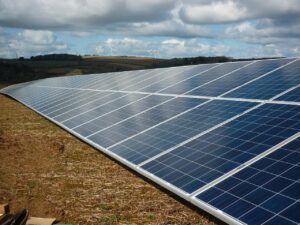
Masdar’s most visible technology signal is its round-the-clock renewable energy project in Abu Dhabi, developed with Emirates Water and Electricity Company. The project is designed to combine a 5.2 GW DC solar photovoltaic plant with a 19 GWh battery energy storage system. Masdar and EWEC have presented it as a project capable of delivering 1 GW of continuous clean power, with operations expected in 2027.
The importance of this project is not only its size. It addresses one of the central challenges in solar-heavy power systems: matching electricity output with demand after sunset and during variable conditions. Solar power can be cheap and fast to build, but without storage, flexible demand, transmission or complementary generation, high solar penetration can create curtailment and reliability challenges. A solar-plus-storage project designed for continuous output is an attempt to make renewable power look more like firm capacity from the perspective of an offtaker. See also: EVs.
The project should still be assessed carefully. A 1 GW continuous-output design does not mean solar and batteries can replace all forms of firm power in every grid. Economics depend on solar resource quality, battery costs, land availability, grid needs, financing terms and the offtake structure. Abu Dhabi has unusually strong solar conditions and a centralized procurement environment, which may make replication easier in some markets than others.
Financing, bonds and the discipline test
Masdar’s growth target requires large amounts of capital. In its January 2026 update, the company said it had invested US$45 billion to date and expected to deploy an additional US$30 billion to US$35 billion in equity and project finance this decade. Masdar also said it would need to add an average of about 10 GW of new capacity each year to reach the next phase of growth.
Its investor materials list US$2.75 billion of green bonds outstanding and long-term credit ratings of AA- from S&P, A1 from Moody’s and AA- from Fitch. Those ratings are important because renewable energy growth is capital intensive. Developers must finance assets before revenue is fully realized, and interest rates, foreign exchange exposure and offtake credit quality can materially affect returns.
Masdar’s public messaging emphasizes disciplined growth, diversified technologies and investment-grade markets. That wording matters. In a period when renewable energy demand is rising but supply chains, grid bottlenecks and policy changes remain challenging, the winners are not necessarily the companies with the largest announcements. They are the companies that convert pipelines into operating assets without overpaying for acquisitions or taking on excessive development risk.
What Masdar’s growth means for the wider energy transition
Masdar’s expansion reflects a broader shift in clean energy. Renewable power is now a mainstream infrastructure asset class, not a niche climate segment. IRENA’s 2026 renewable capacity statistics reported that global renewable power capacity reached 5,149 GW in 2025 after 692 GW of additions. Solar and wind accounted for most of the increase, showing that the global market is still being led by technologies with falling costs and modular deployment characteristics.
At the same time, the International Energy Agency’s 2025 renewables outlook warned that its 2025-2030 growth forecast had been revised down by 5% compared with the previous year because of policy, regulatory and market changes. That is a reminder that growth is strong but not automatic. Grid queues, auctions, permitting, financing costs and political support all influence how quickly announced capacity becomes electricity generation.
For Masdar, the opportunity is clear: use its capital base and partnerships to turn global demand for clean power into contracted assets. The risk is also clear: a 100 GW portfolio by 2030 requires consistent annual execution across many jurisdictions. Masdar’s progress should therefore be judged by operational capacity, financial close announcements, grid connection milestones, storage integration and realized generation, not only by portfolio headlines.
Frequently asked questions
What is Masdar’s clean energy target?
Masdar is targeting 100 GW of renewable energy capacity by 2030. Its January 2026 update said the portfolio had reached 65 GW, while its investor materials list 66.5 GW of gross project capacity across operational, under-construction, committed and advanced-pipeline projects.
Who owns Masdar?
Masdar is jointly owned by TAQA, Mubadala and ADNOC. The current structure was completed in December 2022 and was designed to consolidate renewable energy and green hydrogen efforts under the Masdar brand.
Why is the TERNA ENERGY acquisition important?
The TERNA ENERGY deal gives Masdar a larger European platform, especially in Greece and nearby markets. It also supports Masdar’s plan to expand through both acquisitions and new project development.
What makes the Abu Dhabi solar and battery project notable?
The project is designed to combine 5.2 GW of solar PV with 19 GWh of battery storage to deliver 1 GW of continuous clean power. Its significance is that it moves the discussion from low-cost solar generation toward firm, dispatchable renewable electricity.
Is Masdar guaranteed to reach 100 GW by 2030?
No public target is guaranteed. Masdar has scale, capital access and a growing portfolio, but the 2030 outcome will depend on construction delivery, acquisitions, permitting, grid connections, financing conditions and market policy in multiple countries.