
Solar plus storage is becoming a planning standard
Solar power and battery storage work together by turning variable daytime generation into electricity that can be used later, especially during evening peaks, outages, or periods of high grid prices. Solar panels generate electricity when sunlight is available. Batteries store part of that output and discharge it when the customer or grid needs it more.
In 2026, this pairing is no longer a niche add-on. U.S. Energy Information Administration data published in August 2026 showed utility-scale battery capacity reaching nearly 52 GW by the end of June 2026, after averaging 70% annual growth over the prior three years. For more storage-focused market context, see our energy storage coverage.
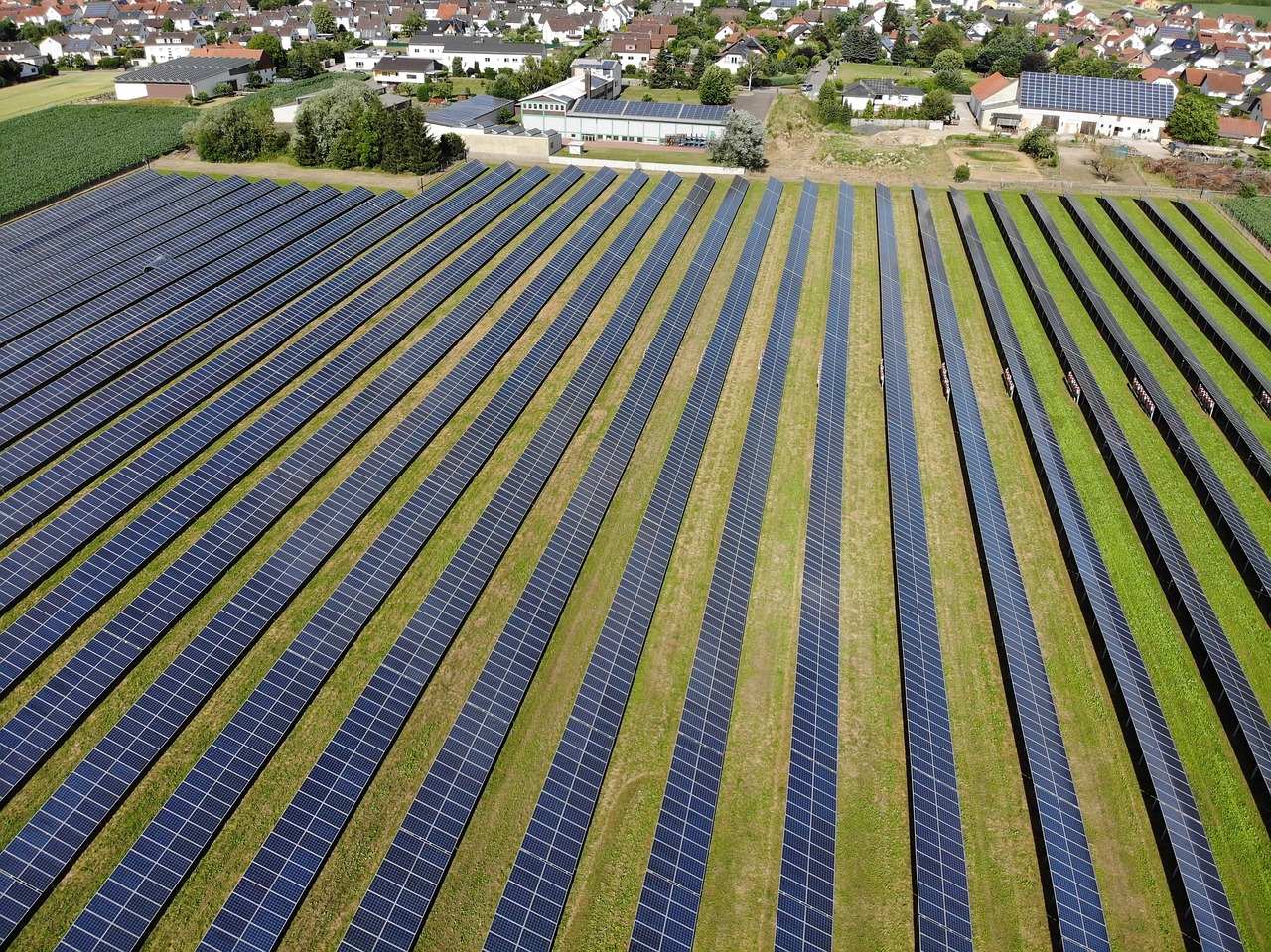
The move toward solar-plus-storage is being driven by three overlapping needs: cleaner electricity supply, more flexible grid operations, and better control over when solar energy is used. Solar power alone can reduce daytime electricity costs. A battery changes the value proposition by shifting some of that energy into higher-value hours. That is why utilities, commercial power users, and homeowners are increasingly evaluating solar and batteries as one integrated energy system.
How the system works
A solar-plus-storage system has four basic functions: generate, convert, store, and dispatch. Photovoltaic panels produce direct current electricity. Inverters convert that electricity into alternating current for buildings or the grid. Batteries store electricity, usually in direct current form, while power electronics control when the battery charges, discharges, or stays in reserve.
The key distinction is between power capacity and energy capacity. Power capacity, measured in kilowatts or megawatts, describes how much electricity a battery can deliver at one moment. Energy capacity, measured in kilowatt-hours or megawatt-hours, describes how long it can keep delivering that power. A 10 kW battery with 40 kWh of usable energy can theoretically provide 10 kW for four hours, although real-world operation depends on efficiency, reserve settings, temperature, and the control strategy.
AC-coupled and DC-coupled designs
Solar and batteries can be connected in different ways. In an AC-coupled system, the solar array and battery each use their own inverter and connect on the AC side. This can be practical for retrofits because a battery can be added to an existing solar installation with less redesign.
In a DC-coupled system, the battery is connected closer to the solar array on the DC side and may share conversion equipment. This can help capture solar energy that would otherwise be clipped by inverter limits, but the design can be more complex and must be carefully controlled.
There is no universal winner between AC and DC coupling. The better choice depends on whether the project is new or retrofitted, how much solar production is expected to be clipped, whether the battery may charge from the grid, interconnection rules, warranty terms, and how the owner plans to operate the system.
Why the market is moving toward paired systems
The strongest market signal is utility-scale deployment. In February 2026, the EIA reported that developers planned to add a record 86 GW of new U.S. utility-scale generating capacity during 2026 if all projects were completed as scheduled. Solar accounted for 51% of those planned additions and battery storage for 28%. The same EIA update listed 43.4 GW of planned utility-scale solar and 24 GW of planned battery storage for the year, with Texas, California, and Arizona leading much of the battery buildout.
Hybrid projects are another important signal. Berkeley Lab’s utility-scale solar and hybrid plant research has tracked a growing population of PV-plus-battery plants, and its interconnection queue work shows that solar and storage continue to represent a very large share of proposed U.S. capacity. Queue data should not be read as a build forecast, because many projects withdraw or change design before construction. Still, it shows developer interest and helps explain why interconnection, permitting, and transmission capacity have become central constraints.
Globally, the International Energy Agency has described batteries as a key technology for integrating higher levels of solar PV and wind. In its 2024 battery analysis, the IEA said global energy storage capacity would need to rise sharply by 2030 in scenarios aligned with climate and energy-security goals. That projection is not a guarantee, but it shows why grid planners increasingly treat storage as part of the renewable energy buildout rather than a separate market.
Where solar power and battery storage create value
The value of solar-plus-storage depends on the user and the local power market. A homeowner may care most about backup power and using more self-generated solar. A business may focus on demand charges, time-of-use rates, and resilience. A utility or independent power producer may optimize for wholesale price spreads, capacity value, ancillary services, and reduced renewable curtailment.
| Use case | Main value | Key design question |
|---|---|---|
| Residential | Backup power, self-consumption, time-of-use savings | Which loads must run during an outage? |
| Commercial and industrial | Peak demand reduction, tariff optimization, resilience | How often do demand peaks occur and how costly are they? |
| Community solar | Higher local value and potential grid support | Can project rules compensate storage services? |
| Utility-scale solar | Energy shifting, capacity contribution, curtailment reduction | What battery duration and dispatch strategy match grid needs? |
| Microgrids | Resilience for critical loads | How many hours or days of autonomy are required? |
For utility-scale projects, the most visible use is shifting low-cost midday solar energy into the evening. In regions with large solar fleets, wholesale prices can fall during sunny hours and rise when solar output drops but demand remains high. A battery can charge during low-price or surplus periods and discharge later, improving the dispatchability of the solar plant.
For commercial users, the economics are more site-specific. Batteries can reduce demand charges if they discharge during a facility’s highest monthly load intervals. They can also support power quality and resilience when paired with appropriate switchgear and controls. However, savings depend heavily on the tariff, load profile, battery cycling limits, and software performance.
For homes, backup power is often the clearest motivation, but system sizing still matters. A small battery may keep essential loads running, such as refrigeration, lighting, communications, and selected outlets. Whole-home backup requires more battery capacity, higher inverter output, load management, or a combination of these. Oversizing a battery without understanding actual outage needs can raise costs without proportionate value.
What to check before sizing a system
Good solar-plus-storage design starts with the load, not with the battery catalog. The first question is when electricity is needed. The second is how much power must be delivered at one time. The third is how long the system needs to operate under normal and abnormal conditions. See also: clean energy.
- Daily load shape: Identify whether consumption peaks in the morning, afternoon, evening, or overnight.
- Solar production profile: Compare local solar output with the timing of demand and grid prices.
- Critical loads: Separate must-run equipment from flexible or nonessential loads.
- Battery duration: Match kWh capacity to the hours of discharge that actually create value.
- Inverter rating: Make sure the system can deliver the required instantaneous power.
- Operating mode: Decide whether the priority is backup, bill management, grid services, or a blend.
- Interconnection limits: Confirm export rules, metering requirements, and utility approvals early.
A common mistake is to size storage only from annual electricity consumption. Annual data can hide the peaks and timing that determine battery value. Interval data, such as 15-minute or hourly consumption, is far more useful for commercial and industrial sites. For homes, a circuit-level backup plan can be more practical than trying to back up every appliance.
Limits and risks that should not be ignored
Battery storage improves the usefulness of solar power, but it does not make solar energy available without limits. Most lithium-ion grid batteries are designed for daily shifting over a few hours, not for seasonal storage. A four-hour battery can be very valuable during an evening peak, yet it is not a substitute for multi-day firm generation during long periods of low renewable output.
Safety and permitting also deserve careful attention. Stationary energy storage systems are governed by electrical, fire, and building code requirements that vary by jurisdiction. NFPA 855 is the key U.S. standard for the installation of stationary energy storage systems, and UL 9540 and UL 9540A are widely used in product safety and thermal runaway evaluation. The practical takeaway is that buyers should look for listed systems, qualified installers, compliant spacing and ventilation, and clear emergency response documentation.
Battery degradation is another real design factor. Batteries lose usable capacity over time as they cycle and age. High temperatures, frequent deep discharges, and aggressive operating strategies can accelerate degradation. A project that looks attractive in year one should also be modeled under expected capacity fade, warranty limits, replacement assumptions, and end-of-life plans.
Policy and market rules can change as well. Net metering structures, time-of-use rates, export compensation, capacity market rules, and tax incentives vary by location and may be revised. Stronger projects are not built on a single policy assumption; they stack value from energy savings, resilience, operational flexibility, and grid services where those services are available.
What the trend means for energy planning
The growth of solar power and battery storage is changing how energy systems are planned. Instead of asking only how much solar capacity can be installed, planners increasingly ask when that solar electricity will be delivered, how predictable the delivery can be, and what grid services the project can provide.
This shift favors better software, stronger interconnection planning, and more transparent performance data. It also requires realistic expectations. Solar-plus-storage can reduce peak demand, improve resilience, lower curtailment, and support cleaner grids. It cannot eliminate every need for transmission, long-duration storage, demand flexibility, or firm capacity. The most credible energy strategies combine these resources rather than treating any one technology as a complete answer.
For buyers and developers, the main lesson is straightforward: a battery should be sized and operated for a defined job. If the job is backup, start with critical loads and outage duration. If the job is bill savings, start with tariffs and interval load data. If the job is grid value, start with interconnection constraints, market rules, and dispatch modeling. Solar power supplies the energy; battery storage determines when that energy can be most useful.
Frequently asked questions
Is battery storage required for solar power?
No. Grid-connected solar can operate without a battery. Storage becomes valuable when the owner wants backup power, higher self-consumption, peak demand reduction, time-of-use savings, or the ability to shift solar production into later hours.
How long can a solar battery power a home or business?
It depends on battery energy capacity, inverter power, the selected loads, weather, and whether solar is available to recharge the battery. A system designed for essential loads may last much longer than one trying to run heating, cooling, water heating, and heavy equipment at the same time.
What is the difference between kW and kWh in battery storage?
kW measures power output at a moment in time. kWh measures stored energy. A higher kW rating helps run larger loads, while a higher kWh rating helps run loads for more hours.
Are solar-plus-storage systems safe?
Properly designed and permitted systems use listed equipment, battery management systems, fire-code-compliant installation practices, and qualified installers. Safety should be evaluated at the full system level, not just by checking an individual battery cell or module.
Will batteries make solar power available 24 hours a day?
Batteries can extend solar energy into evening or outage hours, but most common systems are not sized for unlimited or seasonal supply. Around-the-clock clean power usually requires a mix of solar, storage, wind, demand flexibility, transmission, and other firm resources.