
The short answer is installed cost, not just turbine price
Wind turbine cost depends first on the cost boundary. A turbine supply price covers the machine itself. An installed wind project also includes foundations, transport, cranes, electrical works, roads, grid connection, development, finance, contingency, and operations. Public benchmarks show a wide spread: IRENA reported a 2024 global weighted-average installed cost of about $1,041 per kilowatt for onshore wind, while Berkeley Lab reported recent U.S. land-based wind turbine prices around $900–$1,100 per kilowatt and installed project costs near $1,700 per kilowatt. NREL’s 2024 reference cases put U.S. land-based wind at $1,968 per kilowatt, fixed-bottom offshore wind at $5,411 per kilowatt, and floating offshore wind at $7,349 per kilowatt. In practice, the answer depends on project type, site conditions, financing, and how the estimate defines included costs.
For readers tracking broader wind energy economics, the main rule is straightforward: compare costs on the same basis before drawing conclusions.

Current cost benchmarks by project type
The benchmarks below are useful because they separate turbine price, installed capital cost, and levelized cost of energy. They are not quotes for a specific site. They are public reference points from IRENA, Berkeley Lab, the U.S. Department of Energy, and NREL, using data sets available during 2025 and 2026.
| Project type or metric | Recent public benchmark | What it means |
|---|---|---|
| Global onshore wind installed cost | About $1,041/kW in 2024 | IRENA global weighted-average total installed cost for commissioned onshore projects. |
| U.S. land-based turbine price | About $900–$1,100/kW in recent 2023 data | Machine price range for land-based turbines, before many balance-of-plant and project costs. |
| U.S. land-based installed project cost | Roughly $1,700/kW on a recent capacity-weighted basis | Berkeley Lab benchmark for installed land-based wind projects in 2023 dollars. |
| NREL reference land-based wind project | $1,968/kW and $42/MWh LCOE | Modeled 2024 reference project for a U.S. land-based wind plant. |
| NREL reference fixed-bottom offshore wind | $5,411/kW and $117/MWh LCOE | Modeled U.S. North Atlantic fixed-bottom offshore reference case. |
| NREL reference floating offshore wind | $7,349/kW and $181/MWh LCOE | Modeled U.S. Pacific Coast floating offshore reference case. |
| Large distributed wind reference case | $3,362/kW and $80/MWh LCOE | NREL reference case for a large single distributed wind turbine. |
A simple conversion makes these figures easier to interpret. One megawatt equals 1,000 kilowatts, so $1,700/kW is about $1.7 million per MW of installed capacity. A 3.4 MW land-based turbine at that installed-cost level would represent roughly $5.8 million of project cost on a basic capacity basis. The turbine package alone, using the $900–$1,100/kW range, would be closer to $3.1 million to $3.7 million for the same 3.4 MW nameplate rating. That gap is why the phrase wind turbine cost often creates confusion.
What is included in a wind turbine cost estimate
A complete wind project cost estimate has several layers. The turbine is usually the most visible line item, but it is only one part of the budget. The nacelle, rotor blades, hub, tower, power electronics, and controls form the turbine package. For utility-scale projects, developers then add balance-of-system and balance-of-plant costs such as foundations, internal roads, crane pads, installation labor, collector cables, substations, communications, supervisory control systems, and site restoration.
Development and soft costs can also be material. These include resource assessment, engineering, permitting, legal work, land agreements, environmental studies, interconnection studies, project management, construction insurance, contingency, and construction finance. NREL’s land-based reference breakdown, for example, separates turbine capital cost from balance-of-system and soft-cost categories, which helps explain why an installed project costs much more than the turbine alone.
Some costs may or may not be included, depending on the study or quote. Transmission upgrades beyond the project substation, network reinforcement, tax equity fees, merchant revenue risk, landowner payments, decommissioning reserves, and long-term service agreements can all change the economic picture. A low turbine price therefore does not automatically translate into a low delivered energy cost.
Why onshore wind costs vary so much
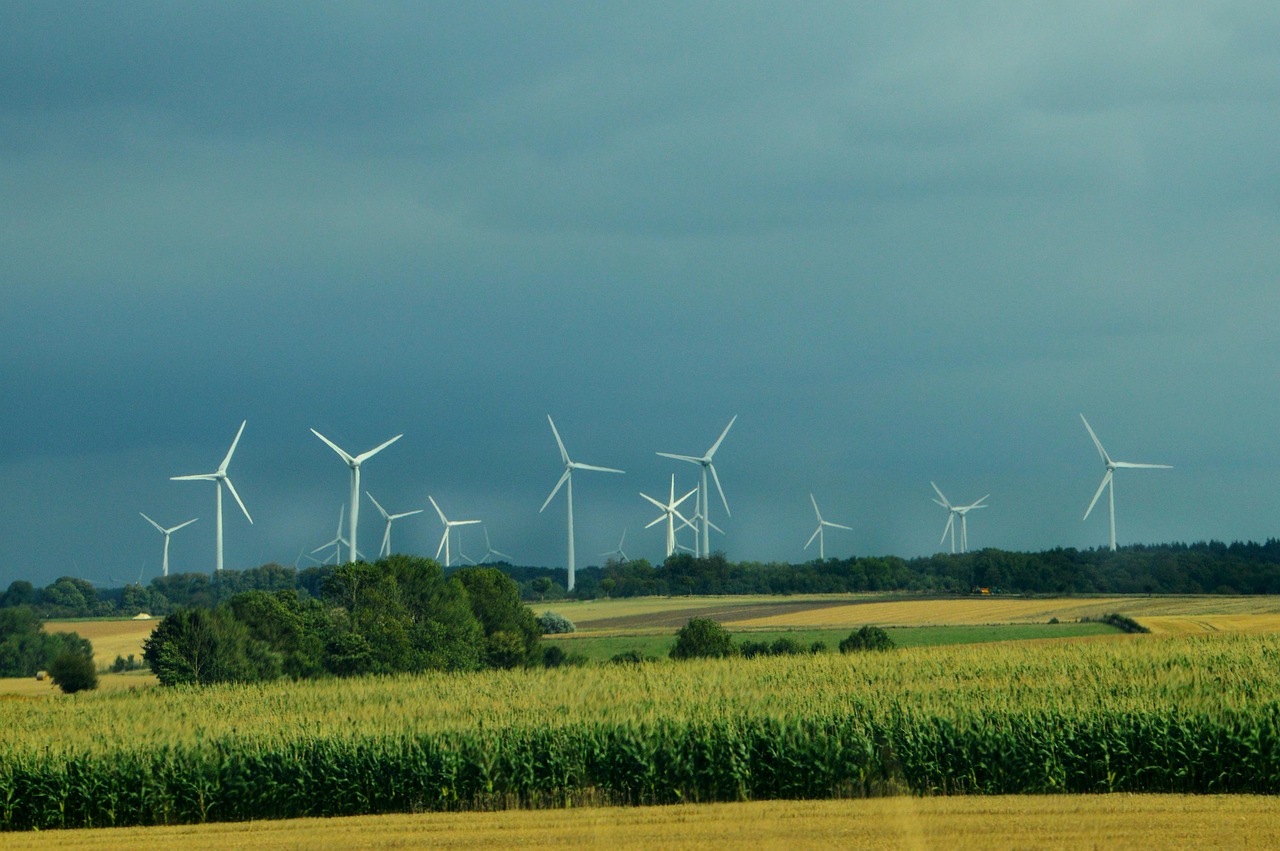
Onshore wind is a mature technology, but project economics are far from uniform. The same turbine model can perform very differently depending on wind resource, distance to grid, terrain, soil conditions, road access, project size, local labor costs, and permitting requirements. A strong wind site can produce more energy from the same equipment, lowering the cost per megawatt-hour even when the installed cost per kilowatt is not the lowest.
Project scale is another major driver. A large wind farm can spread development, mobilization, engineering, and grid-connection costs across more turbines. Smaller projects often face higher per-kilowatt costs because cranes, mobilization, control systems, interconnection, and permitting do not shrink in a perfectly linear way.
Turbine design also matters. Larger rotors and taller towers can increase capital cost, but they may also raise capacity factor by capturing more wind. Berkeley Lab’s U.S. market reporting shows that newly installed land-based turbines have grown significantly over time in capacity, rotor diameter, and hub height. The economic question is not simply whether bigger machines cost more; it is whether the additional energy production outweighs the added capital, transport, and installation complexity.
Regional cost differences can be significant. In recent U.S. data, projects in high-volume wind regions such as SPP and ERCOT have tended to show lower average installed costs than some other regions. That reflects a mix of resource quality, established supply chains, project scale, grid conditions, labor markets, and development experience.
Why offshore wind costs more than land-based wind
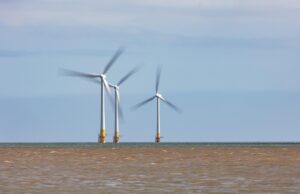
Offshore wind turbines can be much larger than land-based turbines, but offshore projects operate in a more complex construction environment. Foundations or floating platforms must be designed for seabed conditions, water depth, waves, corrosion, and extreme weather. Installation depends on specialized vessels, port infrastructure, marine logistics, subsea cables, offshore substations, weather windows, and higher-cost operations and maintenance.
Fixed-bottom offshore wind is generally less costly than floating offshore wind because fixed foundations are used in shallower waters and are more commercially mature. Floating offshore wind opens deeper-water resources, but it adds platform engineering, mooring systems, dynamic cables, and early-market supply chain risk. That is why NREL’s 2024 reference case shows floating offshore wind with a higher capital cost and LCOE than fixed-bottom offshore wind.
Offshore wind can still be attractive where coastal electricity demand is high, land availability is limited, and offshore wind resources are strong. Its cost comparison with onshore wind, however, should account for location value, transmission needs, grid congestion, policy support, port readiness, and delivery risk. A simple $/kW comparison is useful, but incomplete.
How LCOE changes the cost conversation
Installed cost measures how much it costs to build capacity. Levelized cost of energy, or LCOE, estimates the average cost of producing electricity over the life of the project. LCOE usually combines capital cost, financing, fixed and variable operating costs, expected annual energy production, project life, and sometimes taxes or incentives, depending on the methodology.
This distinction matters. A project with a higher installed cost can still be competitive if it produces more energy, has a lower cost of capital, faces lower operating costs, or captures stronger power prices. Conversely, a low-cost turbine at a weak wind site may deliver a disappointing LCOE because annual energy production is too low. See also: clean energy.
IRENA’s 2024 global cost work found onshore wind among the lowest-cost new renewable power sources on an LCOE basis, with a global weighted average around $0.034/kWh. In the United States, NREL’s reference land-based wind case calculated $42/MWh, while Berkeley Lab’s market reporting estimated an unsubsidized average LCOE of $49/MWh among a sample of projects built in 2023. These figures point in a similar direction, but they are not interchangeable because they use different project samples, assumptions, geographies, and dollar-year conventions.
LCOE also has limits. It does not fully capture when electricity is produced, whether a project is curtailed, the value of capacity, transmission congestion, balancing needs, or broader system costs. For investment decisions, LCOE should be read alongside power price forecasts, interconnection costs, grid value, tax incentives, offtake structure, and project risk.
Questions to ask before comparing wind project quotes
Wind cost comparisons are most useful when the scope is clear. Before comparing a vendor quote, feasibility study, market report, or investment model, ask these questions:
- Is the figure for turbine supply, engineering-procurement-construction, or total installed project cost?
- Does it include foundations, roads, cranes, electrical collection systems, substations, grid interconnection, and development costs?
- What currency and dollar year are being used?
- Is the cost before or after tax credits, grants, domestic content incentives, or other policy support?
- What turbine size, rotor diameter, hub height, and design class are assumed?
- What capacity factor, annual energy production, losses, curtailment, and availability are assumed?
- What project life, debt cost, equity return, inflation, and fixed charge rate are used?
- Are operations, maintenance, warranty, major component replacement, land lease, and decommissioning costs included?
If two estimates answer these questions differently, they are not directly comparable. A lower headline number may simply exclude costs that appear elsewhere in the project model.
What this means for wind buyers, developers, and analysts
For utility-scale onshore projects, the practical starting point is not the turbine price alone but the installed cost per kilowatt and the expected LCOE. Turbine prices near $1,000/kW can be useful for market context, but all-in installed costs closer to $1,700/kW or more may be more realistic for U.S. project-level discussions, depending on site and scope.
For offshore wind, the cost discussion should begin with project class. Fixed-bottom and floating offshore wind have different engineering, logistics, financing, and risk profiles. Treating them as one technology can lead to misleading comparisons.
For distributed and small wind, cost per kilowatt is usually higher than for utility-scale wind. Smaller turbines cannot spread engineering, interconnection, installation, and permitting costs over hundreds of megawatts. The business case often depends on retail electricity prices, resilience value, available land, local wind resource, and whether the system can be integrated efficiently with on-site demand.
The most reliable conclusion is that wind turbine cost is a system question. The turbine matters, but so do wind speed, project scale, grid access, financing, construction logistics, and long-term operations. A useful cost estimate must show both the capital cost boundary and the energy-output assumptions behind it.
Frequently asked questions
How much does one utility-scale wind turbine cost?
Using recent U.S. land-based benchmarks, a 3.4 MW turbine package at $900–$1,100/kW would cost about $3.1 million to $3.7 million before many project-level costs. On an installed-cost basis near $1,700/kW, the same capacity would represent about $5.8 million. A real project quote can be higher or lower depending on site, scope, timing, and contract structure.
Why is installed cost higher than the turbine price?
The turbine price does not usually include every cost needed to deliver electricity. Foundations, transport, cranes, roads, electrical systems, substations, permitting, engineering, financing, contingency, and grid-related work can add substantially to the budget.
Are offshore wind turbines cheaper because they are larger?
No. Offshore turbines are larger, but offshore projects usually cost more per kilowatt because of marine foundations or floating platforms, specialized vessels, subsea cables, offshore substations, port requirements, weather delays, and higher maintenance complexity.
Does a lower wind turbine cost guarantee cheaper electricity?
No. Cheaper equipment helps, but energy cost also depends on wind resource, capacity factor, downtime, financing, operating cost, curtailment, grid connection, project life, and revenue structure. A more expensive turbine at a stronger wind site can sometimes produce lower-cost electricity.
What is the best metric for comparing wind projects?
Use installed cost per kilowatt to compare build cost, and LCOE or project-specific power price modeling to compare electricity cost. For investment decisions, also compare grid value, offtake terms, incentives, interconnection risk, construction risk, and long-term maintenance obligations.