
100% Renewable Energy by 2050? A Global Model Maps the Way Forward
Achieving a fully renewable energy system by 2050 is technically feasible but politically and economically complex. The global energy transition depends on rapid technology deployment, massive infrastructure investment, and coordinated policy action. Current models from agencies like the IEA and IRENA show that renewables could supply more than 85% of electricity by mid-century if nations maintain their net-zero commitments. Yet, reaching the final stretch to 100% will require breakthroughs in storage, smarter grids, and social acceptance of large-scale change.
Assessing the Feasibility of Achieving 100% Renewable Energy by 2050
The path toward full renewability is shaped by long-term demand growth, regional inequalities, and technology adoption rates. Understanding how these forces interact helps explain both the promise and limits of a green energy future.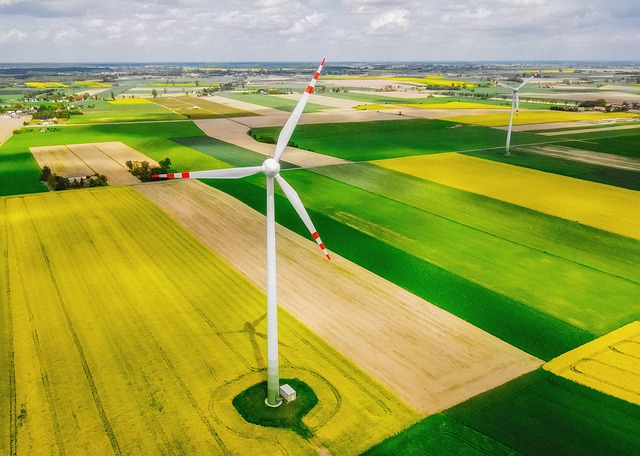
Global Energy Demand Projections and Challenges
Global energy consumption is projected to rise by nearly 50% between 2020 and 2050, driven mainly by population growth and industrial expansion in Asia and Africa. Electrification of transport, heating, and industry will further increase power demand even as efficiency gains offset part of it. However, disparities remain stark: while Europe focuses on decarbonization, many developing regions still struggle with universal access to electricity. This uneven readiness complicates synchronized progress toward global targets.
Evaluating the Current State of Renewable Energy Deployment
Renewable capacity has grown rapidly—solar photovoltaic installations now exceed one terawatt globally, with wind power close behind. Hydropower remains dominant in total generation share but faces environmental constraints. Emerging economies such as China, India, and Brazil are now central players in renewable manufacturing and deployment. Policy frameworks vary widely: some nations offer strong feed-in tariffs or carbon pricing schemes; others still subsidize fossil fuels. These policy asymmetries influence both investment flows and technology diffusion rates.
Technological Foundations of Green Energy Systems
The technological backbone of a renewable system lies in continuous improvement across solar, wind, storage, and digital control systems. Cost declines have already transformed market dynamics but sustaining this momentum requires innovation beyond incremental gains.
Advances in Solar and Wind Power Technologies
Photovoltaic cell efficiency has surpassed 25% in commercial modules thanks to perovskite-silicon tandem designs. Wind turbines now reach hub heights over 160 meters with blades exceeding 100 meters in length, capturing steadier winds at altitude. Offshore wind farms are expanding rapidly across Europe and Asia, while concentrated solar power offers dispatchable heat storage for nighttime generation. These advances collectively push renewables closer to parity with conventional sources even without subsidies.
The Role of Energy Storage Solutions in a Renewable Future
Energy storage bridges the gap between intermittent generation and continuous demand. Lithium-ion batteries dominate current deployments due to falling prices below $150 per kWh. Solid-state batteries promise higher density and safety for future grids. Flow batteries using vanadium or iron chemistries provide longer-duration options suited for utility-scale balancing. Hydrogen also emerges as a versatile medium—produced via electrolysis during surplus periods then used for power generation or transport fuel later on. Smart grids integrating AI-based control systems are essential to coordinate these diverse assets efficiently.
Integrating Green Technologies into Existing Energy Systems
Transitioning from fossil-based grids to renewable networks requires modernization at every level—from transmission lines to market design—to accommodate distributed generation and variable output.
Modernizing Grid Infrastructure for Renewables Integration
Traditional centralized grids must evolve into flexible networks capable of two-way power flows between producers and consumers. Digitalization enables predictive analytics for load forecasting while automation enhances fault detection and restoration times. Cross-border interconnections allow excess renewable power from one region to stabilize shortages elsewhere, improving reliability without additional fossil backup capacity.
Sector Coupling: Linking Electricity with Transport, Heating, and Industry
Deep decarbonization hinges on coupling sectors that historically operated separately. Electric vehicles transform mobility while serving as mobile storage units through vehicle-to-grid systems. Heat pumps powered by renewables replace gas boilers in residential heating; district systems integrate geothermal or solar thermal sources for urban areas. In heavy industry, hydrogen derived from renewables substitutes coal in steelmaking or natural gas in chemical production—an essential step toward carbon neutrality.
Economic and Policy Considerations for a Renewable Transition
Financing remains both the enabler and bottleneck of transformation. Trillions of dollars must be mobilized through innovative instruments that align investor returns with climate goals.
Investment Requirements and Financial Mechanisms
The IEA estimates cumulative investment needs exceeding $100 trillion globally by 2050 to achieve net-zero pathways. Public-private partnerships can share risks across infrastructure projects while green bonds channel capital into certified sustainable assets. Carbon pricing mechanisms create economic incentives by internalizing environmental costs into market decisions—a proven driver for clean technology adoption when consistently applied.
Policy Frameworks Supporting Renewable Expansion
National strategies increasingly embed net-zero targets within law—examples include the EU’s Green Deal or Japan’s Basic Energy Plan revisions emphasizing green hydrogen development. International cooperation through multilateral platforms accelerates knowledge transfer and standardization across markets. Regulatory reforms allowing distributed generation empower prosumers who generate their own electricity from rooftop solar or small wind systems.
Environmental and Social Dimensions of a Fully Renewable System
Beyond technical feasibility lies the challenge of aligning ecological integrity with social equity during transition processes that reshape entire economies.
Land Use, Resource Constraints, and Ecological Impacts
Large-scale deployment demands significant material inputs such as lithium for batteries or rare earth elements for turbines. Mining expansion raises concerns over water use, pollution, and biodiversity loss if not carefully managed. Multi-use planning—combining agriculture with solar arrays or offshore wind with marine conservation zones—can mitigate land conflicts while supporting local livelihoods.
Workforce Transformation and Societal Adaptation
Renewable industries already employ over 13 million people worldwide according to IRENA data, yet fossil fuel decline will displace millions more unless retraining programs expand quickly. Technical education focusing on electrical engineering, data analytics, and maintenance skills becomes vital for inclusive growth. Public engagement also matters: societal acceptance determines whether new projects proceed smoothly or face opposition over aesthetics or land rights.
Modeling Pathways Toward 100% Renewable Energy Scenarios by 2050
Energy transition models simulate possible futures under varying assumptions about cost curves, policy ambition levels, and behavioral change rates.
Key Assumptions in Global Energy Transition Models
Models from organizations like IEA’s Net Zero Emissions scenario assume rapid technology learning rates reducing solar costs another 40% by mid-century while electrification doubles total electricity demand share globally. Sensitivity analyses test resilience against slower innovation or weaker policy enforcement showing delayed but not derailed outcomes if corrective measures follow promptly.
Regional Pathways: Differentiated Strategies Across Economies
Developed nations prioritize grid optimization through digital twins and flexible markets; developing economies focus on expanding access via decentralized microgrids powered by solar mini-systems or hybrid setups combining wind-diesel transitions before full decarbonization occurs. Cross-border collaboration—for example linking North African solar exports with European grids—illustrates how integrated planning can balance resource endowments regionally.
Barriers to Achieving Complete Renewable Penetration
Even optimistic projections face practical hurdles rooted in physics, economics, and governance structures that resist abrupt transformation.
Technical Limitations Affecting System Reliability
Solar irradiance fluctuations or prolonged low-wind periods create reliability gaps known colloquially as “dark doldrums.” Storage technologies today cannot yet economically sustain multi-week coverage at national scale though research continues rapidly toward seasonal solutions using hydrogen or compressed air systems. Cybersecurity risks grow as digital controls proliferate across interconnected networks requiring robust protection standards under IEC guidelines.
Political, Economic, and Institutional Constraints
Countries reliant on oil exports confront fiscal instability when transitioning too fast without diversification strategies; this slows collective progress despite shared climate objectives. Critical mineral supply chains concentrate geographically—cobalt primarily from Congo or nickel from Indonesia—introducing new geopolitical dependencies reminiscent of past fossil fuel politics. Legacy utilities often resist decentralization reforms threatening established revenue models unless regulatory incentives realign interests toward service-based compensation structures.
Emerging Innovations Shaping the Future Energy Landscape
While existing green energy technologies form today’s foundation, emerging innovations could redefine what “renewable” means beyond traditional categories.
Next-generation Technologies Beyond Conventional Renewables
Fusion research aims for commercial demonstration plants after 2040 offering near-limitless clean baseload potential if confinement challenges are solved economically. Small modular nuclear reactors provide low-carbon stability complementing variable renewables where geography limits other options. Bioenergy combined with carbon capture (BECCS) creates negative emissions potential crucial for offsetting residual sectors like aviation or agriculture post-2050 scenarios.
The Role of Artificial Intelligence in Optimizing Renewable Operations
AI applications already improve turbine maintenance scheduling through predictive analytics reducing downtime significantly compared with manual inspections. Real-time forecasting enhances dispatch decisions balancing variable inputs dynamically within milliseconds across grid nodes while autonomous control algorithms fine-tune voltage stability under high penetration conditions increasing overall network efficiency sustainably.
Evaluating the Realistic Outlook Toward 2050 Goals
The probability of achieving full renewability depends less on physical limits than coordinated decision-making speed during this decisive decade ahead.
Probabilistic Assessment of Achieving Full Renewability
Optimistic scenarios suggest up to 90–95% renewable penetration achievable globally given sustained investment trends; conservative projections hover around two-thirds if policies stagnate post-2035 due to cost plateaus or political fatigue cycles recurring historically during transitions like electrification waves last century.
Strategic Priorities Moving Forward
Strategic priorities include strengthening international coordination on R&D funding particularly across storage chemistry diversity projects; harmonizing technical standards under ISO frameworks; embedding resilience metrics alongside decarbonization benchmarks so future grids withstand climate-induced shocks without backsliding into fossil fallback reliance during crises.
FAQ
Q1: Is achieving 100% renewable energy globally by 2050 technically possible?
A: Yes, it is technically possible based on current modeling but requires unprecedented scale-up in storage capacity, grid modernization, and supportive global policy alignment.
Q2: Which sectors will be hardest to decarbonize?
A: Heavy industries such as steelmaking, cement production, aviation fuels remain most challenging due to process emissions requiring advanced hydrogen or carbon capture solutions.
Q3: How much investment is needed annually?
A: Estimates range around $3–4 trillion per year globally through mid-century encompassing infrastructure upgrades plus R&D expenditures across all major technologies.
Q4: What role does AI play in renewable operations?
A: AI enhances predictive maintenance efficiency reduces operational costs improves real-time balancing critical under high variable generation shares ensuring system stability continuously.
Q5: Are developing countries positioned to benefit equally?
A: Benefits depend heavily on financing access technology transfer capacity building programs enabling equitable participation otherwise disparities risk widening despite shared climate goals.