
The short answer
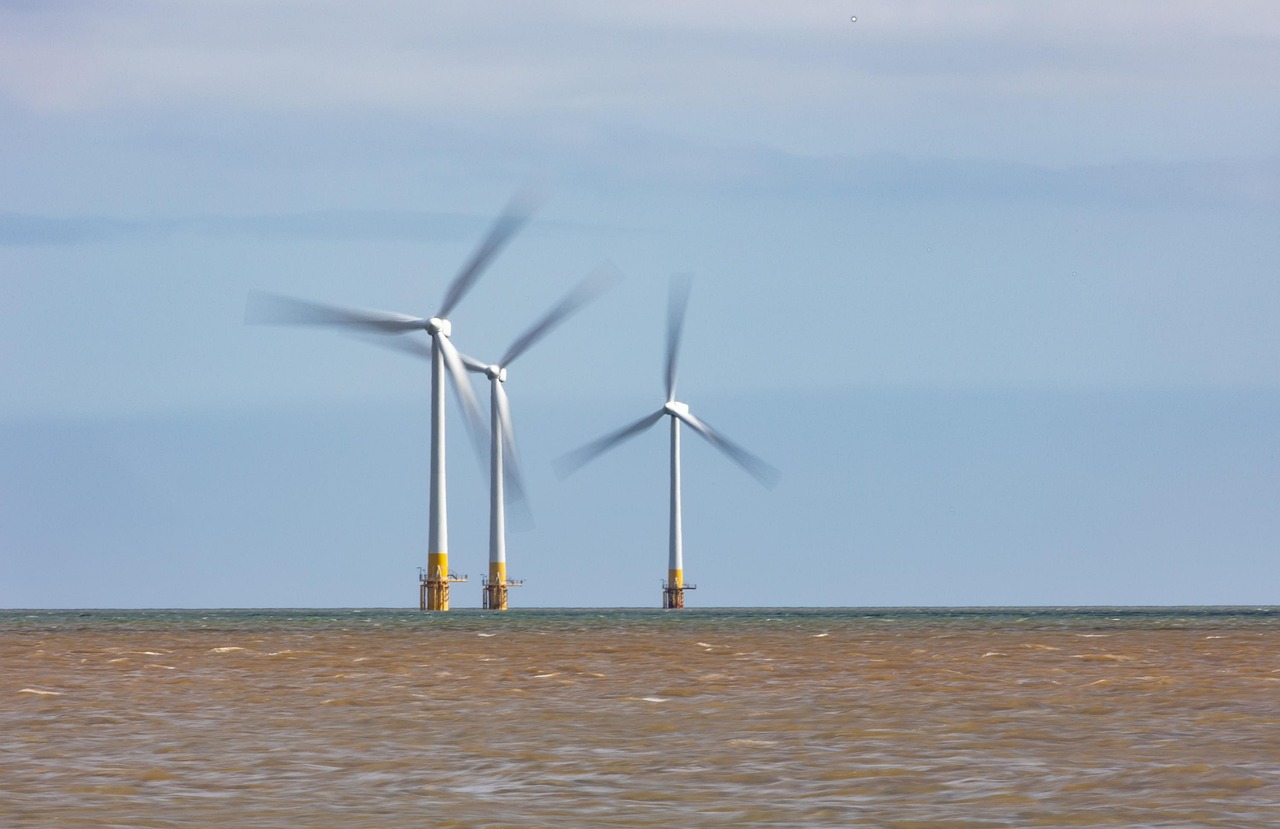
Wind turbines in the ocean, usually called offshore wind turbines, convert stronger and steadier marine winds into electricity and send that power to land through subsea cables. In shallow waters, the technology is no longer experimental. Fixed-bottom offshore wind farms are already commercial in Europe, China and parts of the United States. The next stage is harder. Many high-quality wind areas are too deep for conventional foundations, so floating platforms, larger ports, stronger transmission links and careful ocean planning will determine how quickly the sector can grow.
The main point is straightforward: ocean wind can deliver large volumes of clean electricity near coastal demand centers, but it is infrastructure-heavy. A project depends on engineering, seabed conditions, grid connections, wildlife protection, fishing access, financing and stable policy. For related industry coverage, visit our wind energy section.

How ocean wind turbines turn wind into electricity
An offshore wind turbine works on the same basic principle as a land-based turbine. Wind moves across the blades, the rotor turns, and a generator in the nacelle converts mechanical energy into electrical energy. Offshore, the difference is the scale of the machine and the supporting system around it.
A commercial ocean wind project normally includes turbines, foundations or floating platforms, inter-array cables, one or more offshore substations, export cables, landfall infrastructure and an onshore grid connection. The turbines are only the most visible part. Below the waterline, foundations must withstand waves, currents, seabed movement and corrosion. Electrical systems must move power over long distances while staying protected from anchors, fishing gear and seabed changes.
- Blades and rotor: Capture wind energy and turn the main shaft.
- Nacelle: Houses key mechanical and electrical equipment, including the generator.
- Tower: Raises the rotor into stronger wind and transfers loads to the foundation or floater.
- Array cables: Link groups of turbines and collect electricity within the wind farm.
- Offshore substation: Steps up voltage before power is exported to shore.
- Export cable: Carries electricity from the project to the onshore grid connection.
This system explains why offshore wind projects take years to plan. A developer is not simply placing turbines in open water. Before construction, it must assess seabed geology, wind resources, shipping lanes, fishing activity, protected habitats, military uses, cable routes and coastal grid capacity.
Fixed-bottom and floating turbines solve different ocean problems
The most important technology split is between fixed-bottom and floating offshore wind. Public guidance from U.S. energy agencies and national laboratories commonly uses about 60 meters of water depth as a practical dividing line, although the exact choice depends on economics, seabed conditions and project design.
| Design type | Typical setting | Main advantage | Main limitation |
|---|---|---|---|
| Fixed-bottom monopile | Shallow to moderate water with suitable seabed | Mature and widely used for commercial projects | Less suitable as water depth increases |
| Fixed-bottom jacket | Deeper or more challenging fixed-bottom sites | More structural flexibility than a simple monopile | More complex fabrication and installation |
| Floating platform | Deep water where seabed-fixed foundations are impractical | Opens large wind resources farther offshore | Earlier-stage market with higher cost and port needs |
Fixed-bottom projects dominate installed offshore wind capacity because they can use proven foundation concepts and installation methods. Floating wind is strategically important because many coastlines, including parts of the U.S. Pacific Coast, Japan, South Korea, Norway and deeper Atlantic areas, reach deep water quickly. In the United States, federal energy sources have repeatedly noted that a large share of offshore wind potential lies in waters too deep for standard fixed-bottom foundations.
Floating wind, however, should not be treated as equally mature. Global floating wind capacity remains small compared with total offshore wind capacity. Industry figures for the end of 2024 put installed floating capacity in the hundreds of megawatts, while total offshore wind capacity was measured in tens of gigawatts. That gap affects costs, bankability, installation experience and insurance.
Why put wind turbines in the ocean
Ocean wind offers advantages that are difficult to match on land. Offshore wind resources are often stronger and less turbulent, allowing turbines to produce more electricity over time. Coastal regions also include many major cities, ports and industrial clusters, so offshore projects can be located closer to demand than remote inland generation.
Scale is another factor. Offshore turbines can be very large because blades, towers and nacelles can often move by specialized vessels instead of traveling over roads and bridges. Larger turbines can reduce the number of foundations and cables needed for a given project capacity, although they also require stronger installation vessels, larger port facilities and careful reliability management.
Offshore wind also avoids some land-use conflicts linked to large onshore energy projects. It does not avoid conflict altogether. The ocean is already used by fisheries, shipping, defense, recreation, tourism, telecommunications and wildlife. A good offshore wind site is therefore not just a windy site. It is a site where energy production can be balanced with existing ocean uses.
The hard parts are below the surface and on the grid
The public often focuses on turbine blades, but many of the hardest problems are underwater or onshore. Before construction, developers conduct geophysical and geotechnical surveys to understand seabed conditions. Foundation design must account for water depth, sediment type, wave loading, scour, earthquake risk in some regions and extreme weather.
Cables are another critical constraint. Inter-array cables connect turbines to one another, while export cables carry electricity to shore. Cable routes must avoid sensitive habitats where possible, cross other infrastructure safely and reach a feasible landfall. Once on land, the project still needs substation capacity and transmission availability. A strong offshore wind resource is less valuable if the onshore grid cannot absorb the power.
Operations and maintenance are also more difficult offshore. Technicians need vessels or helicopters, weather windows can delay work, and saltwater accelerates corrosion. Ports must have heavy-lift capacity, storage space and deepwater access. These requirements help explain why offshore wind development often becomes a regional industrial strategy, not just a power generation project.
Environmental and ocean-use questions need project-specific answers
Wind turbines in the ocean can reduce power-sector emissions during operation because they generate electricity without burning fuel. Still, offshore wind is not impact-free. Environmental reviews commonly examine underwater construction noise, seabed disturbance, cable electromagnetic fields, vessel traffic, bird and bat interactions, marine mammals, fish habitat, benthic organisms and visual effects from shore.
Some impacts are temporary and construction-related, such as pile-driving noise or vessel activity. Others may last for the operating life of the project, including new hard structures on the seabed, changes around scour protection and altered patterns of fishing access. Turbine foundations can create reef-like habitat for some species, but that does not automatically mean the net ecological effect is positive. The outcome depends on location, species, project layout and long-term monitoring. See also: clean energy.
In the United States, offshore wind projects in federal waters are reviewed through a process led by the Bureau of Ocean Energy Management, with input from agencies such as NOAA Fisheries and the U.S. Fish and Wildlife Service. Reviews typically consider alternatives, mitigation and monitoring. Common mitigation tools include seasonal construction limits, protected-species observers, noise-reduction measures, vessel speed rules, cable burial, fisheries communication plans and post-construction monitoring.
The most useful way to discuss marine impacts is to avoid both extremes. It is not accurate to assume that offshore wind has no environmental footprint. It is also not accurate to treat every project as equally harmful regardless of evidence. The right standard is project-specific, science-based review with transparent data before, during and after construction.
Market reality in 2026
Offshore wind has grown rapidly but unevenly. Industry data published in 2025 put global installed offshore wind capacity at roughly 83 gigawatts by the end of 2024. China and Europe account for most installed capacity, while the United States remains a smaller but closely watched market.
The U.S. picture is especially mixed in 2026. Operational turbines exist at Block Island, South Fork, Vineyard Wind and the Coastal Virginia Offshore Wind site. Dominion Energy reported that Coastal Virginia Offshore Wind delivered power to the regional grid for the first time on March 23, 2026, with full project completion expected in 2027. When complete, that Virginia project is planned as a 2.6 gigawatt offshore wind farm using 176 turbines.
At the same time, federal policy uncertainty has affected the U.S. pipeline. A presidential memorandum dated January 20, 2025 temporarily withdrew Outer Continental Shelf areas from new offshore wind leasing, and BOEM later rescinded designated Wind Energy Areas on July 30, 2025. That does not erase every already leased or permitted project, but it changes expectations for new leasing and future project development. For readers following ocean wind investment, the distinction between existing projects and future leasing is essential.
What to watch next
The next phase of offshore wind will be shaped by more than turbine size. The main questions are whether floating platforms can move from demonstration to repeatable commercial projects, whether ports and installation vessels can keep up, and whether grid planning can reduce bottlenecks before projects are ready to connect.
- Floating wind costs: Deepwater markets need lower-cost platforms, moorings and dynamic cables.
- Transmission planning: Coordinated offshore grids may reduce repeated cable landfalls and congestion.
- Port capacity: Large turbines require heavy-lift quays, storage areas and deepwater access.
- Environmental monitoring: Better baseline and post-construction data will improve siting and mitigation.
- Policy stability: Auctions, permits, tax rules and power contracts must be predictable enough for long construction timelines.
- Supply chain resilience: Blades, foundations, cables, substations and vessels are all potential bottlenecks.
For energy buyers and policymakers, the key lesson is that offshore wind is not a single technology decision. It is a full infrastructure system. The turbine captures the wind, but the project succeeds only when marine engineering, transmission, environmental review, local acceptance and finance move together.
Frequently asked questions
Are wind turbines in the ocean the same as offshore wind turbines?
Yes. The common industry term is offshore wind turbines. They may be built in oceans, seas, large lakes or other major bodies of water, depending on the market and regulatory framework.
How far from shore are ocean wind turbines placed?
Distance varies by project. Developers balance wind quality, water depth, seabed conditions, visual impact, shipping routes, fisheries, cable cost and grid access. Some projects are relatively near shore, while others are located dozens of miles offshore.
Can offshore wind turbines float?
Yes. Floating turbines sit on platforms moored to the seabed rather than fixed directly into it. This approach is important for deepwater coastlines, but it is still less mature than fixed-bottom offshore wind.
Do offshore wind turbines affect marine life?
They can. Potential effects include construction noise, seabed disturbance, vessel traffic, cable-related electromagnetic fields and habitat changes around foundations. The scale and significance of those effects depend on the site, species, construction method and mitigation measures.
Are ocean wind turbines better than onshore wind turbines?
Not always. Offshore wind can access strong winds near coastal demand centers and use very large turbines, but it usually has higher construction, maintenance and grid-connection complexity. Onshore and offshore wind often serve different roles in a power system.