
What American clean power means now
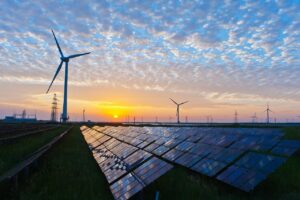
American clean power is no longer just a story about adding more wind turbines or solar farms. In 2026, the term covers a wider build-out: utility-scale solar, land-based wind, battery storage, transmission, and the market rules that determine whether those assets can connect to the grid.
The sector is expanding because U.S. electricity demand is rising again, driven by data centers, manufacturing, electrification, and population growth in high-demand regions. But growth in project announcements is not the same as a completed energy transition. The practical test is whether projects can secure interconnection, permits, equipment, financing, tax eligibility, and offtake agreements quickly enough to become operating grid assets.
For more context on the wider energy transition, see our clean energy coverage.
The numbers show momentum, but not a finished transition
The American Clean Power Association reported that U.S. developers installed more than 50 GW of utility-scale solar, wind, and energy storage in 2025. It was the first time annual clean power deployment crossed that threshold. The association’s April 2026 annual market report also said clean power accounted for 91% of new power capacity connected to the U.S. grid in 2025 and supported more than 1.4 million jobs across direct and broader economic activity.
Deployment continued into 2026. In its September 3, 2026 quarterly market report, the association said developers brought 164 utility-scale solar, storage, and wind projects online in the second quarter, adding 17.1 GW of new capacity. The same report put total U.S. clean power capacity at nearly 388 GW and said battery storage had surpassed 50 GW of installed capacity nationwide.
Those figures matter, but they need context. Capacity additions measure the size of equipment connected to the grid, not the amount of electricity produced hour by hour. The U.S. Energy Information Administration reported that, in 2025, renewable energy sources supplied about 24% of U.S. utility-scale electricity generation, while natural gas supplied about 41%, nuclear about 18%, and coal about 17%. Clean resources are dominating new additions, but the existing generation mix still includes a large fossil fuel base.
| Source period | Reported signal | What it means |
|---|---|---|
| American Clean Power Association, 2025 market reporting | More than 50 GW of utility-scale solar, wind, and storage installed in 2025 | Clean power became the dominant source of new capacity additions, not the dominant source of total generation. |
| American Clean Power Association, Q2 2026 report | 17.1 GW added in one quarter; total clean power capacity near 388 GW | The deployment pace remained strong into 2026, led by solar, wind, and storage. |
| U.S. Energy Information Administration, 2026 capacity outlook | Developers planned 86 GW of new utility-scale capacity in 2026, led by solar, batteries, and wind | The project pipeline is large, but planned additions are not the same as completed projects. |
| EIA 2025 electricity generation data | Renewables supplied about 24% of utility-scale generation | The clean power build-out is reshaping growth at the margin while legacy generation remains significant. |
Why storage is changing the clean power story
The clean power market is increasingly a solar-plus-storage and wind-plus-storage market. Battery storage does not generate electricity by itself, but it changes when electricity can be used. That is why storage appears in many clean power capacity totals even though it is not a fuel source in the same way as wind or sunlight.
Its practical value is flexibility. Solar output is strongest during daylight hours, while many grids face tighter conditions in the evening as solar production falls and demand remains high. Batteries can absorb surplus generation and discharge during higher-value hours. That makes storage especially important in markets with rapid solar growth, volatile peak demand, or congestion that limits the movement of power.
The EIA’s 2026 capacity outlook shows the scale of the shift. Developers planned to add 86 GW of utility-scale generating capacity in 2026, which would be a record if realized. Solar represented 51% of those planned additions, battery storage 28%, and wind 14%. The same EIA outlook said developers planned 24 GW of utility-scale battery storage in 2026, compared with a record 15 GW added in 2025.
Storage does not solve every reliability problem. Battery duration, state of charge, transmission availability, local grid constraints, and market dispatch rules all affect its value. A four-hour battery can be highly useful for evening peaks, but it is not the same resource as long-duration storage, hydropower, nuclear, geothermal, or dispatchable thermal generation during multi-day weather events. The more grounded conclusion is that storage is becoming part of standard grid planning rather than a niche add-on.
The grid is now the main execution test
The clean power debate has moved from whether the United States can develop enough project proposals to whether enough of those proposals can actually connect to the grid. Lawrence Berkeley National Laboratory’s 2026 edition of its interconnection queue analysis found 2,061 GW of generation and storage capacity actively seeking grid interconnection at the end of 2025. That was down 10% from 2024, but still far larger than annual construction volumes.
The composition of the queue shows where developer interest remains concentrated. Berkeley Lab reported 773 GW of active solar capacity, 749 GW of storage, 220 GW of wind, and 253 GW of natural gas in queues at the end of 2025. It also noted that many projects entering queues will not ultimately be built because they still need land agreements, permits, customers, equipment, financing, and sometimes expensive transmission upgrades.
This is the central bottleneck for American clean power. The country has a large pool of proposed projects, but a queue position does not equal power delivery. Interconnection studies can take years, upgrade costs can change project economics, and transmission congestion can weaken the value of otherwise attractive sites. Developers increasingly have to think less like pure generation builders and more like grid strategists, choosing locations based on available capacity, deliverability, curtailment risk, and the timing of grid studies.
Grid pressure is also rising because demand forecasts are moving upward. The North American Electric Reliability Corporation’s 2025 Long-Term Reliability Assessment said aggregated assessment-area summer peak demand is forecast to rise by more than 224 GW over ten years, with winter peak demand expected to grow even more. NERC identified data centers and other large commercial and industrial loads as major drivers in several regions, including Texas, PJM, and parts of the Western grid.
Policy timing is shaping which projects move first
Policy is another reason the 2026 clean power market feels urgent. Federal tax credit rules changed after Public Law 119-21, and the IRS instructions for the clean electricity production credit state that applicable wind or solar facilities must generally begin construction on or before July 4, 2026, or be placed in service before 2028 to qualify under the relevant wind and solar timing rule. Because July 4, 2026 has already passed, project teams are now focused on which assets can still meet placed-in-service deadlines or other applicable requirements. See also: EVs.
This timing matters for project finance. A tax credit can influence whether a project clears an investment committee, wins a power purchase agreement, or remains competitive against other resources. When eligibility windows tighten, developers tend to prioritize projects with advanced interconnection status, secured land, completed permitting, equipment availability, and credible construction schedules.
The policy effect should not be overstated. Electricity demand growth, corporate procurement, state-level clean energy requirements, falling technology costs in some segments, and utility resource planning all continue to support the market. A more accurate reading is that tax rules influence which projects are built first, which are delayed, and which may need to be repriced.
What this means for utilities, buyers, and communities
For utilities, American clean power is now a resource planning issue rather than a branding exercise. Solar, wind, and storage can be built faster than many large conventional assets, but they require careful modeling of hourly output, transmission deliverability, capacity accreditation, and extreme-weather performance. Utilities will increasingly need portfolios that combine clean resources with firm capacity, demand response, transmission expansion, and better forecasting for large loads.
For corporate power buyers, the market is more competitive and more complicated. Large customers seeking clean electricity cannot assume that signing a contract is enough. Project bankability depends on interconnection status, supply chain risk, permitting, tax eligibility, and the local congestion profile. Buyers that need near-term power for data centers or factories may favor projects already under construction or assets with a clear path to commercial operation.
For communities, the impact is local. Clean power projects can bring tax revenue, land lease payments, construction work, and long-term operations jobs. They can also raise questions about land use, viewsheds, wildlife, battery fire safety, local road impacts, and who benefits from the electricity. Better community engagement is not a public relations extra; it is part of project execution.
The most realistic view is that American clean power is entering a more mature phase. The first phase was proving that wind and solar could scale. The second was pairing them with batteries and better procurement models. The current phase is about grid integration, policy durability, and speed to power. The market is growing, but its value will be measured by delivered electricity, reliability contribution, and local acceptance rather than headline capacity alone.
Frequently asked questions
Does American clean power mean the same thing as renewable energy?
Not always. Renewable energy usually refers to sources such as wind, solar, hydropower, geothermal, and biomass. In U.S. market reporting, clean power often includes utility-scale wind, solar, and battery storage, and may also be discussed alongside transmission. Battery storage is not a generation source, but it helps move clean electricity to the hours when the grid needs it most.
Why can clean power dominate new capacity but still supply a smaller share of electricity?
Capacity and generation are different measures. Capacity is the maximum output a resource can provide under specific conditions. Generation is the electricity actually produced over time. Wind and solar output varies with weather and time of day, while older gas, coal, nuclear, and hydropower plants still make up a large part of the existing U.S. generation fleet.
What is the biggest constraint on U.S. clean power growth?
The biggest near-term constraint is not a lack of proposed projects. It is the ability to move projects through interconnection, transmission upgrades, permitting, financing, procurement, and construction. Grid queues remain large, and many projects in those queues will not be built without stronger execution conditions.
Why is battery storage so important for clean energy?
Battery storage helps shift electricity from periods of high production to periods of high demand. This is especially valuable for solar-heavy grids, where midday output can be strong but evening demand remains high after solar production declines. Storage also supports grid flexibility, though it does not replace every type of firm or long-duration resource.
Will policy changes stop American clean power growth?
Policy changes can slow, redirect, or reprioritize projects, especially when tax credit deadlines affect financing. They are unlikely to erase demand for new power. Electricity load growth, corporate procurement, state policies, and the need for faster capacity additions continue to support clean power development, but projects with stronger grid and permitting positions are likely to have an advantage.