
Why Are Energy Storage Systems Becoming a Boardroom Topic?
If you sell solar equipment, run a factory, plan EV charging, or manage a commercial building, energy storage systems are no longer just an add-on. They decide how much clean power your site can use after sunset, during high-tariff hours, or when the grid is not stable. For more product and application context, visit Storage solutions. This guide keeps the topic close to real project work, using public data from the International Energy Agency, the U.S. Energy Information Administration, BloombergNEF, UL Solutions, and ANSI.
Renewable Growth Needs Flexibility
Solar and wind can be built quickly, but their output changes with weather and time of day. Storage helps match that power with the hours when the site actually needs it. In its 2024 battery report, the International Energy Agency said global energy storage capacity must increase sixfold by 2030 to support the global goal of tripling renewable capacity, with battery storage providing most of that growth. The point is quite direct: without storage, many clean power projects face grid limits or lose low-cost electricity during strong solar hours. (iea.org)
Batteries Are Scaling Fast
The market has moved beyond trial projects and is becoming normal power infrastructure. The IEA reported in Global Energy Review 2026 that 108 GW of new battery storage capacity was deployed worldwide in 2025, 40% more than in 2024, and total installed capacity was eleven times higher than in 2021. In the United States, the EIA said developers planned to add 24 GW of utility-scale battery storage in 2026, after a record 15 GW added in 2025. These are no longer small figures; they show that the supply chain is learning how to build, ship, install, and service storage at scale. (iea.org)
Buyers Want Cleaner Backup
Diesel generators are still common in backup plans, especially for remote sites or sites with weak grid access. At the same time, many buyers now ask for quieter backup, lower routine service, and less fuel use. A battery energy storage system can cover short outages, smooth voltage, and reduce generator runtime. In a warehouse, that may mean fewer production stops; in a hotel, it may keep lights, lifts, and payment systems running long enough for staff to respond properly.
What Do Energy Storage Systems Actually Do for Your Site?
A good storage project starts with the site problem, not with the battery cabinet. The same 500 kWh system can save money, improve power quality, or provide backup, depending on the controls and the load profile. If this step is skipped, the buyer may pay for too much battery or, worse, buy a system that does not fit the job.
Peak Shaving and Demand Control
Many commercial power bills include demand charges based on the highest 15-minute or 30-minute peak. A battery can discharge during that short spike, so the site takes less power from the grid at the most costly moment. Think about a light industrial site where chillers, air compressors, and forklift chargers all run around 3 p.m. The battery does not need to run all day; it only needs to cut the hard peak, which is why the control logic matters as much as the nameplate capacity.
Solar Self Consumption
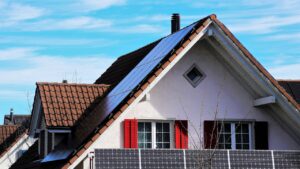
Solar panels often make more power at noon than a building can use at that time. Without storage, extra power may be exported at a low rate or curtailed. With storage, the site can move midday solar energy into evening loads such as lighting, refrigeration, security systems, and EV charging. For a supermarket, this is easy to understand because refrigeration runs steadily, while tariff prices and solar output keep changing through the day.
Backup Power and Power Quality
Backup power does not always mean running the whole facility for eight hours. In many projects, the more useful job is a clean ride-through for sensitive loads during a voltage dip or short outage. A battery with a suitable inverter can support servers, control rooms, medical refrigerators, access gates, or process equipment. For full-site backup, the load list must be checked carefully because motors, pumps, and HVAC start-up current can make the system larger than expected.
Which Storage Chemistry Fits Real Projects Best?
Chemistry affects cost, safety design, footprint, cycle life, and sourcing. Buyers do not need to become cell engineers, but they should understand why one project uses LFP while another may still choose NMC or review a newer option.
Lithium Iron Phosphate for Daily Cycling
Lithium iron phosphate, often called LFP, has become the common choice for stationary storage. The IEA reported that LFP batteries accounted for around 90% of battery storage deployments in 2025, up from well below 50% only five years earlier. LFP is usually less energy-dense than some EV chemistries, but it is lower in cost and works well for frequent cycling. For solar storage, factories, charging stations, and community energy projects, that trade-off is often acceptable. (iea.org)
NMC for Space-Limited Sites
Nickel manganese cobalt, or NMC, can still suit projects where space and weight are tight. Its higher energy density can help when the installation area is small. The downside is higher material cost in many cases and more careful safety design. If a site has enough space for containerized LFP cabinets, many buyers take the lower-cost route; if the site is a rooftop plant room or a compact urban asset, the engineering review needs to be more detailed.
Sodium-Ion and Flow Batteries as Watch Items
Sodium-ion and flow batteries are worth tracking, especially for long-duration use and material-diversity plans. They are not yet the normal choice for most commercial solar-plus-storage projects. Even so, the market is moving. BloombergNEF noted in 2025 that sodium-ion production capacity was starting to come online, while new cathode and anode chemistries were moving closer to commercialization. For now, these options should be handled as project-specific choices rather than standard catalog items. (about.bnef.com)
How Should You Size a System Without Overpaying?
Oversizing may look safe in a proposal, but it can weaken the payback. Undersizing leads to customer complaints and missed savings. A useful sizing process checks load data, tariff rules, solar output, backup needs, and site limits. It takes some work at the start, but it often saves real money later.
Load Profile Comes Before Battery Size
Start with 12 months of interval data if the utility or meter can provide it. Look for daily peaks, weekend patterns, seasonal changes, and unusual operating days. A battery sized only from average monthly consumption can miss the real issue. For example, a cold-storage site may use energy steadily, while a welding workshop may create sharp peaks; both may look similar in kWh, but the inverter size and control plan can be very different.
Duration Depends on the Job
Battery duration shows how long the system can discharge at rated power. A 1 MW and 2 MWh system is roughly a two-hour system, while a 1 MW and 4 MWh system is roughly a four-hour system. The IEA said in 2026 that most battery projects still clustered around two hours, while more systems were being deployed for four hours or more as solar-heavy grids placed higher value on flexibility. For peak shaving, two hours may be enough; for moving solar energy into the evening, four hours is often more useful. (iea.org)
Inverter and EMS Choices Matter
The inverter controls how fast power can move in and out of the battery. The energy management system, or EMS, decides when to charge and discharge. A low-cost control system can miss savings even when the battery itself is good. Ask for clear operating modes, including self-consumption, peak shaving, time-of-use shifting, backup reserve, and remote monitoring, and also ask how firmware updates are handled because this small detail can become a service problem later. See also: clean energy.
What Safety and Compliance Details Should You Check?
Safety is not just one certificate printed in a brochure. It covers cell quality, pack design, enclosure layout, ventilation, fire detection, spacing, commissioning, and maintenance. If the project crosses borders, local codes should be checked early. Requirements can change by country, utility, insurer, and fire authority.
Certified Equipment Comes First
For North American projects, UL 9540 is a key reference for energy storage systems and equipment. UL Solutions describes it as covering electrical, electrochemical, mechanical, and other types of storage technologies intended to supply electrical energy. In real purchasing work, buyers should ask for system-level documentation, not only cell certificates. The battery, inverter, BMS, EMS, and enclosure need to operate as one tested system. (ul.com)
Thermal Runaway Testing Guides Layout
UL 9540A is widely used for evaluating thermal runaway fire propagation. The ANSI listing for UL 9540A:2026 states that the test method evaluates fire and explosion hazard characteristics and supports installation instructions such as separation distances and fire protection requirements. This is why layout drawings should not be left until the last week of the project. A few meters of clearance can affect civil work, cable length, equipment placement, and the full site plan. (webstore.ansi.org)
Maintenance Is Not Optional
Batteries are not fit-and-forget assets. Terminals, HVAC, smoke detection, firmware, insulation readings, and alarm logs should all be part of the service plan. The service team should also check state of health, cell imbalance, and coolant or air filter status. If the system is installed in a dusty yard beside a factory, the maintenance interval may need to be shorter because clean filters and clear alarm records matter more than a good-looking brochure.
How Can You Build a Better Business Case?
A solid storage business case often comes from several benefits at the same time. It may cut demand charges, increase solar self-use, reduce outage losses, and prepare the site for future EV charging. The important part is to count only the benefits allowed by local tariffs and grid rules. A neat spreadsheet is not enough if the rules do not support the income.
Cost Declines Support Faster Payback
Battery cost trends help, but installed project cost still includes inverters, cabinets, fire systems, software, transformers, freight, labor, and permits. BloombergNEF reported in December 2025 that average lithium-ion battery pack prices fell 8% to $108 per kWh in 2025. It also reported that stationary storage pack prices dropped to $70 per kWh, 45% lower than in 2024. This does not mean every project is cheap, but lower pack prices do give more projects a chance to meet the payback target. (about.bnef.com)
Revenue Stacking Needs Local Rules
Revenue stacking means one battery does more than one job. It may cut peaks, store solar energy, keep backup reserve, and join a grid service program. Some utilities, however, restrict export, require interconnection studies, or limit market participation. Before giving a payback period, confirm the tariff, meter setup, export rules, and dispatch rights because a battery cannot earn revenue from a service it is not allowed to provide.
Supplier Strength Reduces Risk
Look beyond the cabinet price. Check warranty terms, cycle limits, usable capacity, degradation curve, spare parts, local service partners, and remote monitoring access. Ask what happens in year seven if one rack fails. Also ask whether replacement modules will still be available, because these ordinary questions often separate a bankable project from a container that stays silent after the first serious fault.
FAQ
Q1: What Size Energy Storage System Do You Need? A: You need a size based on interval load data, solar output, tariff rules, and backup goals. For most commercial projects, usable kWh and inverter kW should be sized together.
Q2: Are Energy Storage Systems Only for Solar Projects? A: No. They can support peak shaving, backup power, EV charging, grid services, and power quality even without solar. Solar simply makes the value easier to see.
Q3: Is LFP Better Than NMC for Stationary Storage? A: LFP is usually preferred for stationary daily cycling because it is cost-friendly and widely adopted. NMC may still fit space-limited projects where higher energy density matters.
Q4: How Long Can a Battery Storage System Run? A: Runtime depends on the battery energy capacity and load. A 500 kWh battery can run a 100 kW critical load for about five hours before losses and reserve settings.
Q5: What Should You Check Before Buying a System? A: Check system certification, usable capacity, cycle warranty, safety test reports, inverter rating, EMS functions, service support, spare parts, and local code requirements.