
China Installs World’s Largest Floating Wind Turbine for Deep-Water Offshore Wind Energy
China’s installation of the world’s largest floating wind turbine marks a pivotal shift in its deep-water renewable energy strategy. The project demonstrates how floating offshore wind technology can unlock vast wind resources previously inaccessible to fixed-bottom systems. By merging advanced engineering with national policy support, China positions itself as a global leader in offshore innovation and carbon-neutral energy production.
The Emergence of Floating Offshore Wind in China
Floating offshore wind has become central to China’s renewable transition, extending its energy reach into deeper waters where winds are stronger and steadier. This technology underpins the country’s ambitions to secure sustainable power generation beyond coastal limits.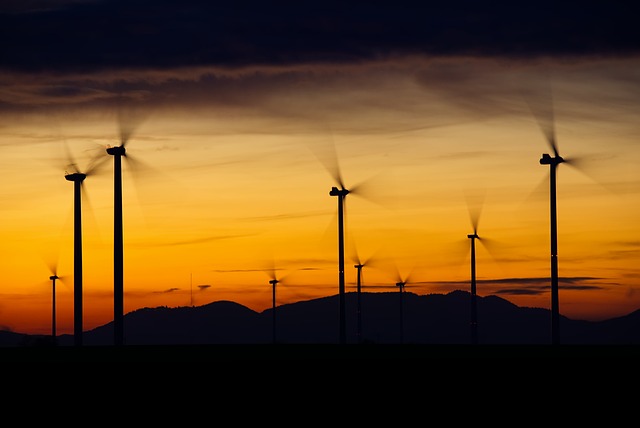
The Strategic Importance of Floating Offshore Wind Development
Floating platforms enable turbines to operate in depths exceeding 60 meters, unlocking new maritime zones for power generation. These regions, particularly along the South China Sea and East China Sea, offer consistent wind speeds ideal for large-scale deployment. For China, this expansion is not just technical—it strengthens national energy security and supports the long-term carbon neutrality target set for 2060. Deep-water floating projects diversify the grid, reduce dependency on fossil fuels, and stabilize supply during seasonal demand fluctuations.
Policy and Regulatory Framework Supporting Offshore Wind Expansion
China’s 14th Five-Year Plan emphasizes offshore wind as a core component of its green energy portfolio. National agencies coordinate with provincial authorities to streamline maritime spatial planning, ensuring efficient use of ocean space. As subsidies phase out, market-based mechanisms such as competitive bidding are driving innovation and cost reduction across the sector. These regulatory measures foster healthy competition among domestic developers while maintaining environmental standards.
Technological Advancements in China’s Floating Offshore Wind Projects
The success of floating offshore wind depends on engineering breakthroughs that address deep-water challenges—structural stability, cost efficiency, and integration with existing power infrastructure.
Design Innovations in Floating Turbine Platforms
China’s engineers have adapted semi-submersible, spar-buoy, and tension-leg designs to withstand local ocean conditions. Each structure type balances buoyancy and stability under heavy wave loads and typhoon impacts common in Chinese seas. Modular construction allows easier assembly at shipyards and transport to deployment sites using existing maritime logistics networks. This approach reduces downtime during maintenance and accelerates scaling for commercial projects.
Grid Integration and Power Transmission Challenges
Connecting remote floating farms to coastal grids requires long subsea cable routes capable of handling high voltages over hundreds of kilometers. High-voltage direct current (HVDC) systems are increasingly used to minimize transmission losses across these distances. Smart grid management technologies further stabilize electricity flow by predicting generation variability from offshore sources. Such integration ensures that intermittent offshore output complements onshore demand patterns efficiently.
The Role of China’s Largest Floating Wind Turbine Installation
This milestone installation represents not only an engineering feat but also a benchmark for future commercial-scale floating projects across Asia.
Technical Specifications and Performance Expectations
The turbine boasts record-breaking capacity among floating units worldwide. Its enlarged rotor diameter captures more low-frequency wind energy while maintaining structural integrity under extreme conditions. Advanced sensors embedded within the nacelle provide real-time performance monitoring, enabling predictive maintenance that minimizes downtime and extends operational lifespan.
Engineering Collaboration and Supply Chain Development
The project brings together domestic shipyards, research institutions, and component manufacturers under unified design standards. Localization efforts focus on producing high-value components such as blades, mooring systems, and control software domestically to reduce reliance on imports. Standardization initiatives are also underway to simplify certification processes for future installations, improving scalability across multiple provinces.
Deep-Water Deployment: Environmental and Operational Considerations
Deploying turbines far from shore introduces environmental sensitivities that require careful planning alongside technical execution.
Site Selection Criteria for Deep-Water Installations
Bathymetric surveys identify suitable seabed depths for anchoring systems while avoiding ecologically sensitive zones. Oceanographic modeling assesses risks from typhoons, currents, and wave patterns unique to each region. Environmental impact assessments evaluate potential effects on marine habitats such as coral reefs or fish migration routes before construction begins.
Maintenance Strategies in Harsh Marine Environments
Harsh sea conditions demand remote inspection tools like remotely operated vehicles (ROVs) capable of underwater diagnostics without human exposure risks. Predictive analytics based on sensor data helps operators schedule repairs before faults escalate into failures. Corrosion-resistant materials such as advanced composites extend service life even under continuous saltwater exposure.
Economic Implications and Market Outlook for Floating Offshore Wind in China
Beyond technology, economic viability defines whether floating offshore wind becomes a mainstream contributor to China’s renewable mix.
Investment Trends and Cost Reduction Pathways
Capital investment is accelerating through both state-owned enterprises and private investors attracted by long-term returns from clean energy assets. As domestic manufacturing scales up, economies of scale lower production costs for turbines and substructures alike. Lessons from early pilot projects continue to refine installation techniques that cut overall levelized cost of energy (LCOE). Financial tools like green bonds are increasingly used to channel capital toward these complex offshore ventures.
Global Competitiveness and Export Potential of Chinese Technologies
Chinese developers are positioning themselves within international markets by offering turnkey solutions for deep-water projects abroad. Partnerships with global utilities facilitate technology transfer while enhancing credibility in emerging markets such as Southeast Asia or Africa. Continuous innovation could allow Chinese designs to redefine global price benchmarks for floating systems within this decade.
Integration of Floating Offshore Wind into China’s Energy Transition Strategy
Floating offshore wind fits seamlessly into broader national plans linking renewable generation with hydrogen production, marine industries, and regional development goals.
Synergies with Hydrogen Production and Marine Energy Systems
Offshore turbines can directly supply electricity for electrolysis-based hydrogen production either at sea or through coastal hubs near industrial clusters. Combining wind generation with wave or solar modules enhances total output per square kilometer of ocean area—a crucial advantage where maritime space is limited.
Long-Term Vision for Deep-Water Renewable Infrastructure
Future deep-sea platforms may evolve into multi-purpose hubs integrating storage units or aquaculture operations alongside power generation facilities. Scaling these systems across provinces will help balance regional supply disparities between northern industrial zones and southern consumption centers. Sustained R&D funding ensures progress aligns with national decarbonization targets leading up to 2060.
FAQ
Q1: What makes floating offshore wind different from fixed-bottom systems?
A: Floating systems operate in deeper waters using buoyant platforms anchored by mooring lines rather than rigid foundations attached to the seabed.
Q2: Why is China focusing on deep-water installations now?
A: Deeper waters offer stronger winds and larger available areas essential for scaling renewable capacity beyond crowded coastal regions.
Q3: How does HVDC improve offshore power transmission?
A: HVDC reduces electrical losses over long distances compared with AC transmission, making it ideal for connecting remote floating farms to mainland grids.
Q4: What environmental protections apply during site selection?
A: Each project undergoes detailed environmental impact assessments covering marine biodiversity preservation, noise control, and sediment management.
Q5: Could Chinese floating wind technologies be exported globally?
A: Yes, domestic manufacturers aim to supply cost-competitive solutions internationally as experience grows from large-scale deployments at home.