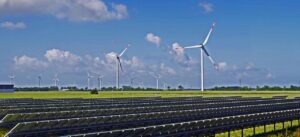

Can Hybrid Solar, Wind and Storage Systems Solve the UK’s Energy Gap?
The UK’s energy system faces a structural gap between supply and demand as fossil fuel plants retire faster than renewables can replace them. Hybrid solar, wind and storage systems offer a realistic bridge. By combining complementary generation patterns with storage flexibility, they can stabilize the grid, reduce curtailment, and lower costs. The evidence from both national modelling and pilot projects suggests that hybridization could become the backbone of a resilient low-carbon electricity network.
The Current State of the UK Energy Landscape
The UK power sector is in transition. Coal has nearly vanished from the generation mix, while gas still provides around 40% of electricity. Renewables—mostly wind—supply close to half on windy days but drop sharply in calm weather. This volatility highlights a growing dependence on imports and flexible backup generation.
Overview of the UK’s Electricity Generation Mix and Dependency on Fossil Fuels
Natural gas remains the dominant dispatchable source, though its share is declining as offshore wind expands. However, gas-fired plants are still essential for balancing intermittent renewables, especially during winter peaks when solar output is minimal.
Impact of Aging Infrastructure and Decommissioning of Coal and Nuclear Plants
Many nuclear reactors built in the 1970s are nearing closure. The retirement of coal plants has already removed several gigawatts of firm capacity. Without rapid replacement, this trend deepens the capacity shortfall and challenges grid reliability.
Growing Electricity Demand Driven by Electrification of Transport and Heating
Electric vehicles and heat pumps are pushing up demand curves. National Grid forecasts suggest total electricity use could rise by 50% by 2035 if electrification continues at pace.
Policy Drivers Behind the Energy Transition
Policy now shapes investment decisions more than fuel prices do. The government’s net-zero target by 2050 sets a clear direction for decarbonization but requires massive renewable build-out supported by flexible technologies.
Government Targets for Net-zero Emissions and Renewable Energy Integration
The UK aims for a fully decarbonized power system by 2035. Offshore wind is expected to reach 50 GW capacity by then, alongside growing solar deployment across rooftops and utility-scale farms.
Regulatory Frameworks Promoting Clean Energy Investment
Mechanisms such as Renewable Obligation Certificates have evolved into more competitive auctions under Contracts for Difference (CfD), which guarantee price stability for low-carbon generators.
Role of Market Mechanisms Such as Contracts for Difference (CfD) in Supporting Renewables
CfDs reduce investor risk by ensuring predictable revenue streams even when wholesale prices fluctuate. This structure has accelerated cost reductions in offshore wind over recent years.
Fundamentals of Solar and Wind Hybrid Systems
Hybrid systems combine two or more renewable sources with shared infrastructure to smooth power output and enhance utilization rates. In the UK context, solar-wind pairing fits naturally due to seasonal complementarity.
The Technical Basis of Hybrid Integration
Solar PV peaks during summer days; wind turbines often produce more during winter nights. Combining them reduces variability at both daily and seasonal scales. System designs vary: AC-coupled setups connect each source separately to the grid, while DC-coupled ones merge outputs before inversion—each with trade-offs in efficiency and control complexity.
Grid Connection Configurations: AC-coupled vs DC-coupled Systems
AC coupling allows independent operation but requires multiple inverters. DC coupling minimizes conversion losses but demands sophisticated control electronics to manage combined generation effectively.
Role of Hybrid Inverters and Control Systems in Optimizing Power Output
Hybrid inverters coordinate both resources dynamically based on irradiance, wind speed, and grid conditions. Advanced control algorithms help maintain stable voltage while maximizing export potential.
The Importance of Energy Storage in Hybrid Systems
Storage transforms hybrid plants from variable generators into dispatchable assets capable of supporting grid services beyond simple energy supply.
Battery Storage as a Balancing Mechanism to Manage Intermittency
Lithium-ion batteries respond within milliseconds to frequency deviations, providing near-instantaneous balancing power that traditional turbines cannot match.
Comparison Between Short-duration (Lithium-ion) and Long-duration (Flow or Hydrogen-based) Storage Solutions
Short-duration batteries handle intraday fluctuations; flow batteries or hydrogen storage can shift energy across days or even seasons—critical during prolonged low-wind periods known as “dunkelflaute”.
Integration Challenges Related to Grid Stability, Frequency Response, and Dispatchability
Integrating large volumes of hybrid-plus-storage capacity requires careful coordination with transmission operators to prevent local overloads or frequency oscillations.
Evaluating the Potential of Hybrid Systems to Bridge the Energy Gap
The real test lies not only in technology but also in how well hybrids align with local resource patterns across Britain’s diverse geography.
Capacity Factors and Resource Complementarity in the UK Context
Scotland’s strong winds complement southern England’s higher solar irradiation. When modelled together using historical weather data, hybrid plants show improved annual capacity factors compared with single-resource sites.
Seasonal Complementarity Between Wind-dominant Winter Months and Solar-rich Summer Periods
This natural offset reduces curtailment since one source tends to fill gaps left by the other, maintaining steadier output throughout the year.
Modeling Hybrid System Performance Using Historical Meteorological Data
Simulations using Met Office datasets confirm that co-located solar-wind systems can cut variability by up to 30%, improving predictability for grid operators.
Grid Reliability and Flexibility Enhancement Through Hybridization
Beyond generation smoothing, hybrids strengthen grid performance through distributed flexibility services that reduce reliance on centralized backup plants.
How Hybrid Systems Contribute to Voltage Regulation, Frequency Control, and Reserve Capacity
Inverter-based hybrids can inject reactive power for voltage support or deliver fast frequency response within seconds after disturbances—functions once limited to conventional generators.
The Role of Distributed Hybrid Generation in Reducing Transmission Congestion
Co-locating resources near consumption centers eases pressure on long-distance transmission lines, lowering congestion costs during peak flows from remote wind farms.
Interaction Between Hybrid Assets and Demand-side Response Programs
Smart coordination between hybrid sites and flexible consumers—like EV charging hubs—creates local balancing zones that minimize strain on national networks.
Economic Considerations for Large-scale Deployment
Economics ultimately determines whether hybridization becomes mainstream or remains niche. Falling technology costs are making it increasingly viable at scale.
Cost Trends in Solar, Wind, and Storage Technologies
Over the past decade, solar module prices have dropped nearly 90%, while wind turbine efficiencies have doubled output per unit area. Batteries follow similar cost curves as manufacturing scales up globally.
Influence of Capital Expenditure (CAPEX) Optimization Through Shared Infrastructure
Sharing land leases, substations, cabling, and maintenance teams cuts capital intensity compared with separate installations—a major driver behind hybrid project economics.
Operation & Maintenance Cost Synergies From Co-located Assets
Joint servicing schedules reduce downtime; monitoring platforms integrate performance analytics across technologies for lower lifecycle expenses.
Financial Viability Under Current Market Conditions
Revenue diversification protects investors against market swings—a key advantage over single-technology projects reliant solely on energy sales.
Revenue Stacking From Energy Arbitrage, Ancillary Services, and Capacity Markets
Hybrid-plus-storage assets earn income from multiple streams: day-night price arbitrage, fast frequency response contracts with National Grid ESO, and participation in capacity auctions ensuring supply adequacy.
Implications of Volatility in Wholesale Electricity Prices on Project Returns
Price volatility creates both risk and opportunity; flexible hybrids can capture high-price periods better than fixed-output renewables alone.
Investment Risks Associated With Policy Uncertainty and Grid Connection Delays
Delays in securing grid access remain one of developers’ biggest headaches; queue times exceeding five years are not uncommon across some distribution zones.
Technical Challenges Limiting Widespread Adoption
Despite promise, scaling hybrid systems faces technical bottlenecks related to infrastructure readiness and environmental constraints that require careful planning rather than optimism alone.
Integration With Legacy Grid Infrastructure
Older substations were never designed for bidirectional flows from distributed generation; upgrades are costly but necessary for widespread adoption outside industrial clusters.
Need for Advanced Forecasting Tools to Manage Variable Generation Inputs
Machine learning models now predict combined solar-wind output hours ahead with increasing accuracy—vital for dispatch scheduling under dynamic market conditions.
Cybersecurity Considerations in Digitalized Hybrid Control Systems
As control layers become cloud-connected for real-time optimization, cybersecurity risks grow; compliance with ISO/IEC 27001 standards helps mitigate vulnerabilities across critical assets.
Environmental and Spatial Constraints
Balancing renewable expansion with environmental stewardship remains politically sensitive across rural communities where most projects locate.
Land-use Conflicts Between Agricultural Land, Conservation Areas, and Renewable Projects
Dual-use concepts like agrivoltaics allow farming beneath elevated panels but require tailored designs respecting biodiversity corridors around wind installations.
Visual Impact Assessments Influencing Public Acceptance
Local opposition often centers on visual intrusion; transparent consultation processes tend to improve acceptance rates compared with top-down planning approaches.
Lifecycle Environmental Footprint Including Material Sourcing and End-of-life Recycling for Batteries and Panels
Circular economy strategies focusing on recycling lithium cells and PV modules will be crucial as early-generation assets reach decommissioning age around 2040s.
Future Outlook for Solar-Wind Hybrid Systems in the UK Energy Mix
Hybridization sits at the intersection of innovation policy, digital control technology, and long-term system design thinking aimed at achieving resilience through diversity rather than uniformity.
Emerging Innovations Enhancing System Efficiency
AI-driven predictive maintenance detects component wear before failure; integrating electrolysers converts surplus renewable electricity into green hydrogen stored seasonally or used industrially; floating offshore platforms combining turbines with PV arrays maximize sea-space utilization near existing wind clusters like Dogger Bank Zone C developments already exploring such models experimentally today.
Strategic Pathways Toward a Balanced Renewable Future
Coordinated planning aligning generation siting with transmission reinforcement schedules avoids stranded assets while enabling smoother integration into regional networks managed under Ofgem oversight frameworks promoting whole-system optimization principles set out by National Grid ESO’s Future Energy Scenarios reports emphasizing distributed flexibility roles toward 2050 targets envisioned under BEIS policy roadmaps guiding investors toward stable decarbonization pathways framed within evolving CfD auction rounds supporting next-generation hybrid portfolios entering commercial operation later this decade through joint ventures between utilities seeking diversified asset bases resilient against climate-driven variability shaping tomorrow’s British energy landscape more robustly than any single technology could achieve alone.
FAQ
Q1: What makes a solar-wind hybrid system different from traditional renewable projects?
A: It combines two resources sharing one site or grid connection so their outputs complement each other seasonally while reducing curtailment losses.
Q2: How does battery storage improve reliability?
A: It stores excess energy when production exceeds demand then releases it instantly during shortfalls maintaining steady frequency levels across the network.
Q3: Are hybrid systems economically competitive today?
A: Yes—shared infrastructure lowers capital costs while multiple revenue streams boost returns compared with stand-alone plants.
Q4: What are main barriers preventing faster rollout?
A: Grid connection delays regulatory uncertainty around market access rules plus local opposition over land use remain key obstacles.
Q5: Could hybrids fully close the UK’s energy gap?
A: Not alone but combined with network upgrades demand flexibility programs they form an essential part of achieving secure affordable decarbonized electricity supply nationwide.