
Do Solar Generators Really Work? Here’s the Truth
Solar generators do work—and in industrial settings, they’re proving their worth beyond backup power. Modern systems can sustain heavy loads, integrate with smart grids, and deliver consistent performance under variable conditions. For factories, data centers, and logistics hubs seeking energy independence, these systems are no longer experimental. They’re practical tools that offset fuel costs and align with decarbonization goals. The key lies in proper system design: matching generation capacity to load demand and ensuring robust storage. With advances in photovoltaic efficiency and battery chemistry, solar generators have become a credible, reliable energy source for industrial operations.
Understanding Solar Generators in Industrial Contexts
In large-scale industries, solar generators aren’t just emergency assets; they’re integral parts of hybrid energy infrastructures that balance grid supply with renewable input. Their design combines electrical engineering precision with energy management strategies to maintain operational continuity.
Defining Solar Generators and Their Core Components
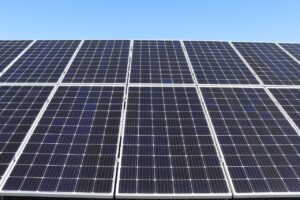
A solar generator converts sunlight into electricity through photovoltaic (PV) panels connected to an inverter, charge controller, and battery bank. The PV panels capture solar radiation, the inverter converts direct current (DC) into alternating current (AC), while charge controllers regulate voltage flow to protect batteries from overcharging. Batteries—typically lithium-ion or advanced lead-acid—store excess power for later use.
Portable solar generators are compact units designed for mobile or remote applications, often limited to kilowatt-range outputs. Industrial-scale systems, however, may span megawatt capacities and integrate seamlessly with existing electrical infrastructure through grid-tied inverters or microgrid configurations.
Integration involves synchronization between renewable inputs and conventional power systems. In industrial environments, this means coordinating phase alignment, voltage regulation, and load balancing across distributed assets.
The Evolution of Solar Generator Technology
Over the last decade, PV efficiency has risen from around 15% to over 23% in commercial modules. Improvements in monocrystalline silicon cells and bifacial panel designs have increased yield per square meter. Simultaneously, advances in lithium-iron-phosphate (LiFePO₄) batteries have enhanced cycle life beyond 5,000 cycles—crucial for industrial uptime.
Smart grid technology now plays a pivotal role by enabling two-way communication between generators and utility networks. This allows dynamic load management based on real-time demand data.
Industrial adoption is driven by three main trends: declining hardware costs, carbon neutrality commitments under ESG frameworks, and rising fuel price volatility that makes renewables financially attractive.
Assessing the Reliability of Solar Generators for Industrial Power Needs
Reliability remains a primary concern for any industrial operator evaluating renewable systems. The question isn’t whether solar generators produce energy—it’s whether they can do so consistently under varying operational conditions.
Evaluating Energy Output and Load Capacity
Commercial-grade solar generators typically range from 50 kW modular units to multi-megawatt installations capable of powering entire production lines. Proper sizing requires analyzing daily load profiles—peak demand periods versus base loads—to ensure adequate reserve capacity.
Continuous operations like manufacturing plants demand stable output; intermittent facilities such as warehouses can tolerate more variability. Reliability improves when storage systems are scaled to buffer fluctuations during low irradiance hours or unexpected cloud cover.
Performance Stability Under Variable Conditions
Solar output depends heavily on geographic location and meteorological patterns. Regions with high insolation levels achieve better yield consistency than those prone to frequent overcast conditions or shading from nearby structures.
Battery performance also varies with temperature: lithium-ion cells operate best between 15°C and 35°C. Excessive heat accelerates degradation; cold reduces discharge efficiency. Industrial enclosures often include thermal management systems to stabilize internal conditions.
During grid outages or peak demand surges, hybrid setups combining solar generation with stored energy ensure uninterrupted supply—a key reliability factor for mission-critical operations like data centers or cold storage facilities.
Integration Challenges in Industrial Applications
Integrating solar generators into existing plant infrastructure involves technical complexity beyond simple installation. Compatibility issues arise when connecting renewable sources to legacy grids designed for unidirectional power flow.
Compatibility with Existing Power Infrastructure
Industrial sites may operate on both grid-tied and off-grid configurations depending on regional utility reliability. Synchronizing frequency and voltage across multiple sources prevents equipment damage and maintains power quality standards defined by IEEE 519 guidelines.
Older facilities often require retrofitting transformers or switchgear upgrades before connecting new renewable inputs. This ensures stable operation without harmonic distortion or phase imbalance affecting sensitive machinery.
Maintenance, Monitoring, and Lifecycle Management
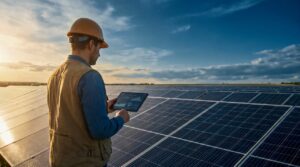
Modern industrial solar systems employ IoT-based monitoring platforms that track panel output, inverter efficiency, battery health, and environmental parameters in real time. Predictive maintenance algorithms detect anomalies early—reducing downtime risk.
Typical maintenance intervals include semi-annual cleaning of panels to remove dust accumulation that can reduce efficiency by up to 10%, quarterly inspections of cabling integrity, and periodic firmware updates for control units.
Lifecycle cost analysis considers not only initial capital expenditure but also replacement cycles for batteries (usually every 8–12 years) and inverter components (around 10–15 years). Over time, lower operational expenses offset upfront investment through reduced fuel consumption and maintenance savings.
Economic and Environmental Considerations
The decision to deploy solar generators at scale is both financial and ethical—balancing return on investment against environmental responsibility within corporate sustainability frameworks.
Cost-Benefit Analysis for Industrial Operations
Initial capital costs remain substantial but continue to decline annually due to economies of scale in PV manufacturing. Operational savings emerge from reduced reliance on diesel or gas-fired backup systems whose fuel prices fluctuate unpredictably.
Government incentives such as tax credits or accelerated depreciation schemes further improve project ROI calculations by shortening payback periods from ten years down to five or six in some regions.
When compared directly with fossil-fuel-based generators over a ten-year horizon, solar systems often achieve lower levelized cost of electricity (LCOE), especially when factoring maintenance-free operation during daylight hours.
Environmental Impact and Sustainability Metrics
Each kilowatt-hour generated by a solar system displaces roughly 0.7 kg of CO₂ emissions compared with conventional grid electricity based on global IEA emission factors. Over its lifecycle—from silicon extraction through module recycling—a modern PV array offsets its embodied carbon within two years of operation.
Industrial firms increasingly align these outcomes with ESG reporting standards such as GRI 302 (Energy) metrics to quantify progress toward net-zero targets while enhancing brand credibility among stakeholders focused on sustainability performance.
Future Prospects for Solar Generators in Industry
The next wave of innovation will redefine how industries harness sunlight—not merely as supplemental energy but as a core component of autonomous power ecosystems spanning continents.
Innovations Shaping Next-Generation Systems
Emerging materials like perovskite-silicon tandem cells promise conversion efficiencies exceeding 30%, potentially halving land requirements for equivalent output capacity. Solid-state batteries under development aim for higher energy density without thermal runaway risks associated with liquid electrolytes.
Hybrid architectures combining solar arrays with wind turbines or hydrogen electrolysis units create diversified microgrids capable of round-the-clock generation independent of weather variability. Artificial intelligence tools already assist operators by forecasting production curves based on irradiance data patterns collected via satellite sensors.
Strategic Outlook for Industrial Adoption
Market forecasts suggest global industrial solar capacity will surpass 300 GW by the end of this decade as sectors like logistics hubs adopt rooftop PV coupled with smart storage clusters to reduce peak tariffs. Policy frameworks emphasizing renewable procurement mandates further accelerate deployment across heavy industry corridors worldwide.
As technology matures and cost curves continue downward trajectories observed since 2010—a drop exceeding 80% in module prices—the long-term reliability outlook strengthens accordingly. Solar generators are transitioning from experimental add-ons into mainstream industrial utilities shaping tomorrow’s energy landscape.
FAQ
Q1: Can industrial facilities run entirely on solar generators?
A: Technically yes if paired with sufficient storage capacity; however most facilities use hybrid setups combining grid supply or other renewables for continuous stability during low sunlight periods.
Q2: How long do industrial solar generator batteries last?
A: Lithium-based batteries generally last between eight to twelve years depending on depth-of-discharge cycles and ambient temperature control within installation enclosures.
Q3: Are there specific standards governing industrial solar integration?
A: Yes—standards such as IEC 62109 for safety requirements of power converters and IEEE 1547 governing interconnection compliance define how these systems must interact safely with electrical grids.
Q4: What factors most affect system performance?
A: Geographic latitude, panel orientation angle, shading obstruction levels, temperature extremes affecting battery chemistry—all significantly influence annual yield consistency metrics used during feasibility studies.
Q5: Do solar generators require frequent maintenance?
A: Not typically; aside from periodic cleaning of panels and routine inspections every few months most modern setups operate autonomously thanks to automated diagnostic software tracking component health continuously.