
EV Magazine: Home of Electric Vehicle News
Electric vehicles (EVs) have evolved from niche experiments into a cornerstone of global mobility transformation. The shift has been fueled by breakthroughs in battery chemistry, power electronics, and digital connectivity. Today, EV technology not only challenges internal combustion engines but also redefines how energy systems interact with transportation networks. The next decade will likely see solid-state batteries, AI-driven fleet management, and circular material flows make electrified transport both scalable and sustainable.
The Evolution of Electric Vehicle Technology
The story of EVs spans more than a century of innovation and setbacks. Early concepts struggled with range and reliability, but modern engineering has turned those weaknesses into opportunities for reinvention.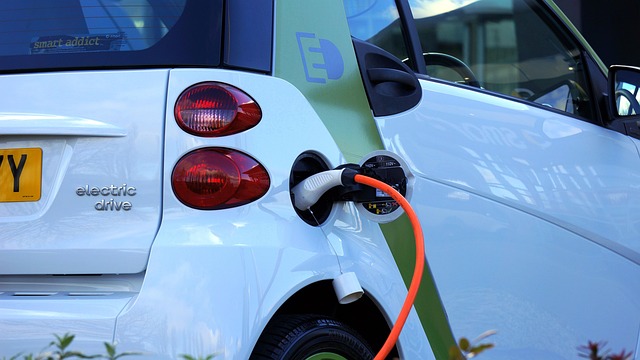
Historical Development of EV Technology
The first electric vehicles appeared in the late 19th century, competing briefly with steam and gasoline cars. Their limited range and slow charging times curtailed adoption once mass-produced internal combustion engines became affordable. After decades of dormancy, environmental regulations in the 1990s reignited interest in zero-emission transport. Battery advancements—especially lithium-ion cells—enabled automakers to move from experimental prototypes to market-ready models such as the Nissan Leaf and Tesla Model S.
Key Technological Milestones in EV Development
Progress in lithium-ion chemistry increased energy density while cutting weight and cost per kilowatt-hour. Improvements in motor efficiency and regenerative braking recovered otherwise wasted energy, extending driving range without enlarging battery packs. Lightweight materials like aluminum and carbon fiber further enhanced performance, helping manufacturers meet both emission targets and consumer expectations for speed and handling.
Battery Innovation as the Core Driver of EV Progress
At the heart of every EV lies its battery system—the defining factor for range, safety, cost, and environmental impact. Continuous improvement in electrochemistry has been critical to making electric mobility commercially viable.
The Role of Battery Chemistry in Performance Enhancement
Lithium-ion remains dominant due to its balance between energy density and durability, but solid-state batteries promise higher capacity with lower fire risk. Thermal management systems maintain optimal cell temperature during fast charging or extreme climates, directly affecting longevity and safety standards defined by IEC 62660. Economies of scale have steadily reduced battery costs from over $1,000 per kWh a decade ago to below $150 today.
Energy Storage and Charging Infrastructure Synergy
Charging networks have evolved from slow Level 2 systems to ultra-fast DC chargers delivering up to 350 kW. This infrastructure expansion complements advances in grid integration where smart charging balances demand peaks using predictive algorithms. Vehicle-to-grid (V2G) technology allows parked cars to return electricity to local grids—an emerging model that could stabilize renewable-heavy power systems.
Electrification Beyond Passenger Vehicles
Electrification now extends far beyond personal cars into logistics fleets, public transit, and industrial applications. Each sector faces unique engineering constraints but shares the same decarbonization goal.
Expansion into Commercial and Industrial Sectors
Heavy-duty trucks and buses require larger battery packs capable of sustaining long routes under heavy loads. Downtime for charging remains a challenge; hence depot-based megawatt chargers are being tested across Europe and North America. Fleet operators increasingly adopt route optimization software to minimize idle time while maintaining delivery schedules.
Emerging Segments in Electric Mobility Ecosystems
Micro-mobility solutions—electric scooters, bikes, and compact delivery vans—are reshaping urban logistics by reducing congestion and emissions simultaneously. Cities respond by redesigning infrastructure: adding curbside chargers, dedicated lanes, and low-emission zones that favor electric fleets. Modular vehicle platforms now allow manufacturers to adapt chassis designs across multiple use cases without reinventing core components.
The Role of Software and Connectivity in Modern EVs
Software defines much of an EV’s intelligence—from driving assistance to real-time diagnostics—and increasingly determines brand differentiation more than hardware does.
Integration of Advanced Driver Assistance Systems (ADAS)
Modern EVs employ sensor fusion combining radar, LiDAR, cameras, and ultrasonic sensors to support semi-autonomous functions such as adaptive cruise control or lane keeping. These systems feed data into predictive maintenance tools that detect component wear before failure occurs—a practice aligned with ISO 26262 functional safety standards.
Software-defined Vehicles and Over-the-Air Updates
Manufacturers now treat vehicles as evolving digital platforms rather than static machines. Over-the-air updates refine performance parameters or add new features remotely without service center visits. This approach extends product lifecycles while allowing customizable user experiences through app-based ecosystems integrated with cloud analytics.
Sustainability Metrics in the Electric Mobility Value Chain
As electrification expands, measuring its true environmental footprint becomes essential for transparent policymaking and consumer trust. Life cycle assessments (LCA) provide a comprehensive view from mining to recycling stages.
Life Cycle Assessment (LCA) of EV Production and Operation
Compared with internal combustion engines (ICE), EVs emit fewer greenhouse gases over their lifetime despite higher production emissions due to battery manufacturing. Sourcing critical minerals like lithium or cobalt responsibly is guided by frameworks such as OECD Due Diligence Guidance for Responsible Mineral Supply Chains.
Circular Economy Approaches in Battery Recycling and Reuse
Second-life applications repurpose used batteries for stationary energy storage supporting solar or wind installations. Closed-loop recycling processes recover nickel, cobalt, and lithium for new cells—reducing dependence on virgin extraction while aligning with extended producer responsibility (—reducing dependenceE on virginPR) policies adopted across the EU.
Policy, Market Dynamics, and Global Adoption Trends
Government incentives remain pivotal for accelerating market penetration until economies of scale naturally reduce costs further across production lines worldwide.
Government Incentives Driving EV Uptake
Tax credits up to several thousand dollars per vehicle stimulate consumer adoption alongside zero-emission mandates forcing automakers toward compliance targets under EU Regulation 2019/631 or California’s ZEV program. Regional variations persist: China’s subsidies focus on domestic manufacturing dominance while U.S. incentives emphasize job creation within supply chains.
Market Competition and Technological Convergence
Traditional OEMs now compete head-to-head with startups focused solely on electric powertrains. Collaborations between automakers, semiconductor firms, and renewable energy providers illustrate convergence shaping integrated mobility ecosystems where vehicles function as both transport units and distributed energy assets.
Future Outlook: Redefining Sustainable Mobility Through Electrification
The next phase of electrification will merge clean energy generation with intelligent transportation networks built around data-driven decision-making rather than mechanical constraints alone.
Anticipated Breakthroughs Shaping the Next Decade
Solid-state batteries are expected to double current energy density while improving safety margins through non-flammable electrolytes validated under IEC testing protocols. Renewable-powered charging hubs will reduce lifecycle emissions further as solar canopies or wind-fed microgrids become standard at highway rest stops.
Towards a Decarbonized Transportation Ecosystem
Full supply chain electrification aligns directly with net-zero strategies outlined by IEA’s Net Zero by 2050 roadmap. Hydrogen fuel cells may complement batteries for long-haul freight where quick refueling outweighs volumetric efficiency concerns—creating hybridized pathways toward truly carbon-neutral logistics systems.
FAQ
Q1: What is currently limiting widespread EV adoption?
A: High upfront costs, limited fast-charging availability in rural areas, and concerns about battery longevity remain major barriers despite rapid progress in each area.
Q2: How long do modern EV batteries last?
A: Most lithium-ion packs retain over 80% capacity after eight years or roughly 160,000 kilometers under typical usage conditions defined by automotive warranties.
Q3: Are solid-state batteries commercially available yet?
A: Not widely; pilot production lines exist but large-scale deployment is expected around the late 2020s once manufacturing yields stabilize.
Q4: Can electric trucks compete economically with diesel models?
A: Yes on short routes where fuel savings offset higher purchase prices; long-haul viability depends on future megawatt charging networks reducing downtime.
Q5: How do governments plan to recycle end-of-life batteries?
A: Many regions mandate producer responsibility schemes requiring manufacturers to collect spent packs for certified recycling under ISO 14001 environmental management standards.