
2027 Chevrolet Bolt First Drive: Cheap, Good, Flawed— …
The 2027 Chevrolet Bolt stands as a transitional EV—technically refined yet still defined by its affordability. It remains the practical entry point into electric mobility for many buyers, but in a market saturated with advanced competitors, its simplicity feels both intentional and limiting. The model’s evolution focuses on incremental gains rather than radical innovation, keeping it relevant but no longer class-leading. Its continued success depends less on performance metrics and more on how effectively GM positions it as the accessible face of its broader electrification strategy.
Market Position of the Chevrolet Bolt in 2027
The EV landscape in 2027 is far more competitive than when the Bolt first appeared. Legacy automakers have matured their electric lineups, while startups push design and technology boundaries. The Bolt’s place within this ecosystem reflects GM’s balancing act between affordability and modernization.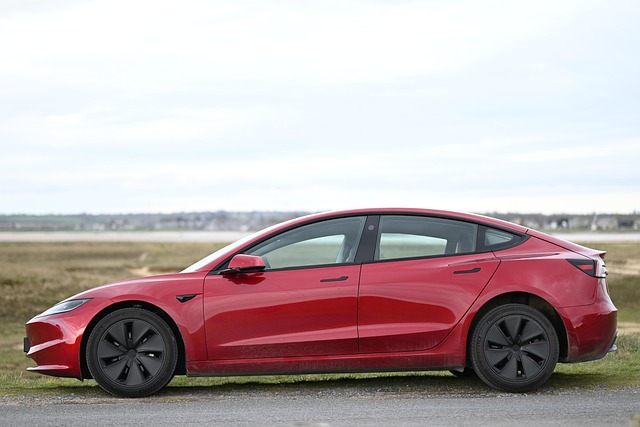
Assessing the Bolt’s Standing in the Evolving EV Landscape
The 2027 Chevrolet Bolt competes in a market where consumers expect long range, fast charging, and high-tech interiors even from budget models. While newer entrants such as Rivian and Lucid target premium segments, the Bolt continues to serve cost-conscious buyers seeking reliability over novelty. Its relevance persists primarily because it democratizes EV ownership at a time when average transaction prices for electric cars have climbed steadily.
Competitive Benchmarking Against Key Rivals
Compared with the Tesla Model 3, Hyundai Ioniq 6, and Nissan Leaf, the Bolt remains less powerful but significantly cheaper. The Model 3 offers superior acceleration and range; the Ioniq 6 delivers futuristic aerodynamics; yet neither matches the Bolt’s price-to-value ratio. GM’s mid-cycle updates—particularly improved thermal management and new infotainment features—help narrow perception gaps without inflating cost. Consumer trust in GM’s service network also supports residual confidence among fleet buyers.
Affordability as a Continuing Differentiator
Affordability still defines the Bolt’s identity. Even as battery costs fluctuate due to mineral sourcing pressures, GM maintains pricing discipline through localized production and simplified trim structures. Incentives under federal clean vehicle credits further enhance its appeal to first-time EV adopters.
Technological Advancements and Platform Updates
GM’s technological roadmap for the Bolt emphasizes refinement over reinvention. While its Ultium platform dominates newer models like the Blazer EV, the Bolt retains an optimized legacy architecture adapted for efficiency rather than performance breakthroughs.
Evolution of Battery Technology in the Chevrolet Bolt
Battery chemistry improvements yield modest gains in energy density and charging speed. The shift toward nickel-rich cathodes enhances durability while reducing cobalt dependency—a move aligned with global supply chain sustainability goals outlined by IEA reports on critical minerals. Enhanced liquid cooling systems extend longevity beyond earlier models that faced degradation concerns after extended use.
Software, Connectivity, and Driver Assistance Features
The latest software suite introduces over-the-air updates for navigation and system diagnostics. GM’s Super Cruise remains optional but significantly refined with lane-change automation suitable for highway conditions. Cybersecurity protocols follow ISO/SAE 21434 standards to mitigate vulnerabilities linked to connected vehicle ecosystems.
Performance, Range, and Efficiency Metrics
Beyond specifications on paper, real-world driving defines consumer satisfaction with compact EVs like the Bolt. GM has tuned this generation for smoother torque delivery and improved chassis composure under mixed driving conditions.
Evaluating Real-world Driving Dynamics
The single-motor front-wheel-drive setup produces brisk low-speed response ideal for urban commuting but reveals traction limitations under spirited acceleration. Revised suspension geometry reduces body roll while maintaining ride comfort on uneven surfaces—a notable improvement over earlier iterations criticized for stiffness.
Range Optimization and Charging Infrastructure Compatibility
EPA-rated range now hovers around 270 miles per charge depending on configuration, placing it mid-pack among competitors. Real-world figures typically fall within 5–10% of official ratings under moderate climates. Compatibility with major DC fast-charging networks allows recovery of up to 100 miles in roughly 30 minutes using standard CCS connectors.
Design Philosophy and Interior Ergonomics
Design updates subtly modernize without alienating existing owners who value familiarity over flashiness. Efficiency-driven styling blends function with understated aesthetics typical of mass-market EVs.
Exterior Design Evolution in the 2027 Model Year
Aerodynamic refinements include reshaped front fascia vents and flush door handles that reduce drag coefficients marginally below prior models. Lightweight aluminum panels replace select steel components to balance cost control with improved efficiency metrics measured under WLTP testing procedures.
Cabin Layout, Materials, and User Experience Enhancements
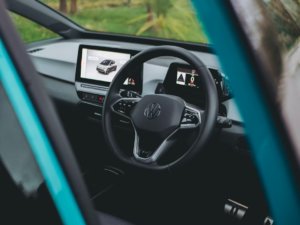
Inside, recycled textiles dominate seat upholstery consistent with GM’s sustainability commitments toward circular manufacturing practices by 2030. Visibility improves through repositioned A-pillars while digital instrumentation simplifies driver interaction via a unified central display interface optimized for fleet telematics integration.
Economic Viability and Ownership Value Proposition
Economic logic continues to underpin the Bolt’s appeal more than emotional design or cutting-edge tech. Its ownership proposition rests on predictable operating costs and accessible maintenance pathways across established dealer networks.
Pricing Strategy in Relation to Market Trends
MSRP adjustments remain conservative relative to inflation trends since its relaunch phase in mid-decade cycles. Federal tax credits combined with regional rebates keep effective purchase prices below $30,000—a psychological threshold crucial for mainstream adoption according to BloombergNEF market data projections.
Resale Value and Long-term Reliability Considerations
Depreciation rates have stabilized as battery reliability data improves through extended warranty coverage reaching eight years or 100,000 miles for energy storage systems. Fleet operators cite lower downtime incidents compared with early-generation Bolts affected by recall campaigns tied to battery modules.
Broader Implications for General Motors’ EV Strategy
Within GM’s electrification roadmap, the Chevrolet Bolt functions as both an entry product and brand ambassador bridging internal combustion phase-out targets toward full electrification by early next decade.
The Bolt’s Role Within GM’s Electrification Roadmap
Although Ultium-based vehicles command strategic focus moving forward, retaining an affordable sub-Ultium model broadens GM’s reach across diverse income brackets worldwide. Production continuity at Orion Assembly supports economies of scale vital for sustaining profitability amid tightening regulatory frameworks across North America and Europe.
Future Outlook: Sustainability, Regulation, and Market Adaptation
Compliance with evolving emissions mandates through 2030 requires continuous lifecycle assessment improvements including recycling pathways for spent battery materials under IEC standards governing environmental management systems (ISO 14001). Supply chain resilience will depend heavily on diversified sourcing agreements mitigating exposure to lithium carbonate price volatility seen since early-2020s peaks.
FAQ
Q1: What is the expected range of the 2027 Chevrolet Bolt?
A: Around 270 miles per EPA estimates depending on configuration and driving conditions.
Q2: Does the new Chevrolet Bolt use GM’s Ultium platform?
A: No, it continues using an enhanced version of its existing architecture optimized for cost efficiency rather than full Ultium integration.
Q3: How does it compare to Tesla Model 3 in performance?
A: It offers slower acceleration but greater affordability; both deliver competitive daily usability within their respective classes.
Q4: What warranty coverage does GM provide for the battery?
A: Eight years or 100,000 miles covering major components including energy storage modules against capacity loss beyond specified thresholds.
Q5: Is fleet adoption increasing for this model?
A: Yes, due to stable operating costs and proven reliability data from commercial usage cycles recorded since earlier generations.