

ASTM Proposes Standard for Solar Panel Cleaning Robots
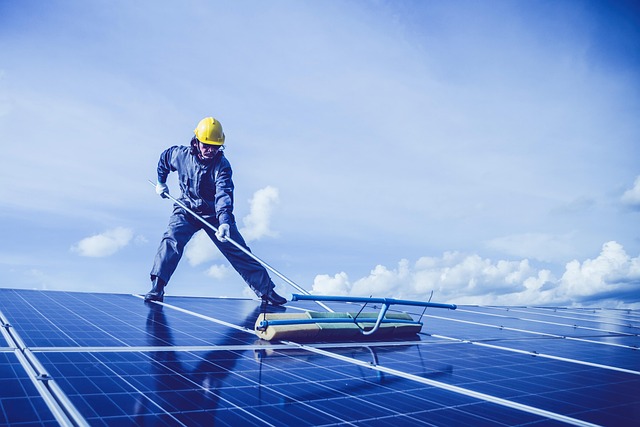
The rapid rise of solar energy has created a new class of maintenance challenges, particularly in cleaning large-scale photovoltaic installations. As dust and debris can cut energy yield by up to 30%, the industry is moving toward automation. Solar panel cleaning robots are becoming essential for efficiency, safety, and sustainability. ASTM’s proposal to standardize these systems marks a pivotal step toward consistent performance benchmarks, interoperability, and investor confidence. This shift signals a maturing market where robotic cleaning will soon be as integral to solar farms as inverters or trackers.
The Growing Importance of Solar Panel Cleaning Robots in the Renewable Energy Sector
The renewable energy sector is scaling fast, but maintaining peak solar output remains a technical and economic challenge. Automated cleaning robots are emerging as vital tools to bridge the gap between expanding capacities and limited human resources.
Market Dynamics Driving the Adoption of Cleaning Automation
As solar farms expand into hundreds of megawatts, manual cleaning becomes impractical. Operators face high labor costs, inconsistent results, and safety risks on tilted or elevated panels. Automation offers predictable performance across vast arrays. In arid regions such as the Middle East or western India, water scarcity adds pressure to adopt dry-cleaning robotics that conserve resources while meeting environmental standards. Regulatory frameworks increasingly favor low-water technologies, pushing robotic solutions into mainstream adoption.
Technological Advancements in Robotic Cleaning Systems
Modern cleaning robots integrate AI-driven navigation and machine vision to detect dust accumulation precisely and adapt routes dynamically. Some systems use waterless microfiber rollers or electrostatic brushes that minimize abrasion on panel coatings. Semi-autonomous fleets can now operate with remote supervision through IoT platforms. Mobility innovations—like adjustable traction systems—allow operation across varying tilt angles and uneven terrain, making them suitable for both ground-mounted and rooftop installations.
Evaluating Readiness for ASTM Standardization
As robotic systems proliferate globally, establishing uniform testing criteria becomes critical. ASTM’s involvement aims to bring coherence across manufacturers and markets.
The Role of ASTM Standards in Solar Technology Development
ASTM standards have long guided photovoltaic materials testing and performance validation. Extending this framework to cleaning robots would introduce uniformity in assessing reliability and interoperability. Investors often seek standardized certification as proof of product maturity; hence compliance with ASTM could significantly boost global acceptance.
Current Gaps in Testing and Certification Frameworks for Cleaning Robots
Despite rapid innovation, no unified metrics currently exist for evaluating cleaning efficacy or mechanical durability under real-world conditions. Safety protocols also vary widely—especially concerning autonomous movement over energized arrays. Environmental assessments rarely account for micro-scratch effects or particulate dispersion caused by brushes or air jets, leaving gaps that formal standards must address.
Technical Considerations for Standard Development
Developing credible standards requires identifying measurable indicators that reflect both operational performance and environmental compatibility.
Defining Key Performance Indicators (KPIs) for Cleaning Robots
Key metrics include dust removal efficiency (often measured as percentage recovery of power output), energy consumption per cycle, and total operational time per megawatt cleaned. Durability testing should simulate exposure to UV radiation, high temperatures, humidity cycles, and abrasive dust typical in desert climates. Material compatibility tests ensure brushes or rollers do not degrade anti-reflective coatings on modules.
Safety, Reliability, and Maintenance Protocols in Standardization Efforts
Autonomous navigation accuracy must meet defined thresholds to prevent collisions or misalignment on panel surfaces. Standards should outline maintenance intervals for sensor calibration and software updates. Remote diagnostics protocols can reduce downtime by allowing predictive maintenance alerts before mechanical failure occurs. Safety measures must protect both human operators during handling and panels from mechanical stress during deployment.
Global Adoption Trends and Market Readiness Assessment
Regional variations in policy support, climate conditions, and cost structures shape how quickly robotic cleaning gains traction worldwide.
Regional Market Insights on Robotic Cleaning Adoption
In North America and Europe, sustainability commitments drive interest in high-efficiency robotic systems compatible with smart-grid analytics. Government incentives often cover digital O&M innovations under clean energy programs. Meanwhile, Asia-Pacific markets—particularly China and India—are expanding solar capacity at record speed, creating demand for scalable robotic fleets that can handle frequent dust accumulation without water use. In the Middle East’s harsh desert environments, robotics capable of night-time dry cleaning are proving indispensable due to extreme daytime heat.
Economic Factors Influencing Global Deployment
Lifecycle cost analyses show automated systems can reduce annual O&M expenses by 30–40% compared with manual labor when scaled over multi-megawatt sites. Economies of scale are lowering hardware prices as production volumes grow across Asia-Pacific manufacturing hubs. However, tariffs on imported robotics components still influence adoption rates in certain regions. Subsidies promoting local assembly could accelerate deployment further by reducing upfront capital costs.
Collaboration Between Industry Stakeholders and Standards Bodies
Standardization cannot succeed without alignment among manufacturers, researchers, regulators, and asset owners who understand field realities.
Role of Manufacturers, Researchers, and Regulators in Shaping Standards
Manufacturers bring insights into design tolerances; researchers contribute data from controlled trials; regulators provide oversight ensuring public safety compliance. Joint working groups under ASTM can test prototypes under diverse climatic conditions—from humid tropics to dusty plateaus—to define realistic performance thresholds balancing innovation freedom with reliability assurance.
Pathways Toward International Harmonization of Standards
Global harmonization will require coordination among ASTM (U.S.), IEC (Europe), ISO (international), and regional agencies like BIS (India) or SASO (Saudi Arabia). Shared benchmarks would simplify cross-border certification processes for solar panel cleaning robots while fostering competitive yet safe innovation ecosystems. Open data sharing among laboratories could speed validation cycles by reducing redundant testing efforts worldwide.
Future Outlook: From Prototype Validation to Mainstream Integration
Once standardized testing frameworks are established, market confidence will likely surge as buyers gain comparable benchmarks across brands.
Anticipated Evolution of Robotic Technologies Post-standardization
Post-standardization phases may see transition from semi-autonomous units toward fully autonomous fleets managed through cloud-based dashboards integrating weather forecasts and predictive maintenance data via IoT analytics platforms. Machine learning algorithms will refine route optimization based on historical soiling patterns collected from sensors embedded within PV arrays.
Strategic Implications for Solar Asset Owners and Operators
For asset owners managing multi-site portfolios across continents, standardized performance expectations simplify procurement decisions and contractual guarantees. Predictable quality reduces downtime risk while improving ROI consistency across assets regardless of geography or vendor origin—a crucial advantage as global competition tightens around cost-per-kilowatt-hour metrics.
FAQ
Q1: What is driving the need for ASTM standards for solar panel cleaning robots?
A: The absence of unified testing methods creates inconsistency in product evaluation; ASTM aims to establish reliability benchmarks supporting global market trust.
Q2: How do these robots differ from traditional cleaning methods?
A: They automate repetitive tasks using sensors and AI navigation while minimizing water use—key advantages over manual washing especially in arid zones.
Q3: Which regions show fastest adoption rates?
A: Asia-Pacific leads due to rapid solar expansion; Middle Eastern countries follow closely given their dusty climates demanding frequent dry-cleaning cycles.
Q4: What challenges remain before full standardization?
A: Defining universal KPIs for efficiency, safety protocols for autonomous operation on live panels, and environmental impact criteria remain unresolved issues.
Q5: How might standardization affect investment decisions?
A: Certified products backed by ASTM standards signal reduced operational risk to investors, encouraging larger-scale financing of automated maintenance solutions within renewable portfolios.