
What a vertical axis wind turbine is
A vertical axis wind turbine is a wind energy device with a rotor that spins around an upright shaft rather than a horizontal shaft. Its appeal is clear: it can accept wind from changing directions without a yaw system, some designs can place heavier drivetrain components closer to the ground, and compact models are often promoted for distributed or urban energy use.
The important qualification is that vertical-axis machines have not displaced horizontal-axis turbines in utility-scale wind farms. According to the U.S. Department of Energy, horizontal-axis turbines remain the most commonly used design in today’s market, while vertical-axis turbines are less common at utility scale. For buyers, engineers, and renewable energy readers, the useful question is not whether the technology is interesting. It is where the technology is technically and economically appropriate.
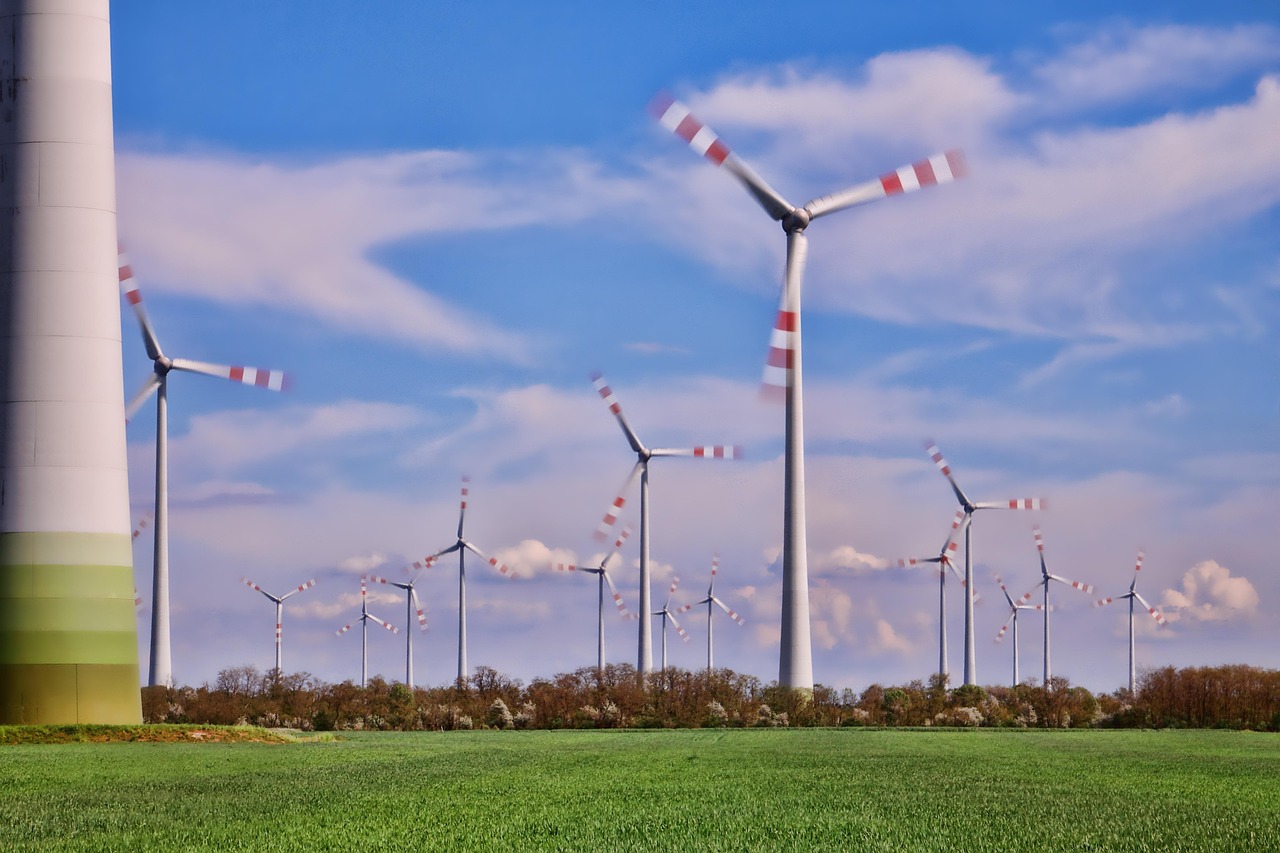
That question matters as wind energy continues to expand. The Global Wind Energy Council reported 117 GW of new wind capacity installed worldwide in 2024, and the International Energy Agency reported that wind supplied about 8% of global electricity generation in 2024. In the United States, the U.S. Energy Information Administration said wind generated 464,000 GWh of electricity in 2025, 3% more than in 2024. Vertical-axis designs belong in this wider wind technology discussion, but their strongest use cases are specific rather than universal.
Main vertical axis wind turbine designs
Most vertical-axis wind turbines fall into two broad families: drag-based Savonius turbines and lift-based Darrieus turbines. Hybrid concepts combine features of both. Each design makes different trade-offs in starting behavior, efficiency, mechanical complexity, and tolerance of turbulent winds.
Savonius turbines
A Savonius turbine is usually recognized by its curved, scoop-like blades. Wind pushes harder on the concave side of the blade than on the convex side, creating torque around the vertical shaft. This drag-based principle makes Savonius rotors simple, robust, and relatively good at self-starting in low or variable wind. Recent review literature on Savonius turbines describes them as attractive for low-power and decentralized uses because of their simple construction and ability to operate in low-speed or turbulent environments.
The trade-off is efficiency. Drag-based devices usually convert a smaller share of available wind energy into useful mechanical power than lift-based designs. A Savonius rotor can make sense for ventilation, low-power charging, education, monitoring systems, or remote auxiliary loads. It should not be expected to compete with a modern horizontal-axis turbine on energy yield per swept area.
Darrieus and H-rotor turbines
Darrieus turbines use airfoil-shaped blades and rely mainly on lift, similar in principle to the aerodynamic forces that turn conventional wind turbine blades. Classic Darrieus machines have a curved, eggbeater-like shape, while H-rotor designs use straight vertical blades connected to a central shaft by support arms.
Lift-based vertical-axis turbines can reach higher efficiency than Savonius designs, but they introduce more demanding aerodynamics. Darrieus machines may struggle to self-start, can experience torque ripple, and are exposed to cyclic loading as each blade repeatedly moves through changing angles of attack. These issues affect fatigue design, noise, vibration, controls, and long-term reliability.
Hybrid vertical-axis turbines
Hybrid turbines often combine a Savonius component for starting torque with a Darrieus component for higher operating efficiency. The engineering logic is straightforward: use the drag rotor to get the system moving, then allow the lift rotor to contribute more power once the turbine reaches a useful rotational speed.
Even so, hybrid designs are not automatically better. Added parts can increase weight, cost, drag, and maintenance needs. The right comparison is not a marketing rendering, but certified power curves, acoustic data, structural design information, and site-specific wind measurements.
| Design | Main strength | Main limitation | Typical fit |
|---|---|---|---|
| Savonius | Simple construction and good starting torque | Lower aerodynamic efficiency | Small loads, education, ventilation, remote auxiliary power |
| Darrieus or H-rotor | Higher efficiency potential than drag-based designs | Self-starting, fatigue, vibration, and control challenges | Research, specialized distributed wind, offshore concepts |
| Hybrid | Can improve starting behavior | More components and possible drag penalties | Prototype and niche small wind applications |
| Horizontal-axis turbine | Mature, widely deployed, strong utility-scale track record | Needs yaw alignment and taller nacelle access | Most commercial wind farms and many certified small wind systems |
Why vertical-axis turbines remain attractive
The strongest advantage of a vertical axis wind turbine is omnidirectional operation. Because the rotor turns around a vertical shaft, it does not need to face into the wind in the same way a horizontal-axis machine does. That can be useful where wind direction changes frequently, such as around buildings, ridgelines, complex terrain, or experimental floating platforms.
A second advantage is layout flexibility. Some vertical-axis concepts can place the generator, gearbox, or other heavy components closer to the base. In principle, that can simplify maintenance access and lower the system’s center of gravity. This is one reason Sandia National Laboratories has studied large floating offshore VAWT concepts. Sandia’s offshore research has examined whether very large 10–20 MW vertical-axis rotors could reduce cost of energy in deep-water floating wind by changing the relationship between rotor, drivetrain, tower, and platform loads. Sandia describes this as a feasibility and design challenge, not as a commercially proven replacement for today’s offshore turbines.
A third advantage is compact siting. Vertical-axis turbines are often marketed for rooftops or urban sites because they look less like conventional wind turbines and may tolerate shifting wind direction. Compact siting, however, needs careful validation. The Department of Energy’s small wind guidance emphasizes that local wind conditions can vary significantly over short distances, and that on-site measured wind data is preferred when evaluating a small wind project. Rooftop turbulence, nearby trees, parapets, and neighboring buildings can sharply reduce annual energy production even when a turbine spins visibly.
For more wind technology explainers and renewable energy context, visit our wind energy section.
The technical limits that still matter
The main reason vertical-axis wind turbines are not dominant is not a lack of invention. It is the difficulty of delivering dependable energy at a competitive cost over many years. Modern horizontal-axis turbines benefit from decades of scale-up, standardized testing, global supply chains, bankable performance data, and operating experience. A new vertical-axis design has to compete with that maturity.
Efficiency is one constraint. Savonius turbines are easy to understand and can start well, but their drag-based operation limits energy conversion. Darrieus turbines improve the efficiency potential but create challenges in self-starting and cyclic aerodynamic loads. During each rotation, the blade sees changing apparent wind speed and angle. Without careful blade design, controls, materials, and testing, that can lead to dynamic stall, torque pulsation, structural vibration, and fatigue concerns. See also: clean energy.
Certification is another practical issue. For small distributed wind in the United States, the Small Wind Certification Council states that new certifications for small distributed turbines below 150 kW use the American Clean Power standard ACP 101-1 2021 as of January 1, 2023, while legacy certifications may remain under earlier AWEA standards. Buyers should therefore look beyond rated power claims and ask whether the turbine has third-party testing, a measured power curve, acoustic data, survival wind speed information, and documented safety performance.
Marketing claims can also confuse the market. A turbine’s rated wattage is not the same as annual energy production. The Department of Energy’s guidebook highlights that performance depends on the turbine power curve, average annual wind speed at the site, tower height, micro-siting, local terrain, wind distribution, and elevation. A small turbine rated at a high wind speed may produce little useful energy at a low-wind site. That is true for both vertical-axis and horizontal-axis machines, but the risk is especially high when compact VAWTs are sold with limited test data.
Where vertical-axis wind turbines fit today
For distributed energy, vertical-axis turbines may fit small loads where simplicity, appearance, or changing wind direction matters more than maximum energy yield. Examples include demonstration projects, sensor power, off-grid lighting, telecom support with batteries, water pumping in selected rural settings, and education. Even in these uses, the system should be sized around measured site wind speeds and realistic energy demand rather than peak output claims.
For urban buildings, the fit is narrower. The idea is appealing because electricity demand is close to the point of use, but the wind resource above and around buildings is often disturbed. A turbine installed in turbulent roof-level air may experience high vibration and low annual output. In many cases, energy efficiency, solar PV, or a higher tower in a clearer wind corridor can be more productive. A vertical-axis turbine may still make sense as a visible sustainability feature or for specialized loads, but the business case should be tested carefully.
For offshore wind, the story is more forward-looking. Floating offshore wind is important because many deep-water regions have strong wind resources but cannot use conventional fixed-bottom foundations. Vertical-axis offshore concepts may offer lower centers of gravity, different platform dynamics, and easier access to heavy components. Sandia’s work is relevant because it evaluates whether those system-level advantages can offset aerodynamic and structural challenges. The key point is that offshore VAWTs remain an active research and development pathway rather than a mainstream commercial platform.
For utility-scale onshore wind, horizontal-axis turbines remain the clear default. They are bankable, efficient, certifiable, and supported by a large maintenance and supply ecosystem. A vertical-axis project would need a compelling site-specific reason and strong evidence from testing before it could be considered comparable.
A practical checklist before evaluating a vertical-axis turbine
Before choosing a vertical axis wind turbine, start with the energy problem rather than the rotor shape. The following checks are more useful than comparing brochure images:
- Measure or verify the wind resource. Use on-site data where possible, because local terrain, trees, buildings, and height above ground can change output dramatically.
- Ask for a certified power curve. Annual energy production should be calculated from the power curve and local wind distribution, not from rated capacity alone.
- Check certification and standards. For small turbines, ask whether the model has third-party certification or testing aligned with recognized standards.
- Review noise and vibration data. Vertical-axis turbines can still create mechanical noise, torque ripple, and structural vibration, especially on buildings.
- Look at survival wind speed and braking. Storm protection matters as much as low-wind starting performance.
- Compare alternatives. Solar PV, energy efficiency, a certified horizontal-axis turbine, or a hybrid solar-wind-battery system may deliver better value depending on the site.
- Model maintenance access. A ground-level generator can help, but blades, bearings, anchors, electronics, and controllers still need inspection over the system life.
Frequently asked questions
Is a vertical axis wind turbine better than a horizontal-axis turbine?
Not generally. A vertical-axis turbine can be better for specific conditions, such as changing wind direction, compact demonstration projects, or certain research applications. Horizontal-axis turbines remain dominant in utility-scale wind because they have stronger commercial maturity, higher proven energy yield, and extensive operating data.
Can a vertical-axis turbine work on a rooftop?
It can work mechanically, but the energy result may be disappointing if the rooftop wind is turbulent or obstructed. Rooftop projects should be evaluated with measured wind data, structural review, vibration analysis, and realistic annual energy production estimates.
Which is better, Savonius or Darrieus?
Savonius turbines are simpler and usually better at self-starting, but less efficient. Darrieus turbines have higher efficiency potential but face more difficult self-starting, dynamic loading, and control challenges. The better choice depends on the load, site, budget, and reliability requirements.
Why are vertical-axis turbines being studied for floating offshore wind?
Researchers are interested in whether a lower center of gravity, different support structure, and lower drivetrain placement could reduce floating platform challenges. This is a system-level research question. It does not mean vertical-axis offshore turbines are already commercially proven at the scale of today’s horizontal-axis offshore machines.
What is the most important buying factor?
The most important factor is verified annual energy production at the actual site. Rated power, attractive appearance, and low cut-in speed are not enough. Look for measured wind data, certified performance, structural safety information, and a maintenance plan.