
Electric Bills Are Going Down Again for Some in San Francisco. Here’s Who Is Getting a Break
San Francisco’s electric bills are showing a rare decline, and the beneficiaries are primarily customers enrolled in CleanPowerSF programs. The city’s community energy initiative has managed to keep rates below Pacific Gas & Electric (PG&E) levels through efficient renewable procurement and long-term contracts. This downward movement is not across the board, but it signals how local control and clean energy strategies can buffer residents from statewide price volatility. For many, this adjustment translates into modest yet meaningful monthly savings while reinforcing San Francisco’s broader climate goals.
Overview of Current Energy Pricing Trends in San Francisco
Electricity prices across the Bay Area have been volatile for years, driven by fuel costs, infrastructure investments, and state policy shifts. Yet recently, San Francisco consumers have seen relief thanks to local initiatives that prioritize stable sourcing and predictable rate structures.
Analysis of Recent Fluctuations in Electricity Rates Across the Bay Area
Over the past year, PG&E’s generation rates have increased due to wildfire mitigation costs and transmission upgrades. In contrast, CleanPowerSF has maintained more consistent pricing by securing renewable contracts early. This divergence highlights how community-based programs can insulate customers from sudden spikes linked to investor-owned utility expenses.
Comparison Between CleanPowerSF and Pacific Gas & Electric (PG&E) Pricing Structures
CleanPowerSF offers two main options: Green (default) and SuperGreen (100% renewable). Both plans typically undercut PG&E’s bundled rate because generation costs are separated from delivery fees. PG&E still handles transmission and billing for all customers, but CleanPowerSF controls generation pricing—an arrangement that allows flexibility in sourcing cheaper renewable power.
Identification of Customer Segments Experiencing Rate Reductions
Residential users on standard time-of-use plans have benefited most from recent rate adjustments. Small commercial accounts also gained modest savings as CleanPowerSF refined its procurement mix. However, large industrial users tied to specific demand schedules saw less impact since their consumption patterns align with higher-cost peak hours.
Factors Contributing to Lower Electricity Costs
The decline in electricity bills is not accidental; it results from deliberate procurement strategy, favorable market timing, and state-level support for renewables that reduce dependency on fossil-fuel volatility.
The Role of Renewable Energy Procurement in Stabilizing Prices
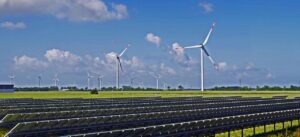
CleanPowerSF sources power primarily through long-term renewable contracts—solar farms in Central California, wind projects near Altamont Pass—which provide predictable pricing over 10–20 years. These agreements shield consumers from short-term wholesale price swings tied to natural gas markets.
Impact of Regulatory Frameworks and State-Level Clean Energy Mandates
California’s Renewable Portfolio Standard requires utilities and CCAs alike to meet escalating clean energy targets. This regulatory consistency encourages investment in renewables while spreading costs over time. As more solar and wind capacity enters the grid, marginal generation costs decline, feeding into lower retail prices for programs like CleanPowerSF.
Seasonal Demand Variations Influencing Wholesale Electricity Markets
Seasonal patterns also play a role: mild coastal weather keeps San Francisco’s summer demand moderate compared with inland regions. During spring months when hydroelectric output peaks, wholesale prices drop further, allowing CleanPowerSF to pass those savings along faster than traditional utilities constrained by fixed-rate filings.
The Role of CleanPowerSF in Local Energy Economics
Beyond pricing relief, CleanPowerSF functions as an economic lever for local sustainability goals. Its structure as a Community Choice Aggregation (CCA) program gives San Francisco control over sourcing decisions while maintaining grid reliability through PG&E infrastructure partnerships.
CleanPowerSF’s Operational Model and Market Position
As a CCA administered by the San Francisco Public Utilities Commission (SFPUC), CleanPowerSF aggregates local demand to procure electricity on behalf of residents and businesses. Governance remains public, ensuring transparency in rate-setting and contract awards—distinct from shareholder-driven models typical of investor-owned utilities.
Procurement Strategy Emphasizing Renewable and Carbon-Free Sources
The program prioritizes carbon-free resources such as solar PV, wind energy, small hydroelectric facilities, and battery storage integration. By focusing on renewables with fixed-cost profiles rather than fossil fuels subject to market fluctuation, CleanPowerSF achieves both environmental progress and financial stability.
Relationship with PG&E Regarding Transmission, Distribution, and Billing
PG&E continues operating the physical grid—maintaining poles, wires, meters—and issues unified bills that include both PG&E delivery charges and CleanPowerSF generation charges. This shared framework simplifies customer experience while preserving operational efficiency across overlapping jurisdictions.
Competitive Pricing Mechanisms Used by CleanPowerSF
Competition among CCAs has encouraged innovation in pricing models that benefit end-users without compromising service quality or reliability.
How CCAs Leverage Bulk Purchasing to Offer Rate Advantages
By pooling demand across thousands of accounts, CleanPowerSF negotiates bulk purchase agreements directly with generators at favorable rates. This collective buying power mirrors wholesale market efficiencies traditionally reserved for large-scale utilities but applied locally for community benefit.
Influence of Long-Term Power Purchase Agreements on Cost Predictability
Long-term Power Purchase Agreements (PPAs) lock in stable prices over decades. These contracts protect against spikes caused by natural gas volatility or drought-driven hydro shortages—a key reason why CCA customers often see steadier bills even during statewide turbulence.
Assessment of Administrative Efficiency Compared to Investor-Owned Utilities
Operating under municipal oversight reduces administrative overhead compared with investor-owned utilities burdened by shareholder returns. Savings from streamlined governance flow back into customer rate credits or reinvestment into local clean energy projects rather than dividends.
Comparing CleanPowerSF Rates with Other Providers
Rate comparison reveals how structural differences translate directly into consumer outcomes—especially when evaluating plan design across residential versus commercial sectors.
Breakdown of CleanPowerSF’s “Green” and “SuperGreen” Plans Versus PG&E’s Standard Rates
The Green plan uses at least 50% renewable content at slightly lower cost than PG&E’s default service. The SuperGreen option provides 100% renewable electricity for a small premium—often offset by reduced delivery surcharges due to lower overall system strain during peak periods.
Implications for Residential Versus Commercial Customers
Residential customers gain predictability; commercial clients value sustainability branding tied to SuperGreen participation. For businesses pursuing LEED certification or ESG reporting compliance, these plans offer quantifiable carbon reduction metrics without major cost penalties.
Evaluation of Time-of-Use Pricing Models Under Both Programs
Both PG&E and CleanPowerSF apply time-of-use structures reflecting California ISO grid conditions: cheaper overnight rates encourage off-peak consumption while discouraging daytime peaks. However, because CCA generation costs are lower overall, total bills under CleanPowerSF remain competitive even during high-demand windows.
Historical Rate Trends and Future Projections
Over five years, data show gradual convergence between CCA rates statewide as markets mature—but San Francisco remains among those achieving net consumer benefit through prudent management of renewables integration.
Data-Driven Comparison of Rate Movements Over the Past Five Years
Between 2019 and 2024 average residential generation charges under CleanPowerSF fell roughly 5%, while PG&E’s rose nearly 12% due largely to wildfire mitigation surcharges. This divergence underscores structural resilience within publicly governed CCAs against external cost shocks.
Expected Trajectory Based on Renewable Integration and Grid Modernization Efforts
Looking ahead, continued investment in distributed solar plus storage should flatten future rate curves further. As transmission bottlenecks ease through modernization projects funded statewide, both reliability and affordability will improve—but CCAs like CleanPowerSF remain positioned to capture benefits earlier due to contractual agility.
Policy, Regulation, and Market Dynamics Affecting Prices
Energy economics never operate in isolation; regulatory frameworks define boundaries within which providers compete while macroeconomic forces shape underlying cost inputs.
State-Level Policies Supporting Community Choice Aggregation Programs
California Public Utilities Commission (CPUC) oversight establishes uniform standards ensuring CCAs maintain fiscal health while meeting renewable mandates. Incentives such as capacity credits for local solar development help balance grid needs with decarbonization objectives central to state policy frameworks.
Incentives Promoting Renewable Adoption Through Local Power Agencies
Grants under California Energy Commission programs support municipal agencies adopting advanced metering or battery storage pilots—tools that allow entities like CleanPowerSF to manage load more efficiently during price spikes or emergencies.
The Impact of Statewide Decarbonization Goals on Rate-Setting Mechanisms
State law targeting carbon neutrality by 2045 compels all load-serving entities to internalize environmental externalities within rate design models—a shift aligning economic signals with long-term sustainability imperatives rather than short-term fuel arbitrage advantages.
External Economic Factors Shaping Energy Prices
While policy sets direction, commodity markets determine pace; natural gas fluctuations remain a major driver behind residual volatility even within largely renewable portfolios.
Effects of Natural Gas Market Volatility on Electricity Generation Costs
Despite declining fossil dependence statewide, marginal units still rely on gas-fired plants whose spot prices surged intermittently during winter cold snaps or supply disruptions—pressures partially mitigated by fixed-price PPAs held by CCAs like CleanPowerSF.
Transmission Infrastructure Investments Influencing Delivery Charges
Ongoing grid hardening projects—fire-resistant lines, undergrounding initiatives—add billions annually to utility capital budgets recovered via delivery tariffs affecting all customers regardless of provider choice; yet efficient procurement offsets some upward push within total bill composition for CCA participants.
Federal Incentives for Clean Energy Projects Affecting Local Pricing Stability
Recent federal tax credits under the Inflation Reduction Act bolster solar-plus-storage economics nationwide; these subsidies lower acquisition costs for new CCA contracts entering portfolios post‑2023 thereby extending downward pressure on retail generation rates citywide.
Broader Implications for San Francisco’s Energy Transition
San Francisco’s case demonstrates how municipal autonomy can accelerate decarbonization without penalizing affordability—a model increasingly studied nationwide as cities seek climate resilience alongside economic equity.
Economic Benefits to Consumers and Local Governments
Savings generated through competitive procurement flow back into community initiatives such as low-income energy assistance or EV charging infrastructure expansion—tangible reinvestment linking household economics with civic progress toward emissions reduction targets.
Enhanced Local Control Over Energy Sourcing Decisions
Local governance grants flexibility absent in centralized utility structures; decisions about resource mix or contract timing reflect community priorities rather than investor expectations—a subtle but powerful shift shaping urban sustainability strategy across California municipalities.
Reinforcement of San Francisco’s Climate Action Objectives Through Lower-Emission Portfolios
By maintaining high renewable penetration at competitive cost levels, CleanPowerSF supports citywide commitments under its Climate Action Plan aiming for net‑zero emissions before mid‑century—a trajectory now economically reinforced rather than hindered by market realities.
Challenges and Opportunities Ahead for CleanPowerSF
Even success breeds complexity: balancing growth against reliability will test institutional capacity as renewable penetration deepens beyond 80% thresholds projected within this decade.
Managing Supply Reliability Amid Increasing Renewable Penetration
Intermittency remains a concern; expanded battery storage deployment will be essential to maintain firm capacity during evening hours once dominated by fossil plants now being retired statewide under decarbonization mandates.
Balancing Affordability With Sustainability Commitments
Future tension may arise between keeping rates low and financing next-generation technologies like offshore wind integration or green hydrogen blending; transparent stakeholder engagement will be critical to sustain public trust during transitions requiring upfront investment before payoff materializes fully.
Future Collaboration Opportunities With Regional Energy Partners to Maintain Downward Price Trends
Regional coordination across Bay Area CCAs could unlock economies of scale through joint procurement pools or shared balancing authority participation—steps likely needed as electrification accelerates transportation demand beyond current planning baselines.
FAQ
Q1: Why are some San Franciscans seeing lower electric bills?
A: Customers enrolled in CleanPowerSF benefit from stable renewable contracts that reduce exposure to volatile fuel markets compared with traditional utility pricing structures.
Q2: Does everyone receive these reductions?
A: No. Primarily residential customers under standard time-of-use schedules experience noticeable decreases; high-demand commercial users may see smaller changes depending on usage profiles.
Q3: How does CleanPowerSF differ from PG&E?
A: It procures electricity independently but uses PG&E infrastructure for delivery and billing while emphasizing cleaner sources at generally lower generation costs.
Q4: Are these savings permanent?
A: They depend on future market conditions; however long-term contracts suggest continued stability barring major regulatory shifts or unforeseen supply constraints.
Q5: What broader impact does this have on San Francisco’s climate goals?
A: Lower-emission portfolios achieved through programs like CleanPowerSF advance citywide decarbonization targets while keeping affordability central to sustainable urban planning efforts.