
Austin Utility, Startup Partner on Home Batteries to Boost Grid Reliability
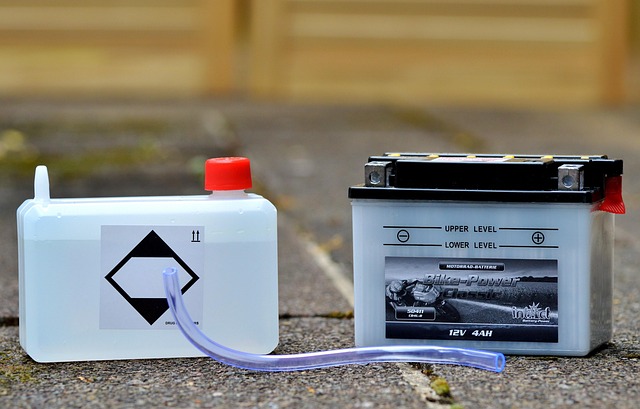
Austin’s energy future is being rewritten through the rise of household battery backup systems. As population growth and extreme weather strain the city’s grid, utilities and startups are turning to distributed storage as a practical tool for resilience. The partnership model emerging in Austin demonstrates how residential batteries can stabilize demand, cut infrastructure costs, and accelerate decarbonization. The conclusion is clear: integrating home batteries into the grid is not just a technical upgrade but a structural shift toward a more flexible, reliable, and locally empowered energy system.
The Strategic Role of Household Battery Backup in Austin’s Energy Landscape
The city’s rapid expansion has turned its power infrastructure into both an opportunity and a risk. With more residents and devices drawing electricity each year, maintaining stability demands smarter, decentralized solutions.
Austin’s Current Grid Reliability Challenges
Austin’s electric grid faces compounding stress from rising consumption and unpredictable weather. Population growth drives higher peak loads during summer cooling seasons, while winter storms expose weak points in centralized transmission lines. These conditions reveal that large-scale grids alone cannot guarantee service continuity. Regulatory hurdles further slow capacity upgrades; environmental permitting and land-use restrictions make it difficult to expand substations or build new transmission corridors quickly. In this context, household battery backup systems act as micro-reserves that strengthen local reliability when the main grid falters.
The Shift Toward Decentralized Energy Solutions
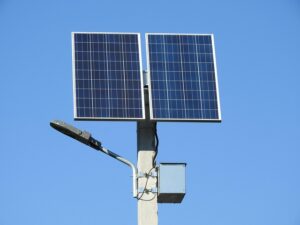
Decentralization marks a turning point in how cities manage power supply. Distributed energy resources (DERs) such as rooftop solar paired with home batteries enable neighborhoods to sustain themselves temporarily during outages. This approach lowers peak stress on the central utility by flattening demand curves across critical hours. It also complements Austin’s broader sustainability goals by reducing fossil-fuel dependence and supporting renewable integration. When thousands of homes operate as small-scale storage nodes, they collectively form a flexible energy web—less fragile than any single centralized plant.
Collaborative Models Between Utilities and Startups
The success of distributed storage depends not only on technology but also on collaboration between established utilities and agile startups capable of rapid innovation.
The Emerging Utility–Startup Partnership Framework in Austin
Austin’s utilities are increasingly partnering with startups to pilot scalable battery programs that fit within regulatory boundaries while moving faster than traditional infrastructure projects allow. Utilities bring grid data, safety standards, and capital access; startups contribute advanced control software, modular hardware design, and customer engagement expertise. This synergy creates deployment models that satisfy compliance requirements yet remain adaptable enough for fast iteration—a balance difficult for legacy institutions to achieve alone.
Incentive Mechanisms for Residential Battery Adoption
Economic signals play a decisive role in encouraging homeowners to invest in household battery backup systems. Time-of-use pricing structures reward users who store energy during low-demand periods and discharge it when rates peak. Rebates from municipal programs or federal tax credits further reduce installation costs, making adoption financially viable for middle-income households. Some utilities now experiment with aggregation schemes where hundreds of home batteries operate as one coordinated asset; participants receive payments for providing grid support while retaining personal backup capability.
Technical Integration of Household Battery Systems into the Grid
Beyond economics lies the challenge of making these devices communicate effectively with utility infrastructure—a task requiring interoperability standards and advanced control protocols.
Interoperability Standards and Communication Protocols
To function safely at scale, household batteries must follow open communication standards such as IEEE 2030.5 or IEC 61850 that define how distributed resources exchange data with grid operators. Smart inverters manage bidirectional power flow so stored electricity can move back into the network when needed without destabilizing voltage levels. Cybersecurity frameworks are equally critical: as more connected devices join the grid, protecting them from unauthorized access becomes essential to prevent cascading failures.
Grid Services Enabled by Residential Storage Networks
Once integrated properly, residential storage units can deliver valuable ancillary services traditionally provided by large power plants.
Frequency Regulation and Peak Shaving Functions
During high-demand intervals—say late afternoon in August—batteries discharge automatically to help maintain frequency within operational limits set by NERC standards. This automated balancing reduces reliance on costly peaker plants that burn natural gas for short bursts of generation.
Demand Response Optimization Through Aggregated Storage Units
When aggregated across hundreds or thousands of homes, these small batteries form what engineers call Virtual Power Plants (VPPs). VPPs allow coordinated dispatch based on real-time conditions: if demand spikes unexpectedly, software signals multiple units to release stored energy simultaneously. Such coordination enhances both efficiency and reliability without requiring physical construction of new generation assets.
Economic Implications for Utilities, Startups, and Consumers
Distributed storage reshapes financial models across the entire electricity value chain—from capital investment patterns to revenue collection methods.
Cost-Benefit Analysis of Distributed Storage Deployment
For utilities, deploying decentralized batteries reduces pressure to build new substations or extend transmission lines into fast-growing suburbs. Localized balancing cuts operational expenses linked to outage management and emergency repairs. For consumers, savings appear through lower bills during peak hours plus potential earnings from participating in demand response markets managed by their utility partners.
Long-Term Financial Sustainability of Battery Partnerships
Over time, utilities will need new revenue frameworks suited to distributed networks rather than volumetric electricity sales alone. Service-based models—charging customers for reliability guarantees or participation in shared storage pools—are gaining attention nationwide. Performance incentives tied to metrics like outage reduction or carbon intensity may also emerge as regulators push for measurable sustainability outcomes aligned with state-level decarbonization targets.
Policy, Regulation, and Future Outlook for Austin’s Energy Ecosystem
Policy alignment remains crucial if household storage is to scale citywide without creating administrative bottlenecks or inequities among participants.
Regulatory Considerations for Household Battery Integration
Existing interconnection rules were designed around one-way electricity flow from generator to consumer; two-way systems require updates that clarify safety protocols and liability distribution between homeowners and utilities. Data privacy laws must evolve too since aggregated usage information can reveal personal behavior patterns if mishandled. Close coordination among municipal authorities, state regulators, technology vendors, and community organizations ensures compliance while preserving innovation space.
Prospects for Scaling Household Battery Programs Citywide
Austin stands well-positioned to expand its early pilots into full-scale neighborhood networks over the next decade. Advanced analytics will help forecast charging cycles under different weather scenarios so grid operators can plan resource allocation proactively rather than reactively. If executed effectively, this evolution could make Austin a national model for integrating decentralized technologies into urban grids—a city where every home contributes actively to collective resilience instead of passively consuming power.
FAQ
Q1: What makes household battery backup important for Austin?
A: It provides localized resilience against outages caused by extreme weather or high demand while supporting renewable integration goals set by city planners.
Q2: How do utility–startup partnerships benefit both sides?
A: Utilities gain innovative deployment tools without overhauling internal structures; startups access stable markets through regulated channels.
Q3: Are there financial incentives for residents installing home batteries?
A: Yes, time-of-use rates lower operating costs while rebates or tax credits reduce upfront investment barriers significantly.
Q4: What technical standards govern these systems?
A: Open protocols like IEEE 2030.5 define secure data exchange between distributed assets and central management platforms ensuring interoperability across vendors.
Q5: Could this model apply beyond Austin?
A: Absolutely; other cities facing similar grid constraints can replicate the collaborative framework combining public oversight with private-sector agility to enhance reliability nationwide.