
TouchWind Installs Floating Wind Turbine Prototype at Dutch Offshore Test Site
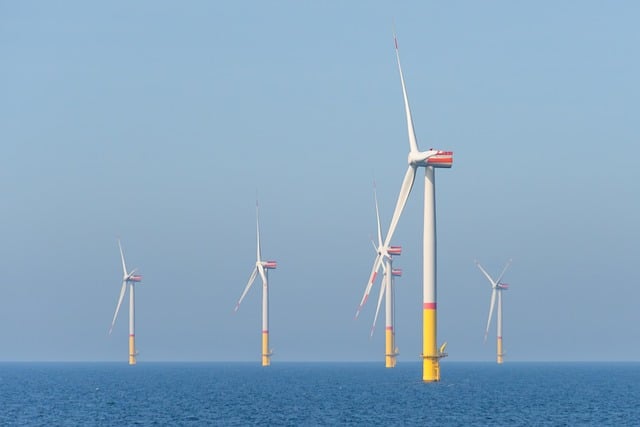
The installation of TouchWind’s floating offshore wind turbine prototype marks a major step in the Netherlands’ strategy to lead in deep-water renewable energy. The project demonstrates how innovative engineering can overcome spatial and technical limits of fixed-bottom turbines. By testing the prototype in real marine conditions, Dutch engineers aim to validate new aerodynamic and structural principles that could cut costs and expand offshore wind capacity worldwide.
Advancing Offshore Wind Technology in the Netherlands
The Netherlands continues to position itself as a global center for offshore wind innovation. Its coastal geography, maritime expertise, and government-backed research programs make it ideal for developing next-generation floating systems that can operate far from shore.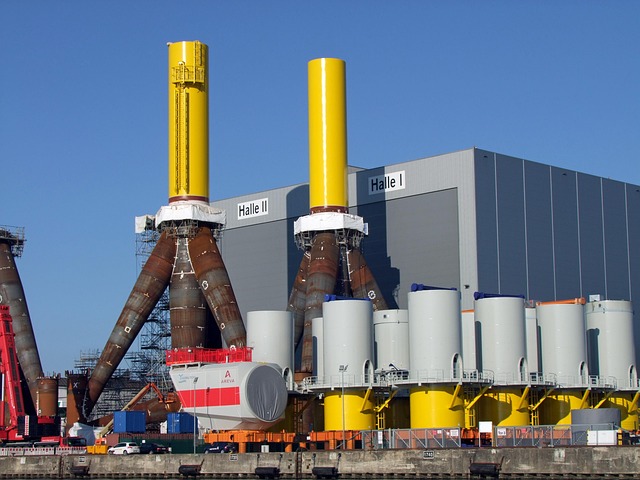
Overview of Floating Offshore Wind Turbine Development
The country’s experience with fixed-bottom turbines has provided a strong foundation for advancing into floating platforms. As wind farms move into deeper waters, floating designs allow access to stronger and more consistent winds beyond continental shelves. This shift enables energy developers to deploy turbines in areas once considered unsuitable due to depth or seabed instability. The Netherlands’ approach focuses on modularity and adaptability, allowing prototypes like TouchWind’s to be tested and refined before full-scale commercial rollout.
Significance of the Dutch Offshore Testing Environment
Dutch offshore test sites offer unique advantages for technology validation. These controlled environments provide real sea conditions with manageable risk levels, enabling researchers to measure turbine responses under variable loads. Collaboration between universities, maritime engineering firms, and national agencies ensures that every test contributes to both academic research and industry standards. Such cooperation accelerates the transition from prototype to market-ready solutions while maintaining strict safety and environmental compliance.
TouchWind’s Floating Turbine Prototype: A Technological Milestone
TouchWind’s prototype represents a bold rethinking of turbine architecture. Instead of replicating conventional multi-blade systems, it introduces a single-blade rotor concept designed for simplicity and efficiency in floating configurations.
Core Design Principles Behind the TouchWind Concept
At the heart of the design is a single-blade rotor that minimizes aerodynamic drag while maximizing lift. This unconventional geometry reduces mechanical complexity and weight, improving buoyancy and balance on moving water surfaces. Lightweight composite materials further enhance stability by lowering the turbine’s center of gravity. Simplified mechanical systems also mean fewer moving parts, reducing maintenance needs—an essential advantage when dealing with remote offshore installations.
Engineering Challenges and Solutions in Floating Configurations
Operating in open-sea conditions presents dynamic challenges from waves, wind shear, and current interactions. Engineers have addressed these through flexible mooring systems capable of absorbing energy without compromising structural integrity. Advanced sensors monitor stress distribution across key components, allowing early detection of fatigue or imbalance. Control algorithms continuously adjust turbine orientation for optimal energy capture while minimizing load asymmetry caused by one-blade rotation.
Offshore Testing as a Catalyst for Performance Validation
Testing at sea is where theory meets reality. For TouchWind, this phase will determine whether its simplified design can deliver consistent power generation under changing marine conditions.
Objectives of the Prototype Deployment at the Dutch Site
The main objectives include assessing operational stability during variable wave patterns and measuring power output across different wind speeds typical of North Sea environments. Engineers also focus on tracking structural behavior using embedded sensors that record vibration frequencies, tilt angles, and torque variations over long durations.
Data Collection and Analysis Frameworks
Digital twins play a central role in analyzing performance data by simulating real-time turbine behavior against predictive models. Integration with SCADA systems allows continuous monitoring from onshore control centers. The combination of sensor data and digital modeling provides insights into fatigue cycles, enabling iterative improvements for future versions before mass deployment.
Implications for the Future of Floating Offshore Wind Energy
The success of this prototype could redefine cost structures across offshore wind projects globally. By proving that simpler designs can perform reliably at sea, developers may achieve faster scalability with lower capital intensity.
Potential Impact on Cost Reduction and Scalability
Floating turbines eliminate expensive seabed foundations required by fixed-bottom units, cutting installation costs significantly. Prefabricated modular platforms allow rapid assembly at ports before towing them to site locations—reducing vessel time and labor expenses. As production scales up, economies of scale are expected to drive further cost efficiencies similar to those seen in solar manufacturing over the past decade.
Contribution to Global Offshore Wind Expansion Strategies
Floating technology opens access to deeper waters rich in untapped wind resources—especially valuable for countries with limited shallow coastal zones such as Japan or Norway. It aligns with national net-zero goals by expanding renewable generation potential without competing for nearshore space used by shipping or fisheries. For Europe, it reinforces leadership in exporting advanced renewable technologies worldwide through collaborative R&D frameworks supported by EU innovation funds.
Collaborative Ecosystem Driving Innovation in Offshore Testing
Behind every successful prototype lies an ecosystem combining policy support, academic expertise, and industrial capability. The Netherlands exemplifies this model through its integrated approach linking public funding with private sector execution.
Role of Industry Partnerships and Research Consortia
Joint ventures unite turbine manufacturers with maritime engineers specializing in hydrodynamics and anchoring systems. Universities contribute through computational modeling of aerodynamics and material fatigue studies under cyclic loading conditions. Government incentives encourage these partnerships by subsidizing experimental deployments that carry higher technical risk but greater innovation potential.
Knowledge Transfer and Standardization Efforts
As floating technologies mature, establishing performance benchmarks becomes crucial for certification under international standards such as IEC 61400-3-2 for offshore turbines. Shared datasets from Dutch trials help shape global guidelines on safety margins, mooring design criteria, and environmental impact assessments. This open exchange accelerates adoption across markets while reducing duplication of early-stage testing efforts elsewhere.
FAQ
Q1: What makes TouchWind’s floating offshore wind turbine unique?
A: Its single-blade rotor design simplifies structure and reduces weight while maintaining high aerodynamic efficiency suitable for deep-water deployment.
Q2: Why is the Netherlands an ideal location for offshore testing?
A: The country offers advanced maritime infrastructure, supportive regulations, and diverse sea conditions ideal for validating new technologies safely.
Q3: How does floating technology reduce costs compared to fixed-bottom turbines?
A: It removes the need for heavy seabed foundations and enables modular construction closer to shore before towing units into position.
Q4: What role do digital twins play in prototype evaluation?
A: They replicate real-world performance virtually, allowing engineers to predict wear patterns and optimize control settings using live sensor data.
Q5: How could this project influence global renewable energy strategies?
A: By proving scalable floating solutions viable at commercial scale, it could unlock vast new offshore areas worldwide for clean power generation.