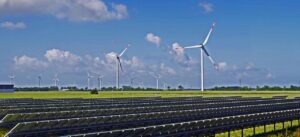

Federal Judge Blocks Trump Administration Restrictions on Wind and Solar Projects
A recent federal court decision has reshaped the trajectory of U.S. renewable energy policy. By overturning Trump-era restrictions on wind and solar projects, the ruling effectively reopens pathways for large-scale clean energy development across federal lands. This judgment not only clarifies regulatory authority but also strengthens the position of hybrid technologies such as solar windmills in national energy planning. The implications reach beyond legal boundaries, influencing investment sentiment, infrastructure strategy, and the pace toward 2035 carbon neutrality goals.
Federal Court Decision and Its Implications for Renewable Energy Policy
The court’s ruling has become a pivotal moment in defining how federal agencies will balance environmental oversight with energy transition priorities.
Overview of the Federal Judge’s Ruling
A federal judge recently blocked restrictions introduced during the Trump administration that limited renewable project approvals on public lands. The court found that these measures violated procedural fairness under administrative law principles by failing to consider current climate objectives. Environmental groups argued that the restrictions hindered progress toward national emission targets, while government attorneys defended them as necessary for resource management consistency. The decision immediately restores permitting authority to agencies like the Bureau of Land Management and signals a renewed emphasis on climate-aligned infrastructure development.
Legal Framework Governing Renewable Energy Development
Federal statutes such as the National Environmental Policy Act (NEPA) form the backbone of environmental review for renewable projects. NEPA mandates comprehensive assessments of ecological impacts before project approval, ensuring transparency and public participation. Judicial review plays a decisive role in interpreting whether agencies have met these obligations. Following this ruling, further appeals remain possible, though most analysts expect policy revisions rather than prolonged litigation due to political momentum favoring renewables.
The Strategic Position of Solar Windmills in the Renewables Landscape
As legal clarity improves, attention turns to hybrid technologies that can enhance grid reliability and land-use efficiency—areas where solar windmills show distinct promise.
Defining Solar Windmill Technology and Its Hybrid Capabilities
Solar windmills combine photovoltaic panels with vertical or horizontal-axis wind turbines within a single system. This integration allows simultaneous harvesting of solar irradiance and kinetic wind energy, optimizing generation across varying weather conditions. Engineers face challenges in mechanical synchronization, load balancing, and maintenance scheduling, yet hybrid systems achieve higher capacity factors than standalone units. Pilot installations in coastal regions and research centers demonstrate growing commercial viability.
Market Readiness and Technological Maturity
The cost curve for hybrid systems continues to decline as materials science advances in lightweight composites and high-efficiency cells. Grid integration remains complex but increasingly manageable through digital control systems that coordinate variable outputs. Compared with separate solar or wind farms, hybrid arrays deliver steadier returns on investment by smoothing intermittency—a key advantage for utilities seeking predictable revenue streams.
Policy Shifts Driving Renewable Infrastructure Expansion
The court’s decision effectively accelerates policy adaptation at multiple levels of government, aligning regulatory frameworks with decarbonization mandates.
Federal Incentives and Regulatory Support Post-Ruling
Federal agencies are expected to streamline permitting procedures for renewable projects under revised guidelines consistent with NEPA standards. Tax credits under sections like the Investment Tax Credit (ITC) may see extensions or expansions to include hybrid configurations such as solar windmills. Coordination between federal, state, and local authorities aims to reduce administrative delays that previously discouraged developers from pursuing complex multi-technology sites.
The Influence of Energy Transition Goals on Project Viability
The Biden administration’s carbon reduction targets—50% emission cuts by 2030—drive long-term projections from both DOE and EIA showing renewables surpassing fossil fuels within two decades. Hybrid systems align naturally with these projections by maximizing site productivity per acre while supporting distributed generation goals. Public-private partnerships are emerging around large-scale demonstration zones designed to validate performance metrics for integrated technologies.
Economic and Investment Dynamics Surrounding Solar Windmills
Legal stability often precedes capital confidence; investors now reassess risk profiles across hybrid renewable portfolios.
Shifting Investor Sentiment Toward Hybrid Renewables
Institutional investors interpret the ruling as a signal of regulatory predictability in clean energy markets. Green bond issuances tied to hybrid infrastructure are rising as funds seek exposure to diversified generation assets. Financial institutions employ new risk models factoring dual-output resilience against weather volatility—a metric particularly favorable to solar windmills compared with single-source plants.
Supply Chain Considerations and Domestic Manufacturing Potential
Component availability remains a challenge as demand outpaces domestic production capacity for advanced turbines and photovoltaic modules. Industrial policy initiatives promoting U.S.-based manufacturing could mitigate dependency on imports from Asia while fostering regional job growth. Companies are exploring modular assembly strategies that shorten deployment timelines without compromising system integrity.
Environmental and Grid Integration Perspectives
Beyond economics, environmental performance defines public acceptance and long-term sustainability credentials of any new technology class.
Ecological Benefits Compared to Conventional Energy Sources
Hybrid systems cut greenhouse gas emissions substantially by enabling continuous generation cycles that reduce reliance on fossil backup plants. Their compact footprint allows shared land use—for example, agricultural operations beneath elevated panels—improving spatial efficiency relative to separate solar or wind installations. However, large-scale deployments must still address potential wildlife interactions through adaptive siting practices guided by ecological monitoring data.
Grid Stability and Energy Storage Requirements
Solar windmills enhance grid resilience because their output patterns complement each other: daytime solar peaks offset nocturnal wind surges. Coupled with advanced battery storage—lithium-ion or emerging solid-state types—they stabilize voltage fluctuations during transitional weather periods. Integration challenges persist where transmission infrastructure lags behind generation growth, prompting investments in smart grid upgrades capable of dynamic load management.
Future Outlook for Solar Windmills in U.S. Renewable Strategy
With legal barriers easing and market mechanisms maturing, hybrid renewables appear poised for accelerated adoption within national planning horizons extending to mid-century benchmarks.
Anticipated Policy Developments Influencing Market Growth
Federal procurement programs may soon incorporate hybrid criteria into competitive bidding processes for utility-scale contracts. State-level initiatives like community microgrids could adopt smaller distributed versions of solar windmill arrays tailored for local resilience needs. These developments collectively contribute toward achieving 100% clean electricity targets projected between 2035 and 2050.
Research, Innovation, and Industry Collaboration Pathways
Collaborations between universities, manufacturers, and grid operators are advancing aerodynamics modeling and materials durability testing for integrated designs. Digital technologies including AI-based predictive maintenance tools improve operational uptime by detecting anomalies before costly failures occur. International cooperation under frameworks such as IRENA promotes standardization efforts essential for scaling cross-border technology deployment efficiently.
FAQ
Q1: What was the main outcome of the federal court ruling?
A: The judge invalidated Trump-era restrictions on renewable projects, restoring broader permitting authority for agencies overseeing clean energy development on federal lands.
Q2: How do solar windmills differ from traditional systems?
A: They integrate both photovoltaic panels and wind turbines into one structure, generating power from sunlight and airflow simultaneously.
Q3: Are hybrid renewable systems cost-competitive today?
A: Costs have fallen significantly due to improved materials and control software; while initial capital is higher than single-source setups, lifecycle returns tend to be stronger due to steadier output.
Q4: What environmental benefits do these hybrids offer?
A: They reduce emissions more effectively by maintaining generation continuity across varying conditions while optimizing land use compared with separate facilities.
Q5: How might this ruling affect future U.S. energy policy?
A: It reinforces federal commitment to renewable expansion goals, likely accelerating investment flows into innovative technologies like solar windmills over the next decade.