
What a wind energy system actually includes
A wind energy system is the full chain that converts moving air into usable electricity. It is not only the turbine visible on the horizon. A complete system includes the rotor, nacelle, tower, foundation, controls, power electronics, transformers, collection cables, grid interconnection, monitoring software, maintenance plan, and, in some projects, storage or hybrid generation.
The practical question is not simply whether wind can produce power. It is whether a specific site, turbine design, grid connection, and operating strategy can turn a variable wind resource into dependable, financeable energy over many years. According to the U.S. Energy Information Administration, wind generated about 464 billion kilowatthours in the United States in 2025, equal to about 10.5% of U.S. utility-scale electricity generation.
For broader market coverage and related industry updates, visit the wind energy section.
Main components from rotor to grid
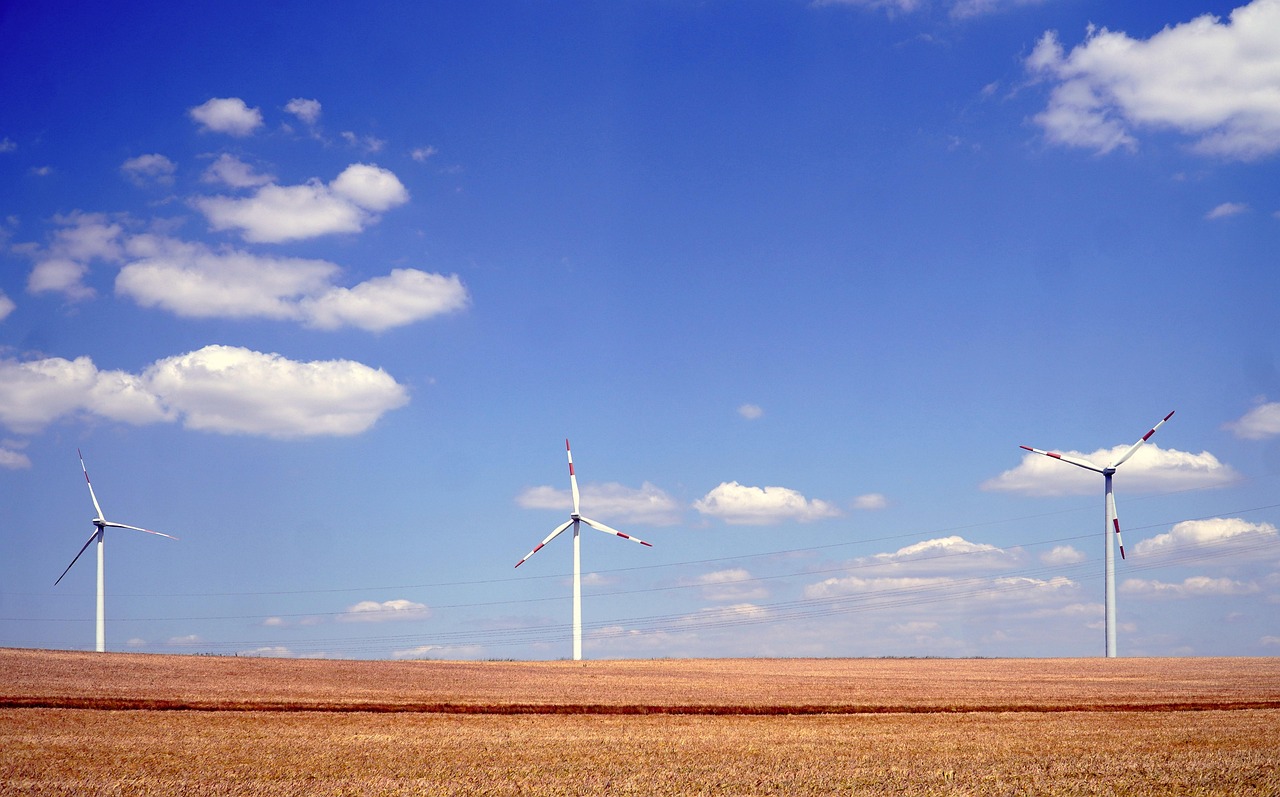
The visible turbine is only the front end of the system. Blades capture kinetic energy from the wind by creating lift, similar to an aircraft wing. The rotor turns a shaft that drives a generator either directly or through a gearbox, depending on the turbine architecture. Modern turbines also use pitch systems to adjust blade angle and yaw systems to keep the rotor aligned with the wind direction.
Inside the nacelle, the generator, braking system, sensors, lubrication systems, and condition-monitoring equipment convert rotation into electricity while protecting the machine from mechanical stress. Power electronics then condition the output so it can meet grid requirements for frequency, voltage, and power quality. At project scale, multiple turbines feed electricity into underground or overhead collection systems, step-up transformers, a substation, and finally the transmission or distribution network.
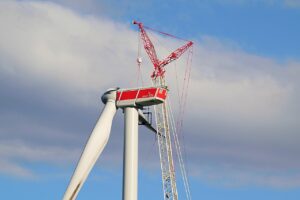
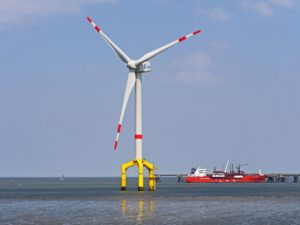
The foundation and tower are also part of the energy system. They determine how high the rotor can reach and how safely the turbine can withstand wind loads, turbulence, soil conditions, and extreme weather. Offshore projects add another layer of complexity, including seabed foundations or floating platforms, subsea cables, marine logistics, corrosion protection, and port infrastructure.
How system size and location change the design
Wind projects are usually grouped into three broad categories: utility-scale land-based, offshore, and distributed wind. Each category uses the same basic physics, but the design constraints, cost drivers, and grid relationships are different.
| System type | Typical use | Key design focus | Main constraint |
|---|---|---|---|
| Land-based utility-scale wind | Large power plants selling electricity to wholesale markets or utilities | Rotor size, hub height, wake management, transmission access | Siting, interconnection queues, local acceptance, transmission capacity |
| Offshore wind | Large coastal projects with stronger marine wind resources | Foundations, marine installation, subsea export cables, port logistics | Capital cost, permitting, vessel availability, grid landing points |
| Distributed wind | On-site or local-grid power for farms, facilities, communities, or microgrids | Load matching, distribution interconnection, maintenance access | Site-specific wind quality, permitting, small-project economics |
The U.S. Department of Energy describes distributed wind as turbines connected at the distribution level or in off-grid applications to serve local demand. These systems can range from small kilowatt-scale turbines for a home or farm to multi-megawatt machines serving industrial facilities. Utility-scale projects, by contrast, are optimized around bulk power production, larger turbines, and long-term energy sales.
Location changes the engineering. A flat, open plain with steady wind allows a different turbine layout than a forested ridge, a complex mountain pass, or an offshore lease area. Wind shear, turbulence intensity, icing risk, extreme gusts, access roads, crane pads, soil bearing capacity, and distance to interconnection all affect whether a site that looks attractive on a wind map can become a strong project.
Performance metrics that matter more than nameplate capacity
Nameplate capacity tells readers the maximum output a turbine or project can produce under specified conditions. It does not show how much electricity the system will deliver across a year. A 100 MW wind farm does not produce 100 MW every hour; output depends on the wind resource, turbine availability, curtailment, wake losses, seasonal patterns, and grid constraints.
Capacity factor is one of the most important metrics. It compares actual electricity generation with the theoretical maximum generation if the plant ran at full capacity all the time. A higher capacity factor usually means better use of equipment, but it should be read alongside local market value. A project that produces strongly during high-price or high-demand hours may be more valuable than one with slightly higher annual output at lower-value times.
Availability is another essential measure. It indicates whether turbines are mechanically ready to operate when wind is available. High availability depends on component quality, condition monitoring, spare parts, access planning, and trained service teams. Offshore wind projects pay particular attention to availability because weather windows, vessel scheduling, and distance from shore can make repairs slower and more expensive.
Other key metrics include annual energy production, net capacity factor, wake losses, curtailment, grid losses, forced outage rate, noise compliance, and forecast accuracy. For investors and planners, the most useful assessment combines energy yield, revenue profile, grid deliverability, environmental limits, and long-term operating cost.
Current market context for wind energy systems
Recent public data show why wind remains central to renewable power planning, while also showing that growth is uneven. The Global Wind Energy Council reported in its Global Wind Report 2026 that new wind installations reached 165 GW in 2025 and that global wind power capacity reached 1,299 GW. Those figures point to a technology with large global scale, not a niche resource.
In the United States, the EIA reported that wind accounted for about 43% of utility-scale renewable electricity generation in 2025. The Department of Energy’s 2024 Land-Based Wind Market Report, which covers calendar year 2023, reported 6,474 MW of new U.S. land-based wind capacity added in 2023 and nearly 150,500 MW of cumulative land-based capacity by the end of that year. The same report noted that the average capacity of newly installed U.S. turbines in 2023 was 3.4 MW, with an average rotor diameter of 133.8 meters and average hub height of 103.4 meters.
| Reference point | Reported period | What it shows |
|---|---|---|
| U.S. EIA wind generation | 2025 | Wind supplied about 464 billion kWh and about 10.5% of U.S. utility-scale generation |
| U.S. DOE land-based wind market data | 2023, published in 2024 | U.S. land-based wind continued to add capacity, while turbine dimensions kept increasing |
| GWEC global market data | 2025, published in 2026 | Global wind installations and cumulative capacity reached new high levels |
The practical takeaway is that larger turbines and wider deployment can improve energy capture, but they also raise demands on transport routes, cranes, foundations, grid studies, and community engagement. A stronger wind energy system is therefore not just a bigger turbine; it is a better-matched project architecture. See also: clean energy.
Grid integration and reliability considerations
Wind power is variable, so output changes with weather. That does not make it unusable, but it does require planning. Grid operators use forecasting, transmission, flexible generation, demand response, storage, and regional balancing to manage changing output. As the share of wind and solar rises in a power system, flexibility becomes more important.
A wind energy system must meet interconnection standards and grid-code requirements. These can include voltage control, reactive power capability, fault ride-through, communication with grid operators, and protective relays. In weak grids or remote areas, developers may need additional equipment such as synchronous condensers, grid-forming inverters, battery systems, or stronger transmission upgrades.
Curtailment is another issue. A turbine may be technically able to produce electricity, but output can be reduced if transmission is congested, local demand is low, or market prices turn negative. Curtailment does not mean the turbine failed. It means the wider system could not accept or economically use all available output at that moment. This is why transmission planning and market design matter as much as turbine performance.
Cost, permitting, and operating factors to watch
The cost of a wind energy system depends on much more than the turbine price. Major cost categories include turbine supply, foundations, civil works, electrical balance of plant, transport, cranes, development studies, permitting, financing, insurance, interconnection upgrades, and long-term operations and maintenance. Offshore projects add specialized vessels, port upgrades, subsea cables, marine surveys, and more complex weather-risk planning.
Public planning tools such as the National Renewable Energy Laboratory’s Annual Technology Baseline are useful because they compare cost and performance assumptions across technologies and scenarios. Even so, any single cost estimate needs careful interpretation. A project in a high-wind area with difficult interconnection may be less attractive than a moderate-wind site with excellent grid access and lower construction risk.
Permitting can shape timelines as much as engineering. Projects may need wildlife studies, aviation reviews, visual impact assessment, sound modeling, road-use agreements, cultural-resource reviews, and community consultation. Offshore projects face additional questions around marine habitat, fisheries, navigation, military use, and coastal grid connections. Early engagement does not remove every objection, but it can identify design changes before they become expensive late-stage conflicts.
Operations and maintenance also deserve attention. Blades face erosion, lightning, leading-edge wear, and fatigue. Gearboxes, bearings, generators, converters, and transformers require monitoring. A strong maintenance strategy uses inspections, sensor data, oil analysis, vibration monitoring, weather planning, and spare-parts logistics to reduce downtime and avoid catastrophic component failures.
A practical checklist for evaluating a wind energy system
Readers assessing a wind project or technology claim should start with a structured checklist rather than a headline capacity number.
- Wind resource: Is there measured site data, not only a broad regional map?
- Turbine match: Is the rotor, hub height, and power rating suited to the local wind regime?
- Energy estimate: Does the annual energy production account for wakes, losses, availability, curtailment, and uncertainty?
- Grid connection: Is interconnection capacity available, and are upgrade costs known?
- Permitting risk: Have wildlife, sound, visual, aviation, and land-use issues been assessed?
- Commercial value: Does the project produce during valuable hours, not just windy hours?
- Maintenance plan: Are access, spare parts, service contracts, and monitoring systems included?
- End-of-life plan: Is there a plan for repowering, component recycling, or decommissioning?
This checklist helps separate a complete wind energy system from a simple equipment purchase. The strongest projects align resource quality, turbine technology, local acceptance, grid capability, and long-term serviceability.
Frequently asked questions
Does a wind energy system need batteries?
Not always. Many wind farms deliver electricity directly to the grid without dedicated batteries. Storage becomes more valuable when a project needs to smooth short-term output, shift energy to higher-value hours, support microgrid resilience, or meet specific grid-service requirements.
Is offshore wind always better than land-based wind?
No. Offshore wind can access strong and consistent marine wind resources, especially near coastal demand centers, but it usually involves higher construction, installation, and maintenance complexity. Land-based wind is often simpler to build and service, while offshore wind may offer scale and proximity advantages in selected markets.
What is the difference between capacity and generation?
Capacity is the maximum rated output of a turbine or project under specified conditions. Generation is the actual electricity produced over time. For wind, generation depends on wind speed, turbine availability, grid constraints, and operating conditions, so it is usually the more useful measure of real energy contribution.
What makes a wind project bankable?
A bankable project needs credible wind data, proven turbine technology, realistic energy modeling, secure land or seabed rights, permits, interconnection progress, a clear revenue structure, manageable construction risk, and a long-term operations plan. Technical performance and commercial structure must support each other.