
Onshore wind is mature, but not static
Onshore wind remains a central renewable power technology in 2026. It has established supply chains, relatively low generation costs, shorter development timelines than many offshore projects, and enough scale to influence power-system planning. For readers searching “on shore wind,” the standard industry term is onshore wind or land-based wind.
Recent data explains why the topic remains important. GWEC’s Global Wind Report 2026 says the wind industry installed a record 165 GW of new capacity worldwide in 2025, with onshore projects accounting for the great majority of additions. IRENA’s July 2026 cost report put the global weighted-average levelized cost of energy (LCOE) of onshore wind at USD 33/MWh in 2025. Those figures do not mean every land-based project is easy to permit, finance, or connect to the grid. They do confirm that onshore wind remains a practical option for clean power growth where the site, grid, and commercial structure are suitable.

What onshore wind means in practice
Onshore wind refers to wind turbines installed on land, usually in rural, agricultural, desert, plateau, or open plain areas where wind resources, land availability, and grid access can support commercial development. It differs from offshore wind, which is built in marine environments, and from small distributed wind, which is usually installed closer to a farm, business, community facility, or remote load.
A typical utility-scale onshore wind project includes wind resource measurement, land agreements, environmental and community review, turbine procurement, civil works, electrical collection systems, substations, and interconnection to the transmission or distribution network. The turbines convert wind’s kinetic energy into rotational motion, which drives an electric generator. Output changes with wind speed, so modern projects rely on forecasting, grid dispatch, power electronics, and sometimes co-located storage to make production more useful to the power system.
Because onshore projects occupy land without using all of it, many sites continue to support farming, grazing, or other local economic activity around turbine pads, access roads, and electrical infrastructure. For broader coverage of renewable power technologies, visit the site’s wind energy section.
The data behind the 2026 onshore wind discussion
The most useful way to read today’s onshore wind market is to separate installed capacity, electricity generation, cost, and project pipeline. Capacity measures the maximum rated output of turbines. Generation measures actual electricity produced over time. Cost estimates compare projects under assumptions that vary by region, financing, grid connection, resource quality, and policy treatment.
| Source and data period | Key figure | Why it matters |
|---|---|---|
| GWEC Global Wind Report 2026, covering 2025 | 165 GW of new wind capacity worldwide and 1,299 GW of total installed wind capacity | Shows that wind remains a large-scale global buildout, not a niche technology. |
| GWEC 2026 offshore and global reporting, covering 2025 | More than 9 GW of offshore additions, implying that most new wind capacity was onshore | Confirms that land-based wind still delivers the majority of annual wind deployment. |
| IRENA Renewable power generation costs in 2025, published July 2026 | Onshore wind LCOE of USD 33/MWh in 2025 | Indicates strong cost competitiveness at the global weighted-average level, while local costs still vary. |
| U.S. EIA electricity data for 2025 | U.S. wind generated about 464 billion kWh, or roughly 10.5% of utility-scale electricity | Demonstrates that wind is already a major operating power source in the United States. |
| American Clean Power Q4 2025 reporting | Land-based wind accounted for about 13% of U.S. power capacity additions in 2025 and ended the year with nearly 30 GW in the pipeline | Shows that U.S. deployment continued, although future growth depends on permitting, grid access, policy, and procurement. |
These figures also show why simple claims about wind can be misleading. A low global average cost does not guarantee a low-cost project everywhere. A large interconnection queue does not mean every project will be built. A record global installation year can also coexist with slower growth in specific regions.
Why land-based wind still has a strong role
Technology has improved without changing the basic concept
Modern onshore wind is not simply the same technology repeated at larger scale. Turbines have become taller, blades have become longer, and control systems have improved. The U.S. Department of Energy’s Land-Based Wind Market Report 2024, which reviewed the 2023 calendar year, reported that newly installed U.S. turbines averaged 3.4 MW in nameplate capacity, with an average rotor diameter of 133.8 meters and an average hub height of 103.4 meters. Larger rotors help capture more energy from lower wind speeds, while taller towers reach steadier wind profiles above ground-level turbulence.
This matters because wind project economics depend on energy production over the full year, not only peak output. A turbine in a moderate wind region with an optimized rotor, suitable hub height, and good availability may deliver a better project outcome than a poorly sited turbine in a stronger wind region with transmission constraints or frequent curtailment.
Onshore wind can complement solar generation
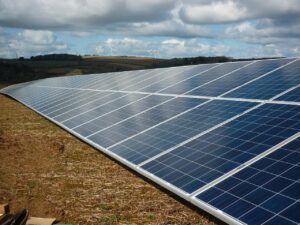
In many power systems, wind and solar production profiles differ. Solar output is concentrated during daylight hours and is strongest in sunny seasons. Wind output can be stronger at night, during seasonal weather patterns, or in regions where solar resources are less dominant. This complementarity does not eliminate variability, but it can reduce the burden on storage and flexible generation when projects are planned as part of a broader portfolio.
Grid value increasingly depends on when and where electricity is delivered. A low-cost onshore wind farm located far from demand may need transmission investment. A slightly more expensive project closer to load, or connected to a less congested part of the grid, may have stronger delivered value. That is why developers now evaluate wind resource, interconnection cost, congestion, expected curtailment, and offtake structure together rather than treating turbine cost alone as the main decision point.
Constraints that can slow onshore wind projects
Permitting and local siting are often decisive
Onshore wind projects are visible, physically large, and specific to local land use. Community concerns can include noise, shadow flicker, landscape change, aviation lighting, road use during construction, wildlife impacts, property values, and fairness in distributing project benefits. These concerns do not automatically make a project unsuitable, but they do mean that early engagement and transparent siting work are essential.
Academic and policy research has documented the growing importance of local wind ordinances in the United States. Setback rules, height limits, sound standards, and permitting procedures can determine whether a theoretically strong wind resource is actually developable. In practice, successful projects usually combine technical optimization with community benefit arrangements, clear complaint-resolution processes, wildlife mitigation, and realistic construction planning.
Interconnection and transmission remain major bottlenecks
Grid connection is one of the biggest practical constraints for land-based wind. Lawrence Berkeley National Laboratory’s Queued Up 2024 analysis found that nearly 2,600 GW of generation and storage capacity was actively seeking U.S. grid interconnection at the end of 2023, with solar, wind, and storage accounting for more than 95% of active capacity. Large queues show market interest, but they also reveal a bottleneck: projects can wait years for studies, network upgrade estimates, and final agreements.
Transmission is especially important for onshore wind because the best wind resources are often located away from dense load centers. Without adequate transmission, projects may face curtailment, lower merchant value, or higher upgrade costs. That is why grid planning, regional transmission coordination, and faster interconnection processes are as important to wind growth as turbine efficiency. See also: clean energy.
Policy and procurement uncertainty can affect timing
Onshore wind project economics are sensitive to tax credits, auction rules, local permitting timelines, trade policy, interest rates, and equipment supply. GWEC has repeatedly warned that permitting, grid transmission, and auction design can limit deployment even when demand for clean power is strong. In the United States, ACP’s March 2026 reporting noted that clean power purchase agreement announcements fell in 2025, which it treated as a warning sign for later-decade deployment.
For developers and power buyers, sequencing matters. A project with a good wind resource may still miss a commercial target if turbine delivery, interconnection approval, tax qualification, or offtake negotiations fall out of order. Conversely, projects with secured land, grid progress, and community support can become strategically valuable when electricity demand is rising.
Where onshore wind can add the most value
The strongest opportunities for onshore wind are not limited to building new projects on untouched sites. Repowering older wind farms can increase output by replacing aging turbines with fewer, larger, more efficient machines, although local permits and grid limits still apply. Hybrid projects that pair wind with solar or storage can improve use of interconnection capacity and smooth revenue exposure. Corporate and utility procurement can also support projects where buyers need long-term clean electricity rather than short-term energy credits alone.
Rural economic value is another important factor. Land lease payments, local taxes, construction work, and operations jobs can make wind projects meaningful to host communities. However, these benefits are strongest when agreements are transparent and when local governments have the capacity to evaluate long-term impacts. A credible onshore wind project should be able to explain who receives lease revenue, how roads will be restored, how emergency services will be coordinated, and what happens at the end of the project’s life.
For power systems, onshore wind’s value is likely to grow when it is planned with transmission, storage, demand response, and flexible resources. The goal is not to make every wind farm operate like a conventional power plant. The goal is to combine diverse clean resources so the overall system can meet demand reliably and affordably.
How to evaluate an onshore wind project
Investors, utilities, policymakers, and large power buyers should look beyond headline capacity and ask practical questions about project quality. Useful evaluation criteria include:
- Wind resource quality: Confirm long-term wind speed, turbulence, seasonal profile, and expected energy production using measured and modeled data.
- Grid deliverability: Review interconnection status, network upgrades, congestion risk, and curtailment assumptions.
- Permitting pathway: Identify local ordinances, environmental review requirements, aviation or radar issues, and realistic approval timelines.
- Technology choice: Match turbine rating, rotor diameter, hub height, and cold-weather or high-temperature specifications to the site.
- Commercial structure: Compare merchant exposure, power purchase agreements, renewable energy credit treatment, and basis risk.
- Community impact: Evaluate landowner agreements, public engagement, tax revenue, visual impacts, and decommissioning plans.
- Portfolio fit: Consider how wind output interacts with solar, storage, load shape, and regional reliability needs.
This project-level discipline matters because the next phase of onshore wind growth will be shaped less by whether the technology works and more by whether projects can be built in the right places, connected on time, and accepted by host communities.
Frequently asked questions
Is onshore wind the same as land-based wind?
Yes. Onshore wind and land-based wind usually refer to the same category: wind turbines installed on land rather than in oceans, lakes, or other offshore environments. “On shore wind” is a common search variation, but “onshore wind” is the standard industry spelling.
Is onshore wind cheaper than offshore wind?
At the global weighted-average level, recent IRENA data shows onshore wind has a lower LCOE than offshore wind. In 2025, IRENA reported onshore wind at USD 33/MWh and offshore wind at USD 78/MWh. Actual project economics depend on local wind resources, financing, grid connection, permitting, turbine prices, and market design.
How much electricity does wind provide in the United States?
The U.S. Energy Information Administration reported that wind generated about 464 billion kWh of electricity in 2025, equal to roughly 10.5% of total U.S. utility-scale electricity generation. Most U.S. wind generation comes from land-based projects.
Why do some onshore wind projects face local opposition?
Common concerns include visual impact, sound, shadow flicker, wildlife, aviation lighting, construction traffic, and how project benefits are shared. Strong projects address these issues early with transparent siting, environmental review, community engagement, and enforceable decommissioning plans.
Can onshore wind work with batteries or solar power?
Yes. Wind can be paired with storage, solar, or both. Hybrid designs can improve grid connection use, reduce imbalance exposure, and better match customer demand. The best configuration depends on local market prices, interconnection rules, resource profiles, and offtake requirements.