
How Trump’s Attack on Wind Power Is Impacting the Energy Industry
The U.S. wind energy sector has faced significant turbulence under Trump-era policies that prioritized fossil fuel expansion and regulatory rollbacks. These measures disrupted investor confidence, slowed renewable infrastructure growth, and reshaped state-federal dynamics in energy governance. Despite this, technological innovation and state-level resilience have kept wind power competitive, particularly through advances in turbine design and private financing models. The long-term trajectory of windmills for electricity now depends on post-Trump policy reforms, global market competition, and renewed federal support for clean energy integration.
The Political Landscape of Wind Energy in the United States
The political environment surrounding wind power has been shaped by shifting federal priorities and contrasting state-level commitments. Federal deregulation under the Trump administration created uncertainty, while states continued to pursue ambitious renewable mandates.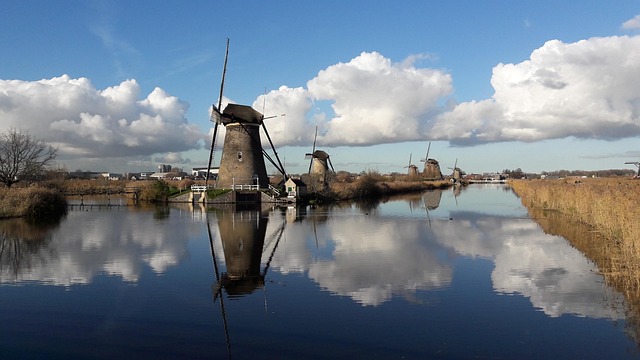
Overview of Trump’s Energy Policies
Trump’s administration emphasized fossil fuel development as a cornerstone of national energy independence. Policies rolled back environmental regulations and scaled down federal incentives for renewable projects. The reduction of tax credits like the Production Tax Credit (PTC) discouraged new investments in wind farms. Moreover, environmental policy reversals influenced capital allocation toward oil and gas, marginalizing renewables in federal planning.
Federal and State-Level Policy Divergence
While federal incentives weakened, states such as Texas and Iowa maintained strong commitments to wind energy. Texas led the nation in installed wind capacity even amid federal resistance. This divergence created legal friction over project approvals and transmission infrastructure funding. States often relied on Renewable Portfolio Standards (RPS) to maintain momentum despite limited federal backing.
Legal and Regulatory Tensions Shaping Future Project Approvals
Regulatory uncertainty remains a core challenge for developers seeking permits for large-scale projects. Federal agencies delayed or rescinded environmental reviews critical to wind farm siting. These actions extended project timelines, increased costs, and complicated coordination between state regulators and federal authorities.
Economic Implications for Wind Power Development
Economic outcomes from Trump-era policies were mixed: investment patterns shifted away from renewables while technology-driven cost reductions preserved competitiveness.
Investment Trends in Wind Infrastructure
The expiration of key tax credits reduced investor appetite for new projects. Capital flows redirected toward natural gas exploration due to favorable policies and lower perceived risks. Domestic turbine manufacturing suffered as supply chains contracted, impacting jobs across component industries such as steel fabrication and electrical systems.
Cost Competitiveness of Wind Energy Under Policy Pressure
Despite policy headwinds, technological advances kept wind power cost-competitive with fossil fuels. Larger turbines improved output efficiency while digital monitoring reduced maintenance expenses. However, tariffs on imported components inflated production costs by up to 15%, undermining profitability margins for some developers.
Potential Slowdown in Grid Modernization Efforts Supporting Wind Integration
Grid modernization—essential for integrating intermittent sources like wind—slowed under reduced federal funding. Without upgraded transmission lines or smart grid technologies, congestion issues persisted in high-generation regions such as the Midwest.
Industry Response to Policy Changes
Wind energy firms adapted through diversification strategies, alternative financing models, and international expansion to offset domestic policy risks.
Strategic Adaptations by Wind Energy Companies
Developers increasingly combined solar arrays with wind installations to stabilize output profiles. Private financing through corporate Power Purchase Agreements (PPAs) surged as companies sought carbon-neutral supply chains independent of government subsidies. Many U.S.-based firms expanded into European markets where policy environments remained supportive.
Role of Utilities in Balancing Portfolios
Utilities reassessed their long-term renewable commitments amid shifting regulatory landscapes. Some deferred new contracts until clearer signals emerged from Washington. Integration challenges persisted due to intermittency concerns but were mitigated through partnerships with technology firms employing AI-based forecasting tools.
Technological Innovation Amid Political Uncertainty
Innovation became the stabilizing force for the industry during political volatility, driving efficiency gains that offset lost subsidies.
Advances in Turbine Design and Efficiency
Modern turbines feature rotor diameters exceeding 150 meters, enabling higher capacity factors even in low-wind areas like the Southeast U.S. New composite materials extend operational lifespans while reducing maintenance needs by nearly 20%. Predictive analytics embedded within control systems further optimize uptime across distributed assets.
Offshore Wind as a Strategic Frontier
Offshore development faced delays due to prolonged federal leasing processes; however, coastal states such as New York and Massachusetts pursued independent initiatives through state-authorized procurement programs. Offshore projects remain critical for balancing national renewable output given their stable generation profiles compared to onshore farms.
Environmental and Social Dimensions of the Debate
Public narratives around windmills for electricity reflect deep political divides influenced by misinformation campaigns and local environmental concerns.
Public Perception and Political Narratives Around Windmills for Electricity
Political rhetoric often exaggerated negative impacts such as noise or wildlife disruption, shaping public skepticism toward new installations. Advocacy organizations responded with data-driven outreach highlighting minimal ecological harm relative to fossil extraction zones.
Environmental Trade-Offs in the Broader Energy Mix
Wind energy occupies more land area per megawatt than gas plants but emits no greenhouse gases during operation. Lifecycle assessments consistently show lower emissions intensity compared to coal or oil generation pathways (IEA). Reduced enforcement of wildlife protection laws under deregulation may have unintended consequences for biodiversity conservation near project sites.
The Future Trajectory of U.S. Wind Energy Policy
The post-Trump era presents opportunities for legislative correction and renewed international alignment on climate objectives influencing domestic energy planning.
Emerging Legislative Proposals Supporting Renewables Post-Trump Era
Bipartisan proposals aim to reinstate renewable tax credits while embedding grid modernization within broader infrastructure bills debated in Congress. Stable incentives are expected to attract global investors back into U.S.-based projects seeking predictable returns over multi-decade horizons.
Global Market Influence on Domestic Policy Evolution
Competition from European turbine manufacturers continues to drive innovation among U.S. suppliers focused on larger offshore units exceeding 12 MW capacity (IRENA). International climate accords indirectly pressure Washington policymakers toward more consistent renewable targets aligned with net-zero pledges by mid-century.
FAQ
Q1: How did Trump’s policies specifically affect investment in wind power?
A: His administration reduced tax incentives like the PTC, discouraging investment while favoring fossil fuel expansion through deregulation measures.
Q2: Why did some states continue supporting wind despite federal cutbacks?
A: States such as Texas maintained Renewable Portfolio Standards mandating minimum renewable shares regardless of federal stance.
Q3: What role does technology play in maintaining competitiveness?
A: Advanced turbines with larger rotors improved efficiency enough to keep costs comparable to natural gas even without full subsidies.
Q4: How significant is offshore wind potential for U.S. energy stability?
A: Offshore resources could provide consistent generation complementing variable onshore output if leasing bottlenecks are resolved.
Q5: Are public attitudes still a barrier to wider adoption?
A: Yes, misconceptions about noise or wildlife impact persist but are being countered by educational efforts emphasizing factual environmental data from authoritative agencies like IEA and NOAA.