
Why Is Lithium Ion Battery Storage Growing So Fast?
Lithium ion battery storage is no longer a side item for clean energy projects. If you are planning a solar plant, a commercial site, a telecom backup site, or a small microgrid, the battery often decides how much of that renewable power you can really use. For more project ideas and storage applications, you can explore energy storage solutions from Econergy New Energy.
Falling Battery Pack Prices
Cost is the first reason many buyers are checking battery projects again. BloombergNEF reported in December 2024 that average lithium-ion battery pack prices fell 20% from 2023 to a record low of $115 per kWh.

That number is not the full installed system price. Cabinets, inverters, fire systems, transport, engineering, and site work still add real cost. Even so, lower pack prices help more projects make sense, especially where electricity tariffs have high peak periods.
Rapid Grid Scale Deployment
The market numbers are not small. The International Energy Agency reported in 2024 that power-sector battery storage deployment more than doubled in 2023, adding 42 GW globally.
In its Global Energy Review 2026, the IEA reported that 108 GW of new battery storage capacity was deployed worldwide in 2025, around 40% more than in 2024. The message is clear enough from the buyer side: many projects are not waiting for a future battery technology. They are using proven lithium-ion systems now.
Renewables Need Flexible Power
Solar output often reaches its high point at noon, while site demand may rise late in the afternoon or in the evening. Wind can be strong at night when a factory line is not running much.
A battery lets you move part of that energy to a better time. The U.S. Energy Information Administration said in February 2026 that U.S. developers planned to add 24 GW of utility-scale battery storage in 2026, after a record 15 GW added in 2025. That growth follows the same issue many sites face: clean power is useful, but clean power that can be used at the right time is worth more.
How Does a Lithium Ion Battery Storage System Work?
A storage system may look simple from outside, often just cabinets or containers near a switchgear room. Inside, it is a controlled electrical system that has to manage current, heat, software signals, and safety events at the same time.
Cells Modules and Racks
The cell is the base unit. Cells are grouped into modules, modules are built into racks, and racks are installed in cabinets or containers.
In stationary storage, containerized systems may be rated at 1 MWh, 2 MWh, 5 MWh, or more. Smaller commercial systems may use cabinet blocks that can be expanded later. This modular layout is one reason lithium-ion storage can fit a retail store, a factory yard, or a utility site.
Battery Management System
The battery management system checks cell voltage, temperature, current, and state of charge. It also limits charge and discharge when a value moves outside the safe range.
A good BMS is not an optional accessory. It is the part of the system that helps prevent overcharge, deep discharge, overheating, and uneven cell aging. When you compare offers, ask how the BMS reports alarms and whether remote monitoring is included.
Power Conversion and Controls
Batteries store direct current. Most buildings and grids use alternating current, so the power conversion system changes DC to AC and back again.
The energy management system decides when to charge, discharge, stay idle, or keep energy for backup. In a solar-plus-storage plant, the controls may follow export limits, tariff signals, weather forecasts, or grid operator commands. This part may not look exciting on a quotation, but it is often where the savings are made.
Which Chemistry Fits Your Project Best?
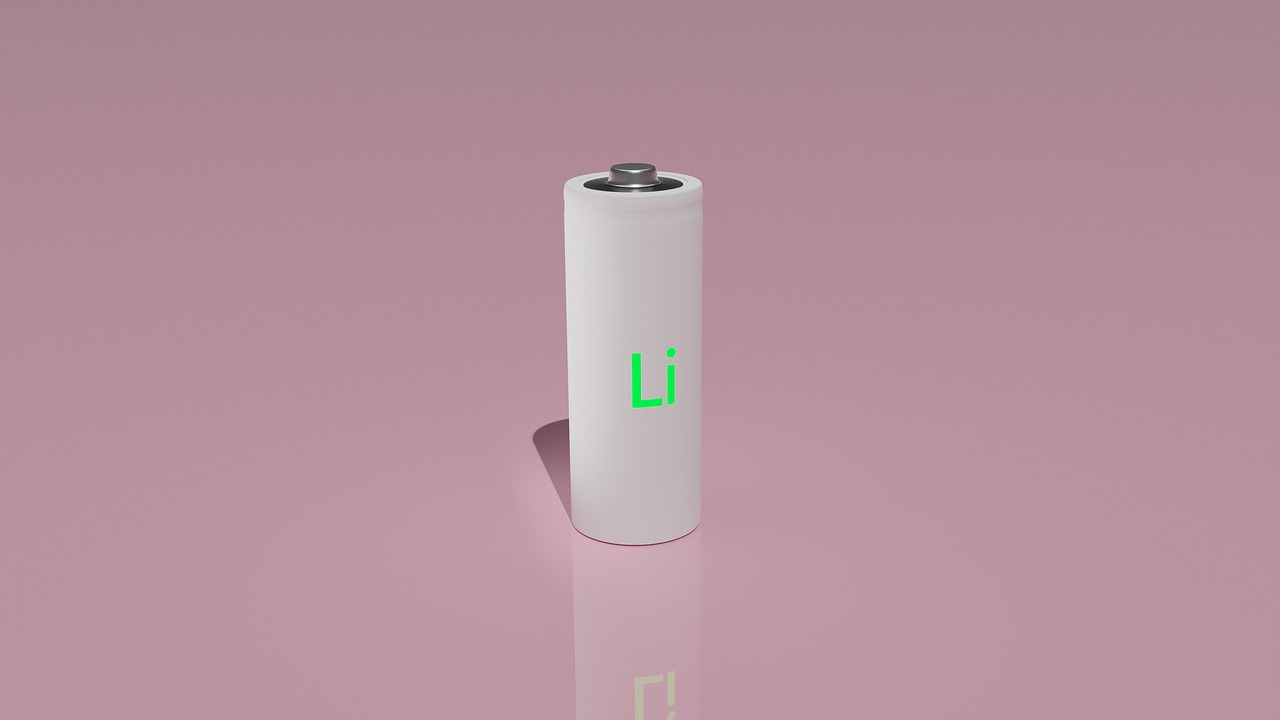
Lithium-ion is a battery family, not one single product. Chemistry affects safety profile, energy density, cycle life, cost, and cabinet layout. For stationary renewable energy projects, most discussions start with LFP and NMC.
LFP for Stationary Storage
Lithium iron phosphate, or LFP, has become the common choice for many stationary systems. The National Renewable Energy Laboratory stated in its 2024 Annual Technology Baseline that LFP became the primary chemistry for stationary storage starting in 2022.
The reason is practical. LFP usually offers good cycle life, lower material cost, and a strong thermal stability profile. It is not the highest energy density option, but a ground-mounted battery cabinet usually has more space than an electric car.
NMC for High Energy Density
Nickel manganese cobalt, or NMC, is still used where energy density matters. It can store more energy in a smaller or lighter package, which may help on sites with limited space.
The trade-off is that NMC systems need close attention to thermal design and cost. If your project is a rooftop retrofit or a site with tight room limits, NMC may still be reviewed. For storage containers and outdoor cabinets, many buyers now start with LFP.
Chemistry Choice by Use Case
A warehouse with a wide yard may choose LFP and accept a larger footprint. A telecom site may care more about compact cabinets, fast response, and easy maintenance.
A solar farm may focus on four-hour discharge, warranty cycles, and grid interconnection rules. Do not buy chemistry because it is popular. Buy it based on duty cycle, temperature range, space, insurance requirements, and the cost of downtime.
What Benefits Can You Expect on a Real Site?
The main reason to buy storage is not that batteries are popular. It is that they solve a specific site problem. Before asking for a quote, write down what the battery must do every day and what it must do during rare events.
Peak Shaving and Demand Control
For commercial and industrial users, demand charges can be expensive. A battery can discharge during a short load spike, such as when chillers, compressors, or production equipment start together.
A 500 kW peak that lasts only 20 minutes may still affect the bill for the whole month, depending on the tariff. Storage will not fix weak electrical planning, but it can smooth peaks when the load pattern is known and repeatable.
Solar Self Consumption
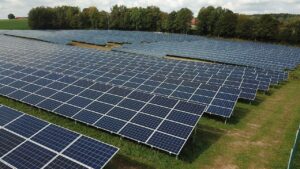
If your site has rooftop solar, midday export may earn a low credit while evening electricity costs more. A battery can store extra solar and use it later inside the site. See also: clean energy.
The International Renewable Energy Agency reported in 2025 that utility-scale solar PV electricity costs had fallen about 90% from 2010 to 2024. Low-cost solar makes generation easier. Storage helps keep more of that value in your facility instead of sending it to the grid at a poor time.
Backup Power and Power Quality
Battery backup is not only for full blackouts. It can ride through short voltage dips, reduce generator starts, and give control systems enough time to shut down in a clean way.
A grocery cold room, a medical storage room, or a data cabinet may not need hours of full-site backup. In many cases, it only needs clean power for the critical loads. That smaller scope can cut project cost and often leads to a better design.
What Safety and Compliance Points Matter Most?
Safety should be discussed early, not after the purchase order. A battery is both an electrical and chemical energy system, so the design has to cover fire behavior, spacing, ventilation, emergency access, shutdown methods, and local permitting.
Thermal Runaway Risk Management
Thermal runaway is the event buyers worry about, and that concern is reasonable. It can happen when cell failure creates heat and that heat spreads to nearby cells.
Good system design lowers the risk through cell selection, module spacing, BMS limits, thermal sensors, fire detection, and clear emergency procedures. LFP chemistry helps, but it does not remove the need for careful design. Safe projects still depend on basic details being done properly.
Recognized Testing and Installation Standards
UL Solutions describes UL 9540 as a key product safety standard for energy storage systems and UL 9540A as a test method for evaluating thermal runaway fire propagation. NFPA 855 is widely used for stationary energy storage installation practices.
These standards do not replace local code review, but they give buyers a useful baseline. Ask suppliers for test reports, certificates, and the exact model numbers covered by those documents. This check should be done before technical approval, not after shipment.
Site Design and Maintenance Discipline
Outdoor containers need access roads, clearances, drainage, grounding, and enough room for service technicians. Indoor systems need ventilation, fire-rated spaces where required, and clear working space around electrical equipment.
Maintenance is routine work, but it keeps warranties valid. Check torque marks, filters, firmware, coolant or HVAC operation, alarm history, and insulation resistance according to the manufacturer’s schedule. If the site team cannot maintain it, the design should be simplified before purchase.
How Should You Size a System Before Buying?
Battery sizing should start with data, not a rough guess. A system that is too small will disappoint the site team. A system that is too large ties up capital and may cycle less than planned. Both problems show up in real projects.
Load Profile and Billing Data
Start with at least 12 months of utility bills and, if possible, 15-minute interval data. Look for seasonal peaks, weekend loads, solar export, outage history, and tariff windows.
A hotel may have evening peaks from air conditioning and laundry. A factory may have one shift with heavy motors and another shift with low baseload. These two sites may not need the same battery size, even if the monthly power bill looks similar.
Duration C Rate and Cycle Life
Battery duration is the energy capacity divided by power capacity. A 1 MW and 4 MWh system is a four-hour battery, while a 1 MW and 2 MWh system is a two-hour battery.
NREL’s 2024 ATB models many utility systems around four-hour lithium-ion storage, and its scenarios project major cost reductions for a 60 MW four-hour battery between 2022 and 2035. Duration should match the job, whether that is fast grid services, peak shaving, backup, or solar shifting.
Total Cost Beyond the Battery Pack
Do not compare only dollars per kWh at cell or pack level. Installed cost includes many items, and some are easy to miss.
- Power conversion system, transformer, switchgear, and protection devices
- Thermal management, fire detection, and safety equipment
- Engineering, permits, civil works, cabling, and commissioning
- Software, monitoring, warranties, spare parts, and service labor
- Grid interconnection studies, metering, and utility approval time
A cheaper cabinet can become expensive if it needs extra HVAC, delayed certification, or difficult maintenance. A good proposal should show usable energy, allowed depth of discharge, degradation assumptions, warranty conditions, and expected round-trip efficiency. If those numbers are not shown, ask for them before signing.
FAQ
Q1: Is lithium ion battery storage suitable for commercial solar projects? A: Yes, it is often suitable when your site has high peak demand, low solar export value, or a need for backup power. The fit depends on your tariff, load profile, and available space.
Q2: How long does a lithium-ion storage battery last? A: Many commercial systems are designed for about 10 to 15 years, but actual life depends on cycle count, temperature, depth of discharge, and maintenance. Always check the written warranty and degradation curve.
Q3: Is LFP better than NMC for stationary storage? A: LFP is commonly preferred for stationary storage because of its cost, cycle life, and thermal stability profile. NMC may still fit projects where space and energy density matter more.
Q4: What size battery do you need for peak shaving? A: You need interval load data first. The right size depends on how high the peak is, how long it lasts, and how often it occurs. A short 20-minute spike needs a different design than a four-hour evening peak.
Q5: What should you ask a battery supplier before purchase? A: Ask for chemistry, usable capacity, cycle warranty, UL 9540 or related certificates, UL 9540A test information where applicable, BMS features, thermal design, maintenance terms, and local code support.