
What off grid power storage needs to solve
Off grid power storage keeps electricity available where there is no reliable utility connection. In a home, cabin, telecom site, farm building, clinic, or remote workstation, the battery bank has to do more than store surplus solar power. It must cover night loads, cloudy periods, appliance start surges, seasonal demand changes, and emergency reserves without damaging the battery or creating safety risks.
A practical off-grid design starts with the loads, not the battery catalog. Public guidance from the National Renewable Energy Laboratory commonly frames resilient system design around hours or days of autonomy: the time a system can serve a defined load without new energy input. That concept is simple, but it changes the project scope. A small cabin with efficient appliances may need only a modest battery bank, while a house with electric heating, pumps, and air conditioning may require a much larger system or a backup generator.
Readers following broader storage topics can also browse Econergy’s energy storage section for related industry coverage.
Why battery-based off-grid systems are changing
Off-grid electricity used to depend heavily on diesel generators and lead-acid batteries. Those technologies are still used, but more projects now center on lithium-ion batteries, especially lithium iron phosphate, often shortened to LFP. In its 2024 Batteries and Secure Energy Transitions report, the International Energy Agency reported that lithium-ion battery prices fell from about USD 1,400 per kilowatt-hour in 2010 to less than USD 140 per kilowatt-hour in 2023. The same report said LFP accounted for a large share of new battery storage in 2023.
Those cost and chemistry shifts matter because off-grid systems cycle batteries frequently. A grid-backup battery may sit idle most days. An off-grid battery may charge and discharge every day, sometimes deeply, while also handling inverter surge loads and temperature stress. Lower battery costs have made larger systems more practical, but they have not removed the need for careful sizing, code-compliant installation, and realistic expectations about winter or storm-season performance.
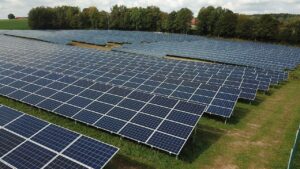
- Solar-plus-storage is the most common architecture for small off-grid projects because daytime generation aligns naturally with battery charging.
- Generators remain useful for long cloudy periods, construction loads, seasonal cabins, and systems with limited solar space.
- Wind or hydro can improve winter performance in the right location, but site resource assessment is essential.
- Load reduction is often cheaper than adding battery capacity, especially for heating, cooling, refrigeration, and water pumping.
The practical sizing workflow
The most common mistake in off-grid power storage is asking how many batteries are needed before defining what the system must run. A practical workflow moves through five steps.
- List daily energy use in kilowatt-hours. Add each appliance’s wattage multiplied by expected run time. Separate essential loads from optional loads.
- Identify peak power demand in watts. A refrigerator, well pump, compressor, or power tool may draw a short surge far above its running wattage.
- Choose the required autonomy. One day may be enough for a generator-supported system. Two or three days may be more appropriate where fuel access is difficult or weather interruptions are common.
- Adjust for usable depth of discharge. A nominal 10 kWh battery is not always 10 kWh of practical energy. Battery chemistry, manufacturer limits, temperature, age, and reserve settings reduce usable capacity.
- Match the battery to charging sources. A large battery with too little solar can remain chronically undercharged; a large solar array with too little battery may waste daytime production.
As a simple example, a critical-load panel that uses 6 kWh per day and needs two days of autonomy requires 12 kWh of usable energy. If the design allows 80 percent usable capacity, the nominal battery bank would be about 15 kWh before adding margins for cold weather, aging, inverter losses, and unusual loads. This is not a universal recommendation; it simply shows why daily load and autonomy are the main sizing drivers.
Inverter sizing should be handled separately from energy sizing. A system may have enough stored energy to run a pump for several hours but still fail if the inverter cannot handle the pump’s start surge. For remote sites, designers often use soft-start equipment, variable-speed pumps, staged loads, or dedicated generator support to avoid oversizing the entire battery system for a few seconds of peak demand.
Choosing the right battery chemistry
Battery chemistry affects cost, weight, usable capacity, cycle life, safety profile, and maintenance. The right choice depends on the load pattern and installation environment rather than a single headline specification.
| Storage type | Where it fits | Key limits |
|---|---|---|
| Flooded or sealed lead-acid | Budget-sensitive systems, legacy installations, simple cabins, and users comfortable with conservative operation | Lower usable depth of discharge, heavier weight, shorter cycle life under deep cycling, and maintenance or ventilation concerns depending on type |
| Lithium iron phosphate | Daily-cycling residential systems, cabins, remote equipment, and solar-plus-storage projects needing long service life | Higher upfront cost than basic lead-acid, battery management system dependency, and temperature limits for charging |
| Nickel manganese cobalt or related lithium chemistries | Applications where high energy density matters, including some portable and mobile systems | Greater attention to thermal management and safety controls is needed; many stationary projects prefer LFP |
| Flow batteries | Long-duration stationary storage where space and system complexity are acceptable | Less common in small residential off-grid projects; higher design complexity and fewer installer options in many markets |
| Sodium-ion batteries | Emerging stationary applications where supply chain diversification and cold-weather behavior may be attractive | Availability, field history, and product options are still more limited than mature lithium and lead-acid systems |
For many stationary off-grid projects, LFP receives attention because it combines relatively stable thermal behavior with long cycle potential and declining costs. Chemistry alone, however, does not make a system safe or reliable. Battery certification, enclosure design, installation location, overcurrent protection, inverter compatibility, software controls, and installer competence all matter.
System architecture matters as much as battery capacity
An off-grid storage system is an integrated power plant. It usually includes generation, charge control, batteries, an inverter or inverter-charger, disconnects, breakers, grounding, monitoring, and sometimes a generator input or transfer switch. A weakness in any one part can reduce the value of the whole battery bank.
- DC-coupled systems route solar power through charge controllers into the battery before inversion. They can be efficient for new off-grid solar builds.
- AC-coupled systems connect solar inverters on the AC side and can be useful for retrofits or larger systems, but they require careful controls when the grid is absent.
- Hybrid inverters combine battery charging, solar control, grid or generator input, and backup output in one platform. Compatibility between inverter and battery is critical.
- Critical-load panels keep essential circuits separate from heavy or optional loads, reducing battery size and improving reliability.
- Remote monitoring helps identify chronic undercharging, abnormal temperature, imbalance, or unexpected loads before they become failures.
Portable power stations can be useful for camping, tools, and short-term emergency loads. They should not be confused with a code-compliant stationary energy storage system for a building. A fixed home or commercial installation needs appropriate electrical protection, installation approvals, ventilation or clearance planning, and safe integration with generators or solar arrays.
Safety, codes and maintenance should be designed in early
Battery storage concentrates a large amount of energy in a compact space. Fire and electrical safety are therefore design requirements, not optional accessories. UL 9540 is widely referenced for energy storage system safety, UL 9540A is used to evaluate thermal runaway fire propagation behavior, and NFPA 855 addresses installation of stationary energy storage systems. Local electrical and fire authorities may also apply building codes, residential codes, and additional spacing or enclosure rules. See also: clean energy.
- Install batteries within the manufacturer’s temperature range and avoid locations exposed to flooding, direct heat, corrosive fumes, or physical impact.
- Use listed or approved components that are compatible with the inverter, battery management system, and disconnect equipment.
- Provide overcurrent protection, proper conductor sizing, grounding, labeling, and emergency access.
- Plan for ventilation, fire separation, and clearances where required by code or manufacturer instructions.
- Document settings, firmware versions, commissioning results, and maintenance intervals so future service does not rely on guesswork.
Maintenance needs vary by chemistry. Flooded lead-acid batteries may require watering, equalization, and corrosion checks. Lithium systems usually require less routine service, but they still need monitoring, firmware management, temperature control, and periodic inspection. In remote locations, maintenance access should be treated as part of the design because a minor fault can become expensive when the site is hard to reach.
Economics and resilience trade-offs
The economics of off-grid storage are different from grid-connected backup power. In a grid-connected home, storage may be evaluated against utility rates, demand charges, or outage costs. In a true off-grid project, the comparison often includes diesel fuel, generator maintenance, fuel delivery, noise, emissions, and the value of reliable power for daily life or operations.
Public NREL material on resilience modeling emphasizes that outage duration and critical-load requirements strongly influence system size and cost. In practical terms, designing for every possible load during the worst weather week can be very expensive. A more resilient approach is to define tiers: essential loads that must always run, important loads that can run when energy is available, and discretionary loads that can be delayed or shifted.
For U.S. homeowners, IRS public guidance available in September 2026 states that battery storage technology may qualify for the Residential Clean Energy Credit if it has at least 3 kWh of capacity and meets the other requirements. Tax rules, eligibility, and documentation requirements can change, so owners should confirm current guidance and consult a qualified tax professional before relying on incentives in a project budget.
In many off-grid projects, the most cost-effective improvement is not a larger battery. It may be an efficient refrigerator, better insulation, LED lighting, a variable-speed pump, a non-electric heating solution, or load scheduling that moves flexible tasks into sunny hours. Battery storage is powerful, but reducing unnecessary demand improves every part of the system.
Checklist before choosing an off-grid battery system
- Prepare a daily and seasonal load table, including start surges and future expansion.
- Separate essential, important, and optional circuits before sizing the battery.
- Choose a realistic autonomy target based on weather, access, fuel availability, and risk tolerance.
- Confirm usable capacity, not just nameplate capacity.
- Verify inverter surge capability for pumps, motors, tools, and compressors.
- Check battery-to-inverter compatibility and communication requirements.
- Confirm local code requirements, permits, clearances, and safety standards before purchasing equipment.
- Plan for monitoring, maintenance access, spare parts, and end-of-life recycling.
Frequently asked questions
How many batteries do I need for an off-grid home?
There is no reliable answer without a load calculation. A small efficient home may use only a few kilowatt-hours per day for lights, refrigeration, electronics, and water pumping. A larger home with electric heating, cooling, cooking, or laundry may use many times more. Start with daily kWh, choose the required autonomy, then adjust for usable depth of discharge, inverter losses, temperature, and aging.
Can an off-grid battery run an air conditioner?
Yes, but air conditioning can dominate the system design. The battery must have enough stored energy for the required run time, and the inverter must handle compressor starting or variable-speed operation. In hot climates, insulation, shading, high-efficiency heat pumps, and daytime pre-cooling can reduce storage needs.
Is solar required for off-grid power storage?
No. Batteries can be charged by wind, hydro, a generator, or mixed sources. Solar is common because it is modular and widely available, but a reliable off-grid design should be based on the actual local energy resource and seasonal load profile.
Are lithium batteries always better than lead-acid?
Not always. Lithium batteries often provide higher usable capacity, lower weight, and longer cycle life in daily-use systems. Lead-acid batteries can still make sense for low-budget, simple, or lightly used systems. The correct comparison should include usable kWh, expected cycle life, maintenance, installation conditions, replacement timing, and safety requirements.
What is the difference between backup power and off-grid storage?
Backup power supports a site when the grid fails. Off-grid storage supports a site all the time because there may be no grid connection at all. That makes off-grid design more demanding: the battery, generation source, inverter, and backup plan must work together every day, not only during outages.