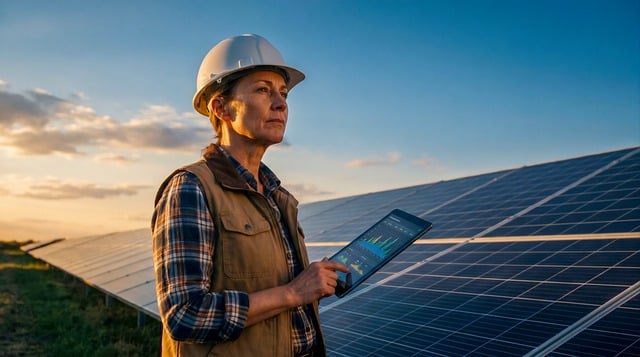

Dirty Solar Panels? This Canadian Startup Has a Self-Cleaning Solution
The solar industry is entering a new phase where maintenance efficiency directly shapes profitability. As large-scale solar farms dominate the energy landscape, traditional cleaning services struggle to meet cost and scale demands. A Canadian startup has introduced a self-cleaning system that eliminates water use and manual labor, offering an automated solution for dirty solar panels. This innovation signals a broader shift toward technology-driven maintenance models that prioritize sustainability, performance, and long-term value.
The Changing Landscape of Solar Panel Maintenance
The global solar sector is evolving rapidly. Maintenance practices once centered on manual cleaning now face pressure from automation and data-driven systems. To remain competitive, solar panel cleaning companies must adapt their operations to meet new efficiency benchmarks and environmental expectations.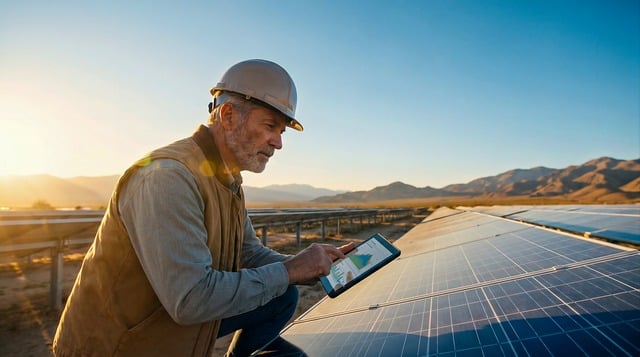
Shifting Market Dynamics in the Solar Industry
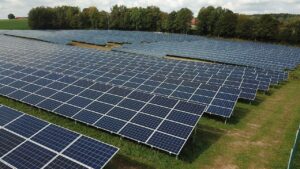
The expansion of utility-scale solar farms has created unprecedented demand for scalable maintenance solutions. Each additional megawatt of installed capacity adds thousands of panels requiring periodic cleaning. Traditional service providers often find it difficult to maintain profitability as travel costs, labor shortages, and water constraints increase. The market trend now leans toward automation, robotics, and IoT-enabled systems capable of reducing operational downtime while maintaining consistent performance across vast installations.
The Role of Efficiency and Cost in Maintenance Decisions
For investors and operators, every percentage point of energy loss matters. Dust accumulation can reduce panel output by 5–30%, depending on location and weather conditions. Manual cleaning remains viable for small or rooftop systems but becomes economically unfeasible at scale. Investors are shifting focus from short-term contracts toward integrated solutions that enhance long-term asset value through predictive maintenance and reduced human intervention.
Emergence of Self-Cleaning Technologies
The introduction of self-cleaning mechanisms marks a turning point in solar operations. These technologies combine material science with automation to create low-maintenance, high-efficiency systems suited for diverse climates.
Overview of Self-Cleaning Mechanisms
Hydrophobic coatings represent one approach by creating surfaces that repel dust and water droplets, minimizing soiling between cleanings. Electrostatic systems use controlled charges to lift particles without physical contact or water consumption. Robotic devices equipped with soft brushes or air jets operate autonomously along panel rows, guided by sensors that detect dirt buildup. When linked with IoT networks, these systems can initiate cleaning only when necessary, conserving energy and extending component life.
Technological Innovations from Startups and Research Institutions
Canadian startups are at the forefront of developing waterless cleaning solutions tailored for cold or remote environments where water logistics are challenging. Their prototypes use lightweight robotic arms powered by small photovoltaic modules to function independently across arrays. Research institutions are advancing nanomaterial coatings that resist abrasion while maintaining optical transparency over years of exposure. Collaborations between equipment manufacturers and technology firms are accelerating commercialization by integrating these innovations into standard panel designs.
Comparing Traditional Cleaning Companies and Automated Solutions
As automation gains traction, the comparison between manual services and self-cleaning technologies becomes more pronounced across cost, efficiency, and environmental parameters.
Operational Efficiency and Cost Comparison
Automated systems significantly cut labor dependency by operating continuously without human supervision. They also minimize production losses since panels no longer need to be taken offline for extended periods during cleaning cycles. However, manual methods still hold advantages in certain scenarios—particularly where panels experience localized soiling such as bird droppings or industrial fallout that robots may miss. Lifecycle cost analysis generally favors automation for projects exceeding 10 MW due to lower recurring expenses.
Environmental Impact Considerations
Water-intensive washing methods pose sustainability challenges in arid regions like the Middle East or western United States where water scarcity already limits agricultural use. Automated self-cleaning systems eliminate this issue entirely by using dry brushes or electrostatic forces instead of detergents or pressurized jets. While robotic devices introduce minor lifecycle emissions during manufacturing, their overall footprint remains substantially lower than traditional methods reliant on fuel-powered transport vehicles.
Market Implications for Solar Panel Cleaning Companies
Automation’s rise is reshaping business strategies within the maintenance sector. Service providers must evolve beyond basic cleaning to remain relevant in a market increasingly defined by technology integration.
Business Model Adaptation Strategies
Forward-looking companies are adopting hybrid models that combine conventional field teams with automated monitoring platforms. By partnering with robotics developers or IoT solution providers, they can offer bundled services encompassing installation oversight, diagnostics, and predictive maintenance analytics. Diversification into performance reporting or efficiency consulting provides additional revenue streams while reinforcing client relationships through data transparency.
Competitive Pressures and Industry Consolidation Trends
Smaller regional cleaners face growing margin pressure as automated alternatives reduce per-panel service costs. Larger players are responding through mergers aimed at acquiring proprietary technologies or expanding geographic coverage. Global firms increasingly invest in AI-based predictive maintenance software capable of forecasting soiling patterns using satellite data—a development that further reduces reliance on manual inspection cycles.
The Future Outlook for Solar Maintenance Ecosystems
The next decade will likely see complete integration between smart monitoring platforms and autonomous cleaning hardware, creating closed-loop ecosystems where performance optimization occurs continuously rather than reactively.
Integration of Smart Monitoring with Cleaning Automation
Predictive analytics platforms already collect real-time generation data from inverter networks to identify anomalies linked to dirt accumulation or shading issues. When thresholds are reached, cloud-based control centers can automatically trigger robotic cleaners deployed onsite. This synchronization not only improves uptime but also prevents unnecessary wear on mechanical components by avoiding redundant cleanings.
Long-Term Prospects for Industry Players
Traditional service providers may transition into system integrators specializing in deploying these smart technologies rather than performing physical labor themselves. Regulatory incentives promoting sustainable practices—such as restrictions on industrial water use—will further encourage adoption of non-water-based solutions across major markets including Canada, India, and Australia. Continuous innovation will ultimately define how human expertise complements autonomous systems as both coexist within an increasingly digitalized energy infrastructure.
FAQ
Q1: How often should solar panels be cleaned?
A: Frequency depends on local conditions; desert installations may need monthly attention while temperate zones can extend intervals up to six months if automated systems are used.
Q2: Are self-cleaning coatings effective long term?
A: Advanced hydrophobic coatings typically retain functionality for several years but require periodic inspection since UV exposure gradually reduces surface tension properties.
Q3: Can robotic cleaners operate at night?
A: Yes, most units include onboard batteries charged during daylight hours allowing them to function after sunset when power generation halts.
Q4: Do automated systems replace human technicians entirely?
A: Not yet; humans remain essential for diagnostics, repairs, and quality checks even though routine washing tasks are increasingly automated.
Q5: What’s driving investment into Canadian self-cleaning startups?
A: Investors recognize their potential to cut operational costs in cold climates where water freezes easily—making dry robotic solutions both practical and profitable for large-scale deployments.