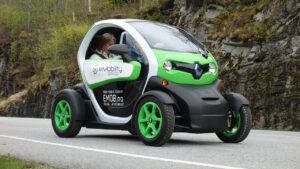

Tata Motors Seeing 2–2.5X Surge In Electric Car Demand
Tata Motors has emerged as the central force in India’s electric mobility revolution, recording a remarkable 2–2.5 times surge in demand for its electric cars over the past year. This growth stems from a combination of government incentives, better charging networks, and changing consumer sentiment toward sustainable transport. The company’s expanding EV portfolio, strong localization strategy, and focus on technology integration have positioned it as a benchmark for both domestic and global automakers navigating the shift toward electrification.
Tata Motors’ Expanding Footprint in the Electric Vehicle Market
Tata Motors’ dominance in India’s EV landscape is not accidental. It reflects years of product development, supply chain restructuring, and alignment with national electrification policies that aim to achieve 30% EV penetration by 2030.
Overview of Tata Motors’ Electric Vehicle Portfolio
Tata Motors currently offers several models under its electric lineup, including the Nexon EV, Tigor EV, Tiago EV, and the fleet-oriented XPRES-T. Each model targets a distinct customer segment—from urban commuters to corporate fleets—allowing Tata to capture a wide market base. The company’s pricing strategy keeps entry barriers low; for instance, the Tiago EV starts under ₹9 lakh, making it one of the most affordable mass-market electric cars in India. This affordability has been crucial in mainstreaming EV adoption among first-time buyers.
Analysis of Pricing Strategy and Positioning Within the Indian and Global EV Markets
In India’s price-sensitive market, Tata’s competitive pricing coupled with government subsidies under FAME II has made its electric cars an attractive alternative to petrol vehicles. Globally, while Tata’s exports remain limited compared to Western automakers, its cost-effective production model provides a blueprint for emerging markets looking to scale affordable electrification.
Discussion on How Tata’s Product Roadmap Aligns With National Electrification Goals
Tata Motors’ roadmap aligns closely with India’s broader green mobility mission. Its future plans include launching ten new electric models by 2026 and expanding charging infrastructure through partnerships with Tata Power. This integrated approach supports India’s goal of reducing oil imports and cutting carbon emissions from transport.
Factors Driving the 2–2.5X Surge in Electric Car Demand
The recent surge in demand for Tata Motors’ electric cars can be traced to converging economic and policy factors that are reshaping consumer priorities.
Government Incentives and Regulatory Support Influencing Purchase Decisions
Central and state-level subsidies have significantly reduced upfront costs for buyers. Tax exemptions on EV loans and registration waivers further enhance affordability. These incentives have created a favorable environment where consumers view electric cars as both eco-friendly and economically rational choices.
Rising Fuel Costs and Improved Charging Infrastructure as Key Adoption Enablers
Rising fuel prices have accelerated the shift toward electric mobility. Simultaneously, India’s public charging network has expanded rapidly, alleviating range anxiety—a major barrier to adoption just a few years ago. Major cities now host fast-charging stations at regular intervals along highways and commercial hubs.
Consumer Perception Shifts Toward Sustainability and Technology-Driven Mobility
Consumers increasingly associate electric vehicles with innovation and environmental responsibility. Younger demographics especially see owning an EV as part of a modern lifestyle choice rather than merely a cost-saving decision. This psychological shift has amplified demand across urban centers.
Evaluating Global EV Trends in Context of Tata Motors’ Growth
While global automakers like Tesla or BYD dominate headlines, Tata Motors’ growth story stands out for its regional focus and scalability within emerging economies.
Comparative Analysis With Global Automakers
Compared to global peers, Tata operates at a different scale but with similar strategic intent—mass-market penetration through affordability. Whereas Western brands prioritize premium segments, Tata focuses on accessibility without compromising safety or performance standards.
Influence of Regional Market Dynamics on Global EV Adoption Patterns
Regional energy policies heavily influence adoption rates worldwide. In Europe, stringent emission norms drive compliance-based sales; in Asia-Pacific markets like India or Indonesia, affordability remains key. Tata’s success underscores how localized strategies can outperform global templates when adapted to regional realities.
The Strategic Importance of Emerging Markets in Shaping Global Demand Distribution
Emerging markets are expected to account for nearly half of new EV sales by 2035 (IEA projection). Companies like Tata that establish early leadership positions here will shape future supply chains and investment flows across continents.
The Role of Supply Chain and Localization Strategies
Localization remains central to cost competitiveness in the EV industry. For Tata Motors, this has translated into deep integration across its domestic supply ecosystem.
Impact of Local Battery Manufacturing and Component Sourcing on Cost Efficiency
By sourcing key components locally—including battery packs through partnerships with Indian cell manufacturers—Tata reduces logistics costs and currency exposure while improving margins even at lower price points.
Integration of Domestic Supply Chains to Reduce Dependency on Imports
Localizing production also shields operations from global disruptions such as semiconductor shortages or shipping delays that affected many international OEMs during recent years.
Potential for India to Become a Competitive Hub for EV Production and Exports
With growing investments in gigafactories and supportive policy frameworks like PLI schemes, India is positioning itself as an export hub for compact electric vehicles—a segment where Tata already holds expertise.
Technological Innovations Supporting Tata Motors’ EV Expansion
Technology forms the backbone of Tata’s long-term competitiveness in electrification—from battery chemistry research to software-driven vehicle intelligence systems.
Advancements in Battery Technology and Energy Management
Continuous improvements in lithium-ion battery density have extended driving ranges beyond 300 km per charge for mainstream models like Nexon EV Max. Research into solid-state batteries promises higher safety margins and faster charging capabilities expected later this decade.
Exploration of Solid-State Batteries and Alternative Chemistries Under Development
Tata Group’s R&D arms are exploring sodium-ion alternatives that could reduce reliance on imported lithium while maintaining comparable performance levels—an innovation critical for scaling production sustainably.
Role of Energy Management Systems in Enhancing Vehicle Performance and Range Optimization
Advanced energy management software monitors driving patterns to optimize power distribution between propulsion and auxiliary systems, improving efficiency without sacrificing comfort or acceleration responsiveness.
Software, Connectivity, And Smart Mobility Solutions
Digital transformation is reshaping how users interact with vehicles—and Tata is integrating these technologies deeply within its product architecture.
Integration of Connected Car Technologies for Predictive Maintenance and User Experience Enhancement
Connected platforms allow real-time diagnostics that alert owners before mechanical issues escalate. Features such as remote climate control or geofencing enhance convenience while reinforcing brand loyalty among tech-savvy buyers.
Use of Data Analytics for Fleet Management, Route Optimization, And Energy Efficiency
For corporate fleets using XPRES-T models, cloud-based analytics enable route planning that minimizes idle time and energy waste—critical for ride-sharing operators focused on operational savings.
Collaboration With Tech Firms for Over-the-Air Updates And Autonomous-Ready Platforms
Partnerships with software firms enable continuous feature upgrades via over-the-air updates—a model inspired by global leaders but tailored for Indian connectivity conditions where bandwidth varies widely across regions.
Market Implications for the Global EV Ecosystem
Tata Motors’ trajectory signals broader shifts within global automotive investment patterns toward sustainable mobility ecosystems rather than isolated vehicle sales growth alone.
Shifts in Investment Patterns Across Automotive Markets
Investor confidence has surged across Indian clean-tech ventures following Tata’s consistent delivery record. This momentum encourages capital reallocation from traditional combustion R&D toward next-generation electrified platforms globally (BloombergNEF data).
Policy Influence And Regulatory Synchronization Across Regions
India’s evolving emission norms now align more closely with international benchmarks such as Euro VI standards—facilitating smoother export compliance once production scales beyond domestic needs (IEA).
The Role of Trade Agreements in Facilitating Global Supply Chain Integration For EVs
Regional trade pacts increasingly include provisions supporting clean technology collaboration—opening pathways for cross-border component standardization critical to lowering costs industry-wide (WTO analysis).
Long-Term Outlook For Tata Motors Within The Global Transition To Electrification
The next decade will test how effectively Tata converts domestic leadership into sustainable global competitiveness amid rapid technological evolution worldwide.
Strategic Vision For Scaling Production Capacity And Exports
New dedicated facilities such as those planned under the “EV-only” manufacturing initiative will expand annual capacity beyond half a million units by mid-decade while targeting exports across Africa, Southeast Asia, and Latin America where price elasticity remains high.
Development Of Dedicated EV Manufacturing Facilities To Meet Rising Demand Projections
These plants integrate renewable energy sources within operations—demonstrating circular economy principles increasingly demanded by institutional investors tracking ESG metrics (IEA Sustainability Report).
Export Strategies Aimed At Leveraging Cost Advantages In Price-Sensitive Regions
By combining low-cost engineering expertise with proven reliability records domestically validated under harsh climatic conditions—Tata can penetrate new markets faster than premium-focused Western brands constrained by higher input costs.
Anticipated Challenges And Competitive Pressures Ahead
Despite impressive momentum, challenges persist around raw material access, software interoperability standards, and intensifying competition from both startups and legacy giants pivoting aggressively toward electrification themselves. Managing these dynamics will define whether today’s surge evolves into enduring dominance or plateaus amid market saturation cycles typical during early industrial transitions.
FAQ
Q1: What are the main reasons behind Tata Motors’ rapid rise in electric car demand?
A: A mix of government incentives, rising fuel prices, improved infrastructure, and changing consumer attitudes toward sustainability have driven this growth surge.
Q2: Which are the most popular tata motors electric car models currently available?
A: The Nexon EV leads sales followed by Tiago EV and Tigor EV across personal mobility segments while XPRES-T serves fleet operators effectively.
Q3: How does localization help reduce costs?
A: Local sourcing minimizes import dependency lowering logistics expenses while stabilizing margins against currency fluctuations common during volatile commodity cycles.
Q4: Is Tata investing in advanced battery technologies?
A: Yes; ongoing R&D covers solid-state prototypes plus sodium-ion alternatives aimed at enhancing performance while cutting rare mineral dependence globally recognized as strategic sustainability goals (IEA).
Q5: What challenges could slow down further expansion?
A: Raw material volatility supply chain disruptions evolving regulatory frameworks plus intensifying competition from global entrants remain significant hurdles ahead though manageable through continued innovation leadership initiatives already underway within group strategy frameworks.