
Plug-In Solar Panels Legalized in Six US States
Plug-in solar panels are reshaping the American residential energy market. Six U.S. states have now legalized their use, marking a pivotal shift toward decentralized power generation. These compact systems allow homeowners to generate electricity without complex installation or utility interconnection procedures. The legalization trend signals growing recognition of consumer-driven renewable energy and the need for flexible regulatory frameworks that balance innovation with grid safety.
Overview of Plug-In Solar Panels and Their Policy Implications
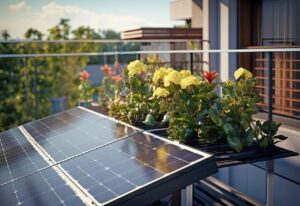
The rise of plug-in solar panels marks a new phase in distributed energy resources (DERs). Unlike conventional rooftop systems, these devices plug directly into household outlets, offering simplicity and portability.
Definition and Technical Structure of Plug-In Solar Panels
Plug-in solar panels are modular photovoltaic units equipped with microinverters that convert DC to AC power for direct household use. They typically include built-in safety disconnects and comply with UL 1741 standards for grid-interactive inverters. The system’s simplicity allows non-professionals to install them safely under certain state regulations.
How Plug-In Systems Differ from Traditional Rooftop or Grid-Tied Solar Installations
Traditional rooftop systems require professional installation, permitting, and grid interconnection agreements. Plug-in units bypass much of this bureaucracy by limiting power output—usually under 800 watts—to prevent backfeeding risks. This makes them ideal for renters or small households seeking partial energy independence.
Safety, Efficiency, and Compatibility Considerations for Residential Use
Modern plug-in panels integrate anti-islanding protection to prevent current flow during outages. Efficiency rates reach up to 22% for premium modules, though total yield depends on orientation and shading. Compatibility with standard 120V outlets is key, but users must avoid overloading circuits or connecting multiple units without proper load assessment.
The Legalization Trend in Six U.S. States
Legal acceptance of plug-in solar panels has accelerated as regulators recognize their potential to democratize clean energy access.
States That Have Formally Legalized Plug-In Solar Panels
As of 2024, six states—Oregon, Vermont, Colorado, Maryland, Massachusetts, and New York—have formally legalized residential plug-in solar devices. Each state’s approval reflects unique motivations: Oregon emphasized consumer choice; Vermont focused on rural electrification; New York linked legalization to climate resilience goals.
Key Legislative or Regulatory Frameworks Enabling Adoption
These states adopted rules clarifying that low-capacity plug-in systems do not require full interconnection permits if they meet UL certification standards. Some legislatures amended electrical codes to define “plug-in photovoltaic equipment” as distinct from permanently installed systems.
Role of Utility Commissions and Public Safety Standards in Approval Processes
Utility commissions played central roles by aligning state codes with national standards such as IEEE 1547 for interconnection safety. Public safety agencies reviewed fire risks and grounding requirements before granting approval.
State-Level Policy Shifts Driving Adoption
The policy momentum behind plug-in solar legalization reveals broader shifts toward distributed generation governance.
Comparative Analysis of Policy Approaches
While Oregon allows self-installation without inspection for certified models, Massachusetts requires registration with local utilities for monitoring purposes. Vermont mandates labeling on all outlets used for solar connection to prevent misuse. These variations show differing balances between consumer freedom and oversight.
Variations in Certification, Inspection, and Interconnection Requirements
Certification under UL 1741 SB is standard across all six states, but inspection rules vary widely. Colorado exempts units below 600W from inspection; Maryland requires visual verification by licensed electricians even for small setups.
Influence of Local Utility Lobbying and Energy Market Structures on Policy Outcomes
Utilities initially resisted legalization due to concerns about untracked generation affecting demand forecasts. However, competitive retail markets like those in New York encouraged utilities to adapt through data-sharing programs rather than opposition.
Incentives and Support Mechanisms for Plug-In Solar Deployment
Financial incentives have helped accelerate adoption among early adopters seeking affordable renewable options.
Tax Credits, Rebates, or Subsidies Promoting Household-Level Adoption
Several states extend existing residential solar tax credits to plug-in systems if certified equipment is used. For example, Colorado’s Renewable Energy Rebate Program offers up to $300 per unit installed within compliance limits.
Net Metering Implications for Plug-In Users Versus Traditional Solar Owners
Plug-in users typically cannot export excess power under traditional net metering rules due to safety constraints. However, some pilot programs explore limited feedback mechanisms using smart plugs that monitor two-way flow securely.
The Role of Community Energy Programs and Pilot Initiatives in Scaling Adoption
Community-based initiatives in Vermont distribute subsidized kits through local cooperatives targeting low-income households. These programs test scalability while maintaining grid reliability through coordinated monitoring platforms.
Technical and Regulatory Challenges Emerging from Legalization
Legalization introduces new challenges around grid management and product accountability that regulators must address carefully.
Grid Integration and Safety Concerns
Unmonitored power injection poses voltage fluctuation risks if multiple households connect simultaneously on the same feeder line. Standardization efforts aim to align these devices with IEEE 1547-2018 guidelines ensuring safe disconnection during outages.
Standardization Efforts to Ensure Compliance With National Electrical Codes
National Electrical Code (NEC) Article 690 revisions now reference portable PV systems explicitly. Manufacturers must certify products under updated UL protocols addressing anti-islanding response times below two seconds.
Utility Perspectives on Balancing Decentralized Generation With Grid Stability
Utilities view small-scale generation as both an opportunity and a challenge: it reduces peak demand yet complicates load forecasting models traditionally based on centralized production patterns.
Certification, Compliance, and Consumer Protection Issues
Consumer trust depends heavily on transparent certification processes and clear liability definitions across stakeholders.
Testing Protocols for Plug-In Systems to Ensure Reliability and Safety
Independent labs test each product batch under simulated overload conditions verifying automatic shutdown performance within prescribed voltage thresholds.
Liability Concerns Between Manufacturers, Installers, and Homeowners
Since most installations are DIY-based, liability often falls on manufacturers unless misuse is proven. Some insurers now offer specific coverage riders addressing potential electrical damage from improper use.
Emerging Need for Updated UL Standards Specific to Plug-In Solar Devices
Industry experts advocate for a dedicated UL category encompassing hybrid plug-and-play storage-enabled systems expected to dominate future markets as battery integration grows common.
Economic and Market Implications Across the Six States
The economic ripple effects extend beyond households into utility business models and regional job creation dynamics.
Impact on Residential Energy Economics
A typical two-panel setup costing around $1,200 can offset roughly 10–15% of an average home’s annual electricity consumption depending on location. Payback periods range between four and seven years assuming stable retail tariffs.
Payback Periods Compared to Conventional Rooftop Systems
While rooftop arrays achieve economies of scale at larger capacities, plug-in panels offer faster returns due to minimal installation costs—often just the retail purchase price itself.
Effect on Electricity Bills Under Varying Tariff Structures
Time-of-use tariffs amplify savings when daytime self-consumption offsets high-rate hours; however flat-rate customers see smaller percentage reductions overall.
Market Disruption for Utilities and Installers
Direct-to-consumer distribution channels are transforming traditional roles within the solar value chain.
How Direct-to-Consumer Models Challenge Traditional Solar Installation Businesses
Retail sales through hardware stores reduce installer involvement entirely except where inspections remain mandatory by law. This shift pressures service-based installers to diversify into maintenance or smart home integration services instead.
Potential Revenue Losses or Restructuring Among Regulated Utilities
Utilities face marginal revenue losses from reduced consumption but may recuperate through fixed service fees or offering branded “plug-and-play” kits bundled with monitoring subscriptions.
Opportunities for New Entrants Offering Modular or Portable Solar Products
Startups focusing on modular designs compatible with balconies or RVs are expanding rapidly across legalized markets tapping urban renters previously excluded from rooftop options.
Broader Policy Consequences for U.S. Energy Transition Goals
Plug-in solar legalization aligns closely with national decarbonization strategies emphasizing localized resilience over centralized dependence.
Contribution to Decentralized Energy Generation Models
By enabling households to produce part of their own power supply without major infrastructure changes, these policies advance Department of Energy targets promoting distributed renewable capacity growth by 2030 benchmarks set under federal clean energy frameworks.
Role of Distributed Energy Resources (DERs) in Reducing Transmission Losses
Localized generation cuts transmission losses estimated at roughly 5% nationwide according to IEA data while strengthening community-level resilience against grid disruptions caused by extreme weather events.
Potential Integration With Smart Grid Technologies and Home Energy Management Systems
Integration with smart plugs allows real-time synchronization between household loads and panel output optimizing consumption patterns via IoT-enabled analytics platforms already emerging in pilot projects across Maryland utilities’ networks.
Long-Term Policy Outlook Beyond the Six States
Momentum suggests other jurisdictions will soon follow suit as consumer demand rises alongside technological maturity levels improving device safety profiles annually tested under IEC benchmarks worldwide.
Forecast of Other States Considering Similar Legal Frameworks
California, Washington State, Illinois, Texas, Arizona, and Maine are evaluating draft bills modeled after Oregon’s simplified code amendments allowing certified low-wattage devices without full interconnection filings.
Anticipated Federal-Level Responses or Harmonization Efforts by DOE or FERC
Federal agencies may eventually harmonize definitions across state lines creating standardized compliance pathways reducing manufacturer complexity while maintaining consistent consumer protections nationally.
Strategic Implications for Achieving Equitable Access to Renewable Technologies Across Regions
Simplified regulatory frameworks could bridge equity gaps between homeowners able to afford full installations versus renters relying on portable alternatives expanding participation in the clean energy transition beyond property ownership boundaries.
Technological Innovation and Future Directions in Plug-In Solar Systems
Innovation continues rapidly as manufacturers refine both hardware efficiency metrics and digital control capabilities enhancing user experience substantially year-over-year.
Advancements Enhancing Efficiency and User Accessibility
Next-generation microinverters now exceed 97% conversion efficiency while adaptive algorithms adjust output dynamically based on household load signatures improving effective utilization rates during variable cloud cover conditions.
Integration With Battery Storage Systems for Enhanced Self-Consumption Capability
Compact lithium-iron-phosphate batteries integrated directly into panel frames enable partial evening usage extending daily autonomy cycles particularly useful during peak-rate periods.
Design Improvements Facilitating Scalability From Small Homes to Multi-Unit Dwellings
Modular stacking architectures allow shared circuits within apartment complexes maintaining individual metering accuracy via embedded communication chips compliant with emerging ISO interoperability standards.
The Evolving Role of Data Monitoring and Smart Connectivity
Digital connectivity transforms how users interact with their microgeneration assets making oversight more intuitive yet raising privacy considerations simultaneously.
Real-Time Monitoring Tools Enabling User Control Over Energy Production and Usage Patterns
Mobile dashboards display instantaneous wattage output alongside cumulative savings encouraging behavioral adjustments like appliance scheduling aligned with sunny intervals maximizing self-consumption ratios effectively.
IoT-Based Solutions Ensuring Safe Synchronization With Local Grids
Smart sockets communicate voltage phase data directly with utility servers preventing overload incidents automatically disconnecting during anomalies detected beyond preset thresholds improving neighborhood-level reliability metrics significantly.
Data Privacy Considerations as Plug-In Devices Become Part of Connected Home Ecosystems
As more devices transmit operational data online regulators must address ownership rights over granular consumption records balancing innovation benefits against cybersecurity vulnerabilities increasingly relevant amid expanding IoT adoption curves globally.
FAQ
Q1: Which six states have legalized plug-in solar panels?
A: Oregon, Vermont, Colorado, Maryland, Massachusetts, and New York have officially legalized residential plug-in solar panel use under specific technical conditions.
Q2: Are plug-in solar panels safe for home use?
A: Yes—when certified under UL 1741 SB standards—they include built‑in protections such as anti‑islanding functions preventing backfeed hazards during outages.
Q3: Do plug‑in panels qualify for federal tax credits?
A: If the system meets recognized certification criteria similar to rooftop PV installations it may qualify depending on IRS guidance updates regarding portable renewable devices.
Q4: Can renters install these panels legally?
A: In most legalized states renters can install approved units provided they do not alter building wiring permanently ensuring compliance with tenancy regulations.
Q5: How much power can a typical plug‑in panel system produce?
A: A standard two‑panel kit generates roughly 600–800 watts sufficient to run small appliances or offset part of daily household consumption depending on sunlight availability.