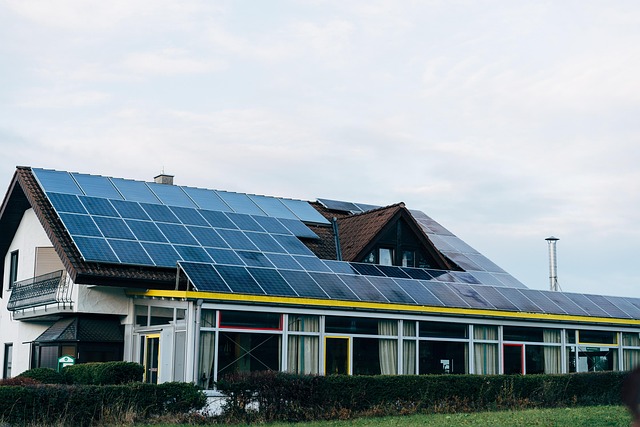

Are Solar Panels for Home Still Worth It?
Residential solar has crossed a key threshold: in many regions, solar electricity now costs the same or less than grid power. That means solar panels for home remain financially sound, though the economics have evolved. The value proposition today is less about subsidies and more about energy autonomy, resilience, and long-term savings. For households with high daytime usage or access to competitive financing, solar remains one of the most stable investments in clean energy.
Understanding Grid Parity and Its Implications for Residential Solar
Grid parity marks a turning point in how solar competes with traditional electricity. Once achieved, market forces—not incentives—drive adoption.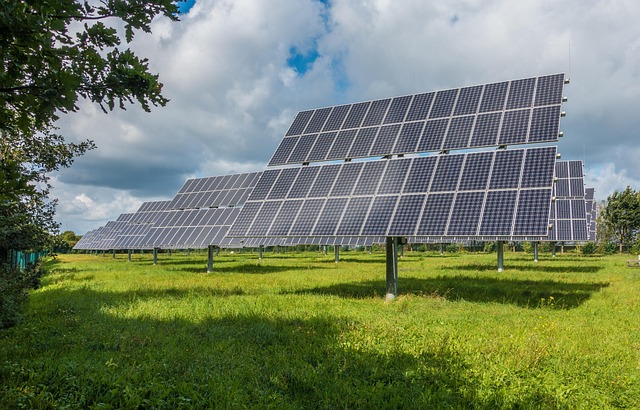
Defining Grid Parity in the Context of Renewable Energy
Grid parity refers to the moment when renewable generation costs match or undercut retail electricity rates. This point differs across regions because of variations in sunlight, utility tariffs, and policy frameworks. Areas with high retail prices and strong irradiance, such as southern Europe or parts of the U.S. Southwest, reached parity years ago. Falling module prices—down nearly 90% since 2010 per IRENA data—accelerated this shift by lowering levelized costs faster than utilities could adapt their pricing structures.
How Grid Parity Varies by Region, Energy Market, and Policy Environment
Local grid conditions define when parity occurs. Liberalized markets tend to reach it sooner due to competitive pricing and flexible interconnection rules. In contrast, regulated markets may lag if retail tariffs are subsidized or fossil fuels remain artificially cheap. Government policies like tax credits or net metering also influence timing by altering effective payback periods for homeowners.
The Role of Declining Solar Technology Costs in Accelerating Parity Achievement
Advances in manufacturing efficiency, supply chain scale, and cell design have steadily reduced costs. High-efficiency monocrystalline modules now dominate residential installations because they deliver more watts per square meter. As production shifts to larger wafer formats and automated assembly lines, incremental cost declines continue even amid rising material prices.
The Evolution of Residential Solar Economics Post-Grid Parity
Once grid parity is reached, the economics of home solar change from being incentive-driven to market-driven.
Transition from Subsidy-Driven Adoption to Market-Driven Growth
Early adopters relied on generous feed-in tariffs or rebates. Today’s buyers make decisions based on real-world performance data and peer experiences rather than government incentives. This transition signals a maturing market where quality and service matter more than subsidies.
Impact of Reduced Feed-In Tariffs and Net Metering Adjustments
Many jurisdictions have scaled back export payments as rooftop solar penetration grows. Reduced compensation rates encourage self-consumption rather than exporting excess power to the grid. Systems are now often designed around household load patterns instead of maximizing total output.
Shifts in Consumer Motivation from Cost Savings to Energy Independence and Sustainability
Homeowners increasingly view solar as part of a lifestyle choice tied to sustainability goals or resilience during outages. Energy independence—especially when paired with batteries—has become a stronger motivator than simple bill reduction.
Cost-Benefit Analysis of Home Solar Systems in the Grid Parity Era
The financial calculus for residential systems now involves deeper consideration of upfront cost versus lifetime performance rather than short-term payback alone.
Evaluating Upfront Costs Versus Long-Term Returns
Average installation costs have fallen below $3 per watt in mature markets. Payback periods vary between 6–10 years depending on local tariffs and sunlight exposure. Financing models like leases or power purchase agreements (PPAs) reduce barriers by converting capital expense into predictable monthly payments.
Assessing Maintenance, Longevity, and System Degradation
Modern photovoltaic panels typically last 25–30 years with annual degradation rates around 0.3–0.5%. Inverters may need replacement once during that lifespan at roughly 10–15 years. Routine maintenance is minimal—mainly cleaning and monitoring—but critical for maintaining yield consistency over decades.
Advances in Monitoring Systems That Optimize Output Over Time
Digital monitoring platforms allow real-time tracking of generation efficiency and fault detection through cloud-based analytics. These tools help installers fine-tune system performance remotely, reducing downtime and improving return on investment.
The Role of Energy Storage in Enhancing Solar Value
Battery storage has become central to maximizing the economic benefit of home solar systems after grid parity.
Integration of Battery Storage with Residential Solar Systems
Storage allows homeowners to use more of their own generation by shifting daytime production into evening consumption hours. This increases self-consumption ratios from roughly 30% without storage to over 70% with appropriately sized batteries.
Economic Trade-Offs Between Battery Cost and Enhanced Energy Autonomy
While lithium-ion battery prices have dropped sharply—over 80% since 2013—they still add significant upfront cost. Yet many homeowners accept longer paybacks for greater resilience during blackouts or time-of-use savings under dynamic tariff structures.
Emerging Technologies Improving Battery Efficiency and Lifecycle Economics
Next-generation chemistries such as solid-state lithium or sodium-ion promise higher energy density and longer cycle life at lower cost per kilowatt-hour stored. Integration with smart controls further extends usable capacity through adaptive charge-discharge scheduling.
Policy, Regulation, and Market Dynamics Affecting Home Solar Viability
Policy changes continue shaping financial returns for residential installations even after technical parity is achieved.
The Impact of Evolving Net Metering Policies
Net metering frameworks are shifting toward export compensation based on wholesale rather than retail rates. Some regulators introduce time-based credits reflecting actual grid value at different hours—a move that rewards load flexibility but complicates forecasting returns for new buyers.
Regulatory Trends Influencing Export Tariffs and Self-Consumption Incentives
Governments now favor policies that promote local consumption rather than large exports back to the grid. Self-consumption bonuses or zero-export configurations align customer behavior with system stability goals while maintaining project viability.
Implications for Return on Investment Under Changing Policy Frameworks
Investors must model multiple policy scenarios since tariff adjustments can alter ROI timelines significantly. Regions adopting fixed export caps may see longer paybacks unless paired with storage or demand management systems.
Technological Innovations Driving Next-Generation Residential Solar Adoption
Continuous innovation keeps residential PV relevant beyond initial parity milestones by improving efficiency and integration potential.
Advances in Photovoltaic Efficiency and Materials Science
New cell architectures such as TOPCon, heterojunction (HJT), and perovskite tandem designs push conversion efficiencies above 24%. Material innovations like bifacial glass-glass modules increase durability while cutting degradation from UV exposure or moisture ingress.
Material Innovations Reducing Production Costs While Enhancing Durability
Manufacturers employ thinner wafers, improved encapsulants, and recyclable frames to reduce resource intensity without compromising performance longevity—a critical factor as recycling regulations tighten globally.
Integration with Building Materials (BIPV) Expanding Application Potential
Building-integrated photovoltaics merge aesthetics with function by embedding cells into roofing tiles or façades—a trend gaining traction among architects seeking seamless sustainability solutions for urban housing projects.
Smart Home Integration and Digital Energy Management Systems
Smart technologies amplify the functional value of rooftop systems by aligning generation with consumption behavior dynamically.
Role of IoT-Enabled Devices in Optimizing Solar Utilization Patterns
Connected appliances can schedule operation during peak sunlight hours automatically, raising direct usage rates without user intervention—a practical step toward true energy automation at home scale.
AI-Driven Forecasting Improving Load Matching with Generation Profiles
Machine learning algorithms analyze weather forecasts alongside household habits to predict surplus production windows accurately, enabling proactive battery charging or appliance scheduling decisions that cut grid draw further.
Interoperability Between Home Energy Management Systems (HEMS) and Utility Grids
As utilities modernize distribution networks, standardized communication protocols allow two-way coordination between homes and grids—laying groundwork for distributed virtual power plant participation models already piloted in several advanced markets.
Economic Outlook for Residential Solar Beyond Grid Parity
Even after reaching cost equivalence with conventional energy sources, residential solar continues evolving within broader market dynamics shaped by supply chains, labor trends, and digitalization pressures.
Market Trends Influencing Investment Decisions
Component prices keep trending down though installer labor costs rise due to skilled workforce shortages. Permitting delays remain a bottleneck affecting deployment speed more than hardware availability itself—a challenge policymakers increasingly address through streamlined approval systems.
Consolidation Trends Among Installers Affecting Pricing Transparency and Service Quality
Industry consolidation brings economies of scale but risks homogenizing service quality if smaller local players exit the market. Experienced consumers now prioritize reputation over lowest quote when selecting providers given long-term maintenance dependencies involved.
Growth Potential in Secondary Markets Such as Retrofits, Upgrades, and Hybrid Systems
Existing owners upgrading older arrays with modern modules or adding batteries represent a fast-growing segment driving aftermarket opportunities beyond new installations alone—particularly where early systems near end-of-life cycles after two decades in operation.
Long-Term Strategic Considerations for Stakeholders
Residential solar sits at the center of emerging decentralized energy ecosystems integrating generation, storage, mobility charging infrastructure, and digital control layers simultaneously reshaping utility business models worldwide.
Utilities exploring prosumer engagement strategies find new revenue streams via aggregation services while households gain flexibility through peer-to-peer trading pilots under development across several advanced economies.
The trajectory points toward decentralized networks where millions of small-scale producers collectively stabilize supply variability once managed solely by centralized plants—a fundamental structural shift defining tomorrow’s electricity landscape.
FAQ
Q1: How long do solar panels for home typically last?
A: Most panels operate efficiently for 25–30 years before noticeable decline occurs; warranties often guarantee output above 80% after that period.
Q2: What factors influence whether solar reaches grid parity locally?
A: Local electricity prices, sunlight availability, equipment cost trends, financing terms, and policy support all determine when parity occurs regionally.
Q3: Are batteries necessary for every residential system?
A: Not always; they add resilience but increase upfront cost significantly. Homes on favorable net metering plans may achieve good returns without storage initially.
Q4: How does carbon pricing affect residential solar economics?
A: Carbon pricing raises fossil-fuel-based electricity costs indirectly improving relative competitiveness of rooftop PV even without direct subsidies involved.
Q5: What future technologies could reshape home solar economics further?
A: High-efficiency tandem cells combined with low-cost solid-state batteries could halve current payback times within a decade if commercialized successfully according to recent industry projections from IEA reports.