
The Hidden Infrastructure Behind America’s Clean Energy Boom
The rapid rise of the US clean energy sector rests on an intricate web of physical assets, digital systems, and financial frameworks. Transmission lines, storage facilities, and data-driven grid management tools form the hidden scaffolding that makes large-scale renewable deployment possible. This infrastructure is not just about adding solar panels or wind turbines—it’s about reengineering how electricity flows, how markets operate, and how policy aligns with private capital. The foundation being laid today will define how resilient and carbon-free America’s power system becomes in the next two decades.
The Foundation of the US Clean Energy Infrastructure
Clean energy expansion in the United States depends on a strong backbone that integrates both hardware and software systems. These interconnections ensure renewable generation can scale without compromising reliability or affordability.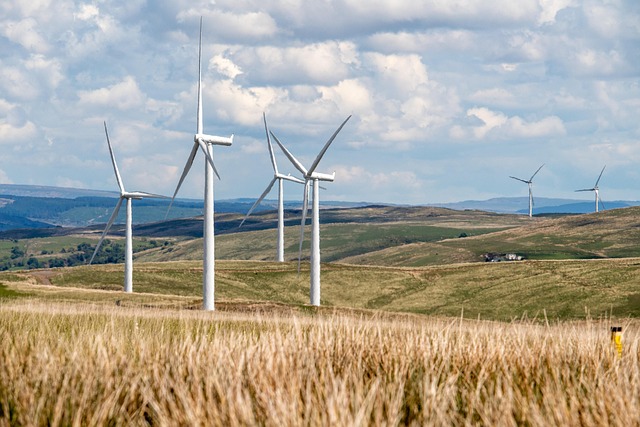
The Structural Backbone of America’s Energy Transition
The physical layer includes high-voltage transmission corridors, substations, battery arrays, and distributed resources like rooftop solar. Digital layers—such as supervisory control systems and advanced metering—enable coordination across millions of endpoints. Together they create a network capable of balancing variable supply from renewables with real-time demand. Modernization efforts focus on converting legacy grids into adaptive networks that can absorb shocks from extreme weather or cyber incidents.
Key Federal and State Policy Frameworks Driving Infrastructure Growth
Federal initiatives under the Infrastructure Investment and Jobs Act (IIJA) and Inflation Reduction Act (IRA) have unlocked billions for grid modernization, storage deployment, and domestic manufacturing. States complement these efforts through renewable portfolio standards mandating clean generation targets. Coordination between federal agencies, state regulators, and private investors has become essential to accelerate project timelines while maintaining cost discipline.
Transmission and Distribution Networks Enabling Renewable Integration
As renewable penetration deepens, transmission infrastructure becomes the critical link between resource-rich regions and load centers. Investments here determine how efficiently wind from the Midwest or solar from the Southwest reaches urban demand hubs.
Modernizing the Power Grid for Renewable Penetration
Expanding high-voltage direct current (HVDC) lines allows long-distance power transfer with minimal losses. Smart grid technologies provide visibility into system conditions every second, enabling operators to reroute power dynamically during outages or congestion events. Resilience measures—like undergrounding lines or installing automated reclosers—help mitigate risks tied to storms or wildfires that increasingly threaten reliability.
Regional Transmission Organizations (RTOs) and Independent System Operators (ISOs)
RTOs and ISOs coordinate electricity markets across multi-state territories, ensuring supply meets demand at every moment. Their market designs reward flexible resources such as batteries or demand response programs that help stabilize frequency when renewables fluctuate. Yet interconnection queues remain a bottleneck; projects often wait years for approval due to limited transmission capacity and complex permitting processes.
Energy Storage as a Core Component of Clean Energy Infrastructure
Storage bridges the temporal gap between generation peaks and consumption peaks. It transforms intermittent renewables into dispatchable assets capable of supporting baseload operations.
The Strategic Role of Battery Storage Systems
Grid-scale lithium-ion batteries dominate today’s deployments because they respond quickly to grid signals and can discharge for several hours during evening peaks. Long-duration storage technologies—such as iron-air or flow batteries—are emerging to sustain output over entire days or even weeks. Economic models now integrate storage into wholesale markets where it captures value through energy arbitrage, ancillary services, or capacity payments.
Emerging Technologies Beyond Lithium-Ion Batteries
Beyond lithium-ion lies a diverse field: vanadium flow batteries offering long cycle life; compressed air systems storing energy in underground caverns; hydrogen-based storage linking power with industrial decarbonization pathways. Each option differs in scalability, cost curve trajectory, and lifecycle emissions profile. Analysts expect hybrid systems combining multiple chemistries to dominate future installations.
The Role of Digitalization in Clean Energy Infrastructure Development
Digital tools are transforming how infrastructure is planned, operated, and secured. Data analytics turns terabytes of sensor readings into actionable insights that improve efficiency across assets.
Data Analytics and Artificial Intelligence in Grid Optimization
AI models predict equipment failures before they occur by analyzing vibration patterns or temperature anomalies across transformers and turbines. Machine learning algorithms forecast solar irradiance or wind output with growing accuracy, helping operators schedule reserves more efficiently. Cybersecurity frameworks based on standards like NIST SP 800-82 safeguard communication channels against malicious interference—a growing concern as grids become more connected.
Smart Metering and Distributed Energy Resource Management Systems (DERMS)
Smart meters feed granular consumption data back to utilities every few minutes, enabling dynamic pricing schemes that incentivize off-peak usage. DERMS platforms orchestrate thousands of small-scale assets—from rooftop PV arrays to EV chargers—to act collectively as virtual power plants. This distributed intelligence adds flexibility that centralized systems alone cannot achieve.
Supply Chain Dynamics Supporting US Clean Energy Infrastructure Growth
Behind every turbine blade or battery cell lies a global supply chain whose stability determines project viability. Building domestic capacity has become both an economic goal and a national security priority.
Domestic Manufacturing Capacity for Renewable Components
New factories are rising across states like Ohio, Georgia, and Texas to produce solar modules, nacelles, blades, and battery packs domestically. Incentives within federal legislation favor sourcing from U.S.-based suppliers through tax credits tied to local content thresholds. Workforce training programs at community colleges aim to fill skilled labor gaps essential for scaling production without delays.
Critical Minerals and Material Sourcing Challenges
Clean technologies rely heavily on materials such as lithium, cobalt, nickel, and rare earth elements—commodities concentrated in a handful of countries. To reduce exposure to geopolitical risks, strategies include recycling end-of-life batteries for material recovery and funding R&D into alternative chemistries using abundant elements like sodium or iron.
Financing Mechanisms Fueling Infrastructure Expansion
Capital intensity remains high across all segments of clean energy infrastructure development. Innovative financing models are reshaping how risk is shared among stakeholders.
Public–Private Partnerships in Clean Energy Projects
Partnerships between government entities, utilities, developers, and institutional investors pool resources while aligning incentives around long-term performance metrics. Green bonds have emerged as a key instrument channeling funds toward projects meeting verified sustainability criteria under frameworks such as ICMA’s Green Bond Principles.
Institutional Investment Trends in Clean Energy Infrastructure
Large pension funds and sovereign wealth funds increasingly allocate capital toward renewable assets due to their stable cash flows correlated with inflation-indexed contracts. Environmental, social, and governance (ESG) mandates further reinforce this trend by prioritizing investments aligned with decarbonization goals over purely speculative ventures.
Regional Development Patterns Across the United States
Geography shapes opportunity in America’s clean energy transition: each region contributes distinct strengths based on natural resources and policy environments.
Renewable Energy Corridors in the Midwest, Southwest, and Offshore Regions
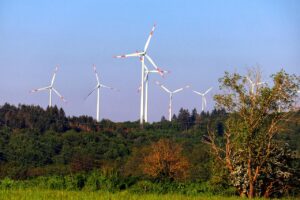
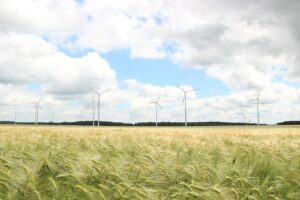
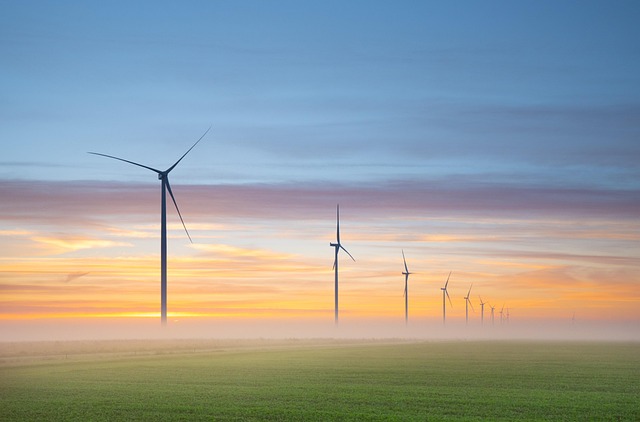
The Midwest has become a wind powerhouse thanks to vast plains ideal for turbine siting coupled with new transmission projects connecting states like Iowa to Chicago load centers. In the Sun Belt region—including Arizona and Texas—utility-scale solar farms flourish under high irradiance levels supported by streamlined permitting processes. Offshore wind along the Atlantic seaboard is gathering momentum through multi-gigawatt leases integrating directly into coastal grids serving dense population zones.
Urban Versus Rural Infrastructure Deployment Dynamics
Cities focus on distributed solutions: rooftop photovoltaics atop commercial buildings, smart EV charging networks along streetscapes, microgrids powering campuses or hospitals during outages. Rural counties benefit differently—hosting large wind farms or solar arrays brings jobs during construction phases plus tax revenue streams sustaining local budgets after commissioning.
The Future Outlook for US Clean Energy Infrastructure Evolution
The next decade will test whether innovation can keep pace with ambition as policymakers push toward carbon neutrality targets around mid-century timelines.
Technological Innovations Shaping Next-Decade Growth Trajectories
Advancements such as grid-forming inverters allow inverter-based renewables to provide voltage support traditionally delivered by fossil generators—a prerequisite for 100% renewable operation scenarios envisioned by system planners at institutions like NREL. Digital twin simulations shorten design cycles by replicating asset behavior virtually before construction begins.
Policy Evolution Toward a Carbon-Neutral Power Sector
Regulatory evolution will likely tighten emission limits while expanding cross-sector integration linking electricity with transport electrification via EV fleets or hydrogen fueling networks serving heavy industry clusters near ports.
FAQ
Q1: What is driving current investment in US clean energy infrastructure?
A: Federal incentives from IIJA and IRA combined with state mandates are catalyzing both public funding and private investment at record levels.
Q2: Why is transmission expansion so critical?
A: Because renewable resources are often located far from demand centers; without new lines much potential generation remains stranded.
Q3: How does energy storage contribute beyond backup power?
A: Storage stabilizes frequency fluctuations from renewables while enabling time-shifting of excess generation into high-demand periods.
Q4: What role does digitalization play in grid modernization?
A: It enhances situational awareness through real-time analytics while improving operational efficiency across distributed assets.
Q5: Are domestic supply chains sufficient for future growth?
A: Not yet fully; ongoing efforts aim to expand manufacturing capacity for key components while reducing reliance on imported critical minerals.