

A horizontal axis wind turbine is the wind power design most people recognize: a rotor mounted on a horizontal shaft, usually at the top of a tower and pointed into the wind. It dominates modern onshore and offshore projects because its aerodynamic blades, yaw system, drivetrain, and tower height can be engineered for high energy capture at large scale.
That does not make it the right answer for every site. Wind resource quality, turbulence, grid access, permitting, maintenance access, certification, and environmental constraints can matter as much as turbine size. For developers, landowners, and industry readers, understanding how the design works is the first step in judging whether a wind project is technically and economically realistic.
What is a horizontal axis wind turbine?
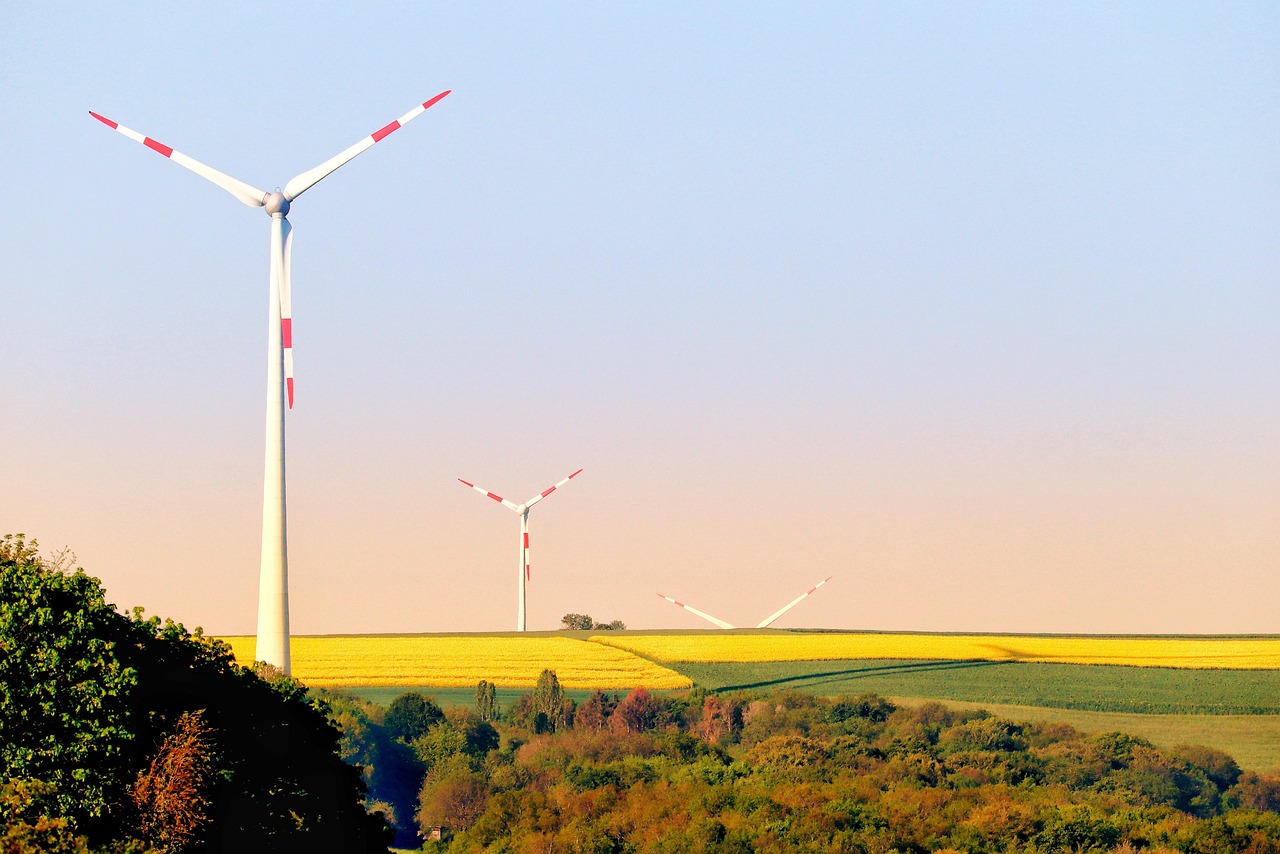
A horizontal axis wind turbine, often shortened to HAWT, is a turbine whose main rotor shaft is aligned roughly parallel to the wind direction. In most modern machines, the rotor, hub, gearbox or direct-drive generator, braking system, power electronics, and monitoring equipment sit inside a nacelle at the top of a tower. The rotor turns in a vertical plane, while a yaw mechanism rotates the nacelle so the blades can face changing wind directions.
This differs from a vertical axis wind turbine, where the rotor spins around a vertical shaft. Vertical-axis machines can accept wind from multiple directions without the same yaw arrangement. However, the U.S. Energy Information Administration notes that very few vertical-axis turbines are in use today compared with horizontal-axis machines because they have generally not performed as well in mainstream power generation applications.
The most recognizable configuration is the three-bladed, upwind turbine. Three blades are not the only possible choice, but they have become common because they balance aerodynamic performance, structural loading, noise, manufacturing practicality, and visual stability. Large onshore and offshore wind farms use this arrangement, and many distributed wind systems follow the same basic layout at smaller scale.
How a horizontal axis wind turbine converts wind into electricity
A horizontal axis turbine is not simply pushed around by the wind. Its blades are shaped like airfoils, so moving air creates lift. That lift produces torque around the rotor hub and turns the low-speed shaft. Depending on the turbine architecture, the rotational energy either passes through a gearbox to raise rotational speed for a conventional generator, or it drives a generator directly in a direct-drive design.
The basic energy pathway is straightforward:
- Wind flows across the blades and creates aerodynamic lift.
- The rotor turns and transfers mechanical energy through the hub and shaft.
- The drivetrain converts rotation into generator input.
- The generator produces electricity.
- Power electronics condition the output so it can be used on-site or delivered to the grid.
- Control systems adjust pitch, yaw, braking, and shutdown behavior to protect the machine and optimize production.
Wind speed has an outsized effect on output because the energy available in wind rises strongly as wind speed increases. This is why resource assessment sits at the center of project planning. A site with modest average wind speed and high turbulence may perform worse than a site with a steadier, stronger resource. The U.S. Department of Energy emphasizes that wind flow patterns vary by terrain, vegetation, water bodies, and height above ground, which means the tower is not just a support structure but a performance component.
Main components and what they do
The visible simplicity of a wind turbine hides a complex electromechanical system. Understanding the main components helps explain both the strengths and the maintenance needs of the horizontal-axis design.
Rotor and blades
The rotor includes the blades and hub. Blade length largely determines swept area, which affects how much wind the turbine can intercept. Modern blades are designed to be light, strong, and aerodynamically efficient, while also dealing with fatigue loading, lightning exposure, leading-edge erosion, and transportation constraints.
Nacelle and drivetrain
The nacelle contains the core conversion equipment. In a geared turbine, the gearbox steps up the slow rotor speed to a higher speed suitable for the generator. In a direct-drive turbine, the gearbox is removed, but the generator is usually larger and more specialized. Each architecture brings trade-offs in weight, cost, maintenance strategy, and supply chain requirements.
Yaw and pitch systems
The yaw system rotates the nacelle to face the wind. Pitch systems adjust blade angle to control rotor speed and loading. Together, these systems help the turbine produce efficiently under normal conditions and protect itself when wind speeds exceed operating limits.
Tower and foundation
The tower raises the rotor into stronger and less turbulent wind. For large projects, tower height, foundation design, soil conditions, road access, crane availability, and logistics can significantly affect project cost. Offshore turbines add further engineering requirements, including monopile, jacket, floating, or other foundation concepts depending on water depth and seabed conditions.
Controls and electrical equipment
Sensors, supervisory control systems, converters, transformers, and grid protection devices manage turbine operation and electrical quality. As grids add more variable renewable generation, these controls are increasingly important for voltage support, fault response, curtailment management, and plant-level coordination.
Why horizontal-axis machines dominate wind power
The dominance of the horizontal axis wind turbine is not just a historical accident. The design combines aerodynamic efficiency, scalable rotor size, mature manufacturing, established certification pathways, and decades of operating experience. It is especially well suited to the utility-scale market, where turbines must convert large amounts of energy reliably over long operating lives.
Public energy agencies and industry reports show why the design remains important. The International Energy Agency’s Renewables 2025 outlook projected that cumulative onshore wind capacity additions over 2025-2030 would be higher than in 2019-2024, while wind continues to be a major contributor to renewable electricity growth. In the United States, the Energy Information Administration reported that annual wind generation rose from about 6 billion kilowatt-hours in 2000 to about 464 billion kilowatt-hours in 2025. Those figures refer to wind power as a whole, but the deployed fleet is overwhelmingly built around horizontal-axis technology.
Horizontal-axis designs also benefit from standardization. Large turbines can be type-certified through established international certification systems, and operators can draw on a global supply chain for blades, gearboxes, generators, bearings, controls, towers, and inspection services. This does not eliminate project risk, but it can make financing, procurement, maintenance planning, and performance assessment more predictable than for less common turbine architectures.
| Factor | Horizontal axis wind turbine | Vertical axis wind turbine |
|---|---|---|
| Rotor orientation | Main shaft is generally parallel to the wind direction | Main shaft is vertical |
| Typical use | Utility-scale onshore, offshore, and many distributed wind systems | Niche, experimental, small-scale, or site-specific uses |
| Wind direction response | Usually needs yaw control to face the wind | Can accept wind from different directions more easily |
| Market maturity | Highly mature global supply chain and operating record | Less common in commercial power generation |
| Main limitation | Needs suitable height, spacing, logistics, and maintenance access | Often faces lower efficiency or higher structural challenges at scale |
Project factors that determine performance
Selecting a turbine is only one part of a wind project. A technically strong project starts with the site. Wind resource measurement, terrain analysis, turbulence intensity, extreme wind conditions, icing risk, wake effects, and seasonal variation all influence expected output and structural loads.
For utility-scale wind farms, layout design is critical. Turbines extract energy from the wind and create wakes downstream. If turbines are spaced too closely or poorly aligned with prevailing winds, energy losses and fatigue loads can increase. Developers therefore use wind modeling and long-term resource data to optimize spacing, road layout, cable routing, and substation design. See also: clean energy.
For smaller distributed wind projects, the common risks are more site-specific. A turbine installed too close to buildings, trees, or uneven terrain may sit in turbulent wind that reduces production and increases mechanical stress. The Department of Energy’s small wind guidance has long warned that rooftops and obstructed sites can be poor turbine locations because turbulence may shorten equipment life and lower output.
Grid connection is another decisive factor. A good wind resource has limited value if interconnection is unavailable, delayed, or too costly. Project owners must consider transformer capacity, protection equipment, local utility rules, export limits, and curtailment risk. In some regions, wind projects are technically ready but must wait for transmission upgrades or queue approvals before they can operate at full value.
Readers following broader wind development trends can explore more industry updates through the wind insights section.
Advantages and limitations to evaluate
The strongest advantage of horizontal-axis turbines is their proven ability to scale. Larger rotors and taller towers can capture more energy from better wind layers, which is one reason the design has grown from early small machines to today’s multi-megawatt onshore and offshore turbines. Mature design tools and operating data also help manufacturers refine blades, reduce loads, and improve reliability.
Another advantage is bankability. Investors, insurers, utilities, and regulators are familiar with the technology. Performance models, maintenance practices, component failure modes, and certification procedures are well documented compared with newer or less common concepts. That familiarity can reduce perceived project risk.
The limitations are equally important. Horizontal-axis turbines need space, height, and clear wind exposure. They can create visual, noise, shadow flicker, aviation, radar, wildlife, and land-use concerns that require careful siting and community engagement. Transporting long blades and heavy nacelles can require road modifications, specialized trailers, port capacity, and large cranes. Offshore turbines add vessel availability, marine weather windows, cable protection, corrosion control, and seabed investigation to the risk profile.
Maintenance strategy also needs early attention. Gearboxes, bearings, pitch systems, yaw drives, blades, converters, and transformers all require inspection and may need repair or replacement during a project’s life. Condition monitoring and predictive maintenance can reduce downtime, but they do not remove the need for trained technicians and safe access procedures.
In short, the horizontal-axis design is proven, but it is not plug-and-play. Its success depends on matching the machine to the wind resource, grid conditions, regulatory environment, financing plan, and long-term operations strategy.
Where the technology is heading
The basic horizontal-axis concept is stable, but the technology continues to evolve. Manufacturers are working on larger rotors, lighter blades, improved materials, advanced controls, better drivetrain monitoring, recyclable blade concepts, and designs suited for deeper offshore waters. Floating offshore wind is especially important because it allows horizontal-axis turbines to be deployed beyond fixed-bottom locations, although costs, port infrastructure, mooring systems, and maintenance logistics remain major challenges.
At the system level, the future value of wind power will depend not only on turbine efficiency but also on grid integration. Storage, transmission expansion, forecasting, flexible demand, hybrid renewable plants, and market rules will affect how much wind generation can be absorbed without curtailment. The IEA’s recent renewable electricity outlooks describe wind and solar as central to global renewable growth, while also pointing to the importance of grids, permitting, and flexibility.
For project decision-makers, the practical takeaway is clear: turbine technology should be evaluated as part of a complete energy system. A high-quality horizontal axis wind turbine at a weak site can disappoint, while a well-sited, well-maintained, grid-ready project can deliver durable value over many years.
Frequently asked questions
Is a horizontal axis wind turbine better than a vertical axis wind turbine?
For mainstream electricity generation, horizontal-axis turbines are generally the proven choice because they have higher market maturity, a larger supply chain, and stronger operating history at utility scale. Vertical-axis turbines may still be considered for special applications, but they are not widely used in large commercial wind farms.
Why do most horizontal-axis turbines have three blades?
Three blades provide a practical balance between aerodynamic performance, structural loading, rotor stability, noise, cost, and visual acceptance. One- and two-bladed designs exist, but three-bladed upwind turbines have become the dominant commercial standard.
Can a horizontal axis wind turbine work for a home or business?
Yes, but only if the site has a strong, clean wind resource, enough tower height, suitable zoning, safe setbacks, and a workable interconnection path. Small turbines placed near buildings or trees often underperform because of turbulence and low wind speeds.
What is the biggest factor in turbine output?
Wind resource quality is usually the most important factor. Rotor size, tower height, turbine availability, wake losses, and grid curtailment also matter, but a turbine cannot overcome a poor wind site.
How long does a wind turbine project need to be planned?
Planning time varies widely by project size and location. A small distributed project may move faster if zoning and interconnection are simple, while a utility-scale or offshore project can require years of resource assessment, permitting, grid studies, procurement, financing, and construction planning.