
What universal clean energy means
Universal clean energy means that households, businesses and public services can use energy that is affordable, reliable, modern and increasingly low-carbon. The concept is closely aligned with Sustainable Development Goal 7, but it should not be treated as a simple renewable capacity target. A country can add large volumes of solar and wind while some communities still lack electricity, reliable service or clean cooking options.
In practice, universal clean energy combines four outcomes: access for people not yet connected, affordability for low-income users, reliability for productive use and a cleaner supply mix that reduces pollution and climate risk. That distinction matters for investors, policymakers and clean energy developers. The global power system is moving quickly toward renewables, yet access gaps remain concentrated in places where grids are weak, finance is costly and clean cooking has received less attention than electricity. Universal clean energy is therefore a delivery challenge, not only a technology trend.

The latest data show two different stories
Recent public data point to a split picture. Renewable power is expanding at record scale. The International Renewable Energy Agency reported that global renewable power capacity reached 5,149 gigawatts at the end of 2025 after 692 gigawatts of additions during the year. IRENA also reported that renewables represented 85.6% of total global capacity expansion in 2025. Solar accounted for the largest share of new renewable capacity, supported by rapid deployment in China and other large markets.
On electricity generation, Ember’s Global Electricity Review 2026 found that clean power sources grew fast enough in 2025 to meet all growth in global electricity demand, preventing an increase in fossil generation. Ember also reported that solar, wind, hydropower and other renewable sources together supplied more than one third of global electricity for the first time in the modern power system. These figures show that clean energy is no longer a niche addition to the grid. It is becoming the main source of new electricity supply.
Access data tell a different story. The 2026 UN SDG indicators update reported that global electricity access stood at 92% in 2024, leaving 655 million people without electricity. The same UN update said clean cooking access reached 75% in 2024, meaning a large share of the global population still relied on polluting fuels and technologies for daily cooking. The International Energy Agency has similarly highlighted that around two billion people still use polluting cooking fuels and technologies.
| Indicator | Latest reported period | What it shows | Why it matters |
|---|---|---|---|
| Renewable power capacity | End of 2025 | IRENA reported 5,149 GW globally after 692 GW of additions in 2025. | Clean power investment is scaling rapidly, especially solar and wind. |
| Renewables in electricity generation | 2025 | Ember reported renewables supplied more than one third of global electricity. | Generation, not only capacity, is beginning to reshape the power mix. |
| Electricity access | 2024 | The UN reported 92% global access, with 655 million people still without electricity. | Power sector growth has not automatically reached every household. |
| Clean cooking access | 2024 | The UN reported clean cooking access at 75% globally. | Modern energy access includes kitchens, health outcomes and women’s time, not only grid connections. |
Why renewable growth does not automatically deliver universal access
The world can install record renewable capacity and still fall short of universal clean energy because the barriers are not only technical. Many unserved communities are rural, remote or low-income. Extending a national grid to these areas can be expensive, especially where demand is initially small and payment risk is high. In cities, informal settlements may be physically close to grid infrastructure but still lack legal, safe or affordable connections.
Reliability is another gap. A household may be counted as connected, but frequent outages can limit lighting, refrigeration, phone charging, education and income-generating activity. For clinics, schools, farms and small manufacturers, intermittent power can be almost as restrictive as no power at all. Universal clean energy requires service quality, not merely a wire or a meter.
Affordability is just as important. If connection fees, tariffs or appliance costs are too high, low-income households may underuse electricity or continue relying on kerosene, charcoal, firewood or diesel generators. Clean energy systems also need working capital, maintenance networks and local technicians. Without those support systems, solar home systems, mini-grids or efficient cooking devices may not deliver long-term value.
Clean cooking is often the most overlooked part of the agenda. Electricity attracts more investment because projects are larger, easier to meter and more visible in national power statistics. Cooking transitions depend on household behavior, fuel availability, stove design, cultural preferences and recurring fuel cost. That makes clean cooking a health, infrastructure and consumer adoption challenge at the same time.
The technologies that can support universal clean energy
No single technology pathway can deliver universal clean energy everywhere. The practical approach is a portfolio that matches local demand, income, geography and grid conditions.
Grid-connected renewables
Utility-scale solar, wind, hydropower, geothermal and sustainable bioenergy can lower the emissions intensity of national power systems. In markets with fast demand growth, they can also reduce exposure to imported fossil fuel price volatility. However, grid-connected renewables need transmission and distribution upgrades, forecasting, flexible generation, storage or demand response to maintain reliability as variable generation rises.
Distributed solar and mini-grids
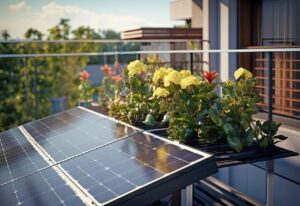
Solar home systems and renewable mini-grids are often faster to deploy than grid extensions in remote areas. They can support lighting, communications, irrigation, refrigeration and local enterprise. Their limitation is scale: small systems may not power all productive uses unless they are designed with enough capacity, storage and room for future expansion. Productive-use demand from farms, shops and community services can improve project economics by increasing daytime electricity consumption.
Storage and flexible demand
Batteries, pumped hydropower, thermal storage and flexible loads help match clean electricity supply with demand. Storage is especially important where evening demand rises after solar output falls. For universal clean energy, storage can improve reliability in both mini-grids and national grids, but it adds capital cost and requires planning for maintenance, recycling and battery replacement.
Clean cooking solutions
Clean cooking can include electric cooking, liquefied petroleum gas, biogas, bioethanol, advanced biomass stoves and other cleaner options depending on local conditions. Electric cooking becomes more attractive when grids are reliable and electricity is affordable. Biogas can work in agricultural communities with sufficient feedstock. LPG can reduce household air pollution compared with traditional biomass, though it remains a fossil fuel and should be treated as a transition solution rather than a complete decarbonization strategy.
Energy efficiency
Efficiency is sometimes less visible than power generation, but it is central to access and affordability. Efficient lights, fans, refrigerators, motors and cooking appliances reduce the size and cost of the energy system needed to provide useful services. For low-income users, efficient appliances can make the difference between a connection that is technically available and one that is economically useful.
What a practical universal clean energy strategy should measure
A strong universal clean energy plan needs better metrics than installed capacity alone. Capacity shows how much equipment exists, but it does not show whether people can afford service, whether power is reliable or whether households have stopped using polluting fuels. A more useful scorecard should combine access, quality, cost and environmental impact. See also: EVs.
- Electricity access: the number of people and public facilities with safe, legal and usable electricity service.
- Reliability: outage frequency and duration, especially for clinics, schools, water systems and small businesses.
- Affordability: the share of household income spent on basic energy services, including cooking.
- Clean cooking adoption: actual use of clean fuels and appliances, not just distribution of stoves.
- Productive use: whether energy access supports income, refrigeration, irrigation, digital services and local industry.
- Emissions intensity: pollution and carbon emissions per unit of electricity or useful energy service.
- Financial sustainability: tariff design, subsidy targeting, maintenance funding and local business viability.
This measurement approach creates a more honest picture. A mini-grid that powers homes, a health center and local businesses may provide more development value than a larger project that produces clean electricity far from where access gaps exist. Similarly, a national renewable auction can reduce future power costs, but it does not automatically solve last-mile distribution or clean cooking affordability.
Finance and policy will decide the pace
The International Energy Agency’s 2025 access scenario estimated that closing global access gaps would require sustained annual investment for both electricity access and clean cooking. The exact investment mix differs by country, but the policy message is consistent: universal clean energy requires targeted finance, not only broad clean power investment.
Governments can accelerate progress by combining grid planning, mini-grid regulation, appliance standards, clean cooking programs and transparent subsidies. Development finance institutions can reduce risk for projects that serve low-income or remote customers. Utilities can improve access by investing in distribution networks, prepaid metering, loss reduction and service quality. Private developers can contribute when rules are predictable and tariffs or subsidies allow commercially viable service.
Policy design should avoid two common mistakes. The first is treating all clean energy investment as access investment. A large solar plant can reduce national emissions without reaching unserved households. The second is treating access as a one-time connection target. Real access requires continuing service, repair, affordability and customer trust.
For companies following the clean energy sector, the opportunity is broader than generation assets. It includes distribution equipment, smart meters, storage, efficient appliances, mini-grid software, productive-use equipment, clean cooking fuels and financing models. Readers can follow related developments in the clean energy section.
Risks and trade-offs to watch
Universal clean energy also involves trade-offs. Renewable projects can face land, permitting, grid congestion and community acceptance challenges. Mineral supply chains for batteries, solar modules and grid equipment need stronger environmental and labor standards. Hydropower can provide flexible low-carbon electricity, but drought risk and ecological impacts must be managed carefully. Bioenergy can support local energy systems, but only when feedstocks are sustainable and do not compete with food security or ecosystems.
Affordability policies can also create tension. Subsidies may be necessary for low-income households, but poorly targeted subsidies can weaken utilities or discourage efficiency. Mini-grid tariffs may be higher than national grid tariffs because small systems lack economies of scale, yet they can still be the lowest-cost way to provide reliable energy in remote areas. Clear communication is essential so communities understand service levels, costs and future grid integration plans.
The biggest risk is assuming that the energy transition and universal access will converge automatically. They can reinforce each other, but only if policies deliberately connect renewable deployment with last-mile infrastructure, clean cooking, local skills and affordability. Without that link, global clean power statistics can improve while the most vulnerable users remain outside the modern energy system.
Frequently asked questions
Is universal clean energy the same as 100% renewable energy?
No. Universal clean energy is about access to affordable, reliable, modern and cleaner energy services for everyone. A 100% renewable power system is one possible long-term supply goal, but universal clean energy also includes affordability, reliability, distribution networks, clean cooking and productive use.
Why is clean cooking included in universal clean energy?
Cooking is one of the most basic daily energy needs. When households rely on polluting fuels such as traditional biomass, charcoal or kerosene, they face health risks, time burdens and local environmental pressure. Clean cooking is therefore central to modern energy access, even though it receives less attention than electricity generation.
Does record renewable capacity mean the world is on track for universal access?
No. Record renewable capacity shows strong progress in the power transition, but access depends on where projects are built, whether grids reach underserved communities, whether service is affordable and whether clean cooking solutions are adopted. The latest UN data still shows hundreds of millions of people without electricity.
What role can mini-grids play?
Mini-grids can serve communities where national grid extension is slow or uneconomic. They are most effective when they are designed for future demand growth, support productive uses and operate under clear rules for tariffs, subsidies and possible integration with the main grid.
What should energy companies watch in this market?
Companies should track not only renewable capacity additions, but also distribution investment, storage needs, clean cooking programs, appliance efficiency, concessional finance and policy support for low-income users. These factors will shape where universal clean energy becomes commercially and socially viable.