Why solar power station planning is changing
A solar power station is a generation facility that converts sunlight into electricity for local use, wholesale markets or direct supply to an offtaker. Most new projects use photovoltaic modules rather than solar thermal technology, so the main planning question is no longer whether solar PV can work. It is whether a specific site can deliver reliable energy at an acceptable cost after land, grid access, permitting, construction, curtailment and operating risks are taken into account.
The scale of recent deployment shows why this has become a more demanding planning exercise. IEA PVPS reported in its 2026 Snapshot of Global PV Markets that global photovoltaic capacity rose to nearly 3 TW by the end of 2025. IRENA’s Renewable Capacity Statistics 2026 reported that solar photovoltaics accounted for 510.3 GW of the 511.2 GW of total solar power additions in 2025. The figures differ because agencies use different reporting frameworks, but both point in the same direction: solar power station development is now taking place at utility and grid scale. For more coverage of solar industry topics, visit the solar section.
What counts as a solar power station
The phrase solar power station can describe several project types. In industry use, it usually refers to a ground-mounted, grid-connected project built to export electricity at scale. Definitions vary by market. In the United States, the Energy Information Administration commonly treats utility-scale electricity generators as facilities of at least 1 MW, while project finance and development guides often focus on plants ranging from several megawatts to hundreds of megawatts.
There are two main technology families:
- Solar photovoltaic power stations use PV modules to produce direct current electricity, which is converted by inverters into alternating current for the grid.
- Concentrating solar power stations use mirrors to concentrate sunlight as heat, often to produce steam and run a turbine. Some CSP designs can integrate thermal storage, but CSP represents a much smaller share of new global solar additions than PV.
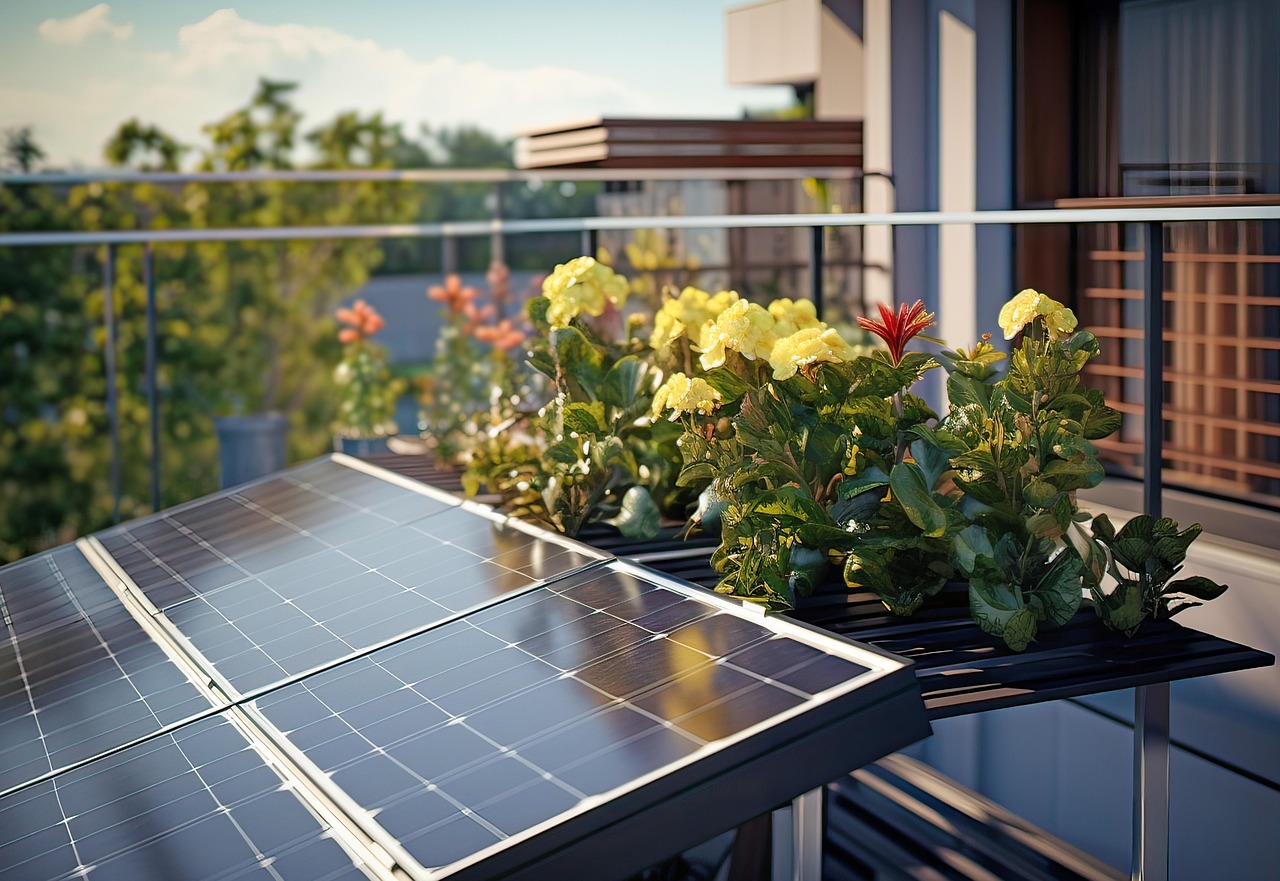
For most developers, utilities and energy buyers, a modern solar power station means a PV plant with modules, mounting structures, inverters, transformers, cables, monitoring systems, access roads, drainage, security and a grid connection point. Increasingly, it may also include a battery energy storage system, although storage is a design choice rather than a requirement for every plant.
Core components of a PV solar power station
A PV power station is sometimes described as a module field, but the modules are only one part of the asset. Project performance depends on how the electrical design, civil works, controls and grid interface function together over the full operating life.
Modules and mounting structures
PV modules convert sunlight into direct current electricity. They may be installed on fixed-tilt structures or on trackers that follow the sun during the day. Trackers can increase energy yield, especially in high-irradiance regions, but they also add mechanical complexity, foundation requirements and maintenance considerations. Fixed-tilt systems are simpler and may be preferred where land, wind loading, terrain or cost constraints outweigh the expected yield benefit.
Inverters, transformers and plant controls
Inverters convert DC output into AC electricity. They also support grid functions such as reactive power control, voltage regulation and plant-level curtailment commands where required by the grid operator. Transformers step up voltage for collection systems, substations and export lines. A plant controller coordinates output so the solar station can meet interconnection rules and operational instructions.
Balance of system
The balance of system includes cables, combiner boxes, switchgear, protection equipment, foundations, roads, fencing, communications and monitoring. These elements rarely receive as much attention as modules, but they have a direct effect on construction quality, fault response, safety and long-term availability.
Site selection factors that shape project value
A strong solar resource is necessary, but it is not enough. A technically attractive site can become uneconomic if it is too far from a suitable interconnection point, has difficult land rights, faces environmental restrictions or requires expensive civil works.
| Planning factor | Why it matters | Common risk if ignored |
|---|---|---|
| Solar resource | Determines expected energy yield and revenue potential. | Overestimated production and weak financial performance. |
| Grid proximity | Affects export line cost, substation needs and interconnection schedule. | High grid upgrade costs or long connection delays. |
| Land characteristics | Terrain, soil, drainage and access affect civil design and construction cost. | Foundation redesign, flooding, erosion or construction delays. |
| Permitting and environmental limits | Local rules may address land use, habitat, cultural resources, glare and decommissioning. | Approval delays, mitigation costs or project redesign. |
| Market and offtake structure | Revenue may come from a power purchase agreement, auction, merchant sales or hybrid model. | Exposure to price volatility, curtailment or basis risk. |
Good site selection starts with screening, but it should move quickly into evidence. Long-term irradiance data, topographic surveys, geotechnical work, grid studies, land title checks and permitting reviews help distinguish a bankable project from a large map polygon with attractive sunlight.
Grid connection is often the hardest constraint
For many solar power station projects, the grid connection is more difficult than the module layout. A plant must export electricity safely while meeting local grid codes, utility requirements and dispatch instructions. Interconnection studies may examine fault levels, voltage impacts, thermal limits, protection settings, power quality and the need for network upgrades.
The point of interconnection can strongly influence project economics. A site close to a transmission line is not automatically viable if that line lacks available capacity or if the required substation work is costly. Conversely, a site with slightly lower solar resource may be more valuable if it has a clearer and less expensive grid path.
As solar penetration rises, curtailment becomes a more important planning issue. Curtailment occurs when a plant could produce electricity but is instructed or economically forced to reduce output because the grid or market cannot absorb the energy at that time. This is not only a technical issue. It can affect revenue forecasts, debt sizing and the value of adding storage.
How storage changes the role of a solar station
Battery storage does not make a solar power station generate more sunlight. It changes when electricity can be delivered. A co-located battery can store midday energy for evening demand, reduce clipping, provide grid services or improve the firmness of a power purchase agreement. In markets with frequent low or negative midday prices, storage may help protect revenue by shifting output to higher-value hours. See also: clean energy.
Storage also changes the project scope. It adds capital cost, degradation management, fire safety requirements, controls integration, warranties and market modeling. The decision should be based on the plant’s grid constraints, price profile, offtake terms and permitted operating strategy. In some regions, a solar-only plant remains more competitive. In others, a hybrid solar-plus-storage project may be more valuable than a larger PV array alone.
Market data should be read with context
Solar deployment numbers are useful, but they are not interchangeable. A developer, investor or policy reader should check what each source measures before using a headline number in a project assumption.
| Source type | What it is useful for | Important caution |
|---|---|---|
| IEA PVPS market reports | PV deployment trends, market segmentation and technology context. | Installation estimates may differ from connected capacity statistics. |
| IRENA capacity statistics | Cross-country and cross-technology capacity comparisons. | Reported capacity can depend on national data quality and definitions. |
| Grid operator data | Interconnection queues, curtailment, congestion and local grid constraints. | Highly market-specific and not always comparable across regions. |
| Auction and PPA results | Revenue expectations and procurement trends. | Bid prices may exclude grid upgrades, inflation exposure or local incentives. |
The International Energy Agency’s Renewables 2025 analysis expects solar PV to dominate renewable capacity growth through 2030, and it notes that competitive auctions are becoming a major procurement mechanism for utility-scale renewables. That trend supports continued solar power station development, but it also increases pressure on developers to control interconnection risk, delivery schedules and operating assumptions.
Operational performance depends on more than sunshine
After commissioning, a solar power station has to be managed as an operating asset. Key performance indicators usually include energy generation, availability, performance ratio, inverter uptime, soiling losses, clipping, degradation and curtailment. A plant can have excellent irradiance and still underperform if vegetation shades modules, connectors fail, inverters trip frequently or cleaning schedules are poorly matched to local dust conditions.
Operations and maintenance planning should begin before construction. Access roads, spare parts strategy, monitoring granularity, string-level diagnostics, vegetation control and safe isolation procedures all affect long-term output. In regions with hail, snow, high wind, flooding or extreme heat, resilience planning is part of performance planning rather than an optional add-on.
Decommissioning and repowering also deserve early attention. Many permits require a decommissioning plan, and landowners may expect restoration commitments. Over time, a project owner may evaluate repowering, which can involve replacing modules, inverters or controls to improve output within the existing land and grid rights. Whether repowering is attractive depends on equipment condition, remaining contract life, interconnection limits and local permitting rules.
Frequently asked questions
What is the difference between a solar power station and a solar farm?
The terms often overlap. Solar farm is a common public-facing term for a ground-mounted solar project, while solar power station emphasizes the facility’s role as an electricity generation asset. In technical and investment discussions, solar power station may be used when grid connection, capacity, dispatch and operating performance are central to the topic.
Does every solar power station need battery storage?
No. A PV plant can operate without batteries. Storage becomes attractive when it improves revenue, reduces curtailment, supports grid requirements or helps meet an offtaker’s delivery profile. The decision depends on local market prices, interconnection rules, battery costs and the contract structure.
Why can two solar stations of the same size produce different amounts of electricity?
Nameplate capacity is only one factor. Output also depends on solar resource, module orientation, tracker or fixed-tilt design, inverter sizing, temperature, shading, soiling, equipment availability, grid curtailment and degradation. That is why energy yield studies matter more than capacity numbers alone.
Is concentrating solar power the same as solar PV?
No. Solar PV converts light directly into electricity through semiconductor modules. Concentrating solar power uses mirrors to concentrate sunlight as heat, usually to drive a thermal power cycle. CSP can have thermal storage advantages in some settings, but recent global solar growth has been led overwhelmingly by PV.
What is the biggest planning risk for a new solar power station?
There is no single universal answer, but grid connection is often the decisive constraint. Land, permits and equipment can be challenging, yet a weak interconnection route or unexpected network upgrade can change the cost, schedule and revenue profile of the entire project.