
Quick answer for homeowners
Solar panels for house electricity can still make financial and practical sense in 2026. The decision, however, now depends more on local electricity rates, roof condition, utility export rules and financing terms than it did when the federal homeowner tax credit was broadly available. As of August 27, 2026, the IRS describes the Residential Clean Energy Credit as applying to qualified home clean energy property installed from 2022 through December 31, 2025, and not to property placed in service after that date. That does not make residential solar uneconomic by default. It means homeowners need to judge each project on its own numbers: installed price per watt, expected annual production, bill-credit value, maintenance assumptions and whether battery backup is part of the goal.
This guide focuses on U.S. residential solar decisions and uses public information from the IRS, U.S. Energy Information Administration, U.S. Department of Energy, Berkeley Lab, PVWatts and SEIA/Wood Mackenzie. For related coverage, visit our solar section.
What changed for home solar in 2026
The most important change for many homeowners is policy timing. The IRS currently states that the Residential Clean Energy Credit equals 30% of qualified costs for eligible home clean energy property installed from 2022 through December 31, 2025. It also says the credit is not available for property placed in service after December 31, 2025. For a homeowner buying a system in 2026, it is risky to rely on older articles or sales materials that still assume a 30% federal credit for a new customer-owned rooftop installation.
Market conditions have also shifted. SEIA and Wood Mackenzie reported that U.S. residential solar installed 4,647 MWdc in 2025, down 2% from 2024. Their 2025 year-in-review report attributed part of the late-2025 installation rush to the Section 25D deadline and projected a steeper residential contraction in 2026 after the credit expired for customer-owned systems. That background matters because installers may be changing sales models, financing offers and third-party ownership options.
Electricity prices remain a central reason households continue to evaluate solar. The U.S. Energy Information Administration reported an annual average U.S. residential electricity price of 17.30 cents per kWh in 2025, with preliminary 2026 year-to-date data through June showing 18.16 cents per kWh. The rate on your own utility bill is more important than the national average. Solar economics are usually stronger where retail rates are high, export credits are reasonable and the roof can produce power with limited shading.
How to size solar panels for a house
Good solar sizing starts with actual electricity use, not with the largest system that can fit on the roof. Collect 12 months of bills and note total kWh consumption, seasonal peaks and any expected changes, such as an electric vehicle, heat pump, induction cooking or a future home addition. A system sized only on last year’s usage may be too small if the home is about to shift more loads to electricity.
A simple planning formula is:
Target annual solar production ÷ expected annual kWh per kW of solar capacity = approximate system size in kWdc.
The second number is the one that needs care. Production depends on location, roof direction, tilt, shading, system losses and equipment design. PVWatts, a widely used public calculator, estimates energy production for grid-connected PV systems and lets homeowners compare production assumptions before accepting a sales proposal. It does not replace a site-specific engineering design, but it is useful for checking whether a quote’s production claim is broadly reasonable.
For example, if a home uses 10,000 kWh per year and the target is an 80% offset, the system would need to produce about 8,000 kWh per year. If a location-specific estimate suggests each kWdc of solar would produce 1,250 kWh per year, the rough system size would be 6.4 kWdc. In a sunnier area, or on a better-oriented roof, the required system may be smaller. On a shaded or poorly oriented roof, it may need to be larger, or the project may not be attractive.
Roof fit matters as much as panel count
The U.S. Department of Energy notes that solar panels can work in all climates, but not every roof is a good candidate. Roof age, tree cover, usable roof area, roof shape and slope all affect performance and cost. The DOE homeowner guidance says panels typically perform best on south-facing roofs with a slope between 15 and 40 degrees, while also noting that other roof orientations can still be suitable.
Before signing a contract, check three practical constraints:
- Roof age: If the roof may need replacement soon, replacing it before solar installation can avoid the cost and disruption of removing and reinstalling panels later.
- Shade: Shade from trees, chimneys, dormers and nearby buildings can reduce output. A formal shade analysis is more reliable than a visual estimate from the driveway.
- Usable space: Vents, skylights, setbacks, fire-code pathways and complex roof planes can reduce the number of panels that actually fit.
Ground-mounted solar can be an alternative for some properties with enough land, but it often brings different permitting, trenching and racking costs. Community solar may be an option for renters, shaded homes or owners who do not want equipment on the roof, although program availability and savings vary by state and utility territory.
What a residential solar system includes
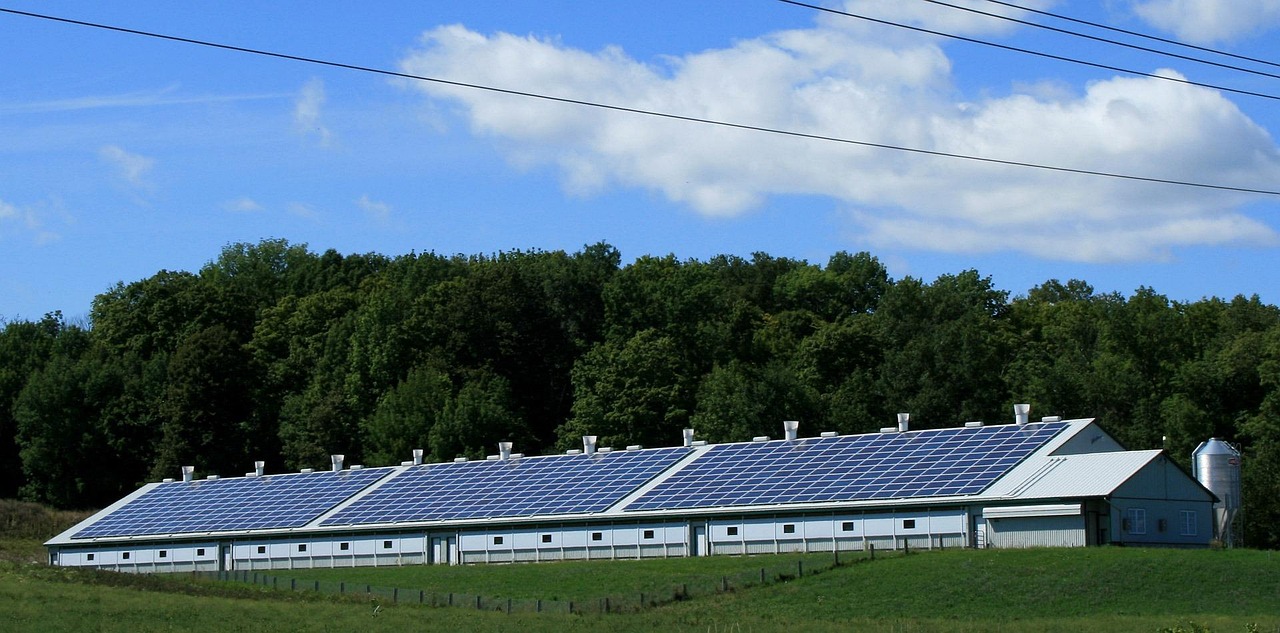
A house solar project is more than panels. A typical system includes PV modules, an inverter or microinverters, racking, roof attachments, wiring, electrical disconnects, monitoring and interconnection equipment. The inverter choice affects design flexibility, shading performance, maintenance and cost. String inverters, optimizers and microinverters can all be appropriate, depending on the roof layout and the installer’s design.
Batteries are optional, not automatic. A standard grid-tied solar system often shuts down during an outage for utility-worker safety unless it includes approved battery backup and islanding equipment. A battery can store solar production for evening use, back up selected circuits or help manage time-of-use rates, but it increases project cost and should be sized around specific goals. A homeowner focused mainly on lowering annual bills may not need the same battery configuration as someone who wants overnight backup for refrigeration, medical equipment, internet and lighting.
Durability should be evaluated at the system level. DOE materials describe PV performance periods in decades, and many modern panels carry long power warranties. However, inverters, batteries, roof penetrations and monitoring hardware may have different warranty terms. A 25-year panel warranty does not mean every component has the same coverage, or that labor is included for all future service.
Cost and payback factors to calculate carefully
Installed price per watt remains the clearest way to compare solar-only quotes. Berkeley Lab’s 2025 distributed solar update, based on project-level data through the end of 2025, reported that 2024 host-owned residential PV pricing differed sharply by financing type: median cash-purchase systems were $3.5/W, while median loan-financed systems were $4.7/W. Berkeley Lab noted that loan fees rolled into the upfront price were part of the difference, and that the data are gross prices before incentives or tax credits. See also: clean energy.
That finding is especially relevant in 2026 because a low monthly loan payment can hide a higher contract price. Compare the cash price, financed price, dealer fees, interest rate, loan term, prepayment rules and total repayment amount. A quote that looks cheaper per month may cost more over the full term than another option with a higher monthly payment but a lower principal balance.
| Factor | Why it matters | What to ask |
|---|---|---|
| Gross installed price | Sets the baseline economics before incentives | What is the cash price in dollars per watt? |
| Financing terms | Dealer fees and interest change payback | What is the total amount paid over the loan term? |
| Annual production estimate | Drives bill savings | What assumptions were used for shade, tilt and degradation? |
| Export credit | Determines value of excess daytime solar | How does the utility credit exported kWh? |
| Battery cost | Adds resilience but may extend payback | Which loads will be backed up, and for how long? |
A basic payback calculation divides net project cost by expected annual bill savings. Homeowners should not treat that number as guaranteed. Savings can change if utility rates, net billing rules, household consumption or system performance change. A more useful approach is to run at least three cases: conservative, expected and optimistic. Use conservative assumptions for export value and production if the contract does not include a strong performance guarantee.
Net metering, export credits and batteries
Net metering used to be simple in many places: excess solar exported to the grid could offset consumption at or near the retail rate. Today, many states and utilities use more complex net billing structures, time-of-use prices, monthly true-ups, minimum bills or lower export compensation. As a result, two identical houses with identical solar systems can have different payback periods in different utility territories.
Ask your utility or installer to show how your bill will be calculated after solar. The key question is not only how much the panels produce, but when the home uses that power and what exported power is worth. If the utility pays much less for midday exports than it charges for evening imports, self-consumption becomes more valuable. In that case, batteries, load shifting, smart water heating or EV charging during sunny hours may improve the value of solar production.
Battery storage should be evaluated separately from solar payback. It can be valuable for outage resilience and time-of-use management, but it is not always the lowest-cost way to reduce annual bills. A small backup battery may keep critical circuits running but not whole-home air conditioning. A larger battery may support more loads but can materially increase the upfront price. The right answer depends on outage frequency, climate, medical or work-from-home needs and local electricity tariffs.
How to compare solar quotes before signing
Homeowners should collect at least three quotes using the same requested scope: solar-only, solar plus battery if desired, cash price, financed price and expected first-year production. Ask each installer to separate equipment costs from financing assumptions and to identify the panel model, inverter model, battery model if included, warranty terms and workmanship coverage.
Be cautious with sales claims that are too broad. A proposal should not promise that electricity bills will disappear unless the bill design, system size and consumption pattern support that conclusion. It should not rely on a federal homeowner credit for a 2026 installation unless the installer can point to a current, applicable rule and you verify it with a tax professional. It should also account for roof replacement, main-panel upgrades, permitting delays and utility interconnection requirements where relevant.
A stronger proposal will include a roof layout, shade assumptions, annual and monthly production estimates, utility-rate assumptions, equipment data sheets, total contract price, payment schedule, cancellation terms and a clear explanation of who handles permits and interconnection. If the installer offers a lease or power purchase agreement, compare the escalator, transfer rules, buyout terms and maintenance obligations against direct ownership.
Frequently asked questions
How many solar panels does a house need?
There is no universal panel count. The number depends on annual kWh use, local sun, roof conditions, panel wattage and the target bill offset. A smaller efficient home may need far fewer panels than a large all-electric house with an EV. Start with annual usage and model production before counting panels.
Are solar panels for a house worth it without the federal homeowner tax credit?
They can be, especially where electricity rates are high, roof conditions are strong and the installed price is competitive. However, the margin for error is smaller. In 2026, homeowners should be especially careful with financed prices, export-credit assumptions and outdated tax-credit claims.
Do solar panels work during a power outage?
Not by default. Most grid-tied systems shut down during an outage unless the system includes approved battery backup and islanding equipment. If backup power is a priority, specify which circuits or appliances must run and ask for a battery design that matches that requirement.
Should I replace my roof before installing solar?
If the roof is near the end of its service life, replacement before solar installation is often worth evaluating. Removing and reinstalling panels later can add cost and complexity. A roof inspection should be part of the decision process.
What is the best first step?
Gather 12 months of electric bills, check your roof age, review your utility’s solar billing rules and request several quotes with cash and financed pricing separated. Then compare projected production and savings using conservative assumptions.
Bottom line
Solar panels for a house in 2026 require a more disciplined review than they did during the broad federal-credit period. The core question is not whether solar technology works; it does. The practical question is whether your roof, utility tariff, installed price, financing terms and resilience goals add up to a sensible project. Homeowners who verify policy timing, model production, compare cash and loan prices, and understand export credits are in the strongest position to decide whether rooftop solar is a good fit.