
Why Does Onshore Wind Still Matter in 2026?
Onshore wind is still one of the common ways to add renewable power when a buyer wants proven equipment, known project steps, and a shorter path from site study to generation. It does not fit every location. But when the wind is strong enough and the grid is not far away, the cost per kilowatt hour can still be very hard to beat.
The Market Is No Longer Experimental
Global wind is now part of normal power planning, not a test project. The Global Wind Energy Council’s Global Wind Report 2026 reported that the world added a record 165 GW of new wind capacity in 2025, up 40% from 2024, while total installed wind capacity reached 1,299 GW by the end of 2025. That scale matters for buyers because it usually brings more supplier options, more trained service teams, and better access to parts.
Fast Build Times Help Buyers Plan
After permits and grid connection are in place, an onshore wind project is usually easier to handle than offshore wind. Roads, foundations, cranes, transformers, and turbines are all handled on land, so the site team is dealing with work they can see and control. You are not waiting for jack-up vessels, seabed surveys, or long marine weather windows. A wet access road can still delay work for days, but it is a problem most contractors know how to manage.
A Familiar Technology Base Lowers Risk
The U.S. Department of Energy’s Wind Market Reports 2024 showed 150,492 MW of land-based wind capacity installed in the United States by the end of 2023, including 6,474 MW added that year. It also noted that four states got more than 40% of their electricity supply from land-based wind in 2023. For a buyer, that track record is useful. A mature technology base makes it easier to compare turbine models, service teams, spare parts, and real operating records.
How Much Does Onshore Wind Really Cost?
Cost is the main reason onshore wind still shows up in utility plans, factory energy plans, and renewable tenders. Even so, one global cost figure should not be treated as the final price for a real project. Your cost will depend on wind speed, land conditions, transport distance, grid upgrades, finance terms, tax rules, and the power sales contract.
The LCOE Number Tells Only Part of the Story
IRENA’s Renewable Power Generation Costs in 2024, published in 2025, placed the global weighted average levelized cost of electricity for new utility-scale onshore wind at USD 0.034/kWh in 2024. The same report listed solar PV at USD 0.043/kWh and hydropower at USD 0.057/kWh. IRENA also stated that onshore wind in 2024 was 53% lower than fossil fuel-based generation on a global average basis. This is useful market data, but each site still needs its own energy yield model before any budget is taken seriously.
Grid Connection Can Change the Bill
A wind farm with good wind and a weak grid can become costly very quickly. You may need a longer transmission line, a stronger substation, reactive power equipment, or curtailment studies. These items are not as visible as a turbine nacelle, but they can decide whether the project works. In some tender cases, the lowest turbine price is not the lowest total project cost.
Finance Terms Often Decide the Winner
IRENA’s 2024 cost report also pointed out that financing costs remain a key factor for renewable project viability. This point matters a lot for wind because most of the capital is spent before the first kilowatt hour is sold. If the loan rate is high or the power purchase agreement is weak, the project can lose its cost advantage even with a good wind resource.
Where Does Onshore Wind Work Best?
Good onshore wind projects start with land and wind data, not with a turbine brochure. The right site needs steady wind at hub height, enough space for a safe layout, and a grid route that does not eat up the budget. A nice hilltop view is not the same thing as a bankable wind site.
Strong Wind Resource at Hub Height
Modern turbines are taller and use larger rotors than older machines, so wind data near ground level is not enough. The U.S. Department of Energy’s Land-Based Wind Market Report 2024 said the average newly installed U.S. land-based turbine in 2023 had a 3.4 MW nameplate capacity, a 133.8 meter rotor diameter, and a 103.4 meter hub height. That means the wind measurement campaign should match the height and rotor sweep of the turbine planned for the project. If the data height is wrong, the energy model can look better than the site really is.
Enough Space for Access and Setbacks
Onshore wind needs room for turbine spacing, crane pads, blade turning areas, access roads, and setbacks from homes or other sensitive locations. The land between turbines can often remain in farming or grazing use, but the project will still change how the area is used. Landowner agreements should be checked early. Road rights, drainage, crop disturbance, and decommissioning terms are all worth putting in writing before design work goes too far.
Nearby Load and Grid Nodes
A site near a substation, industrial load, mine, port, or data center can have a stronger business case than a remote site with better wind. Shorter grid distance can lower cost and reduce permitting work. If the power is meant for a factory, wind output should also be compared with the load profile. Night wind may suit a 24-hour plant, while a daytime-only facility may need storage or a grid contract to balance supply.
How Should You Compare Onshore Wind with Solar and Offshore Wind?
The right renewable mix is often not one technology only. Onshore wind, solar, and offshore wind have different costs, output patterns, and construction risks. If you compare only nameplate capacity, the result can be misleading. Delivered energy, timing, grid value, and project risk need to be compared together.
Different Output Patterns
Solar output is easier to read by daylight hours, while wind can produce at night and in different seasons. In windy regions, this makes onshore wind a useful match for solar PV. The IEA’s Renewables 2025 forecast expects cumulative onshore wind capacity additions to reach 732 GW from 2025 to 2030, 45% higher than additions from 2019 to 2024. That forecast shows that demand for wind is still moving, even while solar grows very fast.
Lower Civil Works than Offshore Wind
Offshore wind can reach strong wind resources near coastal demand centers, but the work scope is heavier. Foundations, vessels, subsea cables, port space, and marine weather all add cost and planning risk. IRENA’s 2024 cost report listed total installed costs of USD 1,041/kW for onshore wind and USD 2,852/kW for offshore wind in 2024. Offshore may still be the right answer for some countries, but onshore is usually simpler when suitable land is available.
Hybrid Sites Can Smooth the Curve
A site that combines wind, solar, and batteries may use the grid connection better than a single-source project. The basic idea is simple: solar covers sunny hours, wind may help at night or during seasonal peaks, and storage can shift part of the output. The difficult part is the contract setup. Curtailment rules, metering, and dispatch control must be clear before the equipment reaches the site.
What Project Risks Should You Check Before Buying?
From a distance, onshore wind can look simple: install turbines in a windy place and connect them to the grid. Real projects have more details to manage. Before buying equipment, check local rules, the grid queue, transport routes, and the local community situation. A cheap offer can become expensive if one of these points is not checked early. See also: clean energy.
Permitting and Community Concerns
The IEA’s Renewables 2023 analysis said permitting can take two to nine years for onshore wind projects, compared with one to five years for ground-mounted solar PV and about nine years on average for offshore wind. The range is wide because land rules, wildlife studies, visual impact, aviation limits, and public hearings vary by region. Local communication should start early and be direct. It is much harder to explain a project after people have already seen survey flags in a field and heard rumors from neighbors.
Transport and Crane Limits
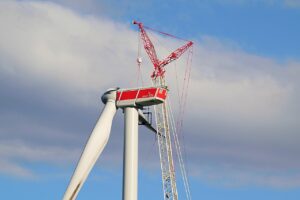
Large blades and tall tower sections need a careful route study before contracts are locked. A bridge, tight village turn, railway crossing, or weak rural road can change the whole delivery plan. Crane availability is another practical issue that should not be left to the last month. The lifting plan has to match hub height, turbine weight, site wind limits, and pad design, or the schedule can slip quickly.
Curtailment and Power Price Risk
High wind output has less value if the grid cannot take the power during windy hours. In some markets, negative prices or curtailment can reduce revenue. Ask for grid studies, historical congestion data where available, and a clear power sales structure. If a developer cannot explain how energy will be sold during low-price hours, that gap should be treated as a real project risk.
How Can You Choose Better Onshore Wind Equipment?
Equipment selection should fit the turbine to the site, not force the site around the turbine. A bigger rotor is not always the right choice, and the lowest purchase price is not always the best deal. The machine needs to match the wind class, grid code, transport route, service plan, and project finance model.
Rotor Size Matches the Wind Class
Low and medium wind sites often use larger rotors to capture more energy. High wind sites may need stronger design margins and a different turbine class. Ask suppliers to show annual energy production assumptions, loss factors, turbine power curves, and measured wind data. If a supplier gives one output number for every site without proper data, no reliable public data can verify that exact claim.
Maintenance Access Comes Before Delivery
Maintenance planning should start before the turbine ships. Check spare parts lead times, service team location, remote monitoring tools, gearbox or direct-drive service needs, and warranty exclusions. A small downtime difference can matter over 20 years, especially for a project with tight debt service. A good O&M plan is not fancy; it is clear, local, and documented.
Bankable Documents Support the Deal
Lenders, insurers, and large power buyers usually want more than a sales sheet. Prepare a clean document package before financial close so each party can check the same technical basis.
- Type certification and grid compliance documents
- Power curve test reports and availability guarantees
- Foundation loads, transport drawings, and lifting plans
- Warranty terms, spare parts list, and service response times
- SCADA data access, cybersecurity notes, and reporting format
These documents make supplier comparison easier. They also help avoid a late-stage surprise, such as a turbine that fits the budget but fails the local grid code.
FAQ
Q1: Is Onshore Wind Better than Solar? A: It depends on the site. IRENA’s 2024 cost data showed a lower global average LCOE for onshore wind than solar PV, but solar may win in high-sun markets with easy grid access. Many buyers use both because the output patterns can support each other.
Q2: How Long Does an Onshore Wind Project Take? A: Construction can move fast after approvals, but permitting and grid connection can take years. The IEA has reported a two to nine year permitting range for onshore wind, so early planning is important.
Q3: What Is the Biggest Cost Risk in Onshore Wind? A: Grid connection is often the hidden risk. Long transmission routes, substation upgrades, curtailment, or weak power pricing can hurt the project more than a small gap in turbine price.
Q4: Can Onshore Wind Work for Industrial Power Buyers? A: Yes, especially if the site has strong wind, nearby load, and a usable grid connection. The buyer should compare wind output with hourly demand before signing a power contract.
Q5: What Should You Ask a Wind Turbine Supplier First? A: Ask for certified turbine data, site-specific energy modeling, grid compliance documents, maintenance terms, and real references from similar wind conditions. A serious supplier should answer with documents, not only claims.