
House Passes Bill to Boost Geothermal, Clean Energy Drawn from Earth’s Heat
Geothermal renewable energy is moving from niche status to a central pillar in U.S. clean power strategy. The recent House bill signals bipartisan recognition that Earth’s internal heat can deliver reliable, carbon-free electricity with minimal land disruption. Unlike intermittent renewables, geothermal offers continuous base-load generation, supporting grid stability as coal and gas retire. With new legislative incentives, advanced drilling methods, and hybrid integration opportunities, geothermal is positioned to expand rapidly across the western states and beyond. The policy shift reflects a pragmatic approach: harnessing proven technology for deep decarbonization without sacrificing reliability or economic growth.
The Strategic Role of Geothermal Renewable Energy in U.S. Clean Power Policy
The momentum around geothermal stems from its dual advantage—renewable consistency and dispatchable capacity. While solar and wind dominate new installations, their variability challenges grid operators. Geothermal fills this gap by providing steady output 24/7.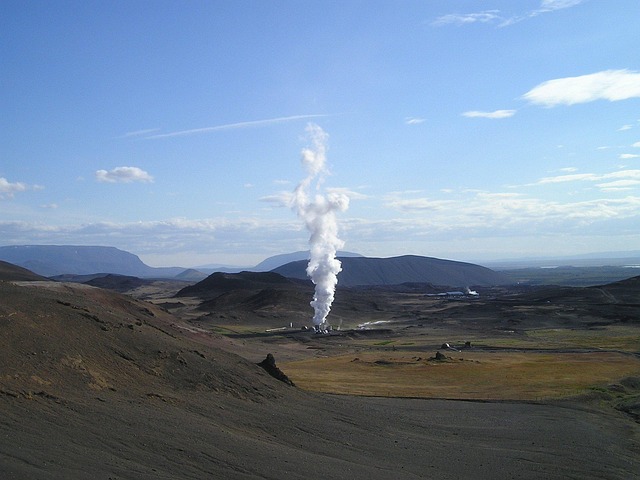
Overview of Geothermal Energy Generation Through Earth’s Internal Heat
Geothermal plants tap into subsurface reservoirs where water meets hot rock, producing steam that drives turbines. In high-temperature zones like Nevada or California’s Imperial Valley, flash steam plants are common; binary cycle systems work even in lower-temperature regions using heat exchangers and organic fluids. This makes geothermal adaptable across diverse geological conditions.
Comparison with Other Renewable Sources in Terms of Reliability and Capacity Factor
Wind averages a 35–45% capacity factor; solar hovers around 25%. Geothermal often exceeds 80%, rivaling nuclear for uptime. That reliability translates into predictable revenue streams and easier integration into existing grids—crucial as utilities retire fossil assets but still need firm capacity.
Analysis of Geothermal’s Base-Load Capability Within the National Grid
Unlike solar peaks at midday or wind surges at night, geothermal runs continuously. It functions as base-load power—critical for balancing variable renewables. The U.S. Department of Energy (DOE) estimates that expanded geothermal could supply up to 8% of national electricity by 2050 if Enhanced Geothermal Systems mature commercially.
Legislative Momentum Toward Geothermal Expansion
Recent congressional actions underscore growing political will to scale geothermal development as part of broader decarbonization goals.
Examination of Recent U.S. House Initiatives Supporting Geothermal Development
The House recently passed legislation aimed at streamlining federal permitting for geothermal projects on public lands and expanding funding for exploration technologies. The measure aligns with DOE’s “GeoVision” roadmap, which targets tripling installed capacity through regulatory reform and R&D support.
Policy Mechanisms Encouraging Private Sector Participation and R&D Investment
Tax incentives remain key levers. Production Tax Credits (PTC) and Investment Tax Credits (ITC), long dominated by wind and solar, now explicitly cover geothermal facilities through parity provisions enacted under recent energy acts. These incentives reduce upfront risk for developers exploring deep reservoirs.
Integration of Geothermal Incentives Within Broader Clean Energy Frameworks
Geothermal policies increasingly integrate within state-level Renewable Portfolio Standards (RPS). California counts geothermal toward its 100% clean energy target by 2045, while Nevada mandates utilities procure a share from firm renewables—a category where geothermal leads due to its consistent output.
Technological Innovations Driving Geothermal Advancement
Technology defines the pace of geothermal growth more than geology alone. Breakthroughs in drilling efficiency and reservoir engineering are expanding viable zones far beyond traditional hotspots.
Enhanced Geothermal Systems (EGS) and Their Potential
EGS creates artificial reservoirs by fracturing hot dry rock formations where natural permeability is low. By injecting water under pressure, engineers form pathways that enable heat extraction similar to conventional fields. Pilot projects in Utah’s FORGE site show promising results with sustained flow rates at commercial temperatures above 175°C.
Advances in Drilling, Reservoir Stimulation, and Heat Exchange Efficiency
Directional drilling borrowed from oil and gas reduces costs dramatically—sometimes by half compared to early projects in the 1980s. Improved downhole sensors optimize well placement while closed-loop systems eliminate fluid loss risks, enhancing environmental performance.
Assessment of Scalability and Cost Reduction Trends in EGS Deployment
As learning curves improve, the levelized cost of electricity (LCOE) from EGS could drop below $60 per MWh within a decade, making it competitive with utility-scale solar plus storage combinations. That projection assumes continued DOE grant support for demonstration plants through 2030.
Hybrid Systems and Grid Integration Opportunities
Geothermal’s flexibility increases when paired with other renewables or emerging storage technologies.
Combining Geothermal With Solar or Hydrogen Systems for Optimized Performance
Hybrid plants combining geothermal baseload with daytime solar generation maximize utilization of shared transmission infrastructure. Some developers are exploring using excess heat for hydrogen production via high-temperature electrolysis—a synergy that supports both power and fuel markets.
Role of Smart Grid Technologies in Balancing Intermittent Renewables With Geothermal Stability
Smart grid controls allow utilities to modulate output dynamically based on demand forecasts. When wind or solar fluctuate sharply, geothermal can ramp modestly within minutes to stabilize frequency without relying on fossil backup units.
Implications for Grid Resilience and Decentralized Energy Networks
Distributed binary-cycle units near industrial clusters offer localized reliability benefits during grid disturbances. As microgrids proliferate across campuses or remote communities, small modular geothermal systems could provide continuous heat and power independent of large transmission lines.
Economic and Environmental Dimensions of Geothermal Expansion
Economic viability determines whether policy ambitions translate into real capacity additions—and environmental metrics shape public acceptance.
Economic Competitiveness in the Clean Energy Market
The LCOE for conventional hydrothermal plants averages around $70 per MWh today but continues declining with improved exploration techniques. Long-term contracts stabilize revenues over decades since fuel costs are negligible once wells are drilled.
Long-Term Economic Benefits From Domestic Energy Independence and Job Creation
Expanding domestic geothermal reduces reliance on imported fuels while generating skilled employment in drilling services, plant operations, and geoscience sectors—industries overlapping with existing oilfield expertise transitioning toward clean energy roles.
Financing Models for Large-Scale Geothermal Projects Under Federal Programs
Federal loan guarantees through DOE’s Loan Programs Office mitigate exploration risk by backing early-stage capital expenditures. Public-private partnerships also enable cost-sharing during test drilling phases before commercial confirmation—a model already used successfully in Nevada’s Dixie Valley expansion project.
Environmental Impact and Sustainability Considerations
Environmental performance remains one of geothermal’s strongest advantages among renewables when lifecycle impacts are assessed comprehensively.
Evaluation of Land Use, Water Requirements, and Emissions Relative to Other Renewables
Geothermal plants occupy less land per megawatt than wind or solar farms due to compact wellhead spacing. Direct CO₂ emissions are minimal—typically less than 5% those from natural gas—and closed-loop cooling minimizes water consumption compared to wet-cooled thermal plants.
Lifecycle Assessment of Geothermal Plants From Construction to Decommissioning
Over a typical 30-year lifespan, most emissions arise during construction rather than operation. Equipment recycling programs now recover steel casings and turbine materials efficiently at end-of-life stages.
Strategies for Minimizing Induced Seismicity and Subsurface Risks
Monitoring microseismic activity during reservoir stimulation helps prevent larger events; adaptive injection protocols have proven effective at sites like Basel (Switzerland) after early setbacks elsewhere underscored the need for robust oversight frameworks.
Regulatory Frameworks and Policy Implications for Geothermal Growth
Regulation determines project speed as much as technology does; clarity around permitting remains essential for investor confidence.
Federal and State-Level Regulatory Landscape
Under the Bureau of Land Management (BLM), developers must secure leases similar to oil operations but face shorter timelines under recent reforms aimed at reducing redundant environmental reviews between agencies like BLM and state commissions managing water rights or wildlife protections.
Coordination Between State Energy Commissions and Federal Agencies on Resource Management
Joint task forces now align data-sharing standards so seismic surveys conducted under federal permits can inform state-level planning processes—reducing duplication while improving transparency across jurisdictions.
Streamlining Environmental Review Procedures to Accelerate Project Timelines
New categorical exclusions under the National Environmental Policy Act (NEPA) shorten review periods for low-impact exploratory wells from years to months without compromising safety assessments—a critical step given exploration remains the highest-cost barrier in project pipelines.
Incentives, Tax Credits, and Public Funding Mechanisms
Financial tools underpin market expansion until economies of scale take hold fully across regions beyond California or Nevada.
Analysis of Production Tax Credits (PTC) and Investment Tax Credits (ITC) Applicability to Geothermal Projects
Recent legislative updates extended PTC eligibility through 2032 while maintaining ITC options up to 30% capital cost coverage depending on domestic content compliance—aligning incentives with manufacturing localization goals set by federal clean energy policy frameworks.
Role of Department of Energy (DOE) Grants in Fostering Innovation and Pilot Projects
DOE continues funding pilot-scale EGS demonstrations under its “Frontier Observatory” program alongside university research partnerships focused on advanced geophysical imaging tools critical for subsurface mapping accuracy improvements.
Potential Reforms to Enhance Policy Alignment With Decarbonization Goals
Future reforms may link tax credits directly to verified carbon intensity metrics rather than technology type alone—creating performance-based parity among all zero-emission sources including geothermal renewable energy producers meeting stringent lifecycle thresholds.
The Future Outlook: Integrating Geothermal Into a Decarbonized U.S. Energy System
As policy frameworks mature, integrating geothermal effectively within national transition plans becomes both an engineering challenge and strategic necessity for achieving net-zero targets by mid-century.
Strategic Scenarios for National Energy Transition Planning
Modeling by national laboratories suggests that under aggressive decarbonization scenarios emphasizing firm renewables over carbon capture reliance, geothermal could provide up to one-fifth of dispatchable generation capacity needed during seasonal lulls when other renewables dip sharply.
Interactions Between Geothermal Expansion and Carbon Capture or Hydrogen Production Initiatives
High-grade thermal output from deep wells can supply process heat directly for industrial carbon capture facilities or drive hydrogen production cycles more efficiently than electricity-based alternatives—a synergy gaining traction among integrated energy hub planners nationwide.
Long-Term Implications for Achieving Net-Zero Emissions Targets by Mid-Century
If scaled strategically alongside transmission upgrades linking western resources with eastern demand centers, geothermal could anchor a resilient low-carbon grid backbone supporting stable operation even under extreme weather stress events projected under climate models through 2050s horizons.
Challenges And Opportunities Ahead For Policymakers And Industry Stakeholders
While technical promise is clear, deployment barriers persist—from upfront exploration risk perceptions among investors to local opposition rooted in seismic concerns that require transparent engagement strategies grounded in data rather than speculation.
Addressing Technical Uncertainties, Public Perception, And Investment Risk Profiles
Insurance-backed risk pools similar to those used offshore wind could attract institutional capital wary of uncertain well yields; meanwhile community outreach emphasizing safety records helps dispel misconceptions about induced seismicity magnitude relative to natural background levels.
Collaboration Between Academia, Industry, And Government To Accelerate Deployment Timelines
Consortia linking universities’ geoscience departments with private drilling firms already demonstrate success accelerating innovation transfer cycles—bridging academic modeling insights into field-tested commercial applications faster than traditional grant structures allow.
Vision For A Diversified Renewable Portfolio Where Geothermal Plays A Stabilizing Role In The Energy Mix
In an increasingly electrified economy reliant on variable sources like solar PV fleets charging electric vehicles at scale each evening peak hour load spike underscores why steady baseload anchors such as geothermal remain indispensable within any credible decarbonization roadmap.
FAQ
Q1: How does geothermal renewable energy differ from other renewables?
A: It provides constant base-load power using Earth’s internal heat rather than depending on weather patterns like sunlight or wind speed fluctuations.
Q2: What regions in the U.S. hold the highest potential?
A: Western states such as Nevada, Utah, Oregon, Idaho, California show strong prospects due to active tectonic settings offering accessible high-temperature resources near surface zones suitable for economic development today.
Q3: Are Enhanced Geothermal Systems safe?
A: Yes; when managed properly through monitored injection protocols they pose minimal seismic risk compared with natural background activity levels recorded historically across comparable geological contexts worldwide according to peer-reviewed studies validated by national labs data sets since early pilot phases began globally two decades ago.
Q4: How do tax credits influence project economics?
A: They lower upfront capital burdens significantly improving internal rate returns thereby encouraging earlier-stage private investment participation which otherwise might hesitate given exploration uncertainty cost exposure typical before production confirmation milestones achieved commercially.
Q5: Can small communities benefit from local-scale projects?
A: Absolutely; modular binary-cycle units can deliver both electricity heating locally reducing dependence long-distance transmission infrastructure while stabilizing rural grids especially valuable remote mountainous areas underserved currently traditional utility expansion plans statewide budgets limits.