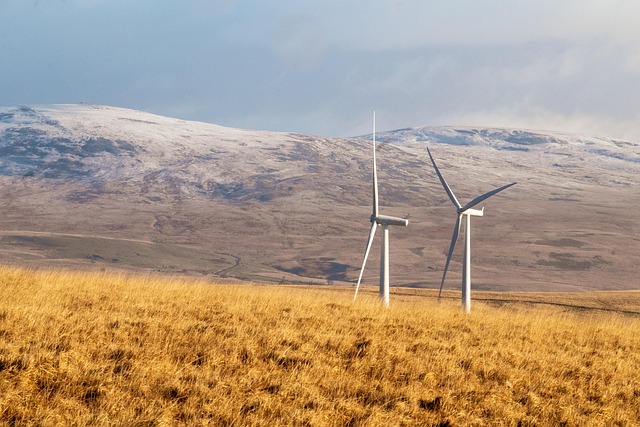

Government Looks to Relax Planning Rules for Small Wind Turbines Following NFU Campaigning
The government’s move to relax planning rules for small wind power generators signals a decisive shift toward rural energy independence and net-zero alignment. The proposed reforms aim to simplify approval processes, reduce local authority barriers, and encourage agricultural participation in renewable generation. Backed by the National Farmers’ Union (NFU), these changes could unlock new investment in distributed wind infrastructure while supporting national decarbonization goals. Yet, they also raise questions about environmental safeguards, grid integration, and public acceptance—issues that will shape how effectively small-scale wind contributes to the UK’s clean energy transition.
Government Planning Reforms and Their Potential Impact on Small Wind Power Generators
The government’s planning reforms seek to address long-standing challenges faced by small wind developers. For years, complex local planning procedures have limited rural adoption of microgeneration technologies.
Overview of the Proposed Planning Rule Changes
Current planning restrictions often classify even modest turbines as major developments, requiring extensive consultation and environmental assessments. The proposed reforms would streamline these processes by increasing height thresholds and simplifying noise evaluation standards. This change aligns with the UK’s broader renewable strategy by promoting decentralized generation capacity that complements large-scale offshore projects. The relaxation of rules is expected to make small wind more accessible for farms and rural enterprises seeking energy self-sufficiency.
The Policy Context Behind the Government’s Shift
This policy shift reflects growing concern over national energy security and volatility in global fuel markets. By enabling rural producers to generate their own electricity, the government aims to reduce dependence on imported energy while advancing decarbonization commitments under the Climate Change Act. Rural development policies now explicitly link agricultural productivity with renewable infrastructure growth, recognizing that distributed generation strengthens both economic resilience and environmental performance.
The Role of the NFU in Advocating for Policy Reform
The NFU has played a pivotal role in shaping this reform agenda through sustained advocacy for fairer planning treatment of farm-based renewables.
NFU’s Campaign Objectives and Policy Recommendations
The union’s campaign emphasizes that small wind power generators can help stabilize farm incomes amid rising input costs. It argues that simplified planning could unlock thousands of potential sites where turbines under 25 meters could operate without lengthy delays. NFU policy papers highlight how on-farm generation supports rural self-reliance while contributing measurable carbon reductions consistent with national targets.
Stakeholder Engagement and Policy Influence Mechanisms
Agricultural stakeholders have actively participated in consultation rounds, presenting data on the financial viability of small-scale projects under reformed regimes. Industry groups have worked closely with civil servants drafting new frameworks, ensuring that technical standards remain practical yet robust. This collaborative process illustrates how stakeholder-driven dialogue can influence legislative design in distributed energy sectors.
Technical and Regulatory Considerations in Small Wind Power Deployment
Beyond policy rhetoric, technical constraints remain central to how effectively relaxed rules can translate into real deployment gains.
Planning Constraints Affecting Site Selection and Installation
Local authorities currently assess turbine proposals against strict visual impact criteria, noise limits, and ecological sensitivity zones. These requirements often deter applicants due to high compliance costs. Under the proposed framework, pre-approved site categories may allow faster permitting while maintaining oversight through environmental screening tools.
Integration with Grid Infrastructure and Energy Markets
Small wind systems face persistent grid connection challenges due to limited capacity in rural distribution networks. However, modernization programs such as smart metering rollouts are improving visibility of local supply-demand balances. Revised regulations could also expand eligibility for export tariffs or balancing services under microgeneration certification schemes, enhancing project revenue streams.
Economic Implications of Relaxed Planning Rules for Small Wind Generators
Economic feasibility will determine whether regulatory easing translates into tangible market expansion.
Cost-Benefit Dynamics for Landowners and Developers
Capital costs for small turbines have declined steadily due to advances in composite materials and modular designs. With lower permitting expenses under new frameworks, payback periods could shorten significantly—potentially within six to eight years depending on site conditions and tariff access.
Market Growth Prospects Under New Regulations
Analysts expect a notable rise in rural renewable capacity once procedural barriers fall. Compared with solar PV, small wind offers steadier winter output profiles valuable for farms with continuous energy demand. Yet regional disparities will persist: areas with weaker grid infrastructure or stricter local interpretation may see slower uptake despite national incentives.
Environmental and Social Dimensions of Policy Shifts
Regulatory relaxation must still balance rapid deployment with ecological responsibility and community trust.
Environmental Assessment Requirements Under Revised Rules
While smaller installations may qualify for streamlined environmental assessments, biodiversity protection remains mandatory near sensitive habitats. Authorities are exploring standardized templates for low-impact projects to maintain oversight without unnecessary bureaucracy.
Public Perception and Community Acceptance Factors
Public resistance has historically hindered onshore wind expansion due to landscape concerns. Transparent communication about benefits—such as local ownership models or community funds—can improve acceptance rates. As compact turbines become familiar features in agricultural settings, perceptions are likely to soften further.
Long-Term Strategic Outlook for Small Wind Power Policy Evolution
The trajectory of small wind policy will depend on how well short-term reforms integrate within long-term decarbonization pathways.
Alignment with National Energy Transition Pathways
Decentralized wind generation enhances grid resilience by diversifying supply nodes across regions. Policymakers view it as complementary to emerging hydrogen production clusters that require stable renewable inputs for electrolysis processes.
Future Regulatory Scenarios and Industry Adaptation Strategies
If reforms proceed smoothly, developers may adopt standardized modular designs suited for rapid installation across multiple sites. Conversely, delays or inconsistent implementation across devolved administrations could fragment market confidence. Continued collaboration among regulators, industry bodies, and landowners will be essential to sustain momentum toward a stable investment environment for small wind power generators.
FAQ
Q1: What qualifies as a small wind power generator?
A: Typically turbines below 50 kW capacity or 25 meters hub height are considered small-scale within UK planning classifications.
Q2: How might relaxed rules affect farmers financially?
A: Reduced permitting costs and faster approvals can improve project returns while lowering reliance on external electricity suppliers.
Q3: Will environmental protections be weakened?
A: No; streamlined assessments still require compliance with existing biodiversity safeguards set out in national planning guidance.
Q4: How does this reform relate to net-zero goals?
A: It supports distributed renewable generation critical for achieving carbon neutrality by diversifying clean energy sources beyond large-scale assets.
Q5: When will the new rules take effect?
A: Implementation timelines depend on parliamentary review outcomes but are expected within the next legislative cycle if consultations conclude positively.